
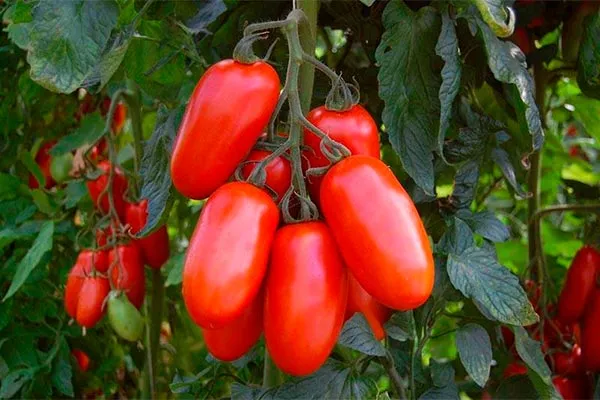
San Marzano is the name of an old Italian tomato variety grown in open beds or greenhouses. Domestic gardeners love it for its unusual-looking fruit and rich flavor. It is prized for its tolerance to cold and heat, temperature fluctuations, and for its good yields during seasons when the productivity of other varieties declines sharply.
History of creation
This tomato variety has been known in Naples since 1770. Its seeds arrived in southern Italy as a gift from Peru. They were first cultivated in the town of San Marzano sul Sarno, located at the foot of Mount Vesuvius. To this day, the variety is very common in Campania (the Sarnese-Nocerino region).
Thanks to the efforts of breeders, this tomato variety has been repeatedly refined, and its characteristics have been improved. Official registries contain the following information:
- The species was registered in 1926;
- The patent belongs to the breeding company Hortus, which specializes in the production of elite vegetable seeds;
- It is not listed in the Russian Federation State Register.
Description and characteristics
This tomato variety boasts many excellent characteristics, making it an attractive choice for both private and commercial growers for decades. Learn about the characteristics and botanical description of the Italian tomato before planting it in your garden.
What does the bush look like?
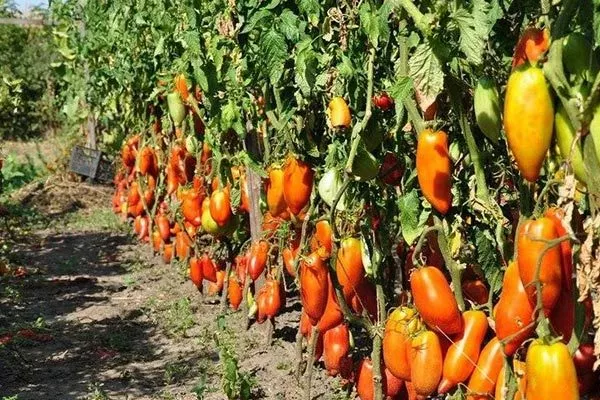
San Marzano plants are indeterminate. They are distinguished by their appearance:
- height - 1.8-2 m in a greenhouse (up to 1.5 m in open areas of the garden);
- powerful structure;
- well developed roots;
- strong central shoot;
- flexible branches;
- moderate thickening;
- light green leaves;
- simple inflorescences;
- fruit clusters consisting of 5-8 tomatoes (the first one is formed above the 5-6 leaf).
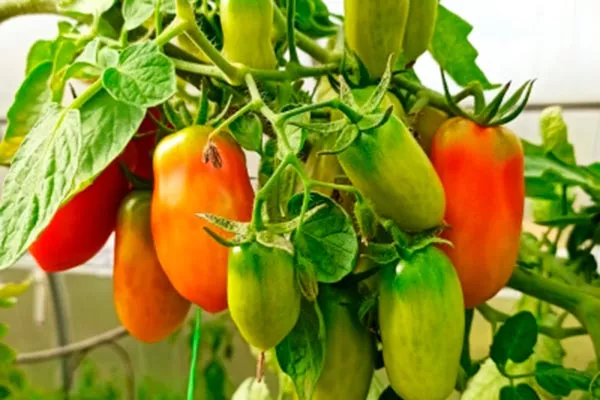
Italian tomato bushes require frequent pinching, every 10 days. They are trained into several stems and always tied to a support.
Fruit characteristics
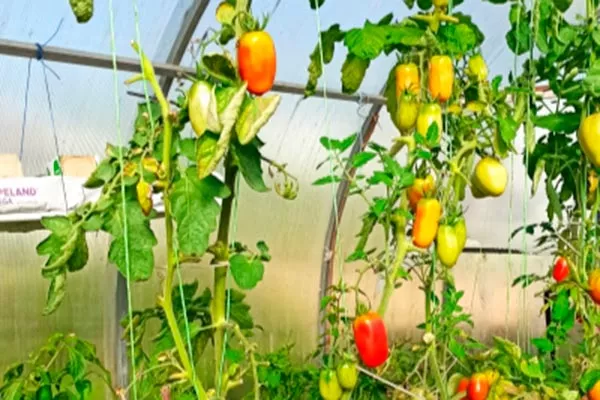
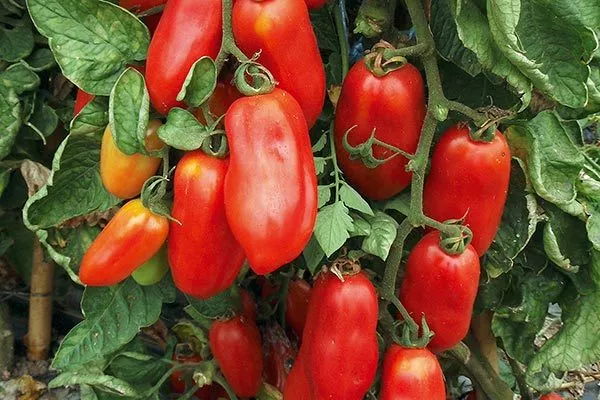
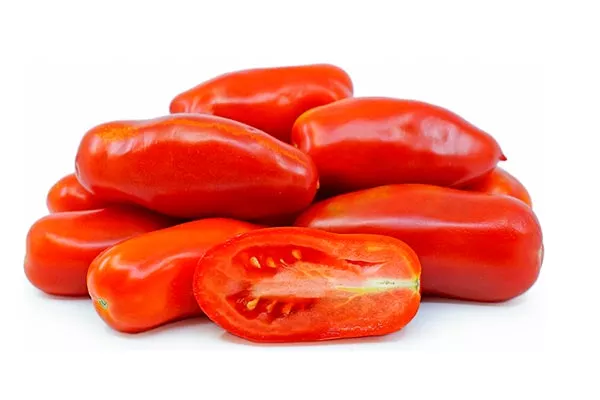
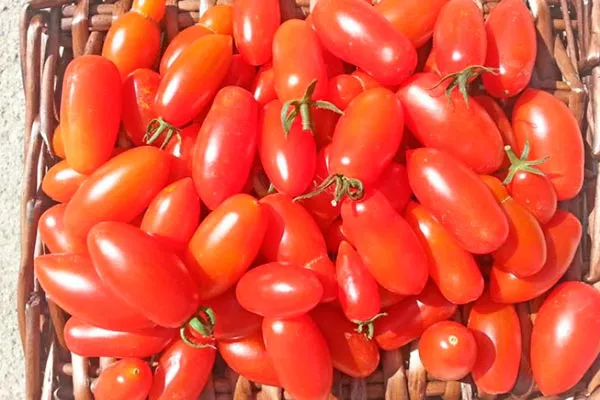
This tomato variety has an interesting appearance. Visually, it resembles a bright red, elongated pepper with a pointed tip. It has the following characteristics:
- medium size (length - 10-14 cm);
- weight - 90-120 g;
- glossy skin of a rich red color, thin, elastic, quite strong, not prone to cracking;
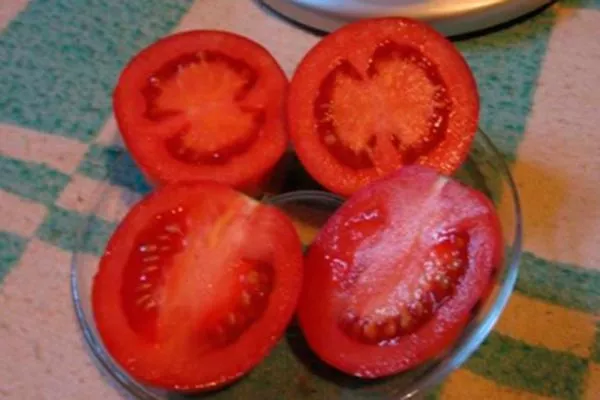
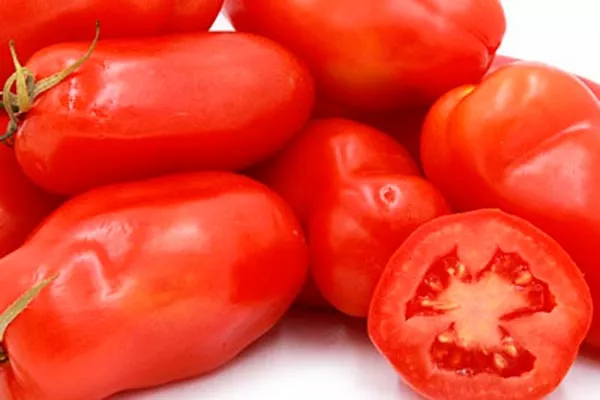
- thick fleshy walls of a red-raspberry color, moderately juicy, with a high content of dry matter;
- a small number of seed pockets and a small content of seeds in them.
- ✓ The fruits do not crack when overripe, which is unique for tomatoes.
- ✓ The formation of voids inside the fruits does not affect their taste.
The tasting qualities of this variety's harvest are excellent. Its flavor is very rich and intense: predominantly sweet, with a slight, refreshing acidity. This is accentuated by a bright, spicy aroma. Fruits grown in low-sun conditions have a more pronounced acidity.
Ripening, fruiting and productivity
This variety is classified as a mid-early vegetable crop. Its harvest ripens within the following timeframes:
- 100-115 days - from planting seeds until the fruits reach harvestable maturity;
- 90 days - after germination (in the hot Neapolitan climate, tomatoes take 75-80 days to ripen).
San Marzano tomatoes ripen evenly. Their peak harvest period is in the second half of summer (July-August).
Gardeners harvest 10-12 large fruit clusters (up to 8-10 kg) from a single plant. The average yield of this variety in the field is 12 kg per square meter. In greenhouse conditions, with enhanced agricultural practices, the productivity of the bushes increases significantly.
Disease resistance
This vegetable variety is highly resistant to diseases and pests. Its plants are not susceptible to infection:
- fusarium;
- verticillium wilt;
- Alternaria;
- Cladosporiosis.
They don't suffer from blossom-end rot, either. However, they are susceptible to late blight and anthracnose. The most common pest is the Colorado potato beetle. If you take preventative measures, you can avoid this problem.
Growing regions and temperature tolerance
San Marzano bushes are hardy and stress-resistant. They are distinguished by their ability to withstand adverse weather conditions:
- cold;
- heat;
- droughts;
- sharp temperature fluctuations.
They grow well in most European countries. They are successfully cultivated by gardeners throughout Russia, as well as Belarus, Ukraine, and Moldova. Even in risky farming zones, they produce a stable harvest.
Purpose and application
The Italian tomato harvest is versatile in its uses. It's perfect for fresh consumption and home cooking:
- Tomatoes are added to various dishes;
- they make sauces and ketchup from them;
- canned;
- salt;
- subjected to drying and withering.
They are especially good for whole-fruit canning. In this form, tomatoes are very tasty and aromatic. In their native land, they are canned without adding preservatives, using only salt and fresh basil. Neapolitans then use them to make a delicious pomodoro sauce.
Italian cooks avoid using fresh San Marzano tomatoes for making puree or sauce, so as not to destroy the fibers in their fleshy walls. They believe that preserving the tomato's internal structure preserves its rich flavor. These tomatoes are also traditionally added to Neapolitan pizza.
Varieties of the variety
| Name | Growth type | Disease resistance | Ripening period |
|---|---|---|---|
| San Marzano 15 F1 | Indeterminate | Resistant to cladosporiosis and fusarium | 85 days |
| San Marzano Lungo F1 | Indeterminate | Resistant to cracking | 90 days |
| San Marzano Gigante 3 | Indeterminate | Resistant to major diseases | 90 days |
| San Marzano Scatalone | Indeterminate | Resistant to major diseases | Late |
| San Marzano Lampadina | Vigorous | Resistant to major diseases | Average |
| San Marzano Pink | Indeterminate | Resistant to major diseases | Average |
| San Marzano Nano | Determinant | Resistant to major diseases | Average |
| San Marzano Golden | Short | Resistant to major diseases | Average |
Since breeders continue to improve this ancient Italian variety, many of its varieties can be found on the market:
- San Marzano 15 F1The hybrid was developed by American scientists. It is distinguished by its pear-shaped fruits and their large size.
- San Marzano Lungo F1This hybrid variety was developed by Italian breeders. It is distinguished by its high yield and fruit that is less prone to cracking in damp weather.
- San Marzano Gigante 3The variety is characterized by large fruits, with the harvest ripening within 90 days after sowing the seeds.
- San Marzano ScataloneThe Neapolitan tomato variety is characterized by late ripening and pear-shaped fruits.
- San Marzano LampadinaThe bushes of this variety are vigorous, and the fruits have an elongated pear shape and very fleshy walls.
- San Marzano PinkTomatoes of this variety are characterized by a beautiful pink color and an extremely sweet taste.
- San Marzano NanoA determinate variety of an Italian cultivar. The bushes grow up to 0.6 m and produce elongated, plum-shaped fruits that are tasty and aromatic.
- San Marzano GoldenThis is a low-growing variety, with plants no taller than 1 m. They produce a rich harvest of small, plum-shaped, yellow tomatoes.
How to grow San Marzano?
Grow a variety of tomato using seedlings. Planting strong seedlings in your garden will allow you to achieve maximum tomato productivity later, provided you properly care for them.
Forcing from seeds
Begin sowing in mid-March. Do this 60-65 days before the expected date of transplanting the seedlings to the garden bed. Plant the seeds in loose, fertile soil (usually a store-bought universal substrate). Use high-quality seed with a high germination rate.
- ✓ Optimum soil temperature for planting seeds: +25°С.
- ✓ The need for additional illumination of seedlings in conditions of insufficient natural light.
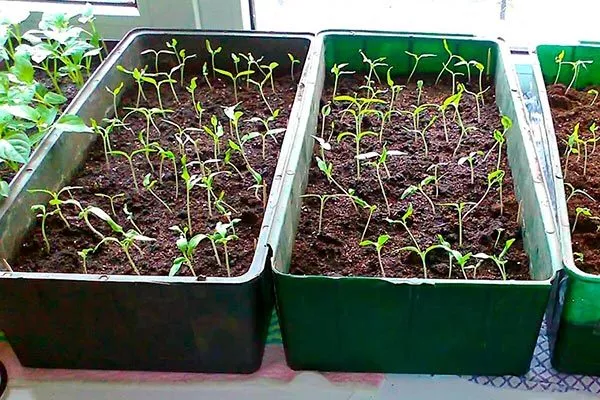
Carry out sowing by following the step-by-step instructions:
- Fill the boxes with nutritious soil mixture.
- Moisten the soil.
- Make holes or furrows in it. Their depth is 1-1.5 cm.
- Place the seeds, leaving a few centimeters of space between them.
- Cover the crops with soil.
- Moisten the planting with lukewarm, settled water using a spray bottle.
- Cover the planting container with plastic wrap and keep it in a warm place (25°C).
Once the sprouts emerge, remove the covering. Place the seedling tray on a south-facing windowsill in a room with a temperature of 20-22°C. Provide supplemental lighting if necessary. Moisten the seedlings moderately, preventing the soil from drying out. Gently loosen the soil beneath the seedlings.
Once the plants have developed 2-3 true leaves, transplant them. Transplant the seedlings into individual containers (peat pots or 10 cm tall cups) filled 1/3 full with nutrient-rich substrate. When planting, ensure that the leaves are 1 cm below the top of the pot.
Transfer
Transplant San Marzano tomato seedlings into a greenhouse in late April and into the open garden in mid-May. Before transplanting, ensure that the threat of frost has passed and the soil has warmed to 15°C (59°F) in the garden and 10°C (50°F) in the sheltered area.
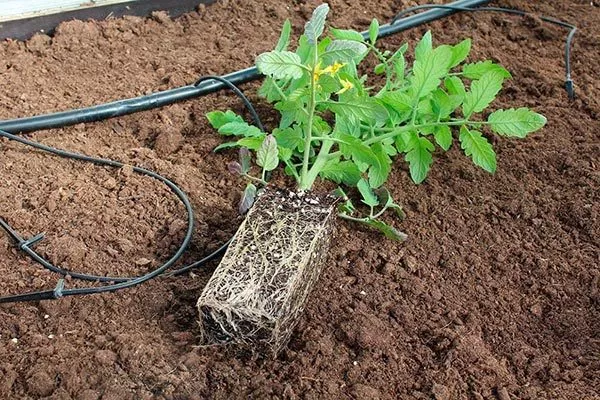
Set aside a plot of land in your garden for a tomato bed that meets the following requirements:
- solar;
- windless;
- having protection from drafts;
- not located in a lowland where the soil is damp and cold;
- with loose soil, rich in nutrients and having a neutral acidity (it will need to be dug up in the fall and fertilized with compost/manure, mineral compounds such as superphosphate and potassium sulfate);
- used last season to grow the best predecessors of tomatoes: carrots, pumpkins, squash, and green crops.
Transplant the Neapolitan tomato seedlings to their permanent growing location on a sunny, windless day. Follow the recommended planting pattern of 50x50 cm. Plant no more than 3-4 plants per square meter of bed. Follow the procedure step by step:
- Dig planting holes up to 30 cm deep.
- Add a little compost and wood ash to each, as well as 20 g of a phosphorus-potassium mixture.
- Fill the planting holes with soil, compacting it lightly around the stems.
- Water the planting.
As soon as the tomato plants begin to form, remove weak shoots, leaving a few strong stems. These will form the basis for a healthy plant. Train San Marzano plants into twin trunks. Regularly remove side shoots (at least once every 10-12 days).
Support for a tomato bush
Due to their tall growth, Italian tomato plants require tying to strong and reliable supports:
- high stakes;
- trellises.
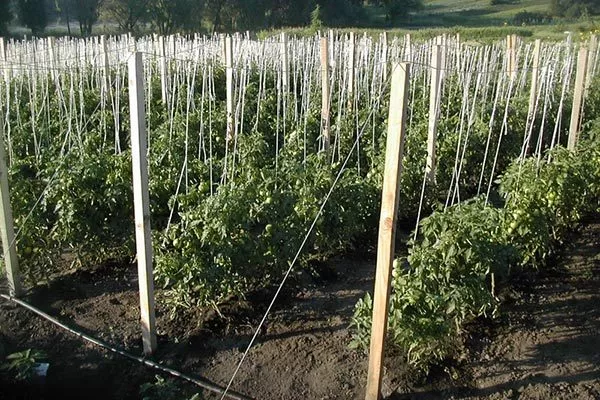
Staking will prevent stems and shoots from breaking, which can be caused by the weight of numerous ripening fruits. Install supports when transplanting seedlings to the garden or greenhouse.
San Marzano Fertilizer
Without proper nutrient application, achieving maximum productivity from San Marzano bushes will be difficult. Feed them several times throughout the summer:
- after the seedlings have taken root in a new location;
- 10 days after the first application of fertilizers;
- during the flowering period of the bushes;
- during the fruit ripening period.
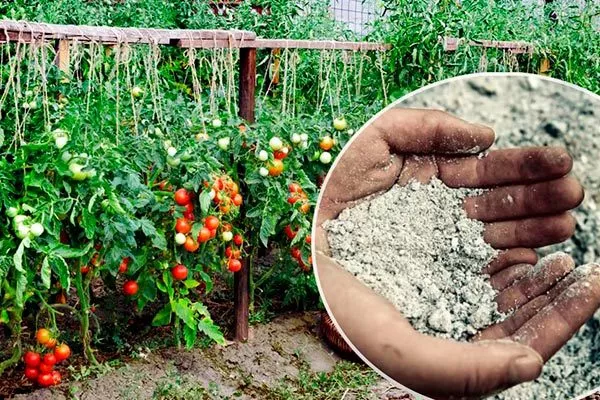
Fertilize your tomato plants the first two times with organic matter (a solution of cow dung or bird droppings) and nitrogen-containing mineral fertilizers such as urea or ammonium nitrate. For the third and fourth feedings, use phosphorus-potassium mixtures (superphosphate, potassium sulfate).
Watering a tomato bush
This vegetable crop thrives on moisture. Water it regularly with warm, settled water (temperature -20°C). Although this variety is drought-resistant, a lack of moisture reduces its yield. For abundant fruiting, water it whenever the top 5 cm of soil dries out.
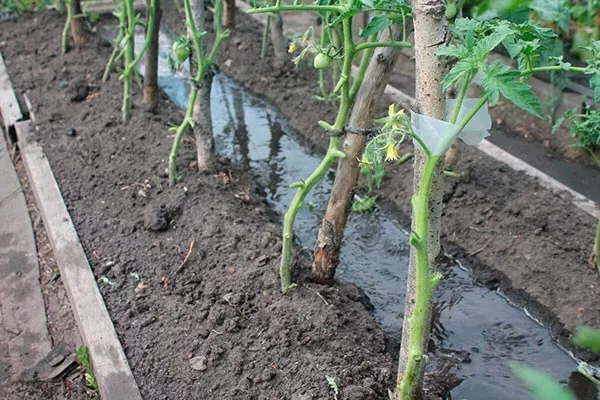
Combine soil moistening in the garden bed with other care procedures:
- LooseningLoosen the soil shallowly to prevent injury to the plants. Avoid the formation of a dense soil crust, which can block oxygen from reaching the tomato roots.
- WeedingRegularly remove weeds that appear in your garden. They rob your crop of nutrients and moisture and provide a breeding ground for pests and pathogens.
- MulchingCover the soil under your tomato plants with organic matter (sawdust, compost, peat, hay). This measure is aimed at reducing the need for watering and weeding.
Harvesting
San Marzano tomatoes begin to ripen in July. Gardeners harvest them within a month. Experienced gardeners harvest unripe tomatoes. They can be ripened at home. This allows the plants to bloom again and set fruit.
Sort the harvested tomatoes. For storage, reserve whole, undamaged, and undamaged tomatoes. Place them in a clean container, wrapping each one in a napkin. Create favorable conditions for them to ensure good shelf life:
- temperature in the storage area: +7-14°С;
- air humidity level - no more than 80%;
- ventilation.
Pros and cons
The San Marzano variety has become widespread in Italy and other countries around the world due to its many positive characteristics:
Similar varieties
The San Marzano vegetable variety has many analogs among other tomato varieties and hybrids. The following varieties have similar characteristics:
- Adele F1This hybrid, developed by the Italian company United Genetics, is characterized by strong, tall bushes and red, sweet, plum-shaped fruits resembling peppers (their weight is 100 g).
The crop ripens early (in 85 days). Gardeners harvest 23 kg of tomatoes per square meter. The crop is resistant to cladosporiosis and fusarium. Its fruits are suitable for all purposes. - Pink plumThis domestically bred variety is characterized by indeterminate bushes and plum-shaped fruits of raspberry-pink color with excellent taste (their weight is 70 g).
The harvest ripens in 100 days. It is shelf-stable and transportable, and versatile in its uses.
The crop is resistant to tobacco mosaic virus. - Aidar F1. This French tomato hybrid from Clause is characterized by tall, medium-leaved bushes and plum-type red fruits with excellent taste (their weight is 140 g).
The crop ripens in 110 days. This variety is considered high-yielding and resistant to major nightshade diseases. - Hummingbird F1 — a French tomato hybrid, characterized by indeterminate bushes with great growth force and red plum-shaped fruits of good taste (their weight is 120 g).
The crop is highly productive, producing a consistent harvest within 70 days of transplanting seedlings to the garden or greenhouse. It is resistant to viral and fungal infections and tolerates heat well. - Polikarpo F1 — a hybrid developed by specialists from the Dutch company Enza Zaden. It is characterized by strong, well-developed, tall bushes and red, plum-shaped fruits with a remarkable flavor (they weigh 180 g).
The harvest matures within 70 days after transplanting the seedlings into a greenhouse or garden. Fruiting is abundant, long-lasting, and consistent. It is susceptible to late blight but resistant to mosaic virus, verticillium wilt, and cladosporiosis.
Reviews
San Marzano is an ancient Italian tomato variety that enjoys widespread popularity among European vegetable growers and domestic gardeners. It boasts excellent consumer qualities, an attractive appearance, and a rich, sweet flavor, productive and resilient plants, and a strong immune system. It's ideal for canning, sauces, and pizza.