
Summer Sun F1 is the name of a mid-early cherry tomato variety bred by specialists at the Israeli-Dutch seed company Hazera. This hybrid's tall bushes, abundantly laden with clusters of sunny yellow fruits, are decorative and produce a bountiful harvest. They are grown in both open and protected soil in double rows.
Description of fruits and plants
Hybrid tomato bushes are indeterminate. They are characterized by vigorous growth, good development, and the ability to quickly adapt to their growing environment. Their appearance includes the following characteristics:
- height - 1.8-3 m;
- strong liana-like stems;
- foliage: green, small in size, similar to potato;
- Fruit clusters: numerous (up to 18 on the main stem), voluminous, consisting of 8-10 miniature cherry tomatoes.
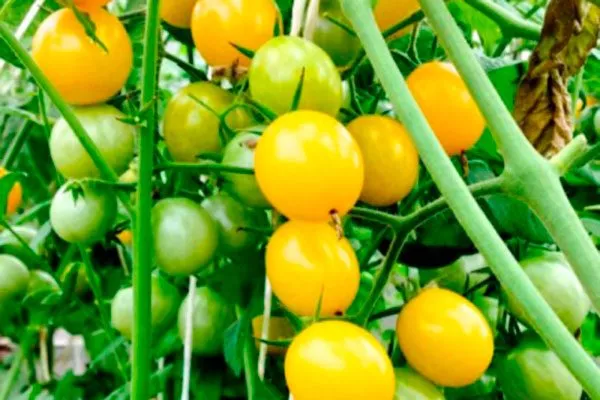
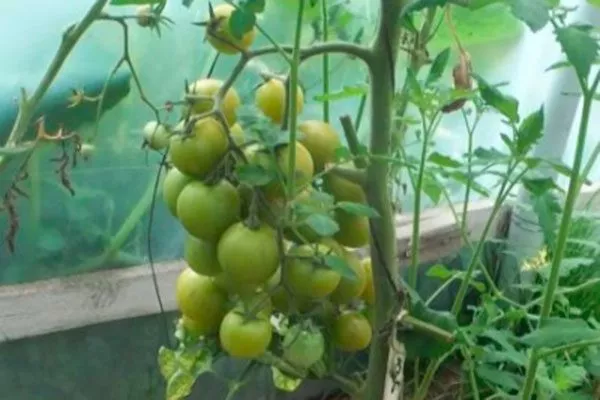
The sunny tomato harvest is distinguished by its attractive appearance and high consumer qualities. The fruits, uniform in size, possess the following characteristics:
- miniature sizes, typical of the cherry type;
- weight - 15-30 g;
- neat rounded shape;
- amber-yellow color;
- thin skin, quite strong, not prone to cracking;
- dense pulp, fleshy, not watery, with a sugary fracture.
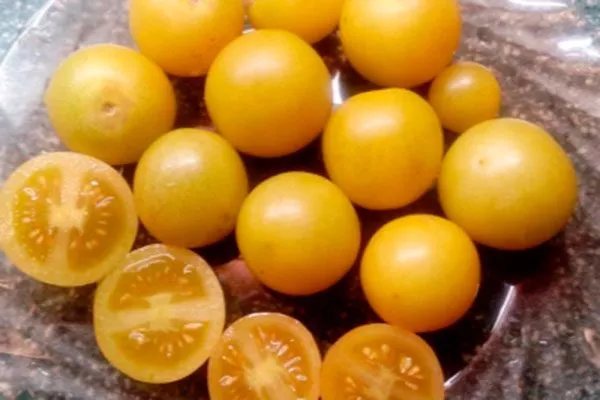
Gardeners harvest them individually or in whole clusters. Yellow cherry tomatoes keep well and retain their marketable appearance during long-distance transportation (they don't crack, bruise, or leak).
Taste and purpose
Sunny tomatoes delight the eater with their wonderful sweet flavor, with a hint of tartness and fruity, honeyed notes. They're a great summer treat, loved by both adults and children. Little ones eat them like candy.
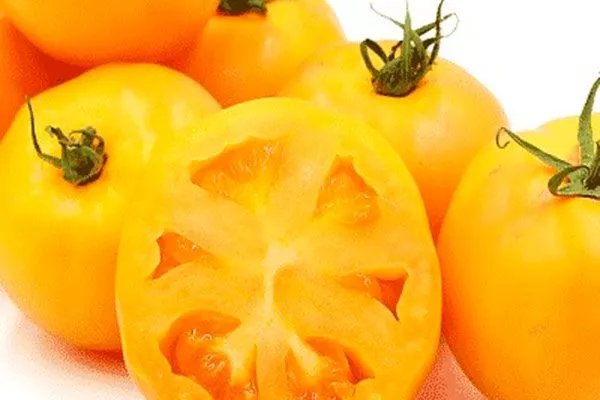
The main purpose of the Summer Sun hybrid harvest is fresh consumption. Unheated, yellow cherry tomatoes are the most delicious and nutritious, with a flavor comparable to that of fruit. They have also found their way into home cooking:
- housewives add them to summer salads and fruit desserts;
- used for making original jam, marmalade, and preserves;
- used to decorate holiday dishes;
- marinated and salted.
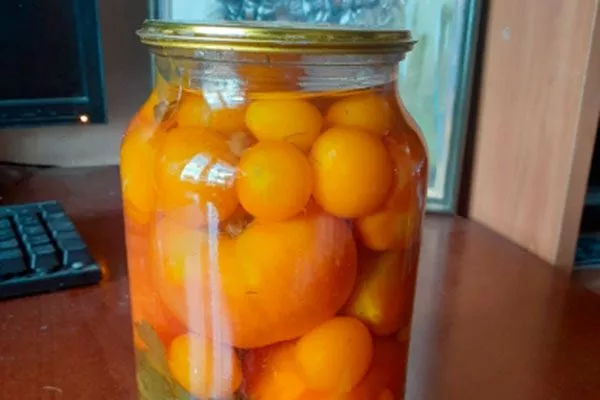
Their miniature size and neat shape make sunny cherry tomatoes ideal for canning for the winter. A jar holds a generous amount of tomatoes. Pickled tomatoes look elegant and unusual, visually reminiscent of cherry or cherry plum compote.
Other characteristics
The Summer Sun tomato hybrid boasts many excellent characteristics that make it attractive to domestic gardeners:
- mid-early ripening of the crop (the fruits ripen in 115-120 days after germination or in 65-75 days after transplanting the seedlings to the garden);
- good productivity of bushes (summer residents get 2-3 kg from 1 plant, up to 7 kg from 1 sq. m of tomato planting);
- long fruiting, continuing until October (the ability to enjoy sweet yellow fruits for more than half of the year is due to the fact that the hybrid can be grown in two rotations: spring-summer and summer-autumn);
- high field health tomato bushes (they are distinguished by their immunity to diseases of nightshade plants: mosaic virus - ToMV, fusarium wilt - Fol, verticillium wilt - Vd);
- endurance of culture, its good stress resistance, and ability to quickly adapt to environmental conditions.
The nuances of planting and growing
Gardeners cultivate this tomato hybrid using seedlings, then transplant them into open or protected soil. This vegetable variety shows the best results when grown in greenhouses.
Seed preparation
Hybrid tomato seeds have good germination rates. This rate persists for the first three years, but then begins to decline sharply. By the fifth or sixth year, the seeds are considered old and germinate poorly.
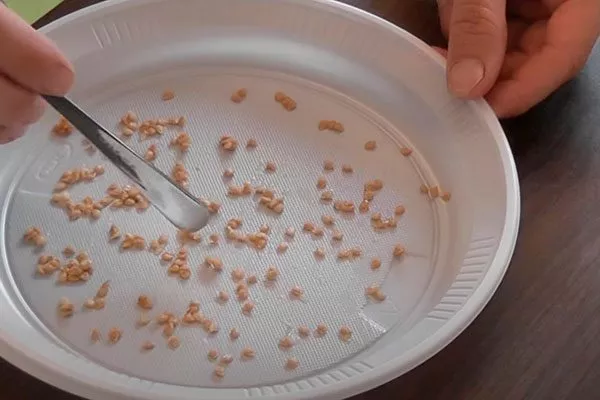
Stale seeds require pre-sowing treatment the most. Those less than three years old don't require dressing or other treatments. The producer has properly prepared them for planting. To improve the germination of old seeds, perform the following steps:
- soak it in a solution of potassium permanganate (concentration - 1-2%);
- warm up;
- treat with Epin or Zircon (growth stimulants);
- expose the seeds to sudden temperature changes to harden them (leave them in the refrigerator for 8 hours 5-6 times, then bring them into a warm place for the same amount of time);
- germinate on a saucer with damp gauze in a warm room (temperature +25°C).
By following these procedures, you can increase seed germination by at least 30%. Before you begin, sort through the planting material. Discard any empty, small, or damaged seeds.
Container and soil
Use suitable containers for growing tomato seedlings:
- long and wide boxes with sides, the height of which does not exceed 10 cm;
- plastic or cardboard cups that can hold up to 500 ml of liquid (their diameter is 10 cm);
- peat pots.
Before using containers, make sure they have drainage holes in the bottom. Wash and disinfect reusable containers and cups. Use a concentrated solution of potassium permanganate or alcohol to disinfect their interior surfaces.
Grow sunny cherry tomato seedlings in loose, nutritious soil with a neutral pH. A ready-made store-bought potting soil or a homemade potting mix will do. To make the latter, use the following ingredients in equal parts:
- black soil;
- river sand;
- peat;
- turf soil;
- humus;
- wood ash.
Disinfect the homemade substrate by baking it in the oven or on a frying pan. After it cools, water it with a mineral fertilizer solution to increase fertility. Prepare a nutrient solution from the following ingredients:
- water - 10 l;
- Superphosphate - 25 g;
- potassium sulfate - 30 g;
- urea - 10 g.
Planting seeds and care
Plant the Summer Sun hybrid seeds in trays filled with prepared soil, planting them 0.5-1 cm deep. Leave a few centimeters between the holes. Do not compact the soil around the seeds. Gently moisten it with a spray bottle. Cover the tray with glass.
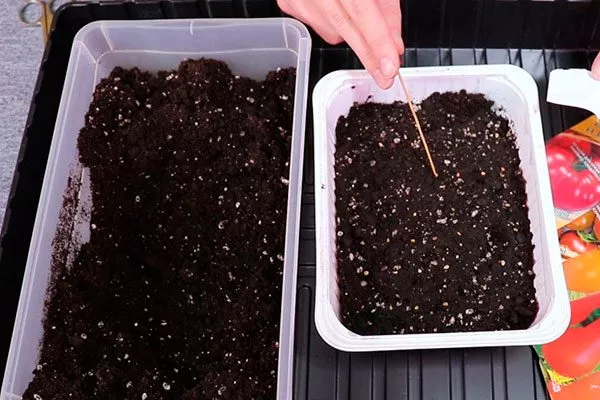
Keep the cherry tomato planting in a warm room, protecting it from direct sunlight. The optimal temperature for seed germination is 25-27⁰C. Under these conditions, seedlings will appear within 6 days after sowing.
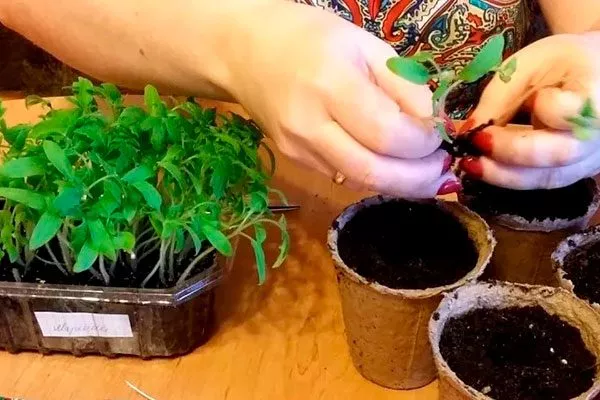
Once the sprouts emerge, remove the glass from the box. Place it in a south- or southwest-facing window of your apartment. It should be in a room with a temperature of 20-22°C. Make sure to provide the young tomatoes with good care:
- Water them moderately, avoiding the soil in the box from drying out or becoming waterlogged.
- Provide additional illumination with a phytolamp to provide the crop with a 12-hour daylight period and prevent the sprouts from stretching.
- Carefully loosen the soil under the seedlings to avoid damaging them and to provide better oxygen access to their roots.
- Dive into separate cups or peat pots after 3-4 leaves appear (when performing the procedure, do not forget to pinch off a third of the roots of the seedlings).
- Fertilize the seedlings. Apply a complete mineral fertilizer for nightshades for the first time 14 days after transplanting. Apply a second fertilizer with superphosphate two weeks after the first application.
- Harden off the seedlings, starting to increase their cold resistance 10-14 days before "relocating" them to a permanent location (this procedure is mandatory for plants that you plan to transplant to an open area of the garden, and consists of gradually lowering the room temperature to +13°C).
Transplanting seedlings into the ground
Plant Summer Sun hybrid seedlings in their permanent location from late April to mid-May. By this time, the risk of frost should have passed, the weather should be consistently warm, and the soil should have warmed to 15°C.
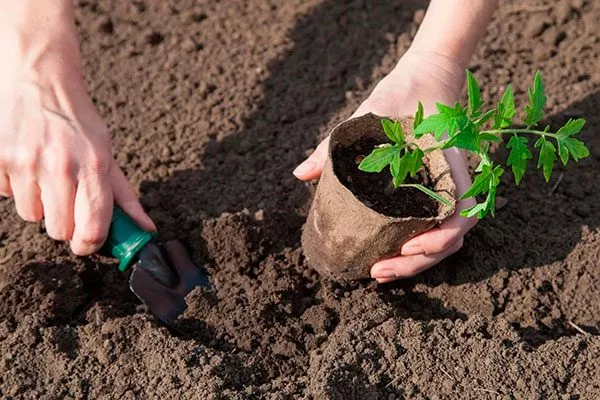
If you're planning to grow sunny tomatoes in an open garden bed rather than a greenhouse, set it up in a sunny, wind-free area of your garden with loose, organically fertilized soil. Before planting the plants in the plastic cover, renew the top layer of soil.
To obtain a bountiful harvest of amber-colored cherries, grow the hybrid after the right predecessors.
We are talking about the following garden crops:
- legumes;
- pumpkin;
- root vegetables.
Plant Summer Sun seedlings in the garden in rows, spacing them 60-80 cm apart. Place no more than 3 plants per square meter of plot. Follow these steps for planting:
- Prepare planting holes in advance. They should be 10 cm deep.
- Water them, using 1 liter per hole.
- Plant the seedlings in the holes, deepening them up to the cotyledon leaves.
- Water the plants. Sprinkle the area around the trunk of each plant with dry soil.
Plant care and formation
Provide your sunny tomato plants with proper care to promote proper development and abundant fruiting, and to prevent disease. This includes the following procedures:
- WateringWater the soil under your tomato plants as the top layer dries. Water the soil 2-3 times a week. Adjust your watering schedule based on weather conditions and rainfall. Avoid overwatering during rainy weeks to prevent waterlogging and rot.
Water greenhouse plants less frequently than those grown outdoors. Water them in the evenings, using settled, sun-warmed water. - Loosening the soilCultivate the soil between the rows to improve air flow to the vegetable roots. Perform this procedure the day after watering or rain, allowing the soil in the bed to dry out slightly. This will prevent the formation of a hard crust.
First, loosen the soil to a depth of 10-12 cm. Then, loosen it to a depth of 5-8 cm, being careful not to damage the tomato plants and their roots. - MulchingAfter watering and loosening the soil, cover the bed with a layer of organic matter (sawdust, straw, pine needles) to protect the crop's root system from cold and overheating, retain moisture and the porous structure of the soil around the main stem, and suppress weed growth. Synthetic agrofibre is also suitable for mulching.
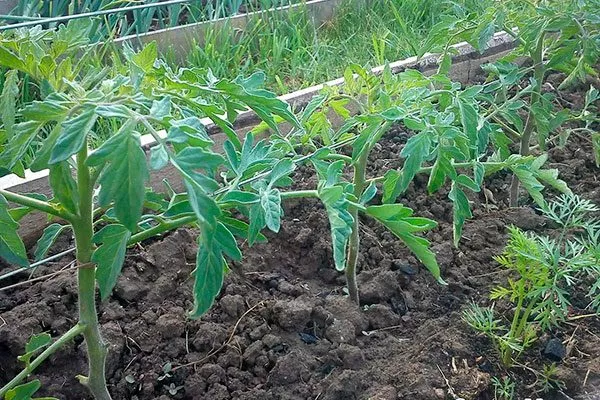
- Tying shoots to a trellis or to stakesThis measure is aimed at preventing stems from breaking and falling to the ground. When securing the plant to the support, do not overtighten the shoots.
- Formation of tomatoesTrain hybrid tomato bushes with 1-2 trunks. In warm climates, they can be grown without this care.
- Removing stepsonsBegin this process in mid-July. Regularly remove any excess shoots that appear at the base of the bush. You will also need to pinch back the tops of the plants.
- Fertilizing the garden bedApply the first fertilizer to tomato plants 14–20 days after transplanting the seedlings to their permanent location. Subsequently, apply nutrients (organic and mineral fertilizers) every two weeks.
Use nitrogen fertilizers such as a solution of mullein or bird droppings, saltpeter, urea before the crop begins to flower to stimulate the growth of foliage.
Use potassium-phosphorus preparations (superphosphate, potassium sulfate), having previously dissolved them in water (40 g per 10 l), after the appearance of the fruit ovary and during its ripening period.
How to harvest and store tomatoes?
This vegetable variety is not suitable for mechanical harvesting. Pick ready-to-harvest tomatoes or whole clusters by hand. Pick fully ripe tomatoes from the bush for immediate consumption or processing, and unripe ones for storage.
The Summer Sun variety produces a good shelf life. It retains its marketable appearance for a long time and does not spoil. Properly prepare its fruits for long-term storage:
- select tomatoes that have no damage, dents, or signs of disease;
- place them in hot water (45-50°C) for a couple of minutes or wipe their skins with alcohol (this technique will prevent cherry tomatoes from turning black);
- then dry the fruits;
- wrap each of them in paper;
- Place the tomatoes in a box in 2-3 layers.
Store the tomato hybrid harvest under the following conditions:
- temperature range: +10-14°С;
- air humidity level is 80-85%.
With the right approach to storing your amber cherry tomatoes, you can enjoy their wonderful summer flavor until winter and even decorate your New Year's table with these miniature fruits.
Disease and pest control measures
The Summer Sun hybrid boasts strong immunity. Its bushes are highly resistant to tomato diseases such as fusarium wilt and verticillium wilt, as well as viral infections. Despite its good field health, disease prevention should not be neglected.
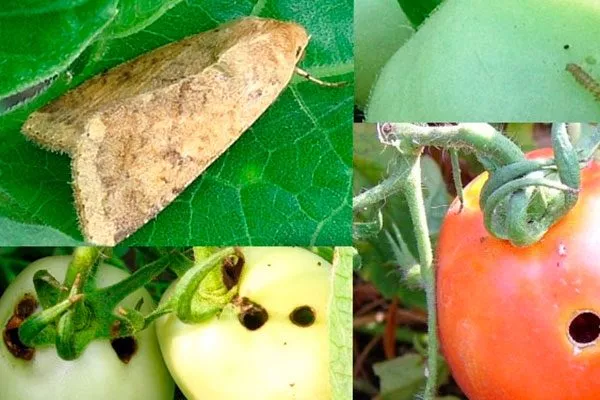
To prevent your sunny tomato plant from getting sick or suffering from pest attacks, follow these steps:
- ventilate the greenhouse periodically (at least once every 5 days);
- do not allow drafts in open and protected soil;
- do not waterlog the garden bed;
- do not neglect fertilizing;
- Be sure to tie the bushes to supports;
- Before planting tomatoes, be sure to treat the soil with copper sulfate or a weak solution of potassium permanganate;
- weed out the weeds in the garden bed and take them outside the area;
- regularly remove the lower leaves from the bushes;
- pick off and burn infected plant parts;
- Preventatively spray young tomato bushes with an antifungal agent (for example, Fitosporin-M), performing the treatment once every 2 weeks;
- Repel harmful insects from your plantings using folk remedies such as garlic or onion broth or wormwood infusion.
Vegetable pests that can affect Summer Sun hybrid plants include whiteflies, spider mites, aphids, and nematodes. Regularly inspect cherry tomato plants to identify pests promptly. If any are detected, consider using the following:
- insecticides (Aktara, Confidor, Decis);
- biological products like Fitoverm.
Pros and cons
The Summer Sun hybrid has many advantages, including:
Gardeners consider the disadvantages of sunny cherry tomatoes to be their need to be tied to supports and side-sonned, the crop's demand for light, and the impossibility of independently collecting seeds for further planting.
Reviews
Summer Sun is a product of foreign breeding, popular among domestic gardeners. This yellow-fruited cherry tomato hybrid is appreciated for its early ripening, high marketability and flavor, productive plants, and strong immunity. These miniature tomatoes are ideal for fresh consumption and whole-fruit canning.