
Salute is the name of a mid-season tomato variety well suited for cultivation in open gardens. Its hallmark is the advantageous combination of low-growing bushes and high yields. The fruits it produces are tasty and attractive, ideal for canning for the winter.
Origin and growing regions
This tomato variety was developed in the 1980s. It was bred by scientists at the Crimean Experimental Breeding Station, part of the N.I. Vavilov All-Russian Institute of Plant Genetic Resources (Krasnodar Krai). The scientists imbued their creation with the following traits:
- excellent fertility;
- high marketability of the crop;
- good tolerance to adverse weather conditions (even in areas with cold or dry summers, the species bears fruit abundantly).
Salute was added to the Russian Federation State Register in 1984. It was approved for cultivation in two regions of the country: the Central Black Earth Region and the Far Eastern Territory.
Description of the variety
If you plan to grow a variety of vegetable crop in your garden, familiarize yourself with the botanical description of the plants and fruits and study its technical characteristics.
Appearance, taste characteristics
Salute tomato plants represent a group of non-standard determinate varieties. They are very low-growing and compact. They have an average shoot-forming capacity.
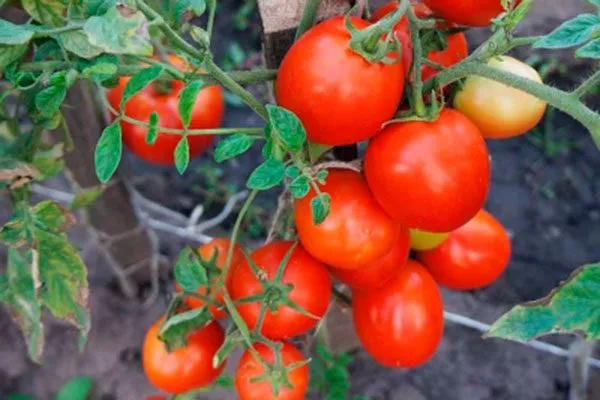
The description of their appearance includes the following features:
- height - 24-38 cm;
- weak branching;
- moderate foliage;
- foliage: medium-sized, green, typical tomato shape, slightly dissected, with a corrugated surface;
- simple inflorescences consisting of 5-6 flowers (the first one is formed above the 6-7th leaf, the subsequent ones - every 2 nodes).
Due to their dwarf size, Saluta bushes don't require mandatory staking (experienced gardeners often do this to prevent stem breakage and protect the fruit from contact with the ground). They don't require pinching. Their compact size means they take up little space in the garden.
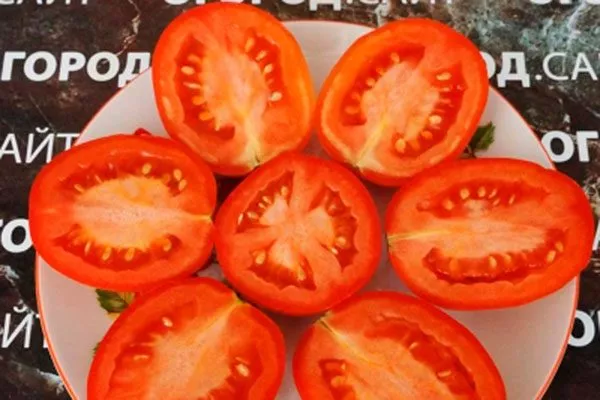
The harvest of this variety is distinguished by its attractive appearance and excellent consumer qualities. The fruits are small in size and belong to the "plum" type. They possess the following characteristics:
- weight - 36-47 g;
- neat oval shape, reminiscent of a plum;
- bright red color;
- strong and smooth skin with a glossy finish;
- fleshy pulp, red, fairly dense, moderately juicy, containing more than 4% dry matter, with 2-3 seed chambers.
The Salut harvest, thanks to its firm fruit and the strength of its skin, tolerates long-distance transportation well and boasts excellent shelf life. These qualities make the variety promising for commercial cultivation.
Scope of application
The tomato harvest of this varietal variety is universal in its purpose:
- tomatoes are eaten fresh;
- add them to summer salads;
- processed into tomato paste;
- use in preparing different dishes;
- canned, salted, marinated;
- dried;
- dry;
- freeze.
The skin covering the small, firm fruits holds the flesh in place well. When sliced, tomatoes form neat pieces, adding an attractive appearance to salads. They are used to make tomato paste, ketchup, various sauces, and borscht dressing. They are also added to vegetable stews, side dishes, soups, and pizza.
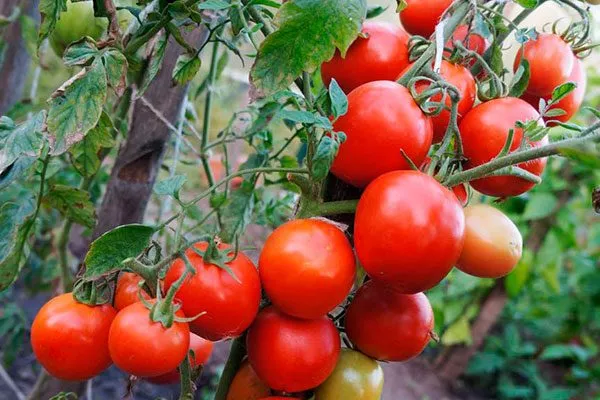
The main purpose of the Salut harvest is to prepare preserves for the winter. The neat "cream" fruits, weighing no more than 50 g, are ideal for whole-fruit canning. Their small size and dense texture make them look beautiful in jars, do not crack, and hold their shape.
Ripening and yield
This vegetable variety yields a harvest in mid-early season. The fruits ripen uniformly on the bushes. They reach harvestable maturity 110-130 days after germination. Fruiting is long and unaffected by weather.
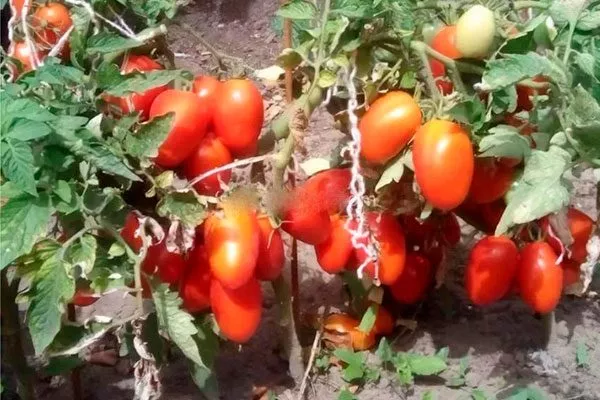
Salute's productivity indicators are high:
- from 3.1 kg to 7.5 kg per 1 sq. m of vegetable planting;
- from 30,800 kg to 75,500 kg per 1 ha of tomato field (for industrial cultivation of the variety).
Resistance to diseases and pests
This tomato variety has good immunity. Its bushes are rarely affected by the following infections:
- tobacco mosaic virus (high resistance);
- Alternaria (resistance to the disease is higher than average).
Saluta plants are susceptible to late blight and are also susceptible to attacks from harmful insects. Gardeners planning to grow this variety in their gardens will need to pay special attention to preventing these problems.
Growing seedlings
Sow tomato seeds for a productive harvest in late March or early April (the optimal time for temperate climates). Transplant the seedlings into an open garden bed in May after the threat of frost has passed. They should be at least 35 days old by the time they're transplanted into the garden.
Working with planting material
For sowing, select viable seeds (full, whole, and free of defects). To determine their viability, follow this step-by-step procedure:
- Make a saline solution (1 teaspoon of salt per 250 ml of water).
- Soak the seed material in it.
- After 30 minutes, collect any seeds floating on the surface. They are not suitable for sowing.
- Rinse the seeds that were at the bottom of the container with salt water. Let them dry on a paper towel. Use them for planting.
The selected seed material will need to be treated to prevent future tomato diseases. Use the following disinfectants for disinfection:
- potassium permanganate solution with a concentration of 1-2% (soaking time of tomato seeds in it is 15-30 minutes);
- soda water (keep the seed material in it for 12 hours);
- aloe juice diluted with water in a 1:1 ratio (procedure duration is 12 hours).
Rinse the treated seeds in clean water. After drying, treat them with Epin. It's also a good idea to germinate the seeds before sowing them in the soil.
Selection of soil and containers
Prepare suitable containers for growing tomato seedlings:
- spacious boxes made of wood or plastic, the height of the sides of which is at least 10 cm;
- large plastic cups (their volume is 300-500 ml) with a drainage hole at the bottom;
- peat pots.
Prepare a suitable substrate for growing young tomatoes. Use a store-bought soil mix that's light and nutritious. It can be a general-purpose soil mix or one specifically designed for nightshade crops.
If you wish, you can make your own seedling soil using the following ingredients:
- turf land;
- peat;
- humus;
- river sand (it can be replaced with sawdust or coconut substrate).
Be sure to disinfect your homemade substrate before sowing the seeds. To eliminate pathogens and parasites in the soil, you can water it with a potassium permanganate solution or boiling water, or bake it in the oven.
Sowing seeds
Fill the box with the prepared soil mixture. Level it. Make furrows in it (1.5 cm deep). Place the seeds in the furrows, leaving a few centimeters between them. Cover them with soil. Do not compact it. Moisten the seeds with warm water from a spray bottle. Cover them with plastic wrap.
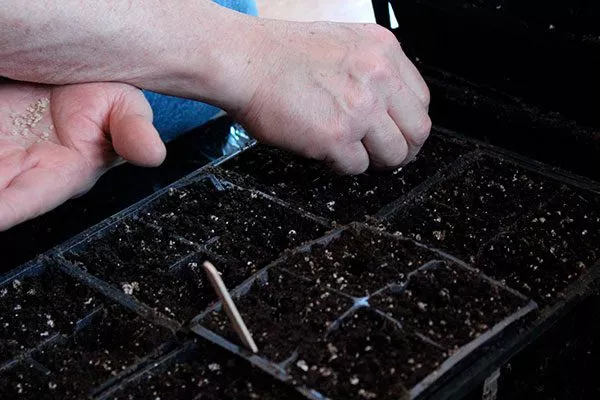
With this sowing method, you'll need to thin out the seedlings after they develop one or two true leaves. You can avoid the trauma of transplanting the plants into individual containers by planting the seeds directly in peat pots or plastic cups. Place one seed in each container.
Caring for seedlings
Keep the seedlings at a temperature of +25°C. After 6-7 days, seedlings will appear. After this, you can remove the film. Then, move the seedlings to a cooler room (+20-22°C) and leave them under a phytolamp. The plants require at least 12 hours of daylight. Provide them with proper care:
- Water the seedlings Water moderately, using lukewarm, settled water. The soil in the container shouldn't be wet or dry. Before transplanting, moisten the soil with a syringe, and after transplanting, use a watering can. Be careful not to let any drips fall on the leaves or stems.
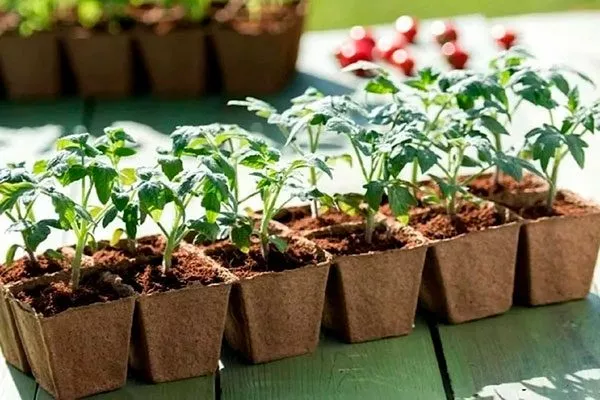
- Carry out a pickingWhen the seedlings have 1-2 true leaves, transplant them into individual pots. There's no need to pinch the roots, as this technique slows the seedlings' growth.
- Fertilize tomatoesTwo weeks after transplanting, water them with a solution of complex fertilizer. Repeat the feeding twice more: 20 days after the first application and three days before transplanting the seedlings into the garden.
- Harden off plantsFourteen days before moving them to their permanent location, begin to lower the temperature in the room where they are located. Gradually reduce the temperature to +13°C. You can also increase the cold resistance of seedlings by placing them on the balcony for a few hours.
Transplanting tomatoes to a permanent location
Choose the right spot in your garden for planting Salute tomatoes: sunny, wind-free, and protected from drafts. The soil should have the following characteristics:
- be light and loose;
- sandy loam or loamy;
- well drained;
- enriched with organic matter;
- with a pH level from 6.0 to 6.5;
- with deep groundwater.
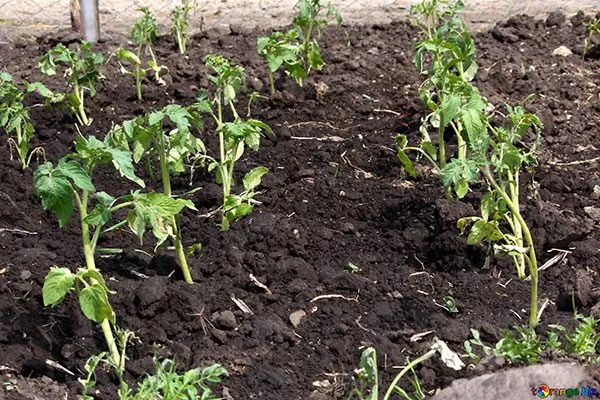
Transplant the seedlings into the garden in early May. By this time, they should be 35 days old. If you're planting outdoors, first make sure all danger of frost has passed and the soil has warmed to 16°C. Work in the afternoon or on cloudy days.
When planting tomato bushes, follow this pattern:
- the distance between bushes is not less than 40 cm;
- row spacing - from 50 cm.
Transplant the seedlings, along with the root ball, into 30 cm deep holes. Add nutrients to each hole:
- a small amount of organic matter (granulated chicken manure, horse manure or cow dung);
- a handful of wood ash;
- some mineral fertilizers (for example, superphosphate).
Don't overplant. Place no more than 4 bushes per square meter of plot. You can grow Salute not only in open areas of your garden but also in a greenhouse. The variety thrives in protected soil, where the risk of infection is reduced. It's easier to regulate temperature and humidity in a sheltered location.
Care
Follow proper cultivation practices to ensure a bountiful and high-quality harvest. Ensure proper watering, fertilizing, and support for the Salute tomato plant. Don't forget to maintain the soil in your tomato bed.
Watering and fertilizing
Irrigate vegetable crops according to the following rules:
- Water the tomato bed moderately, avoiding over-watering and drying out the soil under the bushes;
- perform the procedure once every 3-4 days;
- determine the amount of water used taking into account weather conditions and the age of the plants (2-3 liters will be enough for young, low-growing tomatoes, 1-2 liters for flowering tomatoes, and 3-4 liters for fruiting tomatoes);
- carry out the procedure in the first half of the day or in cloudy weather;
- Use settled and sun-warmed water (its temperature should not be lower than 24-26°C) to moisten the tomato beds;
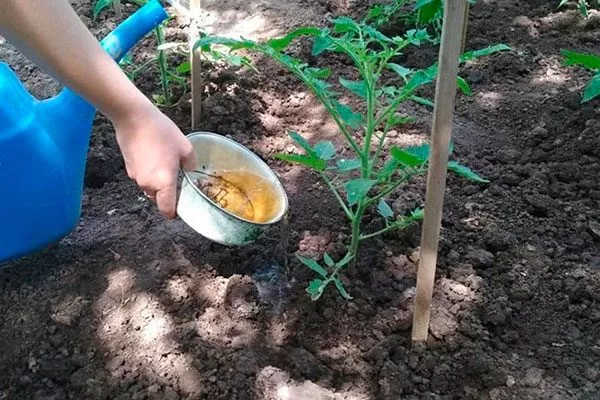
- Pour it under the root of the bush, avoiding splashes on the green mass to prevent burns.
The day after each watering (and rain), carry out soil care in the tomato bed, including the following activities:
- shallow loosening of the spaces between rows (no more than 5 cm deep) to improve soil air permeability;
- weeding to prevent weeds from taking away nutrients from the crop and creating a risk of pest and infection damage.
To maximize productivity from your Salute bushes, don't neglect feeding them. Fertilize them with organic and mineral fertilizers according to a schedule.
Apply nutrients at least 3 times per season:
- 15 days after transferring the seedlings to the garden, water them with a solution of bird droppings/mullein or nitrophoska, ash infusion (use 1 liter of nutrient liquid per 1 plant);
- during the budding phase, apply liquid organic matter (a solution of chicken manure or mullein) or Kemira, using 1.5 liters of fertilizer per bush;
- During the ripening period of fruits, use phosphorus-potassium mixtures (superphosphate, potassium sulfate).
Removing lateral shoots and garter
Inexperienced gardeners neglect staking determinate varieties, believing that the procedure is unnecessary for low-growing bushes. However, it's not a good idea to skip this step, especially if the crop is very productive. Numerous fruits during ripening put a lot of stress on the plant, causing stem breakage.
Although the Salute variety doesn't require mandatory side shoots, it shouldn't be neglected. Regularly remove excess shoots. Monitor the bush's foliage to maximize yield.
Diseases and pests
This tomato variety is not susceptible to tobacco mosaic virus or early blight, but it is susceptible to the dangerous late blight. Pay special attention to preventative measures to avoid this problem:
- strictly follow the rules of agricultural technology of the crop;
- hill up tomato bushes;
- spray the seedlings with biological preparations (Fitosporin-M, Trichodermin) 7 days before transferring them to the garden bed or 1 week after moving them to the garden;
- If there is an increased risk of fungal infection (during damp and cool summers), begin additional treatments of tomato plants with Fitosporin or HOM, Bordeaux mixture, or Quadris immediately after fruit set (the procedure will need to be repeated every 15 days).
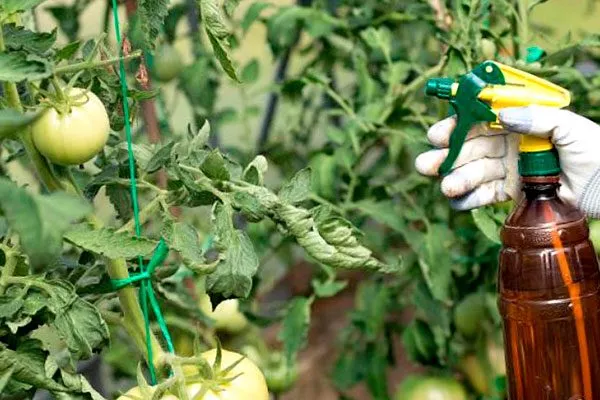
Remember that tomatoes are susceptible to late blight if they are grown in poor soil, if the bed is overwatered, and if there are sudden temperature changes.
If your Salute bushes show signs of a fungal disease, such as brown spots on the leaves and fruit, or a white coating, begin treating them:
- water the soil in the garden bed with a solution of copper sulfate;
- apply the biofungicide Fitosporin-M.
When growing a variety in unfavorable conditions, there's always a risk of pest attacks: whiteflies, aphids, thrips, spider mites, and cutworms. Regular inspection of your plants will help you quickly identify signs of their presence. If pests are detected, treat them with insecticides.
Collection and storage
The Salute tomato harvest takes a long time to ripen. Harvest as soon as the fruit reaches maturity. Remove tomatoes from the vine every few days.
If you're growing this variety in an open garden bed, harvest in dry, warm weather. It's best to do this in the morning. For greenhouse tomatoes, pick them from the vines at any time convenient for you.
To ensure the best possible preservation of your harvest, follow these harvesting rules:
- do not pick the fruits from the bush with your hands, but carefully cut them off with scissors along with the stalk;
- try not to damage the skin of the tomatoes;
- Store overripe and cracked fruits separately (they won’t stay put, they will need to be eaten or processed immediately);
- Pick tomatoes when they are unripe so that they can be stored for as long as possible (they can be ripened further at home).
The Salute variety is characterized by excellent shelf life. To ensure tomatoes stay fresh for a long time, maintain the correct storage temperature:
- +10-12°С — for fruits harvested at the milky stage of ripeness;
- +1-2°С — for tomatoes that have reached biological maturity;
- A lower temperature regime is for the ripest tomatoes (it is advisable to eat them as quickly as possible or use them for preparing dishes, purees, pastes, sauces).
Pros and cons
The Salute variety has maintained its popularity since 1984, not yielding to more modern types of tomatoes and providing them with worthy competition.
Reviews
Salute is a Russian-bred achievement that gardeners have known and loved for over 40 years. This variety boasts dwarf bushes, a beautiful appearance, and small fruit, as well as consistently high yields. It's an excellent choice for those growing tomatoes for sale and for canning for the winter.