
The Sugar Bison tomato stands out for its competitive productivity, large fruits, and aromatic texture, making it particularly popular among Russian gardeners. The fruit color of this variety is pink with a delicate reddish tint. Not being a hybrid, this variety allows for the collection of home-grown planting material.
History, varieties and similar cultivars
The Sakharny Bison variety is the result of the work of Russian breeders from the Aelita agrofirm, who developed this variety in 2004 using selective breeding and selection methods. It was created as an all-season variety, suitable for both open-air and indoor cultivation. The tomatoes were officially registered in the State Register in 2015.
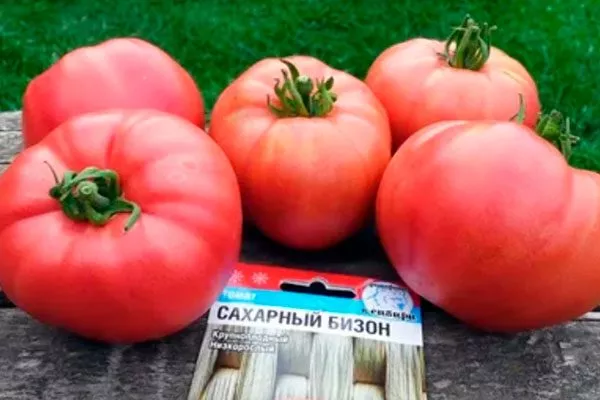
When purchasing Sugar Bison seeds, it's important to ensure the name is identical—there are varieties of Bison with different characteristics, but not the flavor sought by gardeners. Breeders have developed several unique Bison tomato varieties, including:
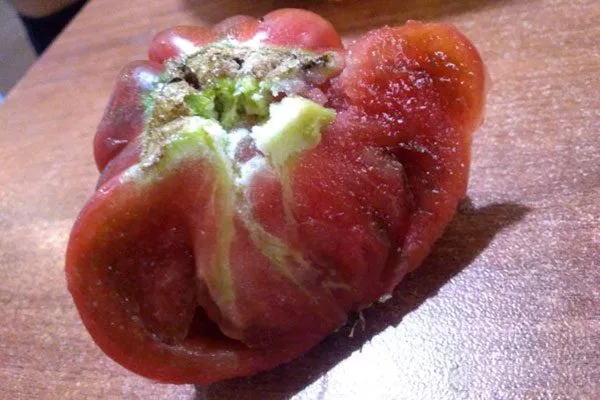
- Black bison. This tomato variety has a round, slightly flattened appearance with slight ridges along the edges. Each fruit weighs between 250 and 300 grams. The fruit is a deep purple color with a slight purple tint.
The tomatoes have a vibrant flavor and a lingering fruity aroma. They are ideal for eating raw, but are not recommended for pickling due to their tendency to crack.

- Yellow bison. Tomatoes of this variety are distinguished by rich, juicy flesh and an excellent flavor. The fruits are also rounded with noticeable ridges along the edges, weighing between 300 and 500 g. The color is golden. Yellow bison tomatoes have a small number of seeds inside and are ideal for salads and various sauces.
- Orange Bison. Tomatoes of this variety are striking in their bright orange color and weigh 800-850 g each. They are round in shape with slight ribbing along the sides. Their sweet flavor makes them ideal for making sauces.
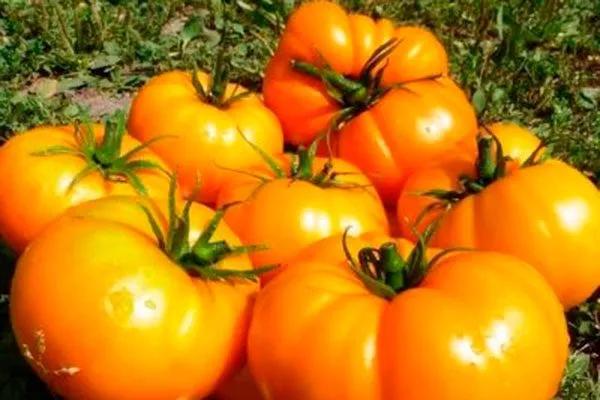
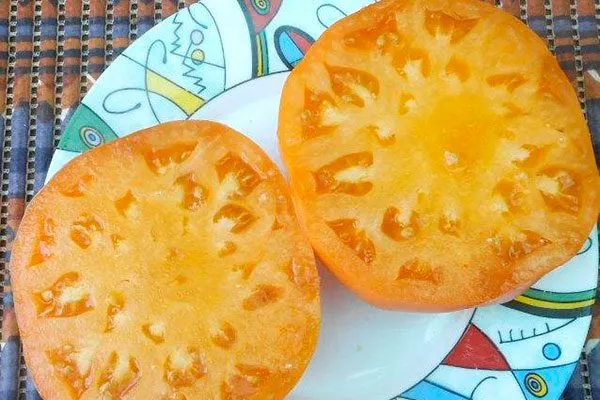
Despite the differences in color, the basic characteristics of these tomatoes remain similar.
Large-fruited indeterminate varieties that are similar in their characteristics to Sugar Bison include the following:
- Abakan pink;
- Bull's forehead;
- Bull's heart;
- St. Andrew's surprise;
- Budenovka;
- Dula;
- Mazarin;
- Raspberry giant.
Despite similar ripening times and fruit weights, the Sugar Bison variety has its own unique advantages and disadvantages.
Description of the bush and fruits
This variety continues to grow continuously, with no defined limit, as it belongs to the indeterminate group. The plant reaches 180-200 cm in height and is adorned with long, deep green leaves. To prevent the Sugar Bison from breaking under the weight of its fruit, it must be trained and secured to a support structure.
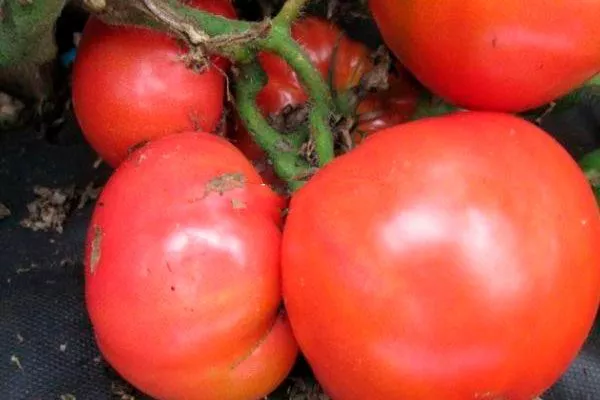
Varietal characteristics:
- The first cluster of fruits appears after the seventh leaf has formed. Subsequent clusters grow at intervals of one or two nodes, which is typical for determinate tomato varieties. A single cluster can contain up to five large tomatoes.
- This variety is distinguished by its uniformly sized fruit, which ripens evenly throughout the entire plant. The average fruit weight is 200-350 g, with specimens weighing as much as 500-600 g.
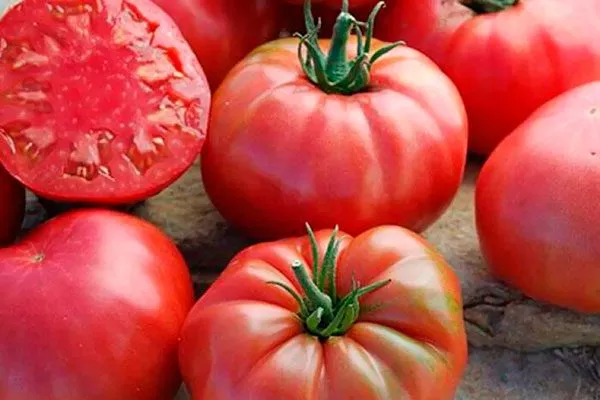
- The fruits are sweet, fleshy, and contain a small number of seeds. Their shape resembles a flattened cone, but can vary depending on environmental conditions.
- The tomatoes are pinkish-reddish in color, with smooth, ribbed skin. They contain 6-12 seed chambers.
The fruits of this variety are formed in clusters, which gives the gardener a choice:
- leave all the fruits on the bunch, resulting in medium-sized ones;
- reduce their number to obtain larger tomatoes.
Main characteristics and history
This tomato variety is an indeterminate, mid-season variety, so the bush requires support, staking, shaping, and pinching, as it grows without restraint. It has increased resistance to viruses, pathogenic fungi, and many pests.
Ripening and fruiting, productivity
The Sugar Bison variety is characterized by large fruits and a relatively short growing season—just 100-110 days from the emergence of the first shoots to the start of ripening. If all planting conditions are met, the first harvest can be collected as early as late July.
Performance Features:
- One bush can produce up to 7 kg of high-quality tomatoes per season;
- If you follow the recommended planting pattern, placing no more than 2-3 plants per square meter, you can get up to 20 kg of delicious tomatoes.
The harvest quantity directly depends on proper planting, care, watering, and fertilization practices. If done correctly, the yield will exceed your expectations.
Scope of application
Tomatoes are firm, juicy, sweet, and have a pleasant aroma, making them an ideal ingredient for summer salads. The Sugar Bison variety is suitable for slicing, juicing, and other types of preserving, except for whole pickling and marinating, as their large size makes them difficult to fit into jars.
Vegetables have a long shelf life when handled carefully, but their skins may split during transportation. To avoid this, it is recommended to harvest the fruit before it reaches technical maturity.
Sowing seeds for seedlings
To successfully transplant seedlings into the ground, seeds must be planted 60-65 days in advance. In Russia, in temperate climates, for gardens under plastic or glass, this is done in early to mid-March, and for open-ground gardens, in late March or early April.
Seed preparation
The process of preparing seeds for planting involves seven key steps: sorting, heating, disinfecting, processing, soaking, freezing, and germination. Experienced gardeners begin this process a month before planting the seedbed:
- Sorting. The healthiest and largest seeds, free of voids and not felt empty, are selected. The remaining grains are discarded.
To do this, prepare a solution of 1-2 teaspoons of salt per 150-200 ml of water. Leave the seeds in this solution for 15-20 minutes, then discard those that have sunk to the bottom of the glass. - Warming up. A cotton bag or envelope is formed into which the seeds are placed. It is then hung near a central heating radiator. The process takes two to three weeks. If you need to do it quickly, the seeds can be laid on a cotton cloth or cardboard and placed on the radiator for 1.5 to 2 days.
- Disinfection. Prepare a potassium permanganate solution by adding 1 g of potassium permanganate to 100 ml of water. It's important to measure accurately, otherwise the seeds may be damaged or not processed properly.
A scale is used for this, but if you don't have one, you can measure out the potassium permanganate using a teaspoon, which holds 6 g of the substance, which is enough for 600 ml of water. The seeds are left in the solution for 20 minutes, after which they are thoroughly rinsed under running water. - Processing. To do this, the seeds are left in water at a temperature of 26 to 30 degrees Celsius for 15 to 18 hours, stirring occasionally every hour. A useful addition to this process is the use of an aquarium air pump to provide the seeds with oxygen.
- The next step is soaking the seeds. This can be done in warm water or special growth-stimulating solutions. Popular products for this purpose in Russia include Zircon, Epin, and Immunocytophyte.
- Hardening of seeds. This involves wrapping the seeds in cotton cloth and cling film, after which they are placed in a low temperature environment, ranging from -2 to +3 degrees Celsius. Then, every eight hours, they are returned to a warmer place with a temperature of 21 to +25 degrees Celsius. This cycle is repeated 5-6 times.
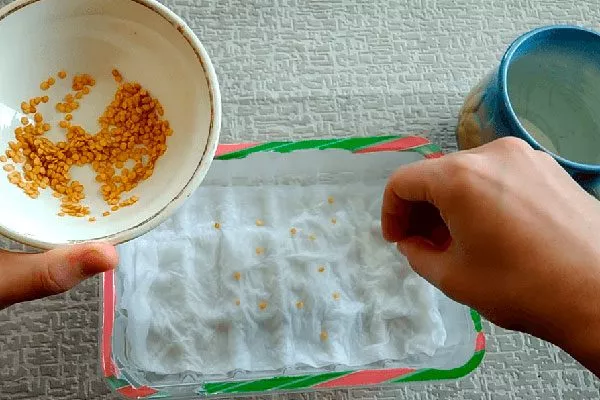
- Germination. The seeds are placed on a cotton cloth or gauze. This cloth is placed in a flat container filled with water. It must be constantly moistened until embryos 2-3 mm long appear on the seeds. The water used for moistening should be heated to 26 to 30 degrees Celsius.
Container and soil
In the store you can find a wide range of containers for growing seedlings:
- paper containers;
- peat pots;
- peat tablets;
- PVC and peat cassettes.
Some gardeners prefer to use elements made from scrap materials:
- cups from yogurts, sour cream, cottage cheese products;
- cut foil packaging for juices and dairy products;
- plastic bottles and glasses;
- cups from old newspapers;
- egg cartons.
To make a glass from newspaper, take a glass bottle and wrap it in a 15 x 30 cm strip of newspaper. Leave a little paper at the bottom for folding the bottom. Secure the edge of the paper with paper clips, glue, or tape.
For growing sugar bison, it is recommended to use a universal tomato soil containing humus, peat, and river sand. To prepare the substrate at home, mix garden soil, peat moss with a pH of 6.5, river sand, humus, or sifted mature compost in a ratio of 1:2:0.5:1.
Sowing
To begin planting, fill the containers with the prepared substrate. Then, be sure to moisten the soil with a hot solution of potassium permanganate. Next, make holes in the soil 12-15 mm deep and carefully place the seeds, spacing them 4-5 cm apart.
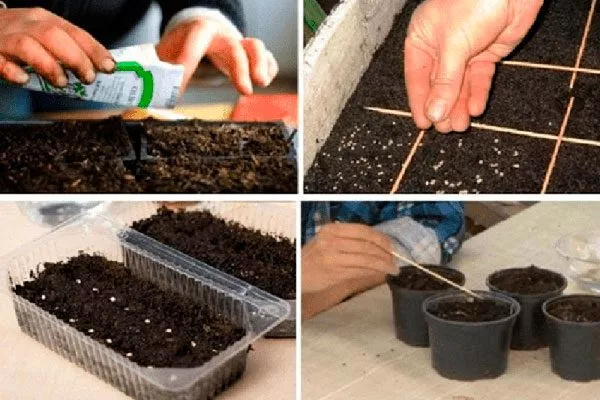
After planting, sprinkle soil or peat over the seeds and moisten with a spray bottle. Then cover the container with a plastic bag. For successful seed germination, move the container with the seedlings to a room with a temperature of 23-24°C.
Growing and care
When the first green shoots emerge from the soil, the seedling containers are opened. Once the plants have two true leaves (cotyledons), they are pricked out and transplanted into individual containers. The cotyledons should be level with the soil.
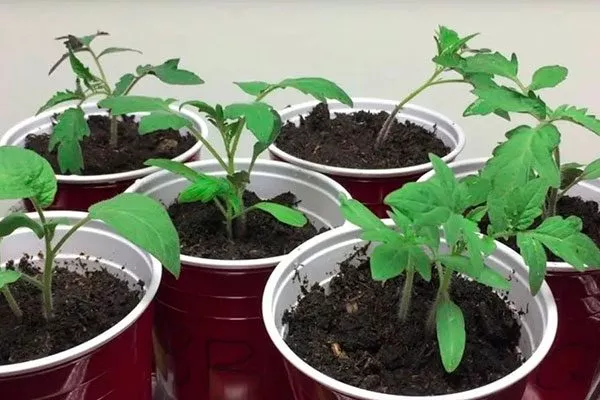
What else to do:
- At this stage, tomato fertilization begins: specialized mineral preparations are added to the seedling soil mixture. Two weeks after transplanting, a complex fertilizer is applied.
- Water plants using a spoon or syringe, gently pouring the water into the soil around the roots when it begins to dry out. To prevent fungal diseases in weaker plants, avoid getting water on the stems and leaves.
- The seedling hardening process begins 40-45 days after sowing. Initially, the plants are taken outside for 2-4 hours. Two days before transplanting outdoors, they are left outside overnight.
Planting seedlings in a permanent location
60-65 days after the first green shoots emerge, tomato seedlings are transplanted to the garden beds. Creating favorable temperature conditions (16°C during the day and 10°C at night) is key to successful growth. The optimal period for transplanting is from May 25 to June 10.
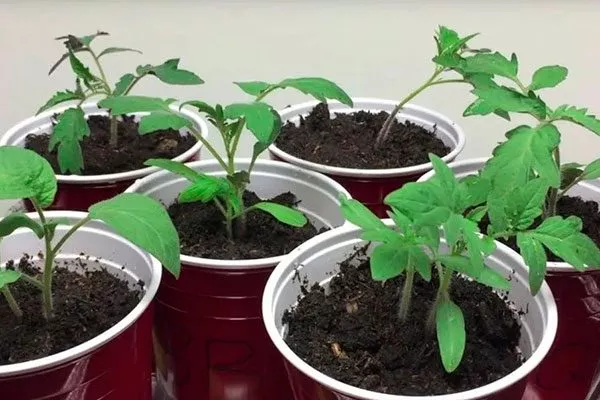
Rules:
- Tomatoes are planted in rows with an interval of 50x60 cm, taking into account 3-4 bushes per 1 sq. m;
- Before work, pre-moisten the seedlings and dig up the area;
- The best neighbors for tomatoes are cucumbers, zucchini, dill and carrots, while you should avoid planting them in areas where tomatoes, potatoes or peppers were previously grown, as these crops are susceptible to similar diseases and pests;
- the soil should be treated with boiling water or a solution of potassium permanganate to prevent infections;
- 4-5 days after planting, young bushes need to be tied up for the first time.
How to care?
Sugar bison have moderate water requirements, so it's important not to overwater the plants to prevent root rot. For garden care, use warm, settled water, carefully watering only the root zones and avoiding wetness on the stems and leaves.
To protect leaves from sunburn, water tomatoes in the evening or morning. Other measures:
- After watering, cover the soil around the plants with a protective natural mulch, remove weeds, and loosen the soil. Once the first buds appear on the tomatoes, reduce soil care and hilling to once or twice every two weeks.
- Depending on the stage of plant development, plants require a variety of fertilizers: nitrogen fertilizers are applied to stimulate the growth of green parts and inflorescences, while phosphorus and potassium fertilizers are applied to promote fruit formation. Fertilizing is done at two-week intervals.
- Sugar Buffalo bushes are characterized by their immense growth, so they are pinched back when they reach a height of 150-170 cm to allow the fruit tips to ripen before the onset of cold weather. The bush is trained to a single main stem, removing all other shoots and side shoots.
Some gardeners prefer to form two stems, which is also correct. - To keep tall bushes upright and prevent them from being damaged by the weight of the vegetables, they are tied up regularly.
The nuances of growing in open ground and in a greenhouse
This tomato variety is unique in that it is recommended to be planted only in warm climates. In conditions where spring frosts are frequent (as is typical in central and northern Russia), freezing temperatures can kill both young seedlings and mature plants.
In these climate zones, sugar bison are raised in heated greenhouses, which can be made of glass, polyethylene, or polycarbonate.
When cultivating Sugar Bison in greenhouse conditions, the following must be taken into account:
- seedlings should be planted in rows along the greenhouse to ensure maximum illumination of the plants;
- the distance between plants should be a maximum of 50 cm, and between rows – 15-20 cm more;
- It is advisable to place a couple of rows in the center and one on the sides to make it easier to care for each bush.
There are also certain recommendations for growing Sugar Bison in open ground conditions:
- the distance between bushes should be at least 60 cm, and between rows – at least 80 cm for ease of maintenance;
- rapid evaporation of moisture must not be allowed.
Add a few drops of iodine to your water to improve the taste and increase the size of your tomatoes.
Features of cultivation and possible difficulties
Beginner gardeners may encounter some challenges when growing Sugar Bison tomatoes. Below are some key issues and solutions:
- If the plant develops an excess of foliage, the fruits will grow small and will not ripen for a long time - to avoid this, remove the lower leaves as the tomatoes grow;
- Tomatoes do not tolerate excessively wet conditions, but require regular watering. To reduce the amount of watering without harming the plant, you can mulch the soil with peat, dry straw or grass;
- If tomatoes ripen with a smaller weight than the manufacturer indicates, it is recommended to remove excess ovaries, leaving up to 3-4 inflorescences on one brush.
Pest and disease control
Despite the lack of information on the packaging about the ability of Sugar Bison tomatoes to resist diseases and harmful pests, experienced farmers still resort to preventative measures to protect their crops.
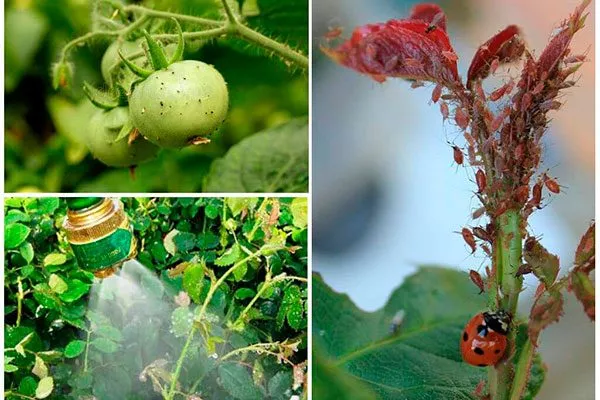
Fungal diseases often occur in tomatoes in greenhouses. To prevent them, gardeners thoroughly ventilate their greenhouses and use protective measures such as:
- Fitosporin;
- Ecosil;
- Quadris;
- Ridomil Gold.
If brown rot is detected on tomatoes, the affected vegetables are removed, the amount of nitrogen fertilizers is reduced, and the intensity of watering is reduced.
Tomato crops are susceptible to pests such as aphids and thrips. Zubr is used to control them. Prestige is effective against Colorado potato beetles, and Confidor is effective against whiteflies.
Pros and cons
A beautiful garden bed is an undeniable plus. The bushes of this variety are tall and massive. With the right approach to training and support, they not only decorate the space but also whet the appetite. To briefly describe the Sugar Bison variety, it's worth mentioning its strengths and weaknesses.
Reviews
The Sugar Bison variety recently appeared on the market and quickly gained popularity among gardeners. These tomatoes are characterized by large fruits, high productivity, and excellent flavor. They are undemanding in terms of moisture and tolerate water shortages better than excess. The fruits are excellent both fresh and for canning.