
The Rugantino F1 tomato is a late-ripening Dutch salad hybrid that attracts gardeners with its excellent flavor and unusually shaped fruits. This tall, large-fruited tomato is versatile and can be grown both in greenhouses and outdoors.
History of the variety's creation
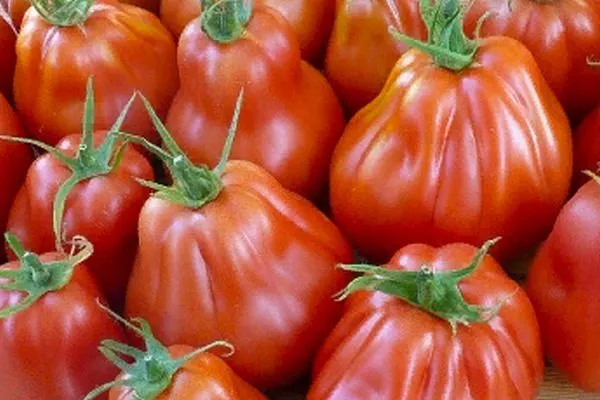
The Rugantino hybrid belongs to the Cor de Boeuf (Bull's Heart) tomato variety. It was developed in 2015 by breeders at the Dutch seed company Rik Zwaan Holding.
Description of the Rugantino tomato
The Rugantino hybrid grows tall and vigorous bushes, belonging to the indeterminate type of plant. They can reach a height of 1.5-2 meters. They have short internodes and medium-sized green leaves.
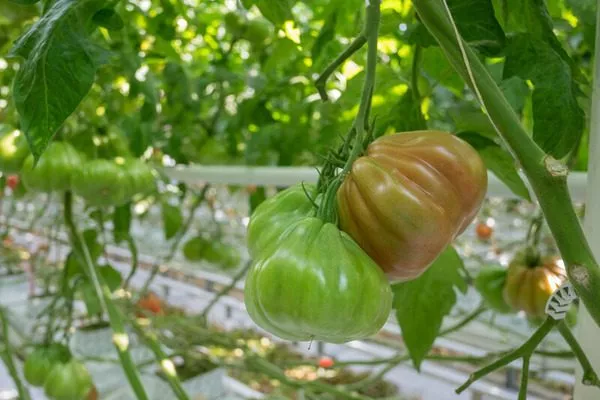
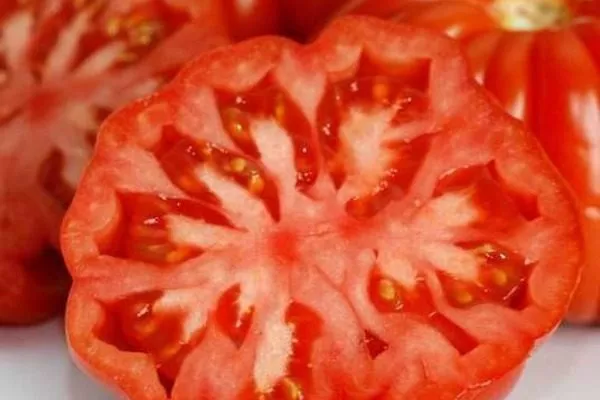
The Rugantino F1 tomato produces large fruits with 5-6 seed nests. They ripen from the inside while the outside is still immature.
Brief description of fruits:
- Color of unripe fruits: green.
- Color of ripe fruits: red.
- Form: pear-shaped, medium-ribbed.
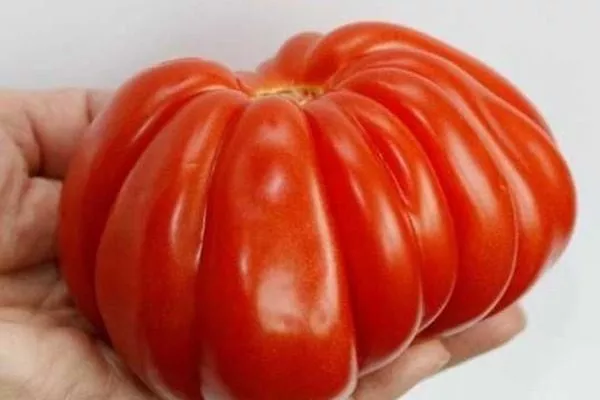
- Average weight: 150-200 g
- Pulp: medium density.
- Pulp color: red.
Characteristics
The Rugantino hybrid has excellent agronomic characteristics, allowing it to be grown in a wide variety of regions of the country.
Main characteristics:
- Ripening period: late. It takes approximately 125–130 days from germination to the beginning of fruiting, and 80–85 days from planting 45–50-day-old seedlings.
- The hybrid's yield depends on soil type. In greenhouse conditions, up to 20 kg of fruit can be obtained per square meter, while in open ground, up to 18 kg can be obtained.
- Cold tolerance: high. The hybrid produces fruit for a long time, despite autumn chills, when most varieties would wilt and wither.
- Disease resistance: high. The hybrid is virtually immune to mosaic virus, brown and gray leaf spot, fusarium wilt, and verticillium wilt.
Taste and use of fruits
Ripe Rugantino tomatoes have a sweet, slightly tart flavor. This versatile tomato is used in salads, sauces, first and second courses, and for canning.
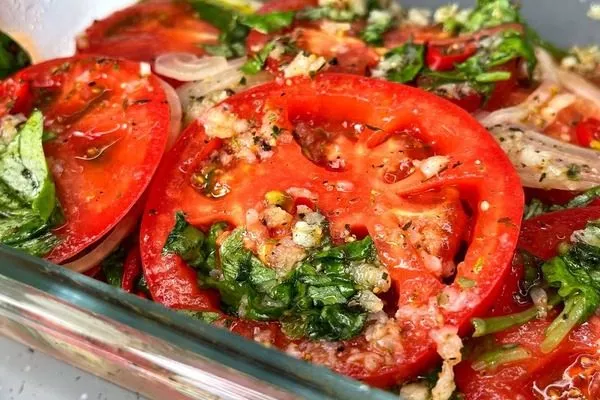
You can find out which varieties and hybrids of tomatoes domestic vegetable growers recognize as the sweetest and most delicious. Here.
Pros and cons
The Rugantino hybrid has its advantages, but also some disadvantages. It's a good idea to learn about all the pros and cons of this Dutch tomato before planting it in your garden.
Landing
The Rugantino hybrid is grown using seedlings. This allows for an earlier harvest, which is especially important for late-ripening varieties, as their harvest has time to ripen before the onset of cold weather.
Seed preparation
The Rugantino tomato is a hybrid, so you need to buy its seeds. Picking your own isn't suitable for planting, as it won't retain the varietal characteristics. Check the seed packaging for information about the treatment they've undergone. Planting material is usually already treated, so disinfection isn't necessary.
Hybrid seeds may require:
- Checking for germination. To ensure seed quality and improve germination, use a 1% saline solution. The seeds are immersed in it and left for 10 minutes. Any seeds that float to the top are discarded.
- Treatment with growth stimulator. You can use solutions such as Epin or Zircon—soak seeds in these solutions to increase germination and viability. Folk remedies such as honey, wood ash, or boric acid are also suitable for this purpose.
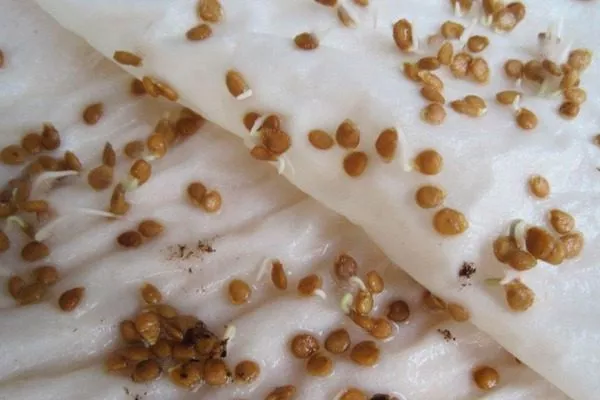
- Soaking and sprouting. Tomato seeds are placed on cotton pads soaked in warm water and covered with the pads. The sprouted seeds are kept in a warm room (25°C); they will germinate in approximately 2-3 days. The sprouts should not grow longer than 2 mm, otherwise they risk breaking off.
Selecting a site
The Rugantino tomato was originally bred for greenhouses and plastic shelters, but in southern regions, where the climate is milder and more favorable for the Dutch hybrid, it is also successfully grown outdoors. To ensure the Rugantino hybrid thrives and produces fruit, it needs to be planted in a suitable location.
Features of choosing a site for planting the Rugantino F1 tomato:
- The location should be well-lit, preferably on a south- or southwest-facing slope—they receive the most light. Shaded areas are absolutely unsuitable, and tomatoes should not be planted near walls, trees, or buildings. Tomatoes should receive at least 6-8 hours of direct sunlight per day.
- The site should be free of drafts and gusty winds. Hedges, staking, and barriers made of agrofibre and netting can be used to protect against strong winds.
- Ventilation and air circulation are essential, otherwise the bushes may be susceptible to fungal diseases. A moderate breeze not only improves ventilation but also pollination, which positively impacts plant growth and development.
- The best soils for the Rugantino tomato are light, loose, and well-drained, enriched with organic matter. Loams and black soils are ideal. The soil should be slightly acidic or neutral (pH 6 to 7).
- Places with stagnant water, swampy areas, and lowlands where rainwater accumulates are contraindicated.
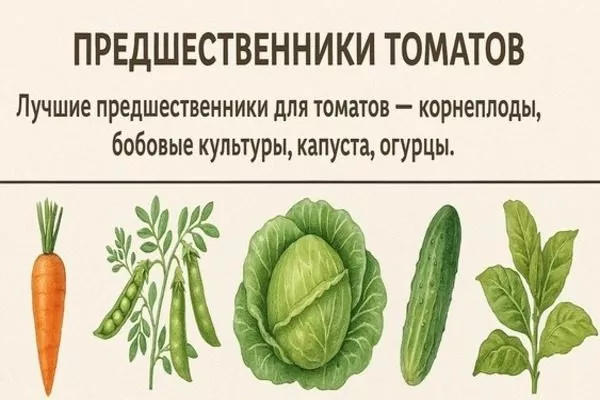
- The best predecessors for tomatoes are root vegetables, legumes, cabbage, and cucumbers. Poor predecessors include potatoes, eggplants, peppers, tobacco, and sunflowers. Tomatoes should not be planted in the same location for at least 3-4 years.
Soil preparation
The soil for planting is prepared in the fall by digging it deeply, adding organic fertilizers (humus or compost) at a rate of 5-7 kg per square meter. If the soil is low in fertility, it is recommended to add mineral fertilizers in the spring: 50 g of superphosphate or 25 g of potassium salt per square meter.
Fertilizers are applied at least a month before planting. It's important that the minerals dissolve in the soil and become easily absorbed by the plants by the time of planting.
If the soil has other qualitative deficiencies besides low fertility, they can be corrected during digging:
- To reduce acidity, add slaked lime, dolomite flour, or wood ash to the soil at a rate of approximately 300-500 ml per square meter. High-moor peat is added to slightly acidic soils.
- For dense, heavy, and clayey soils, add river sand for loosening—10 kg per square meter. For sandy soils, add the same amount of clay.
Preparing containers and soil mixture
To grow strong and healthy seedlings, you need to prepare suitable containers for growing and fill them with nutritious substrate.
Features of preparing planting containers and soil:
- For planting, use any suitable container—large containers or individual plastic cups. Before planting, wash the container with hot water and soap, then disinfect it with potassium permanganate or 3% hydrogen peroxide. This is especially important if the planting containers have already been used for growing seedlings.
- It's best to grow seedlings in peat-humus pots, as they are planted in the soil along with the seedlings—this helps avoid stress during transplantation.
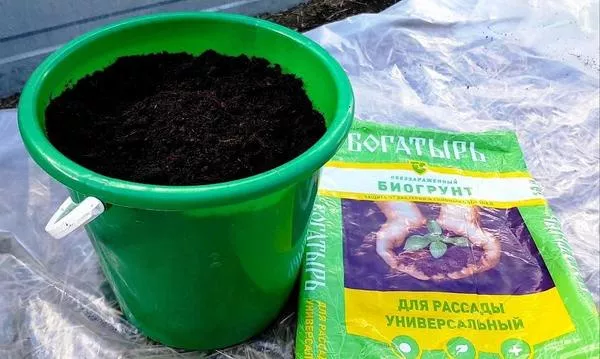
- If using a regular plastic container, fill it with a store-bought universal potting soil or a homemade potting mix. The potting mix can be made from turf, humus, and river sand (2:1:1). To increase the nutritional value and reduce acidity, you can add a little wood ash to the mix.
- Don't use regular garden soil—it may contain pathogens and pest larvae. The soil mixture must be disinfected, baked in the oven, or frozen. Fill the pots with soil to a depth of 2 cm (0.7 in) above the rim for watering and adding soil.
Planting pots and containers must have drainage holes to allow excess moisture to drain. Otherwise, waterlogging will occur and the seedlings' roots will rot.
Sowing seedlings
Rugantino hybrid seedlings grow for approximately 55-60 days. They are sown from late March to late April—the exact timing depends on the region's climate.
Features of sowing tomato seedlings Rugantino F1:
- Seeds are sown in leveled and moistened soil to a depth of 1-2 cm. The sowing pattern depends on the type of planting container.
- If sowing in individual containers, place 2-3 seeds in each, spaced 2 cm apart. Once seedlings emerge, leave only the strongest sprout, carefully removing any excess.
- In large containers, make rows at intervals of 4 cm. Tomato seeds are placed in them at a distance of 2-3 cm from each other.
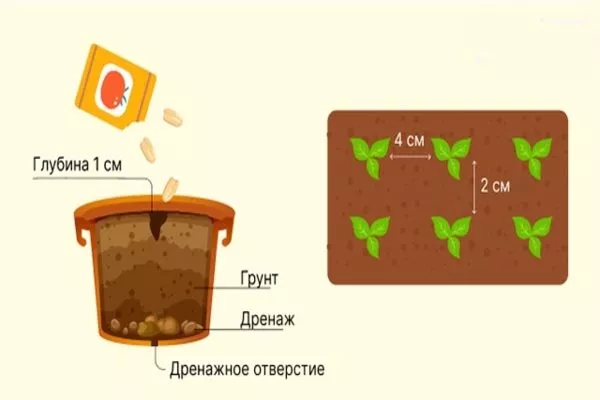
Seeds sown in a common container will need to be transplanted after a couple of weeks. Seedlings in individual pots do not need to be pricked out unless they need to be transplanted into larger pots.
The planted containers are covered with transparent plastic film to create optimal conditions for the seedlings. The cover is opened daily, ventilated, and watered as needed. As soon as the seedlings begin to emerge, the film is removed immediately to prevent them from overheating.
Caring for seedlings
To grow strong and viable seedlings, you need to pay attention to them every day. One mistake can cause them to become diseased, weaken, or die.
Features of seedling care:
- Seedlings require 24-hour lighting during the first week, so grow lights are added in addition to natural light. As the seedlings grow, daylight hours are gradually reduced, initially to 16-18 hours, and from the age of one month, 12-14 hours is sufficient.
- Immediately after removing the film, the temperature is sharply reduced—from 22°C to 25°C to 15°C to 16°C—to slow the seedlings' growth. Otherwise, the seedlings will become very elongated.
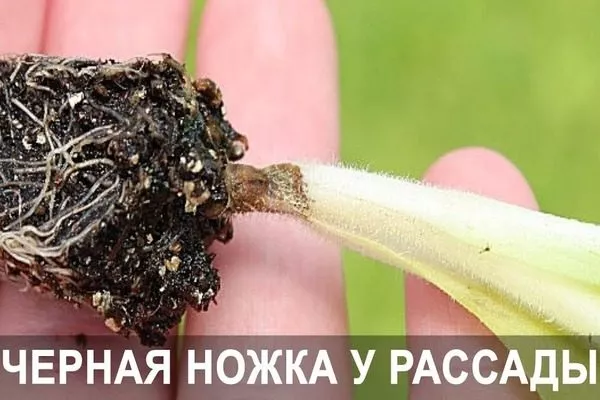
- Before transplanting, during the first two weeks, water the plants sparingly, about once a week. Overwatering at this stage is very dangerous, as it increases the risk of fungal infections, especially blackleg, which is dangerous for young tomatoes.

The best time to water is morning, evening, or on a cloudy day when there is no bright sunlight. Apply water at the roots, avoiding the leaves and stems. The optimal soil moisture level is 85-90%. Allow the soil to dry to a depth of 2-3 cm before watering. Sprinkling 2-3 times a week is recommended. - The first feeding is carried out after 2-3 weeks or after transplanting, if done. A nitrogen-rich complex mineral fertilizer is applied to the seedlings. All subsequent feedings are carried out at 2-3 week intervals. Fertilizer is applied only after watering. You can find more detailed information on fertilizing when growing tomato seedlings here. Here.
Picking
Pricking out is done to improve the seedlings' growing conditions—they receive more space, nutrition, light, and air. Plants are transplanted when they have 2–3 true leaves (not cotyledons). Tomatoes are usually pricked out two weeks after germination.
When transplanting, the central root can be pinched to stimulate branching of lateral roots, which will help strengthen the plants. During transplanting, the weakest seedlings are also discarded from the container.
Transplanting
Rugantino F1 seedlings are transplanted into the ground when they have 8-10 true (non-cotyledon) leaves and one flower cluster. Planting occurs when stable warmth sets in and there is no longer a risk of frost. In open ground, the soil should warm to at least 14 to 15°C. The air temperature should reach 19 to 22°C.
Features of planting Rugantino tomato seedlings:
- The seedlings are watered generously about a day before so that the soil is completely wet.
- It is recommended to plant seedlings in the morning, evening, in cloudy weather or after the daytime heat has subsided, so that young plants do not get burned.
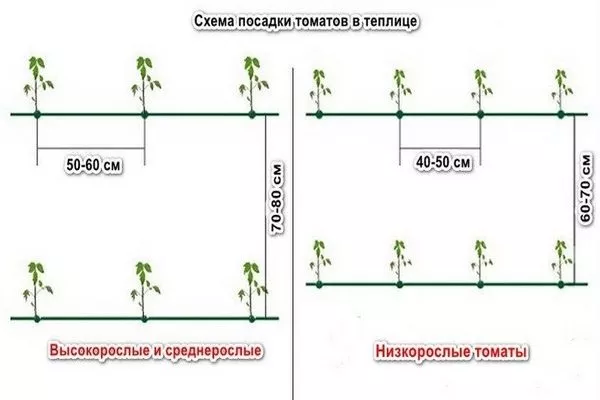
- Prepare a 10 cm deep hole for planting. If the seedlings have outgrown the soil, make the holes deeper. The distance between adjacent holes (plants) is 50-60 cm, and between rows, 70-80 cm.
- Place 50–60 g of humus and 10–12 g of wood ash into the holes.
- Complex fertilizers - ammophos, nitroammophos, nitrophos,
- One to one and a half hours before planting, add 1 to 2 liters of water to each hole. Once the water has been absorbed, transplant the seedlings into the holes using the transshipment method, taking care not to damage the roots.
- The free space in the hole is filled with soil and compacted, forming a small depression around the stem.
- Planted tomatoes are watered with warm, settled water. Once the water has soaked in, the soil is mulched with peat, humus, straw, or hay—mulch slows water evaporation and weed growth.
Care
The yield of the Rugantino hybrid tomato, as well as the quantity and quality of its fruit, largely depends on regular care. To grow a good harvest, the tomato requires watering, loosening, fertilizing, staking, and shaping.
Watering and loosening
The hybrid requires infrequent but abundant watering—once a week. Watering frequency may vary depending on the weather and soil conditions. The hotter the weather, the more frequently the tomatoes need to be watered. Water should be applied at the roots, ensuring no drips fall on the above-ground parts of the plants.
Tomatoes can be loosened 2-3 weeks after planting the seedlings in their permanent location. Loosening should be done to a depth of 4-6 cm. Loosening deeper can damage the roots. The frequency of loosening depends on the soil characteristics. Dense loam soils require more frequent loosening, while light sandy loam soils require less frequent loosening. Loosening is done when the soil has dried out slightly after watering.
Top dressing
To feed the Rugantino F1 tomato, use mineral and organic fertilizers alternately.
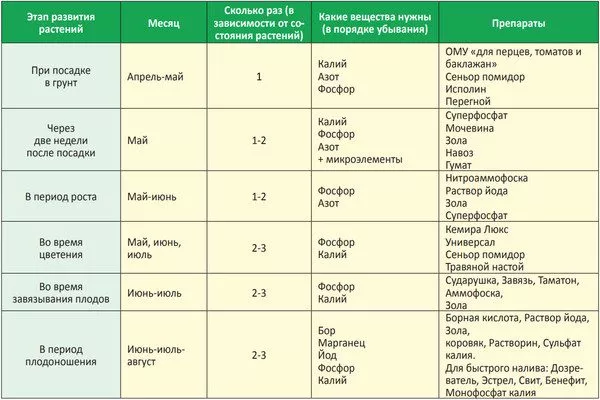
Fertilizing is carried out during certain periods of vegetation:
- A week after planting, 40-50 g of nitroammophoska is diluted in 10 liters of water.
- During the period of fruit setting and filling: potassium sulfate (40 g per 10 l of water), potassium monophosphate (15 g per 10 l of water), superphosphate (30 g per 10 l of water).
Garter and shaping
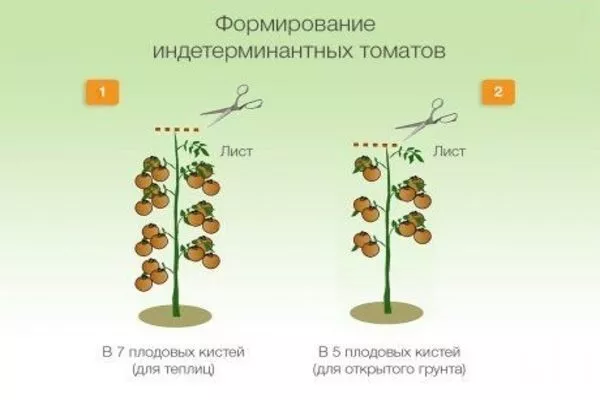
Rugantino F1 tomato bushes require support, otherwise they may collapse under the weight of the fruit. Tomatoes are tied to supports with soft materials such as fabric strips, twine, or special clips. Wire or fishing line are not suitable for this purpose, as they can damage the delicate tomato stems.
Rugantino tomatoes are trained into single or multiple (2-3) stems and regularly pinched—removing side shoots growing in the leaf axils. This procedure prevents bushes from becoming dense and slowing fruiting.
Pest and disease control
The Rugantino hybrid, like all other tomatoes, can be susceptible to various infections due to unfavorable growing conditions, poor care, and poor agricultural practices. This tomato is most often affected by late blight and brown spot. Various fungicides are used to combat these diseases, such as Ridomil Gold.
Among the pests, aphids and spider mites pose the greatest threat to the hybrid, and are controlled with various insecticides. Biotlin, Akarin, Iskra, Komandor, Aktara, and others are used against aphids, while Iskra-Bio, Actellic, and Kleschevit are used against spider mites.
Harvesting and storage
Rugantino tomatoes are harvested as they ripen. They are picked when they are brown. Tomatoes picked at the milky stage ripen perfectly at home and eventually become as delicious as ripe tomatoes fresh from the vine.
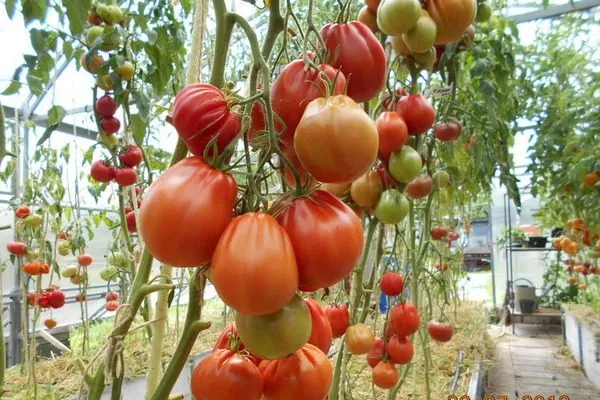
Store Rugantino tomatoes in a cool place, stacked in low crates. They have a shelf life of two months or more.
Reviews
The Rugantino tomato is an interesting Dutch hybrid that consistently attracts the attention of gardeners and casual tomato lovers. The fruits of this hybrid resemble small pumpkins due to their ribbed texture, ripen unusually, and store well—an excellent choice for those who enjoy growing new and unusual varieties.