
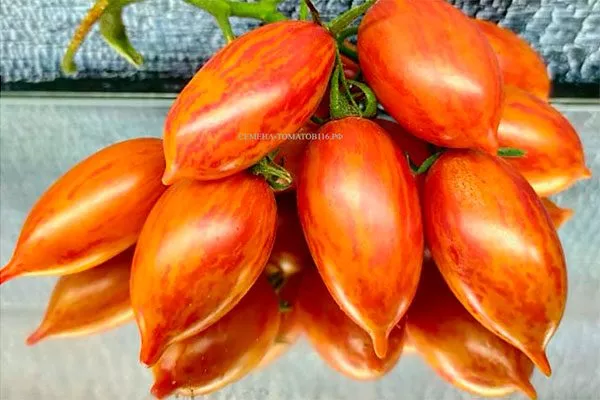
The Pink Tiger tomato is a worthy representative of American selection, attracting gardeners with its unique appearance and taste. This variety produces plum-shaped fruits, small in size, with an unusual variegated coloring. It is this "tiger" pattern that gives the variety its vibrant and unusual name.
Selection
The Pink Tiger tomato was developed by American breeder Fred Hempel. He has been breeding and growing tomatoes since 2002, first on his own plot and then on his family farm, Green Bee Farm (Sunol, California). Another name (synonym): Pink Tiger.
Description of the plant and fruits
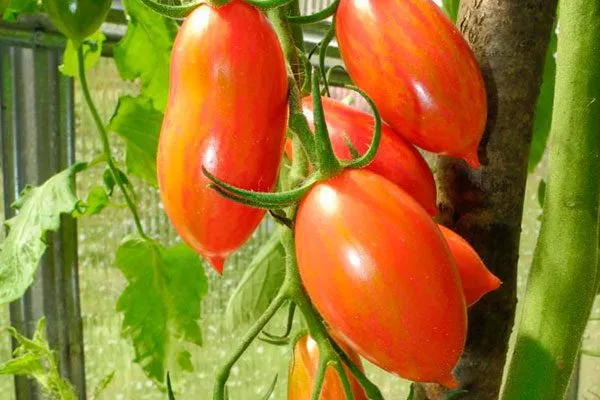
The Pink Tiger variety grows tall, indeterminate bushes. They grow without limits, with strong stems and abundant foliage. The bushes reach a height of 1.5-1.8 m. The leaves are rich green and standard in shape.
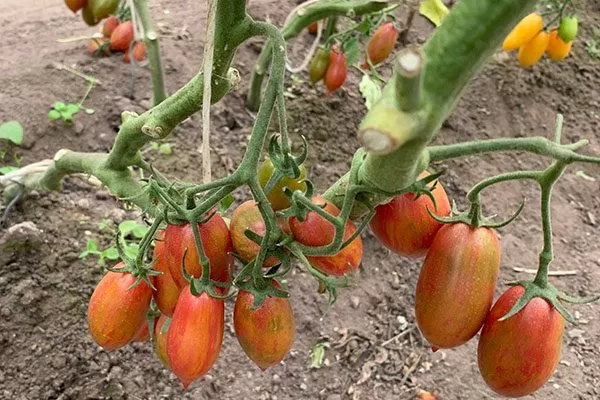
Brief description of fruits:
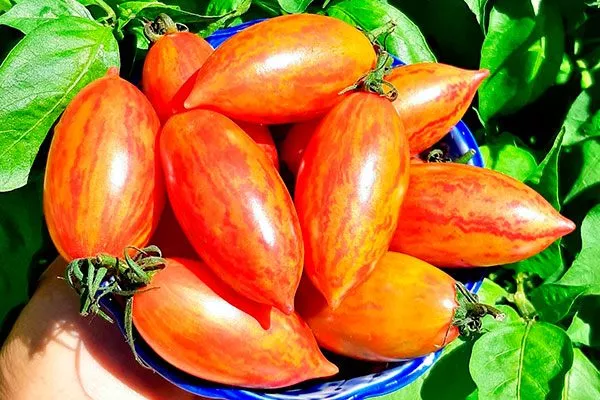
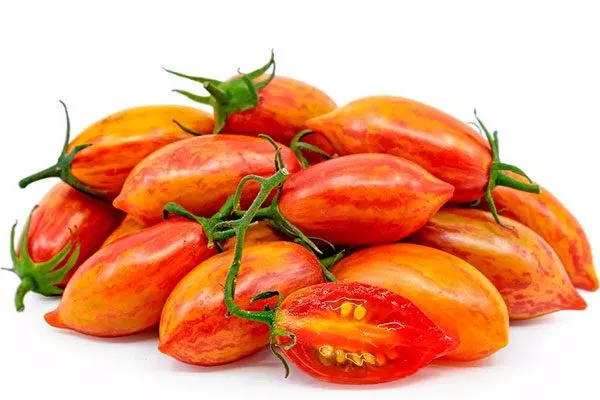
- Color of ripe fruit: pink with gold stripes.
- Form: elongated and pointed.
- Pulp: juicy, crispy.
- Skin: dense, glossy.
- Weight: 20-30 g.
Taste and purpose
The fruit's flesh is sweet, with a slight tartness. These small tomatoes are versatile, delicious fresh and in salads, and are also ideal for whole-fruit canning and a variety of dishes.
Characteristics
The Pink Tiger tomato is an ultra-early ripening variety. It takes just 70 days from germination to ripening. This variety boasts good yields, yielding 6.5 to 7.5 kg per square meter with proper care.
Pros and cons
The Pink Tiger variety is immediately appealing to tomato lovers. But before planting it in your garden, carefully consider all the advantages and disadvantages of this American tomato.
Landing features
The tall Pink Tiger variety is recommended for growing using seedlings. This method is most effective when used with indeterminate varieties and allows for an extremely early harvest.
Planting containers
To grow seedlings, use any suitable container, plastic or ceramic. Cassettes and metal containers, such as buckets, basins, etc., are also suitable. Peat pots are also suitable, as they can be placed in the planting holes along with the tomato seedlings.
Planting containers must have drainage holes in the bottom; otherwise, the soil will become waterlogged, and the seedlings will become infected with an incurable fungal disease called blackleg. New containers should be thoroughly washed with hot water before filling with soil, and old ones should be disinfected, for example, with a solution of potassium permanganate.
Seeds
Pre-sowing treatment is required to improve seed germination. If some seeds fail to germinate, time will be wasted, and the seed container will be wasted. To discard the non-viable seeds, all seeds are placed in a salt solution. After 10 minutes, the non-viable seeds will rise to the top.
- ✓ Seed germination testing in a saline solution should be carried out at a concentration of 5%.
- ✓ To disinfect seeds not treated by the manufacturer, use a 1% solution of potassium permanganate for 20 minutes.
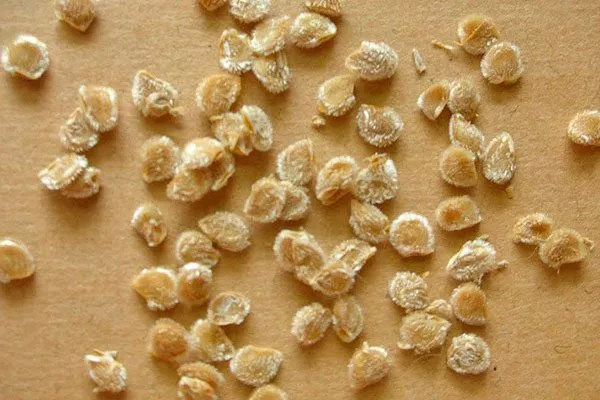
After soaking in the saline solution, the seeds should be thoroughly rinsed with warm water. If the manufacturer treated the seeds with disinfectant solutions, all that's left to do is germinate them. If not, soak them in a weak solution of potassium permanganate. If potassium permanganate is unavailable, hydrogen peroxide can be substituted.
Soil mixture
The planting container (except for peat) is filled with soil. You can use a ready-made substrate for this purpose; special mixtures for tomato seedlings are available commercially. You can also prepare your own soil mixture. It's important to ensure it's not only nutritious and loose, but also has a neutral pH of 6-7.
- ✓ To neutralize soil acidity, use slaked lime at a rate of 500 g per 1 sq. m at a pH below 6.
- ✓ Adding wood ash to the soil mixture not only reduces acidity, but also enriches it with potassium.
There are many recipes for preparing potting soil. For example, you can mix one part sod with one part fine river sand, and add two parts peat. Leaf mold can be used instead of sod.
The intricacies of growing seedlings
Pink Tiger tomato seedlings are sown approximately 50 days before planting in the ground or greenhouse. Sowing times depend on climate conditions; in the south, tomatoes are sown as early as late February or early March, while in more northern regions, they are sown in March or April.
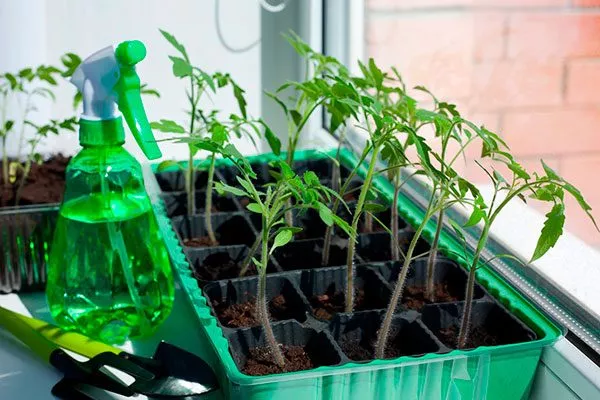
Features of growing seedlings:
- Moisten the soil in the planting containers and spread the seeds at intervals of 1.5-2 cm. You can make furrows in the container and sow the seeds in them. Maintain a 3-4 cm interval between rows. Plant two or three seeds per pot to ensure germination and select the best seedlings.
- The crops are covered with transparent film and placed in a room or greenhouse where the temperature is maintained at 24 to 25°C. They are aired daily and moistened with warm, settled water as needed.
Seedlings usually emerge within 4-6 days. As soon as this happens, the film is removed immediately. The temperature is lowered by about 10 degrees to prevent the seedlings from stretching, and after a week, the normal temperature is returned.
Features of seedling care:
- At first, seedlings don't have enough daylight, so artificial lighting, such as phytolamps, is needed. Even 24-hour supplemental lighting is recommended. Later, daylight hours are reduced to 18 hours, then to 12 hours.
- For the first 3-4 days, the seedlings are sprayed with warm water from a spray bottle. Once the seedlings are one week old, they are watered as usual—at the roots, using a watering can. Watering frequency is once every 5-7 days.
- Three weeks after germination, when the seedlings have developed 2-3 true leaves, transplant them into individual containers. The seedlings are watered first, carefully removed from the soil, and then pinched back by a third of the roots. If the seedlings were initially sown in individual containers, transplant them into larger containers.
- For seedling feeding, use complex fertilizers. No more than two applications are carried out during the growing season, after transplanting.
To ensure seedlings take root well and adapt quickly when transplanted outdoors, they need to be hardened off for two weeks. Seedlings are moved outdoors when the air temperature reaches 17–19°C.
How to choose a site?
The area where tomatoes will grow, whether outdoors or indoors, must be well-lit. Tomatoes don't thrive in shade. The planting site should also be free of waterlogging, drafts, waterlogging, and strong winds.
To ensure that tomatoes grow well and are disease-free, it's important to practice crop rotation. Tomatoes shouldn't be planted in the same spot two years in a row, and they also don't grow well in areas previously planted with nightshade crops like potatoes, peppers, and eggplant. Good precursor crops for tomatoes include root vegetables like radishes, turnips, beets, carrots, and the like, as well as all types of cabbage, onions, and garlic.
Soil preparation
The planting site is prepared in the fall. The soil in which tomatoes grow should be loose, nutritious, and neutral or slightly acidic.
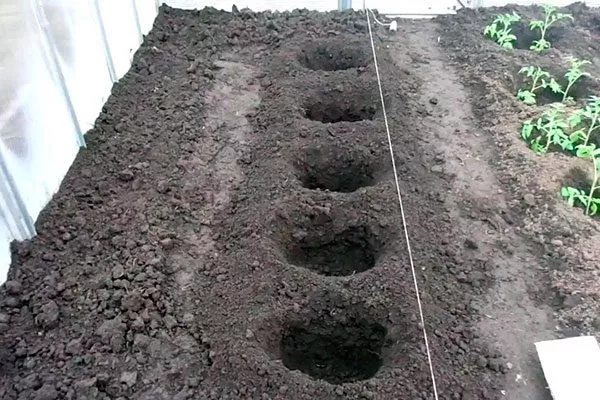
Features of soil preparation:
- In autumn, the area is cleared of plant debris.
- The soil is tested for acidity using test strips. If the values fall outside the pH range of 6-7, slaked lime is added to the soil at a rate of 500 g per square meter. If the acidity is very low, sulfur is added, for example, in the form of ammonium sulfate.
- When digging, be sure to add organic matter—rotted manure, compost, or humus. Mineral fertilizers, such as superphosphate or potassium sulfate, can also be added. The soil should be dug to the depth of a spade.
- If the soil is heavy, add a loosening agent, such as river sand. Peat and wood ash can also be added to improve the soil's moisture and air permeability.
In the spring, the dug and moistened soil is leveled with a rake and the beds are prepared for planting tomatoes.
Transplanting
Pink Tiger tomatoes should be planted no earlier than when the seedlings have 5-7 full leaves. Warm weather should also be established by the time of planting. Tomatoes are planted outdoors when daytime temperatures reach 18-20°C. The temperature should be stable, and the soil should also be warm to a depth of 20 cm.
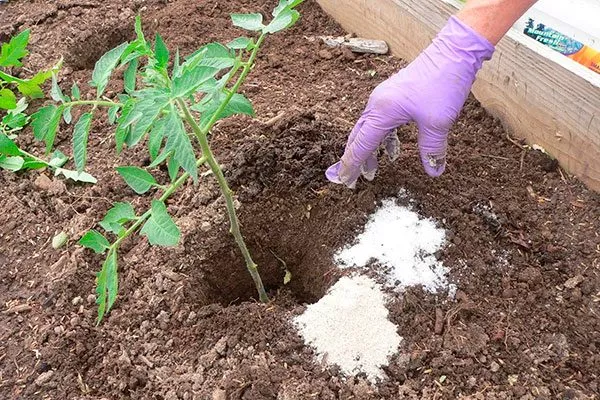
Features of planting Pink Tiger tomato seedlings:
- Planting holes or rows are dug—the choice depends on the gardener's preference. The optimal planting pattern is 60 x 60 cm.
- The holes are disinfected with a pale pink solution of potassium permanganate. Then, warm, settled water is poured into the hole. Once the water has been absorbed, the seedlings can be planted.
- Planting can be done using the transshipment method. Water the seedlings generously, then carefully shake them out of their pots along with the soil ball—this minimizes root damage.
- Place the plants vertically in the holes, deepen them to the cotyledon leaves, fill the empty space with soil, compact it, and water again. After the moisture has been absorbed, the soil can be mulched with sawdust, straw, hay, etc.
Care Features
The Pink Tiger variety requires standard care, as is typical for indeterminate varieties. In addition to watering, loosening the soil, and fertilizing, the plants require shaping, pinching, and staking.
Watering
The Pink Tiger tomato requires abundant and regular watering. Water should be applied to the roots; overhead irrigation is not recommended, as it can cause sunburn and fungal infections. Watering frequency depends on the weather and soil conditions, with care taken to avoid over-watering and dry soil.
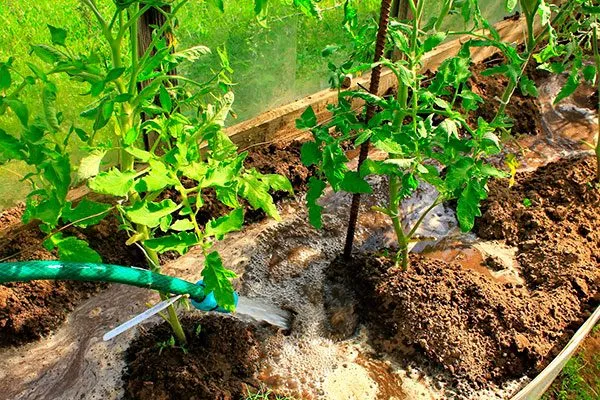
For the first 10 days after planting, newly planted tomatoes are not watered; the moisture added during planting is sufficient. During fruit set, tomatoes require more water; approximately 10 liters per plant is applied. During fruit ripening, watering is reduced to prevent waterlogged fruits and reduce the risk of fungal infections.
Loosening
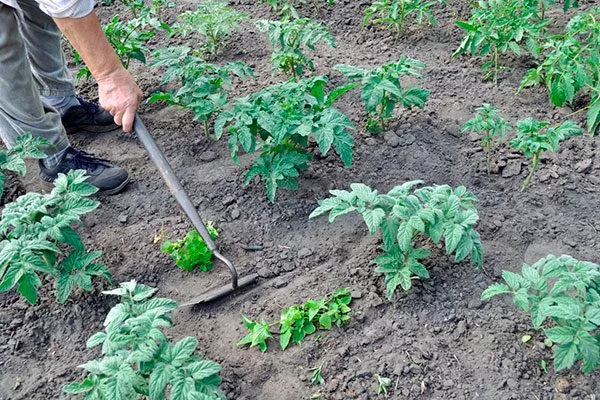
The Pink Tiger variety, like the crop as a whole, requires regular loosening. This cultivation technique provides the root system with oxygen, preventing the formation of a soil crust. Loosen the soil the day after watering, simultaneously removing any emerging weeds.
Top dressing
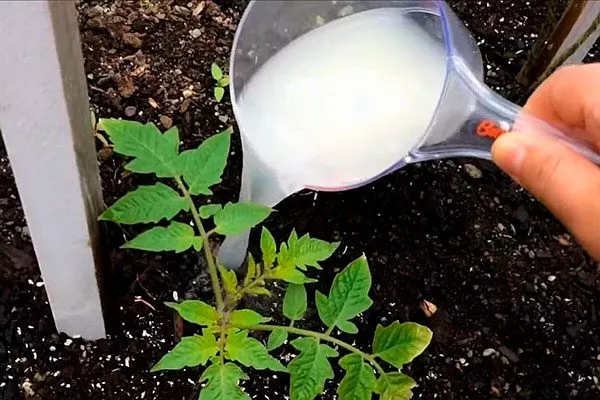
The Pink Tiger variety is recommended to be fed with mineral fertilizers. At the beginning of the growing season, nitrogen-containing compounds are preferred, and once flowering begins, potassium-phosphorus fertilizers are preferred. Superphosphate and potassium nitrate can be added, for example.
Shaping and garter
It is recommended to train this variety into a single stem, removing all shoots that appear in the leaf axils. Removing side shoots allows the plants to focus their energy on developing the central stem and fruiting.
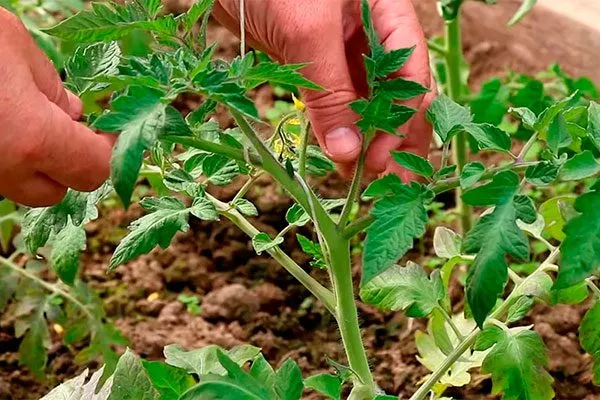
The Pink Tiger tomato requires staking, which should be installed near the bushes in advance. Alternatively, you can use a trellis.
Diseases and pests
The variety is fairly resistant to nightshade diseases, but there is a risk of infection, especially under adverse weather conditions and poor agricultural practices. To prevent late blight, spray the bushes with fungicides such as Previkur Energy or Provizor, or biopreparations such as Fitosporin-M. When signs of late blight appear, use Alirin-B or Gamair.
The Pink Tiger tomato can be affected by aphids and whiteflies, which can be controlled with Confidor or other specialized insecticides. It is also recommended to plant pest-repellent herbs, such as marigolds and calendula, near the tomato beds.
Harvesting
The fruits are harvested when they reach full ripeness, indicated by a pink color with golden stripes. The harvesting weather is not particularly critical for these tomatoes, as the variety has a certain degree of resistance to adverse conditions. Unblemished fruits can be stored for 1-2 weeks.
Reviews
The Pink Tiger tomato is one of the most interesting and original varieties. Its elongated fruits are not only delicious fresh but also canned; the plum-shaped tomatoes with pointed ends look beautiful in jars. Growing this variety requires little knowledge or effort; even an inexperienced gardener can easily handle the task.