
The Pink Elephant tomato is a product of domestic selection and is annually included among the best varieties in Russia. It will impress those who enjoy large pink tomatoes. The Pink Elephant variety is sweet and delicious, with many even saying it has a honey-like flavor.
Description of the plant
The Pink Elephant tomato plant grows to a medium height, spreading, and semi-determinate foliage. The height of the bush is 1.2-1.7 m.
Description of fruits
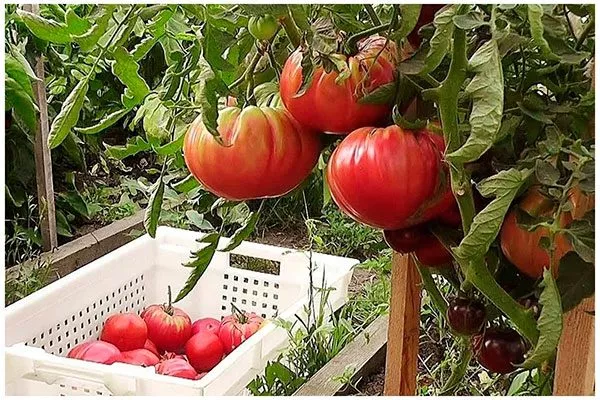
The Pink Elephant tomato produces large fruits. A cluster contains 6 to 8 fruits. Each fruit contains 4 or more chambers (cavities).
Brief description of fruits:
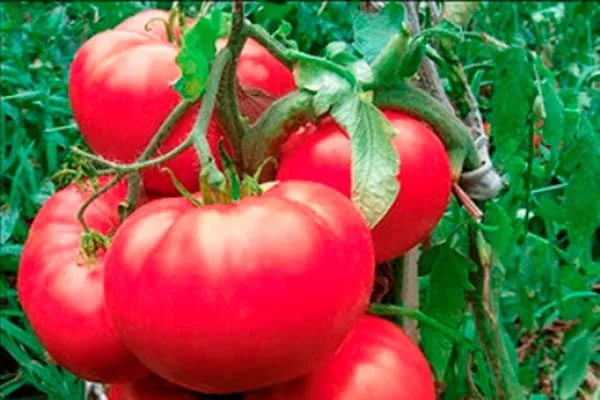
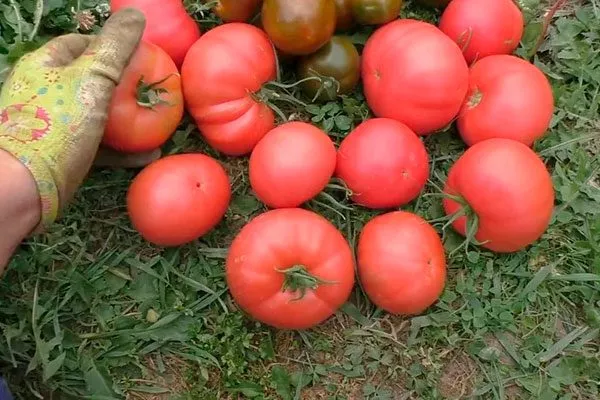
- Color of ripe fruit: pink-raspberry.
- Unripe fruit color: green, with a dark spot.
- Form: flat-rounded, slightly flattened, base medium- or strongly ribbed.
- Weight: 250-280 g
The History of the Pink Elephant Tomato
The Pink Elephant tomato was developed by Russian breeders. A team of researchers from the TOMAGROS Breeding and Seed Company worked on its creation. The variety was approved for commercial use in 1998.
The taste of fruits and their purpose
The Pink Elephant tomato has plump, sugary flesh, and a slightly sweet, slightly tart flavor. This versatile variety is delicious fresh and in salads, but it's also used for canning, sauces, and juices.
Characteristics
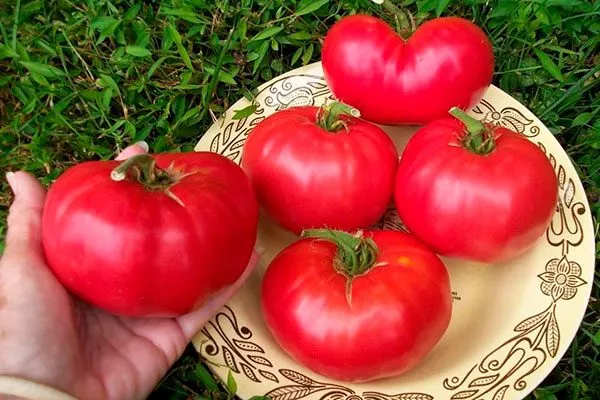
The Pink Elephant tomato is a mid-season variety. It takes 100 days from germination to ripening. The yield per bush is 2.5-3 kg. 6.2-8.2 kg can be harvested per square meter. This variety is quite tolerant of heat and cold, and also has increased resistance to late blight, fusarium, and alternaria.
Pros and cons
It's recommended to familiarize yourself with all the advantages and disadvantages of the Pink Elephant tomato before planting. It's quite possible that this tasty and beautiful variety isn't suitable for your intended purposes.
Landing features
Seedlings are grown for 60-65 days. They are sown according to the local climate. In the temperate zone, sowing occurs in March, in the south – in late February, and in the north – closer to April.
- ✓ Check the expiration date of seeds, as old seeds may have low germination rates.
- ✓ Pay attention to the seed producer; give preference to proven agricultural firms.
- ✓ Consider the climatic conditions of your region when choosing a variety.
Features of growing Pink Elephant tomato seedlings:
- Select a container large enough for seedlings, with drainage holes. They can be sown in individual cups, trays, or peat pots. Large plastic containers are also suitable for planting. Containers should be thoroughly washed and, if previously used for growing seedlings, disinfected.
- Before sowing, seeds must be disinfected and tested for germination in a saline solution. If the seeds have been treated by the manufacturer, they should germinate easily. However, it's advisable to disinfect home-grown seeds and soak them in a growth stimulator.
- Planting containers are filled with a store-bought, ready-to-use substrate or a homemade potting mix. Peat pots eliminate this step—seeds can be planted directly in them. Most importantly, when planting, the seedlings are placed directly in the peat pots, preventing root damage.
- The soil mixture can be prepared using various recipes, such as turf (or leaf mold), fine river sand, and peat, mixed in a 1:1:2 ratio. Alternatively, you can prepare a substrate from humus, peat, and garden soil (1:1:2), adding a little wood ash.
- Sow seeds in pre-moistened soil to a depth of 1.5-2 cm. When planting in containers, sow seeds in rows spaced 3-4 cm apart. Leave 2 cm between seeds in a row.
Cover the seedlings with glass or plastic film and place them in a warm, bright place. Sprouts should appear within a week, at which point the cover should be removed immediately. Until then, air the seedlings daily and mist them with a spray bottle as needed.
Growing seedlings
To obtain high-quality planting material, it is necessary to care for the seedlings daily, monitoring their condition, soil moisture, air temperature, amount of light, etc.
Seedling care:
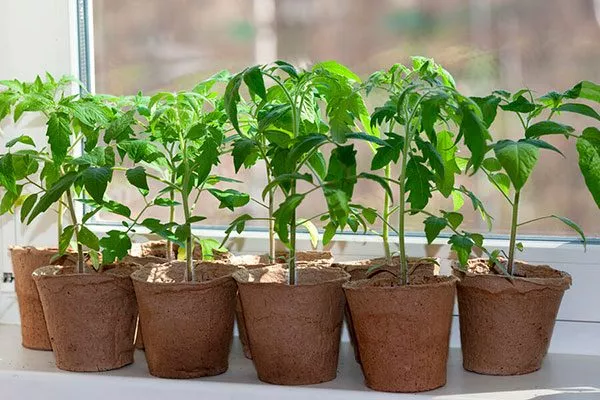
- When seedlings emerge, adjust the temperature from 22°C to 25°C to 14°C to 16°C. Nighttime temperatures should be 2-4°C lower than daytime temperatures. This prevents the seedlings from becoming elongated.
- Before transplanting, water the seedlings with a spray bottle once a week. After transplanting, water them more frequently—3-4 times a week. During this period, it's easier to water the plants with a watering can with a thin spout. Sprinkler irrigation is recommended 2-3 times a week. Use warm, settled water.
- Seedlings require 11-12 hours of light per day to grow. If natural light is insufficient, grow lights are used.
- When the seedlings have two true leaves, they are pricked out. They are transplanted into separate (or larger) containers. When transplanting, the roots are pinched back by a third of their length.
- After picking (after 2 weeks), the seedlings are fed a couple of times with complex fertilizers at intervals of 2 weeks.
If the tomatoes are to be grown outdoors, harden them off by taking them outside every day for two to three hours a day, starting with a full day. The day before planting, the seedlings can even be left outside overnight, provided the temperature doesn't drop below 10°C.
Selecting a site
The Pink Elephant tomato is planted in warm, sunny areas free from drafts and protected from gusty winds. The most suitable soils for these tomatoes are loose, permeable, fertile, and well-drained, with a neutral pH.
Soil preparation
The soil in the area is dug over in the fall, adding 5-7 kg of organic fertilizer, humus, or compost per square meter. If the soil is highly acidic, acid-reducing components such as slaked lime, dolomite flour, or wood ash are also added during the digging process.
If it's time to plant seedlings and the soil is slowly warming up, cover it with plastic film or agrofibre to raise the temperature to 16–18°C. This film can then be used to cover the planted seedlings to protect them from night frosts.
Transplanting
Seedlings are planted taking into account the local climate and soil type. Open ground seedlings are planted 2-4 weeks later than greenhouses. By the time of planting, the soil should warm up to 15°C. The air temperature should be between 18°C and 22°C.

Features of planting Pink Elephant tomato seedlings:
- Before planting, it is recommended to water the soil with a solution of potassium permanganate or copper sulfate.
- For planting, dig holes measuring (approximately) 15x20 cm. They should be large enough to accommodate a lump of soil containing the roots of the seedlings.
- Place 3-4 plants per square meter. The optimal planting pattern is 50 x 40 cm.
- Wood ash (a handful is enough) and complex mineral fertilizers, such as 15 g of potassium sulfate, are added to the holes. Gardeners also often add compost, peat, eggshells, bone meal, etc.
- Pour 3-5 liters of warm, settled water into the holes. Then wait half an hour for the water to soak in and the soil to settle. The seedlings are transferred to the holes, positioned vertically, the empty space is filled with soil, and the soil is compacted, forming a small depression around the plant for watering.
Tomatoes should not be watered for 10 days after planting. This allows the seedlings to establish themselves and adapt to their new location more quickly. However, if the weather is extremely hot, watering the plants is recommended.
Care Features
The large-fruited Pink Elephant variety requires standard care. It should be regular, and all activities should be timely. The bushes should be watered, fertilized, sprayed, the soil around them should be loosened—everything else the tomatoes need to ensure a good harvest.
Watering and loosening
Vigorous Pink Elephant tomato plants require abundant watering, approximately three times a week—the frequency depends on various factors, including weather, soil conditions, etc. It's important to avoid overwatering, as this can lead to root rot and fungal infections.

It's recommended to check the condition of the topsoil before watering—it should be completely dry. The day after watering, loosen the soil and weed it at the same time. Loosening prevents the formation of a soil crust, which interferes with oxygen supply to the roots.
Top dressing
At the beginning of the growing season, before the plants bloom, they are fed with nitrogen-containing fertilizers. Once the second flower cluster appears, stop applying nitrogen. After flowering and fruit set, apply superphosphate and magnesium sulfate. About once a month, the bushes can be fed with an organic fertilizer, such as liquid fermented mullein.
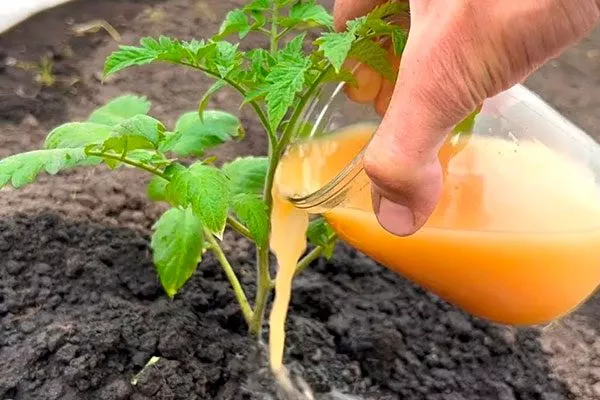
During the fruiting period, foliar feeding is recommended, using foliar sprays. Treatments include a mixture of milk and iodine or a boric acid solution.
Shaping and garter
The bushes are formed into 1 or 2 stems, no more. The plants need to be regularly pinched off—the side shoots that grow in the leaf axils. It is recommended to leave no more than 4 flowers in the first two clusters. It is also advisable to remove part of the ovary from the third cluster. When a leaf forms above the fourth cluster, pinch off the growing point.

Pink Elephant bushes require sturdy supports. Branches laden with fruit are tied to the supports with soft ropes. Fruit clusters also often require additional support.
Diseases and pests
The variety has fairly strong immunity to nightshade diseases, but preventative measures are required to avoid the risk. To prevent late blight, the bushes are treated with biofungicides, Fitosporin, or Trichodermin.

The most dangerous pests for the Pink Elephant tomato are whiteflies, thrips, and spider mites, which can be controlled with products such as Fitoverm, Alatar, and others. Aphids can be controlled with a soap solution, decoctions of celandine, onion peel, or chamomile, and insecticides are used for severe infestations.
Harvesting and storage
The fruits are harvested when they reach ripeness, turning a bright pink and becoming soft. The tomatoes are carefully cut off, stems included. The fruits are carefully sorted. Damaged or defective ones are immediately eaten or processed, while the rest can be stored for a while.
The optimal temperature for storing Pink Elephant tomatoes is considered to be between +12°C and +15°C. Lower temperatures may negatively impact the taste and texture of the fruit. The recommended humidity is 60–70%. Excessive humidity can promote mold and rot.
Reviews
The Pink Elephant variety is an excellent choice for pink tomato lovers. This large-fruited and productive tomato requires some care, but is easily manageable even for novice gardeners.