
Pink Honey, a young berry variety, has already become a favorite among gardening enthusiasts. This variety is distinguished by excellent drought tolerance and promises an impressive harvest. The seedlings root well, and the fruits reach considerable size, while possessing a mild and sweet flavor. Pink Honey is an ideal choice for a diet due to its moderate acidity.
Origin
This variety was created in Novosibirsk and has been officially registered since 2006. Scientists V. N. Dederko and O. V. Postnikova were responsible for developing Pink Honey.
Features and specifications
The marketability of this variety exceeds 90% of the total quantity, and the shelf life ranges from 6 to 14 days from harvest. If not properly cared for, including under-watering, the fruits are prone to cracking. The first harvest is characterized by larger tomatoes than subsequent ones.
Description of the bush
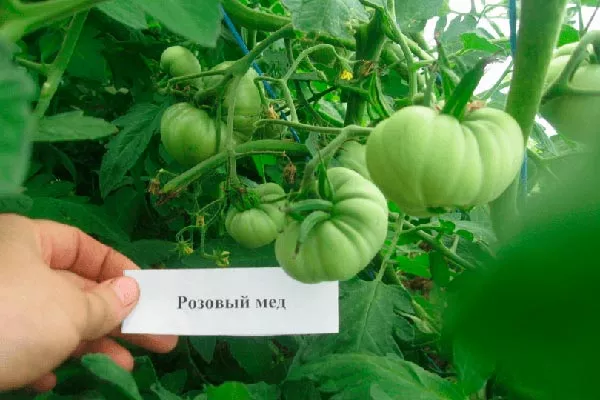
Pink Honey is a determinate tomato variety, although some sources claim it can be semi-determinate. The discrepancy likely stems from the plant's growth: in the open ground, it doesn't exceed 70 cm in height, while in greenhouses, the plants can reach twice that height.
Peculiarities:
- the bushes have medium density;
- their leaves are of medium size, dark green, typical for tomatoes;
- simple inflorescences are formed, and later ovaries appear in their place;
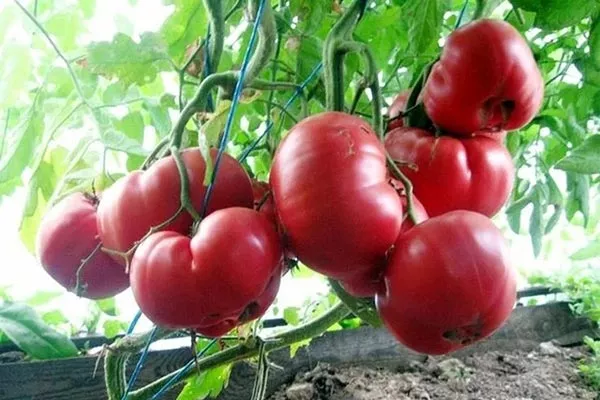
- Each brush produces from 3 to 10 fruits.
Fruits and their taste qualities
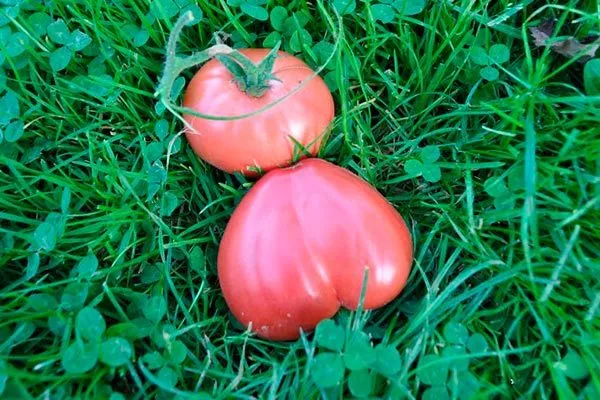
This tomato-shaped variety is striking in its uniqueness: on a single bush you can see tomatoes of various shapes, among which the most common are:
- flat rounded;
- with ribs;
- elongated with a slightly “notched” heart-shaped end.
There are also other varietal characteristics:
- The fruit's light pink hue gives the variety its name. Notably, these tomatoes have a distinctive dark spot near the stem, which ripens and disappears last.
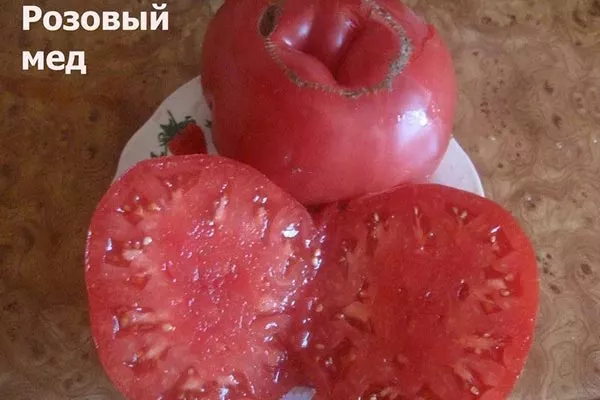
- The skin is quite thin, so they are not recommended for pickling or fermenting, but they are great for salads and vegetable dishes.
- Breeders highly rate the taste of the variety, calling it excellent.
- These fruits can be polyseeded, with 4-8 separate chambers for small seeds.
- The weight of the first tomatoes reaches 1.5 kg, subsequent vegetables weigh approximately 600 to 800 g.
- The pulp is firm and sugary, and the taste is not acidic.
- ✓ A characteristic dark spot near the stalk, which ripens and disappears last.
- ✓ The weight of the first tomatoes can reach 1.5 kg, the following ones - from 600 to 800 g.
The Pink Honey variety is distinguished by its rich flavor, fleshy fruits, and rich nutritional content. These tomatoes contain tyramine, which helps regulate metabolism, normal endocrine function, and dopamine levels. This variety is ideal for those with kidney and cardiovascular problems.
Ripening and fruiting
This variety has a mid-season ripening period: from germination to harvesting, it takes about 110 days. To obtain larger fruits, leave 4-5 clusters on the bush and remove the tops.
Productivity
The yield of this tomato variety will depend primarily on the quality of the soil at planting, rather than on the care it receives—the variety is known for its low maintenance. Optimal conditions for growth are soil previously used for crops such as onions, garlic, peas, carrots, and radishes.
Fruit production may decrease with sudden temperature fluctuations—both high and low. Average yield ranges from 4 to 6 kg per bush.
Climate and regions
It should be emphasized that these tomatoes do not tolerate sudden temperature fluctuations. Therefore, in areas with variable weather conditions, the Pink Honey variety is grown exclusively in protected environments, such as greenhouses.
Regional features:
- In the conditions of central Russia, to achieve successful cultivation of this variety, it is necessary to use temporary film structures or greenhouses.
- In northern regions with a short warm season and harsher weather conditions, seedlings should be planted in heated permanent greenhouse structures.
- At the same time, the most favorable climatic conditions for growing this crop in open ground are the Stavropol, Krasnodar, Volgograd and Rostov regions.
How is it applied?
Using this variety of tomatoes for home canning is not recommended, as their thin skin will inevitably crack. However, Pink Honey is an excellent choice for making pastes, juices, and ketchups. This tomato variety is recognized as the best for creating delicious seasonal assortments.
In culinary art, various dishes are prepared from these tomatoes:
- puree;
- salads;
- caviar;
- juices;
- tomato paste;
- gas stations.
Subtleties of cultivation
Depending on climatic conditions, cultivation of the Pink Honey tomato variety is carried out in different ways:
- in the open garden;
- outdoors using polyethylene film for protection;
- in greenhouses and hotbeds, where it is necessary to provide plants with sufficient space for their successful growth.
Ideal conditions for growing Pink Honey tomatoes
To achieve a bountiful harvest from tomatoes grown outdoors, it is important to provide them with ideal growing conditions.
Temperature
The temperature required for Pink Honey tomatoes should be moderate during flowering and ripening. Ideal conditions for this variety are:
- Temperatures within 20-25 degrees, at which it begins to actively form fruits.
- The general range at which tomatoes develop optimally is from 15 to 30 degrees.
- When the thermometer readings exceed 35 degrees, the pollen becomes sterile, which leads to the cessation of the pollination process.
- When the temperature drops to +15-12 degrees, weak budding and cessation of fruit formation are observed.
Lighting
For successful growth and fruiting, Pink Honey requires sufficient light. The variety does not tolerate high temperatures—intense sunlight can damage the plant's leaves and fruit.
To ensure optimal conditions for plant development and fruit ripening, it is recommended to position tomato beds so that they are shaded during peak sun hours. Otherwise, direct sunlight can weaken the plants' immunity, necessitating preventative treatments against various diseases.
Good and bad predecessors of tomato
To minimize the risk of tomatoes becoming infected with late blight and cladosporiosis, they should be planted in areas where no plants from the nightshade family were grown last year: bell peppers, tobacco, potatoes, and eggplants.
The optimal option is to plant tomatoes after legumes, root vegetables, alliums (garlic, onions), or cruciferous plants (radishes, turnips, cabbage). These diseases are not transmitted to tomatoes, and the pathogens are killed in this case.
Characteristics of seed placement conditions
In the fall, carry out the necessary digging of the site. But there are other requirements:
- The soil must be sufficiently fertile, for which fertilizers such as superphosphate, humus or peat may be useful.
- To plant seeds, you need to dig holes measuring 30 x 5 cm.
- Place no more than five seeds in each hole.
- It is recommended to plant no more than three seedlings per 1 square meter.
- After planting, thoroughly cover the seeds with soil and water.
- After some time, only the strongest shoots should be left and thinning should be carried out.
- The substrate should contain the following components: ash, humus or humus.
- You can purchase the soil mixture at a specialty store or prepare it yourself by first drying it in the oven or treating it with potassium permanganate.
- For planting, it is preferable to use rectangular containers.
- Seeds should be buried in the soil to a depth of maximum 1 cm.
Seed preparation
Seeds can be collected from last year's harvest, as Pink Honey is a cultivar, not a hybrid. Select top-quality tomatoes from healthy plants and let them ripen to a point of overripeness. The tomatoes are then ground into a puree and strained through a fine sieve.
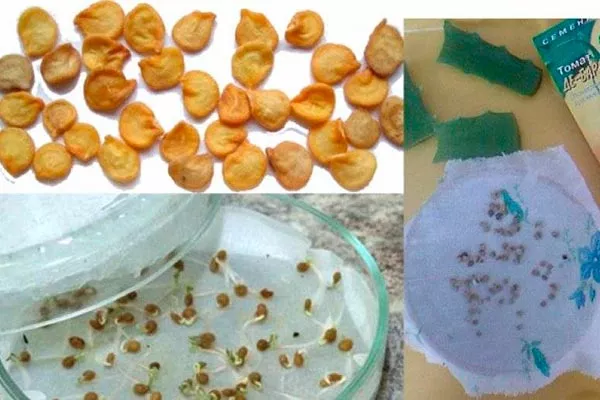
The extracted seeds are washed, dried and packed in paper napkins, which can be stored, for example, in empty matchboxes, where it is convenient to note the year of collection and variety.
To prepare the seeds, they are briefly immersed in salt water (0.5 teaspoon per 100 ml of water). The floating seeds are removed, and the settled ones are rinsed and soaked in a potassium permanganate solution for 30 minutes. They are then laid out on a damp cloth until sprouts form.
Sowing for seedlings
Sowing is carried out two months before the planned transplanting date. In the Central Russian region, seeds for open ground are sown from March 20 to April 10, and for greenhouses, from March 1 to 15.
Preparation for sowing and the process itself
Seedling soil can be either store-bought or homemade, using equal parts garden soil, turf, sand, and peat. Coconut coir is especially popular for growing tomatoes.
The sowing process includes the following steps:
- Make holes in the containers.
- Fill them with moistened substrate.
- In the boxes, create furrows 1 cm deep, into which evenly spread the prepared seeds at intervals of 1-2 cm and sprinkle them with soil.
- Wrap containers in plastic wrap.
- Place in a warm place at a temperature of about 25 degrees for germination.
Caring for seedlings
Light isn't essential for the initial stages of plant growth, but it becomes important once the first green shoots emerge above the soil surface. Furthermore, to accelerate root development, cool temperatures are necessary: around 12 degrees Celsius at night and around 16 degrees Celsius during the day.
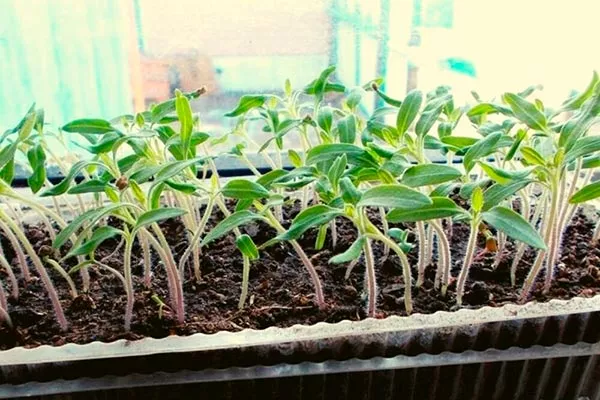
After the seedlings have formed, do the following:
- A week after the sprouts appear, the temperature should be around 18 degrees at night and around 23 degrees during the day.
- It is important to water regularly with warm water when the top layer of soil dries out slightly.
- Before replanting, you need to carry out 2-3 feedings with a weak fertilizer solution if the plant is not developing properly.
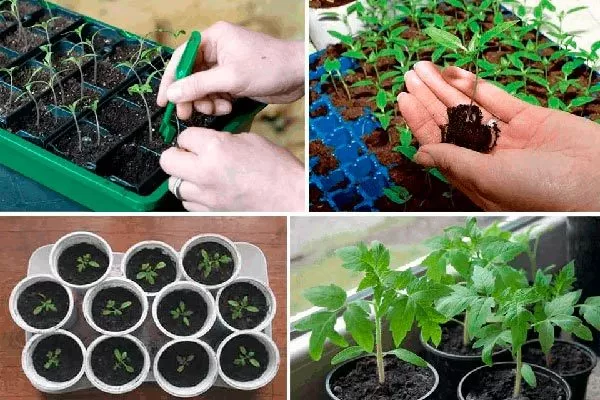
- If the plants are grown in a common container, then when the second true leaf appears after the cotyledon, transplant them, that is, transplant each plant into a separate container, avoiding damage to the roots.
- Two weeks before transplanting the seedlings to the open ground or greenhouse, acclimate them to the upcoming conditions by taking them outside in good weather. Initially, this can be just for half an hour, covered with non-woven material, but then the duration of exposure can be increased.

Growing seedlings without picking
Individual peat pots or 500 ml plastic cups can be used as planting containers, eliminating the need for picking, which will delay ripening and force the young plant to expend energy on restoring roots and leaves.
The planting and care process is identical to the previous one. However, during the growing season, it's important to fill each cup to the top with seedling substrate mixed with perlite to prevent drying out. This promotes the development of additional roots in young plants.
Transplanting
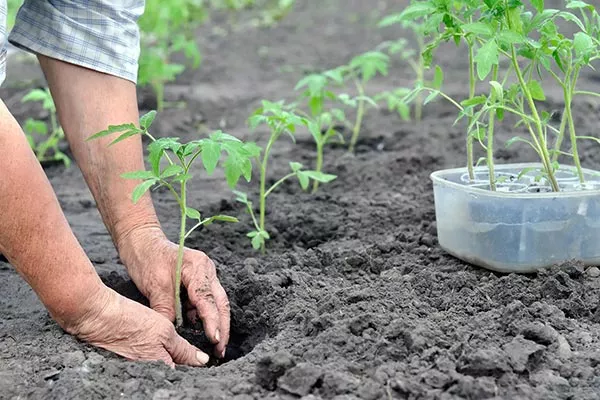
The variety is replanted using the standard method—by transferring the plants from their container. The hole should be slightly larger than the root system.
- ✓ Optimum soil temperature for planting seedlings: 14-15°C.
- ✓ Seed planting depth: no more than 1 cm.
Planting tomato seeds in open ground
The process of planting seedlings in the ground begins when the soil temperature rises to 14-15 degrees Celsius. Under a roof, the soil typically takes three weeks longer to warm up than in the open air. Many garden owners begin this process in early May.
Sowing seeds in the garden is carried out after the danger of recurrent frosts has passed, which usually occurs in early June in the central regions of Russia, and from May 15 in the southern regions.
The method of growing tomatoes without preliminary seedlings has its advantages:
- the plant does not need to adapt after transplantation;
- the bushes develop faster and become stronger than their “indoor” counterparts;
- Their root system is more developed and goes deeper into the ground, which allows them to more easily endure drought.
Growing instructions:
- Choose a site that hasn't had any nightshade crops in the last three years. A plot previously used for pumpkins, onions, or cabbage is preferable. It's important that the bed receives full sun throughout the day.
- During autumn processing, add superphosphate, ash and compost to the soil.
- At the beginning of spring, dig up the beds and moisten the soil if necessary.
- Dig holes about 5 cm deep at intervals of 40-45 cm and place two or three seeds in each hole, then cover them with soil.
- Cover the planted seeds with plastic wrap. As soon as the first sprouts appear, remove the cover, place plastic bottles filled with hot water between the rows, and cover again.
- Once the plants reach a height that reaches the shelter, remove the film permanently.
Greenhouse cultivation
Tomatoes are grown in greenhouses and hothouses using prepared seedlings. Soil preparation is standard. It is recommended to plant the seedlings when they are three weeks old. The key to greenhouse cultivation is adequate ventilation. This can be achieved by installing fans or opening the doors periodically.
Care instructions
Growing these tomatoes is not difficult - just follow the classic steps.
Irrigation of crops
Plant care requires careful watering: it must be sufficient and consistent. In open-air settings, watering may be reduced during prolonged rainfall. In a greenhouse, however, moisture management is entirely the responsibility of the gardener. Plant water requirements vary at different stages of development:
- Once young plants have established roots and until the first fruit sets, they are watered once a week, using 3 to 6 liters of water per plant. Increase watering at higher temperatures.
- As the size of the bush increases, water consumption increases to 18-22 liters per 1 square meter of area.
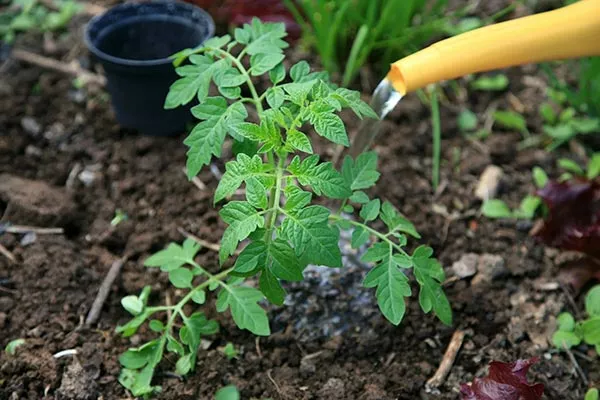
Watering frequency is directly related to weather conditions: when it's cloudy, reduce watering, and when it's cool, skip it altogether. In hot weather, don't wait until plants show signs of dehydration, as this can damage the buds.
There are several important rules to follow:
- use only cool, settled water for irrigation (but not cold);
- Perform humidification early in the morning and be sure to ventilate the greenhouse afterwards;
- do not water the leaves, carefully water from below, at the roots;
- irrigate the entire surface of the bed - the root system of tomatoes can spread over a long distance;
- Avoid long intervals between waterings to avoid cracking of the fruit.
Fertilizer and feeding
Immediately after planting, the seedlings begin actively developing vegetative mass. At this time, they require nitrogen, but it must be combined with phosphorus and calcium. Two weeks after transplanting, fertilize them with a mixture consisting of 1 tablespoon of urea, an equal amount of superphosphate, and 1 teaspoon of potassium sulfate, mixed in 5 liters of water. Use 500 ml of this solution per plant.
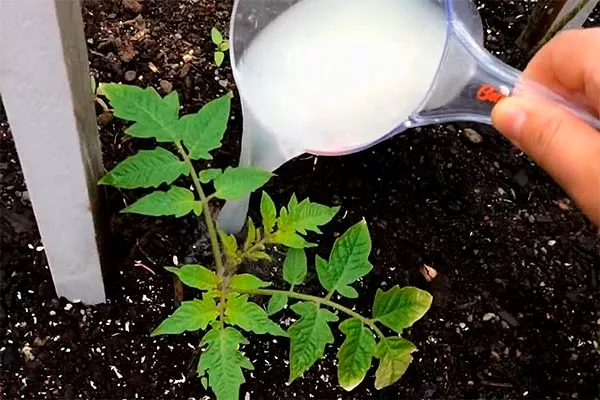
What to do next:
- Once the plants begin to bloom, increase the amount of potassium and phosphorus. For 5 liters of water, add 0.5 teaspoon of potassium sulfate or 1 tablespoon of ash and 1 teaspoon of superphosphate. Use 1 liter of solution per plant.
- When ovaries are forming, 1.5 liters of a mixture consisting of 1 teaspoon of nitrophoska, 0.5 teaspoon of humate-7 and 5 liters of water are poured under each plant.
- In the middle of the growing season, apply foliar feeding with calcium nitrate to prevent blossom-end rot according to the instructions.
- If low pollination of buds is observed, it is necessary to spray with boric acid at a concentration of 1 g per 1 liter of water.
- To support the growth and improve fruiting of tomatoes, as well as to strengthen their protective functions, it is recommended to use green fertilizers: infusions of nettle and other herbs with the addition of ash and mullein.
Loosening
Regular loosening, weeding, and hilling are essential to ensure optimal oxygen supply to the soil. The soil under the tomatoes should be constantly aerated, so loosen the soil after each watering or at 10-day intervals.
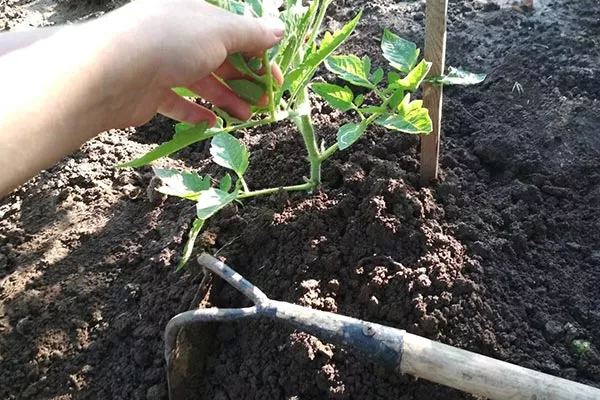
As the bushes grow taller, reduce the tillage depth to avoid damaging the root system. When working with heavy soil, it's important to focus on deep tillage, but this should only be done in areas free of plant roots.
Bush formation, garter
Tomatoes should be regularly removed from side shoots to avoid the formation of unproductive green masses with low yields. If you've chosen a single-stem growing system, remove all side shoots completely. If you've chosen a double-stem growing system, leave one side shoot growing under the first flower head.
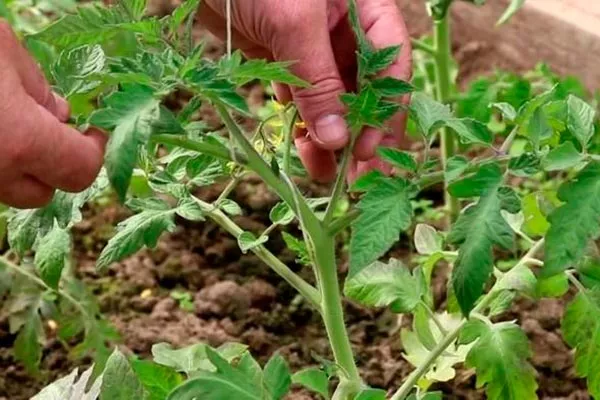
To prevent the stems from drooping toward the ground, secure them to a support. However, for the Pink Honey variety, this may not be enough—each flower head should be secured individually. If a giant tomato grows on the bush, it should be tied individually.
Prevention of diseases and pests
This tomato variety is vulnerable to a variety of diseases, so it's important to prevent them. This can be achieved by not overwatering the soil, providing the plants with adequate space, and following basic care guidelines.
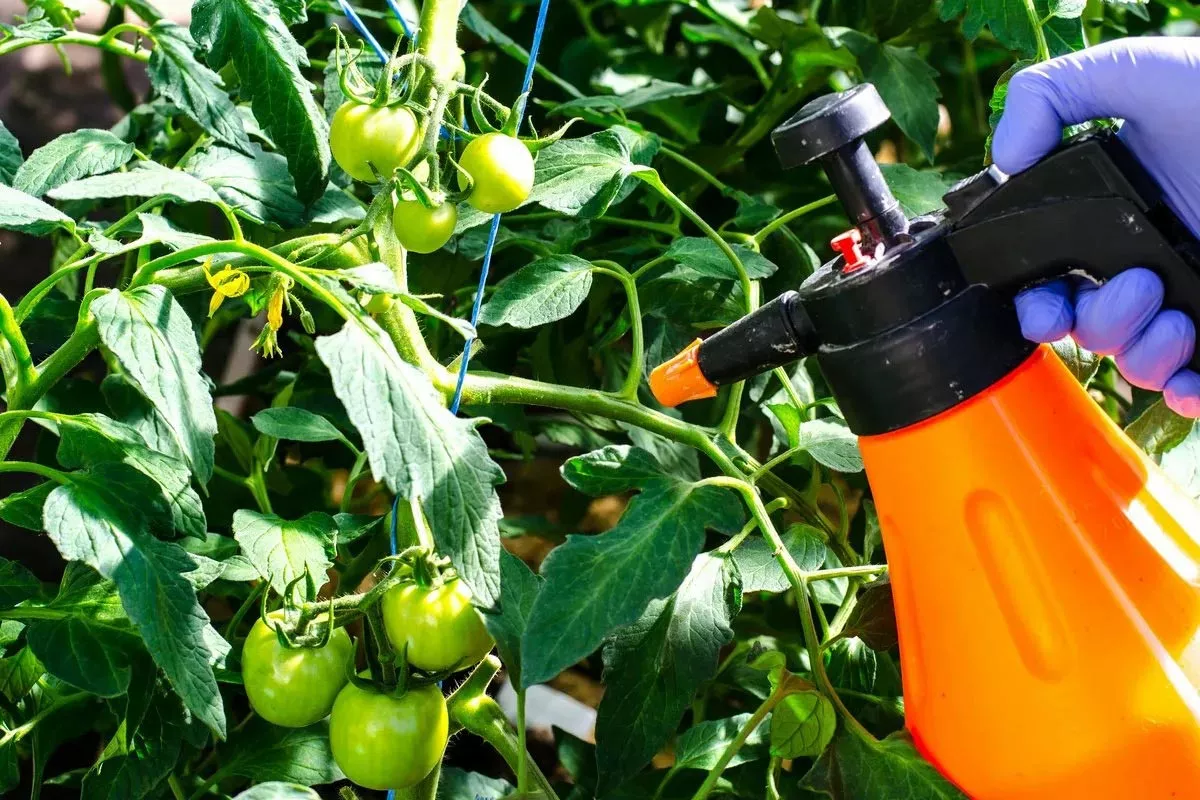
Pink honey is susceptible to late blight, brown spot, and gray mold. Late blight is considered the most dangerous disease. Therefore:
- During the cold season or during prolonged rains, regular spraying with Fitosporin once a week is recommended;
- With the onset of the fruiting phase, it is advisable to treat the bushes with compounds containing copper.
If diseases appear, remove the affected plants from the garden bed and treat the rest with antifungal agents.
As for pests, the variety is susceptible to attacks by common insects, but the most common attack is by cutworms. To combat them, you can use an infusion of onion or garlic. If pests are widespread, use Decis, Inta-Vir, or Lepidocid. To protect against flies, place sticky traps in greenhouses.
Harvesting
The fruits of this variety begin to ripen in July-August, depending on planting time and care. They ripen quickly, so it's important to carefully monitor the bushes to prevent overripening and stem breakage.
Don't delay harvesting; the ideal time is when the fruit is firm and the skin hasn't cracked. Otherwise, the produce will quickly spoil and may lose its attractive appearance.
Pros and cons
Reviews
Pink Honey stands out as a reliable and trustworthy variety. The plant doesn't require any special conditions and produces an annual harvest of large fruits, perfect for fresh salads, sauces, and other dishes. Being a cultivar, not a hybrid, allows you to collect your own seeds for future plantings.