
As its name suggests, the Pink Giant tomatoes are large and incredibly attractive in color. This variety is one of the best for fresh salads—the vegetables are juicy, sweet, and aromatic. Over the past several decades, this variety has won the hearts of many gardeners, making it a popular choice throughout our country.
Characteristics and description of the variety
Pink Giant is one of the most popular beefsteak tomatoes. It boasts long fruiting and good disease resistance. It's used for slicing, salads, and other dishes.
Distinctive features of the plant
A domestically bred variety. It was developed by Moscow scientists from the Scientific and Production Corporation NK LTD: V. M. Nalizhit, A. V. Dynik, V. A. Vasilevsky, and S. A. Korotkov. In 2001, it was included in the State Register, after which it became available for mass cultivation.
Today, its seeds are produced and sold by major agricultural companies. The crop is suitable for cultivation both in greenhouses and open ground, provided the climate is not too harsh.
Distinguishing characteristics:
- It's an indeterminate variety. It's a tall, standard bush with strong shoots that can reach 1.6-2 m in open ground and grow even taller in greenhouses.
- The stem is erect, greenish-gray, and slightly pubescent, with a well-developed root system. The shoots require staking, as they cannot support the fruit without support.
- The plant's leaves are narrow and oblong, dark green, with large teeth and short internodes. Foliage is moderate.
- The flowers are yellow, collected in simple or intermediate racemes. The first inflorescence appears above the ninth leaf, and each subsequent inflorescence appears three leaves later. Typically, about six inflorescences form on a stem, each containing four to six tomatoes.
Fruit characteristics
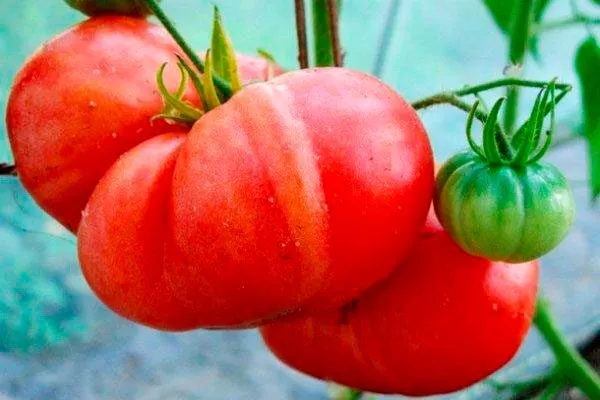
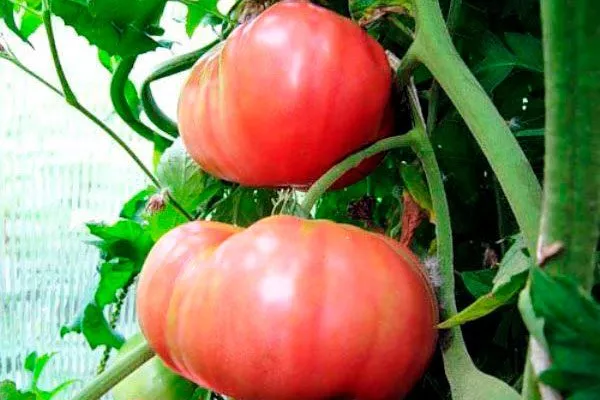
Tomatoes have a characteristic, heavily ribbed, flattened, round shape. Distinguishing features:
- When unripe, they are a uniform pale green color with a dark green spot near the stem. As they ripen, the color turns pink or deep crimson.
- The weight of the vegetables varies from 300 to 350 g, but when grown in a greenhouse and with careful care, it is possible to obtain specimens weighing from 700 to 1000 g. The quality of growing conditions directly affects the size of the tomatoes.
Pink Giant fruits typically contain more than 4 seed chambers inside.
Ripening time and yield
This variety is mid-season. Harvesting begins 100-125 days after planting, and fruiting begins in July and continues until September.
On average, gardeners yield about 2 kg of tomatoes per bush, and 5.8-6.4 kg per square meter in open ground. In greenhouses, the yield may be slightly higher.
Use of fruits
The pulp is sweet, meaty, dense, and grainy when broken, with a small number of seeds. Tomatoes of this variety are beneficial for health due to their high content of micronutrients, antioxidants, and vitamins. The fruits store well—they resist cracking thanks to their strong, thin skin.
The vegetables have a sweet, aromatic, and harmonious flavor. This variety is versatile in cooking: it's used in salads, juice, dressings, pastes, and ketchup. The tomatoes are also suitable for pickling, especially small or diced tomatoes.
Resistance to diseases and pests and necessary climatic conditions
The Pink Giant variety is characterized by moderate resistance to major tomato diseases. Among pests, the most serious are aphids, Colorado potato beetles, and whiteflies. Wood ash or bioinsecticides are used to control them.
This variety is successfully cultivated in a variety of climates, but in temperate latitudes, a good harvest can only be obtained in a greenhouse. In warmer regions, including the North Caucasus and Krasnodar Krai, the plants also thrive in open fields.
How to grow seedlings?
For the Pink Giant variety, seeds are sown in early March to produce seedlings. In southern regions of Russia, tomatoes can be grown without seedlings, sowing seeds directly into the garden beds.
Seed preparation
First, calibrate the seeds, selecting large, even, and dense specimens that don't feel hollow when squeezed. Next, follow a few simple steps:
- Place the seeds in a salt solution (dissolve 20 g of salt in 200 ml of water). After 15-20 minutes, check the container: any seeds that have sunk to the bottom should be left for planting.
- Spread the seeds on a cotton cloth and leave them in a warm place, for example, on a radiator, for 36-48 hours to warm up.
- Disinfect the seeds in a 1% potassium permanganate solution (dissolve 5 g of potassium permanganate in 500 ml of water). Let them soak for 15-20 minutes, then rinse with clean running water.
If potassium permanganate is unavailable, use hydrogen peroxide (dissolve 20 ml of 3% hydrogen peroxide in 400 g of warm water), soaking the seeds for 12 hours. This method accelerates germination, but is not suitable for seeds with a nutrient coating or a thin, water-soluble layer. - Perform bubbling. To do this, place the seeds in warm water (26–30°C) and stir regularly for 15–18 hours, or use an aquarium air pump. This procedure promotes germination and viability of the seedlings.
- Soak the grains for 12 hours in water or a biostimulant solution: Zircon, Epin, or Immunocytophyte. The water temperature should be at least 21°C.
- The next step is hardening. Wrap the seeds in cloth and plastic, place them in a place with a temperature of -2 to +3°C for 8 hours, then return them to a warm place for 8 hours. Repeat this process 5-6 times, varying the temperature. Keep in mind that this is a complex procedure, and if performed incorrectly, the seeds can be damaged.
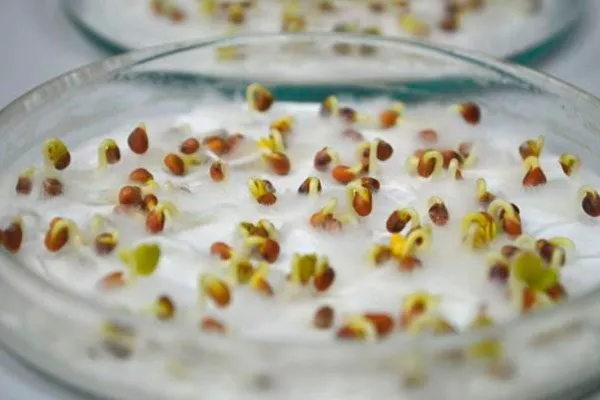
Before planting, germinate the seeds by placing them on a cotton cloth or cheesecloth in a flat container. Keep the cloth constantly moist with warm water (25–30°C) until sprouts 2–3 mm long emerge.
Container and soil
You can use plastic containers, cups, or cut-down PET bottles. You can purchase the planting soil from a store or prepare it yourself.
The finished mixture should include:
- humus;
- peat;
- river sand.
If you decide to prepare the soil for seedlings yourself, combine:
- 1 part garden soil (preferably from a plot where cucumbers, zucchini, carrots or dill grew);
- 2 parts non-acidic peat (pH 6.5);
- 0.5 parts sand (river or washed);
- 1 part humus or sifted mature compost.
Add sifted wood ash (or dolomite flour), sphagnum moss, and fallen pine needles to the mixture. Before use, disinfect the containers and soil with boiling water or a potassium permanganate solution.
Sowing
Sow the Pink Giant tomato directly into individual cups. Place 3-4 seeds in each container, and after the cotyledons emerge, select the strongest plant and remove the rest.
Helpful tips:
- Plant the seeds 1 cm deep.
- Moisten the soil with a spray bottle.
- Cover the containers with film and place them in a warm (+23°C) and bright place.
To strengthen the root system of tall tomatoes, use eggshells and dried banana peels. Chop these ingredients and place them in the bottom of the containers to promote better root development.
Caring for seedlings
Once the seeds have sprouted, remove the film. Provide the seedlings with proper care, following these agricultural practices:
- Moisten the sprouts as the soil dries out using a syringe, teaspoon, or spray bottle to avoid damaging the fragile seeds and roots.
- Pink Giant is a sun-loving variety, so place containers near south-facing windows or provide additional light with fluorescent or regular bulbs. Insufficient light will cause the seedlings to stretch and break.
- Feed the seedlings with complex fertilizers every two weeks.
- Two to three weeks before transplanting to their permanent location, begin hardening off the plants by placing them outdoors—on a balcony or summer veranda. Initially, for two to three hours, gradually increasing the time by one hour each day.
- ✓ Lighting should be at least 12 hours a day; use phytolamps if there is insufficient natural light.
- ✓ Daytime air temperature +20…+22°C, at night not below +16°C.
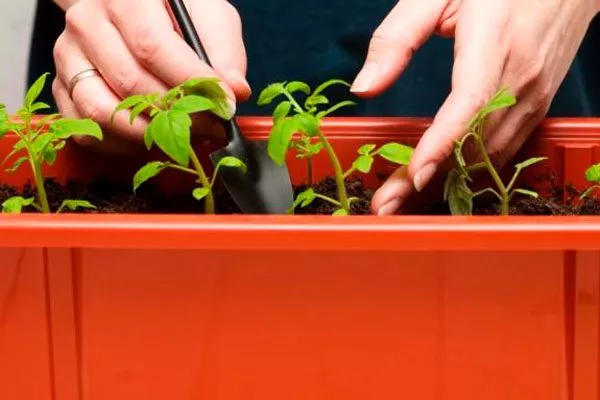
Picking tomato seedlings
After 2-3 true leaves appear, transplant the seedlings. This procedure strengthens the root system, improves plant nutrition, and promotes proper development.
Follow the recommendations:
- Before replanting, moisten the soil so as not to damage the delicate roots.
- Carefully remove the seedlings and shorten the main root by a third to stimulate the growth of lateral roots.
- Plant the seedlings in separate containers with fertile soil, deepening them up to the cotyledon leaves.
After transplanting, moisten the seedlings and place them in a well-lit area. During the first few days, provide moderate watering and protect them from direct sunlight. Proper transplanting accelerates growth and increases yield.
Transplanting tomatoes into the ground
Plant Pink Giant tomato seedlings in the ground 60 days after germination, when the plant has already formed 6-7 leaves and one cluster of inflorescences.

Follow some rules:
- Good predecessors for tomatoes include cucumbers, zucchini, dill, and carrots. However, avoid planting tomatoes in areas previously occupied by tomatoes, potatoes, or peppers, as these plants are susceptible to the same diseases and pests.
- Before planting, disinfect the soil with boiling water or a solution of potassium permanganate.
- Move the seedlings together with the root ball, being careful not to damage the roots.
Planting pattern: 70x70 cm. If planted more densely, yield may decrease.
Further cultivation
Caring for the crop is straightforward. Basic measures include modern agricultural practices, but productivity depends on them.
Watering, fertilizing
Water young plants infrequently but generously. Helpful measures:
- The greatest amount of water is required during the period of active flowering and fruit formation.
- Water the plants once a week, preferably in the evening.
- As tomatoes begin to ripen, reduce the frequency of watering, as excess moisture can be harmful.

Apply fertilizer 3-4 times during the growing season. Use different fertilizers depending on the growth stage. During the active growth stage, apply nitrogen, and after the second fruit cluster has formed, apply fertilizers containing calcium, potassium, and phosphorus.
Bush formation, pinching out side shoots
Removing side shoots is essential to ensure proper growth and a good harvest. Without it, the bushes become overgrown, and the large number of side shoots reduces productivity and fruit size.
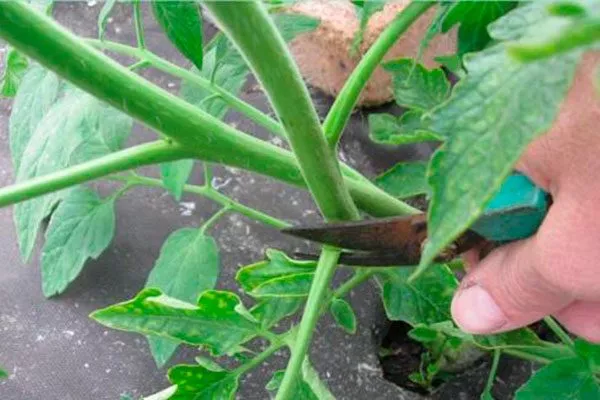
Follow the prompts:
- In a greenhouse, where plants grow faster, form them into 1 stem, and in open beds – into 3 stems.
- To maximize tomato size, remove a few ovaries from the first few clusters. This doesn't affect yield, but it promotes larger tomatoes.
- Pinch the tops of the shoots 1.5 months before the expected end of growth.
If you leave too many side shoots, the plant will waste energy on growing foliage rather than flowering and fruiting. Therefore, remove all leaves and side shoots from the lower cluster, where tomatoes are beginning to ripen.
Loosening, mulching, weeding
To ensure adequate oxygenation of your plants, loosen the soil regularly. Without this procedure, they may suffer from oxygen deficiency. Loosen the soil after watering, not on dry soil. Be sure to disinfect gardening tools and wear protective gloves when working.
Remove weeds while cultivating the soil. They rob plants of water and nutrients. Weed bushes to promote growth. Mulch the beds with hay, grass, or straw. This helps retain soil moisture, prevents weed growth, and maintains a stable temperature in the root zone.
Features of cultivation and possible difficulties
Large-fruited tomatoes require regular feeding throughout the season, especially during the period of inflorescence formation and fruit set. To stimulate fruit development, they require more water, so water them more frequently, but moderately.
Tie up not only the stem but also each individual flower cluster. Gradually remove side shoots and leaves down to the first flower cluster. These are all the difficulties that may arise when growing the Pink Giant variety.
Diseases and pests
Tomatoes of this variety have average disease resistance, and in greenhouses they are susceptible to fungal infections. To prevent disease, thoroughly ventilate the greenhouse and use the following products:
- Fitosporin;
- Ecosil;
- Quadris;
- Ridomil Gold.
To prevent late blight, use whey (fat content no more than 1%) – spray the bushes immediately after transplanting the seedlings and repeat the treatment every 10 days.
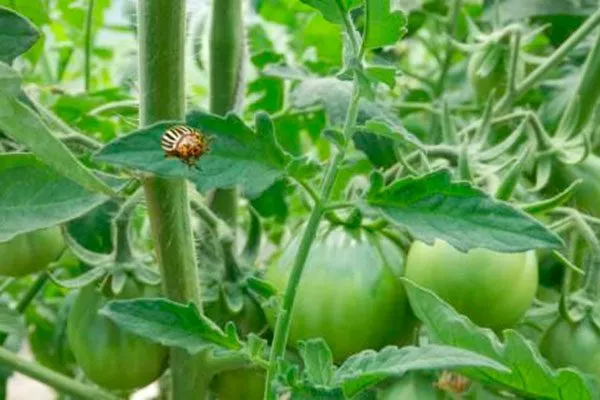
The main pests are aphids and thrips. Zubr is an effective pest control product. To protect against Colorado potato beetles, use Prestige, and against whiteflies, use Confidor.
Nuances for open ground and greenhouse conditions
Plant Pink Giant tomatoes outdoors at the end of May, but only in southern regions of Russia. Cover the plants with agrofibre at night for the first two weeks after planting.
Please also meet other requirements:
- Place tomatoes in the greenhouse at the end of April (for southern regions) and at the beginning of May (for central and northern Russia).
- Maintain a moderate temperature in the greenhouse and ventilate regularly, avoiding too much bright sunlight in the afternoon.
For better formation, grow tomatoes in a greenhouse in one stem, and in open beds - in two.
Collection and storage
The first tomatoes of this variety are ready for harvesting in just 105-115 days after germination. When planted in a single stem, the fruits are smaller but fewer in number (up to 1 kg), while when planted in two or three stems, the fruits per bush are larger but smaller (300-500 g).
The Pink Giant is a salad variety and is typically eaten fresh. These tomatoes are suitable for making juice, sauces, ketchup, and appetizers. Due to their large size and delicate skin, they are not used for pickling.
Pros and cons
Before you start growing seedlings, carefully study the characteristics of the crop and make sure that you are satisfied with everything.
Vegetables may crack if watered incorrectly in the stalk area.
Similar varieties
Pink beefsteak tomatoes are known for their sweet flavor, meaty texture, and multi-chambered structure. Among the mid-season indeterminate varieties similar to the Pink Giant are:
| Name | Peculiarities |
| Grandma's surprise | The bushes reach a height of 1.6-2 m, with strong, compact shoots. Each fruit cluster produces 7-8 tomatoes. The flavor is pleasantly sweet with a slight tartness. |
| Beef pink brandy F1 | Indeterminate bushes reach a height of 2 m. The first tomatoes ripen 110-120 days after sowing. They ripen gradually. In plastic greenhouses, plants form 6-7 fruit clusters. |
| Wild rose | This indeterminate variety produces large, round, pinkish-red tomatoes. They weigh between 300 and 350 grams and are characterized by a smooth surface and excellent flavor. They are ideal for fresh consumption. Yields reach 6 kg per square meter. |
| Mikado Pink | The bush is tall and indeterminate. It reaches over 1 m in open ground and up to 2.5 m in a greenhouse. The fruit is round and flattened, with pronounced ribbing. The average fruit weight is 250 g, and up to 500 g in a greenhouse. The flesh is juicy, turning pink when ripe, and the skin is thin but firm. The overall yield is 6-8 kg per square meter. |
| Rosamarin F1 | The plants are vigorous, with large, dark leaves. The fruits are bright pink, smooth, and weigh up to 400 g. The tender and juicy flesh makes them an excellent choice for salads. They are suitable for baby food and dietary needs. The average yield is 8-11 kg per plant. |
| Pink elephant | This is a determinate variety. Plants reach a height of 120-170 cm. The tomatoes are pink, flattened, and slightly flattened, weighing between 300 and 1000 g. Five to eight tomatoes ripen on a single plant. Unripe tomatoes have a noticeable dark green spot near the stalk, while ripe ones acquire a rich raspberry-coral hue. |
| Ural giant | A large-fruited, mid-season beef tomato (115-120 days from germination to fruiting) for greenhouse cultivation. This indeterminate plant grows over 2 m tall. A cluster produces 2-3 tomatoes. The tomatoes are fleshy, flat-round, very large—400 to 800 g (sometimes up to 1200 g)—and bright red. The flesh is tender and juicy, with a pleasant sweet flavor and distinct aroma. |
Reviews
The Pink Giant is deservedly popular for its large fruits, sweet flavor, and delicate texture. This variety combines excellent taste with an attractive appearance. With proper care, you can harvest a high-quality crop that will grace any table and serve as the basis for delicious preserves.