
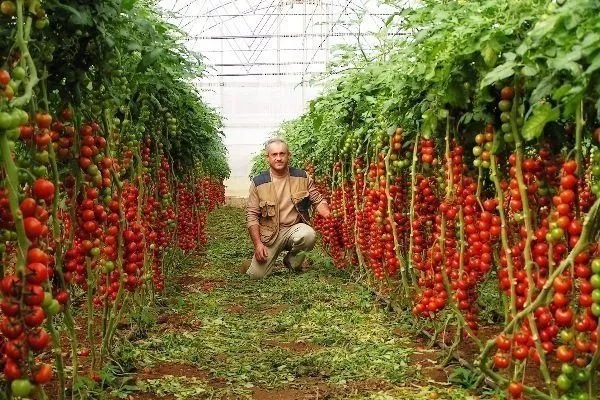
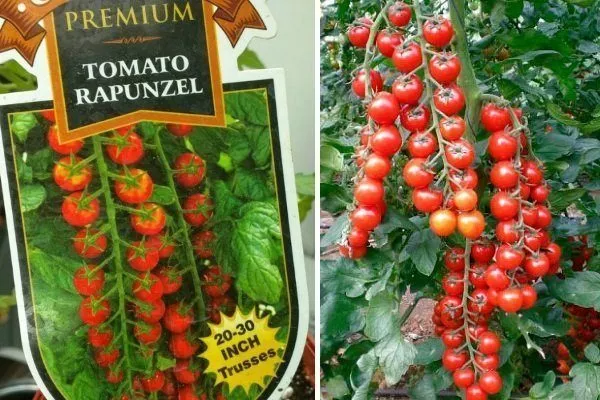
Various tomato varieties have been developed through selective breeding. Rapunzel stands out. This variety has a striking appearance. Its drooping fruiting clusters earned it its name, inspired by the fairytale princess Rapunzel, who had incredibly long hair. Although it's a recent addition, it's already become well-known.
History of the variety's appearance
The new variety was developed in 2014 by English breeders. It was first presented at the Agricultural Achievement Exhibition in the United States in late 2014.
Seeds of the new variety appeared in international online stores as early as 2015. It is not available for sale in Russia, and purchasing this planting material is difficult.
Description of Rapunzel
The new hybrid stands out for its unusual appearance: the branches grow unusually long, with several fruits on each side. They droop under the weight of the fruit.
The stems grow up to 2 m in length. The bushes are considered tall and require ample space.
This is an early-ripening variety. Its growing season from germination to harvest is up to 75 days.
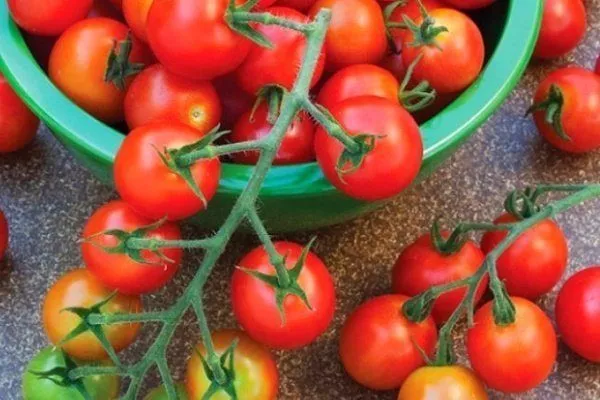
Tomatoes are small, round, firm, and have glossy skin. They are no larger than a walnut and bright red in color. A cluster can hold up to 40 tomatoes.
Migi tomatoes have a sweet, pleasant taste. Due to their high nutritional content, they are considered a dietary product.
Varietal qualities
Rapunzel is a productive variety. Its small fruits are neatly and compactly attached to the branches. They are arranged one opposite the other. The variety also has other distinctive features:
- The plant has virtually no barren flowers. Each flower produces a fruit.
- Tomatoes have another unique feature: they're difficult to grow outdoors. They thrive on balconies and loggias, as well as in greenhouses.
- At home, tomatoes grow in pots, containers, and other receptacles. They can even be placed on a windowsill.
- The shoots reach 2.5 meters in length, which distinguishes it from other varieties. The tomatoes have few internal partitions. They have a juicy, fleshy interior. The fruits are approximately the same size.
- Thanks to selective breeding, tomatoes are resistant to diseases and pests. The most important condition for their vigorous growth and fruiting is good lighting. Otherwise, the plant will wither and die.
Cultural requirements
The Rapunzel variety is quite demanding. To successfully grow it, the following requirements must be met:
- The soil reaction should be slightly acidic.
- Plenty of light and warm air temperature.
- Periodic application of fertilizers.
- To support the bush, support is essential. The branches need to be tied up.
If you neglect these simple rules, you can lose most of your harvest.
Advantages and disadvantages of the variety
Rapunzel tomatoes have high quality characteristics:
- good fruit set;
- resistance to most nightshade diseases;
- excellent taste and dietary properties;
- high yield;
- lack of dependence on climate conditions;
- rapid ripening of fruits;
- no need to water frequently.
The following can be highlighted as disadvantages:
- short shelf life of tomatoes;
- indoor cultivation of crops;
- high lighting requirements;
- increased growth of bushes;
- poor development of the root system;
- lack of seeds available for sale.
Having understood the characteristics of the Rapunzel variety, we can move on to the technological side.
Planting and growing seedlings
Before sowing purchased seeds, they need to be prepared. The recommendations below will help you do this correctly.
Seed preparation
This procedure includes several stages:
- Place the seeds in a high-sided container and cover with a weak salt solution. Leave in a warm place for 12 hours. The empty, unusable seeds will float to the surface. Collect and discard them, and strain the remaining seeds through a sieve and rinse with clean water.
- Dry the remaining seeds and treat them with a potassium permanganate solution. This disinfects them and improves germination. To do this, dissolve 10 mg of potassium permanganate in 50 ml of water. It's best to use hot water, as potassium permanganate dissolves poorly in cold water. Cool the solution until lukewarm. Wrap the seeds in four layers of cheesecloth or a thin cotton cloth and soak them in the resulting solution for 20-25 minutes.
- After the procedure, rinse the wrapped seeds with clean water.
- The final step is drying. Place the wet seeds on a dry cloth and place them in a well-ventilated area. Keep them out of direct sunlight.
- The dried seeds are ready for planting.
The preparation method described above is the most accessible. You can also use store-bought biostimulants if desired. However, it's important to remember that not all products suitable for soil-grown varieties are suitable for this variety.
How to properly germinate seeds is described in more detail here.
Landing
Sowing is done from mid- to late March. Prepare suitable containers for this purpose. Special cups and containers for growing seedlings are available commercially.
Soil selection must be careful. Rapunzel tomatoes thrive in slightly acidic soil. Sowing is done in several stages:
- Before sowing, make sure the soil is warm. Make small furrows in the seedling container with a pencil and sow the seeds in them. Alternatively, scatter the seeds evenly over the surface of the soil in the container.
- In both cases, sprinkle the sown seeds with a thin layer (4 mm) of peat or soil.
- Pour warm water on top.
- To ensure that the sprouts emerge quickly, it is necessary to create favorable conditions: air temperature up to +30°C and high humidity.
- You can cover the top of the container with plastic wrap after watering. This will create a greenhouse effect.
- The first shoots will emerge in 4-7 days. Be sure to remove the film at this time.
We recommend that you also read about how to properly plant tomato seedlings in this article.
Care
The basic rules of care are as follows:
- As soon as the first sprouts appear, be sure to provide them with light. For this, use an LED lamp, which will need to be turned on for 16 hours daily.
- The room temperature should not drop below +20°C. The seedlings require constant warmth, otherwise they will die.
- Don't forget to water the seedlings. This should be done as the soil dries out. Avoid watering too frequently, as this will lead to root rot and the death of the seedlings.
- When the sprouts have their first 3-4 leaves, you need to do pickingPrepare containers with 250-500 ml of soil. Carefully plant the seedlings, each in a separate container. They will grow there until they are planted in the ground.
- Care remains the same. Only temperature requirements are slightly lower. Seedlings can be placed on the balcony once the temperature has warmed to 18°C.
- ✓ Light intensity should be at least 10,000 lux for optimal growth.
- ✓ Daylight hours should be 16 hours; the use of LED lamps with a light temperature of 6500K is recommended for additional lighting.
Planting Rapunzel tomatoes in the ground
Once the threat of night frost has passed, the grown seedlings should be planted in the ground. This period occurs at the end of May. By this time, the soil warms up to 15°C.
At least 50 days must pass from the time of sowing the seeds.
The landing process is divided into several stages:
- In autumn, dig up the area with manure or mineral fertilizers.
- In the spring, also dig up the soil and remove weeds.
- Before planting, apply mineral fertilizers or organic matter.
- Loosen the soil well.
- Plant the bushes at a distance of 50 cm from each other and at a depth of 10 cm.
- Leave 70 cm between rows.
- The bed must be equipped with trellises and posts for tying up the stems.
- It must be planted in soil that has been watered beforehand.
- After planting, water the plants generously.
- Spray the bushes to prevent diseases.
Growing tomatoes outdoors is possible in warm southern regions. Elsewhere, they are grown on balconies and in greenhouses. For more information on growing tomatoes outdoors, see here.
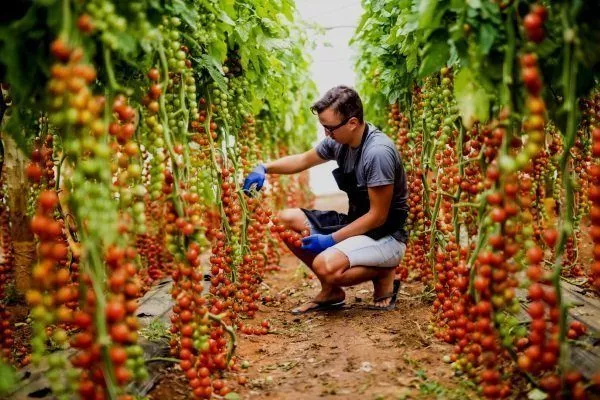
Features of planting in a greenhouse
The main features of planting in a greenhouse are:
- The seedlings should be planted in the greenhouse at the beginning of May, when there is no threat of frost.
- In the fall, add manure or superphosphate to the soil during digging.
- In spring, dig up the area for the beds shallowly and add fertilizer.
- Prepare the greenhouse beds in advance. Equip them with tall, sturdy posts to support the bushes. Trellis and wire work well.
- Water the soil beforehand, it is better to do this a few hours before planting.
- Choose a well-lit and ventilated place for tomatoes.
- When planting, be sure to add organic or mineral complexes.
- Planting depth is 10 cm, distance between plants is 50 cm, distance between rows is 70 cm.
- Then, water and spray the plants.
Aftercare during the growing process
Proper care of the Rapunzel tomato is essential. This will help you get a good harvest.
Watering plants
Rapunzel tomatoes don't tolerate excess moisture. Therefore, they should be watered sparingly, as the soil dries out. The optimal frequency is every 5 days.
In open ground, watering depends on weather conditions. On rainy days, watering is not necessary at all.
Water for irrigation shouldn't be too cold. This will stress the plant. When watering, direct the stream of water under the bush. Never water tomatoes from above. This will lead to leaf diseases.
The best irrigation method is a drip system. It can be used in a greenhouse or a vegetable garden. It keeps the soil under the bushes loose and distributes water evenly. It's also a good way to save water.
Fertilization
The bushes need to be fertilized every 14 days. To fertilize, make a solution of manure or chicken manure. To do this:
- Add approximately 1 liter of manure or droppings to 10 liters of water and stir. Let it sit for 3 days.
- Add the resulting mixture to water for irrigation at a rate of 0.5 liters of mixture per bucket of water. Apply the mixture only to damp soil.
Chemical mineral fertilizers can be used for fertilizing. Organic-based products, which are successfully used for fertilizing tomatoes, are also now available in stores.
Bush formation
Large harvests are achieved through proper bush formation:
- As tomatoes grow, they develop additional shoots called side shoots, in addition to the main stem. These appear in the axils of leaves and branches. Remove them as early as possible.
- Pinching the growing point of the main stem is essential. This significantly increases the yield and reduces the ripening time.
Protection from diseases and pests
To protect tomatoes from diseases and pests, it is necessary to carry out the following measures:
- Spray the bushes every 2-3 weeks. The first spraying should be done immediately after planting the seedlings. This variety is disease-resistant, but preventative measures are a good idea. Use home remedies or store-bought products for spraying.
- If tomatoes are planted in a greenhouse or garden, it is important to rotate crops every 3 years.
- Avoid overcrowding and unhealthy leaves on bushes. Remove such leaves and remove them from the area.
Harvest timing and rules
With proper care, Rapunzel bushes will produce a bountiful harvest within 2.5 months of germination. However, the fruits themselves spoil very quickly. Therefore, don't leave them on the bushes for too long; harvest them promptly. Sell the harvested fruit immediately, otherwise you'll lose some.
For transportation, pick the fruits when they're still in the milky stage. They'll keep for up to two weeks at this stage. They should be transported in ventilated containers, in thin layers no thicker than 10 cm. Make sure to keep moisture out of your luggage.
Rapunzel's Appointment
Tomatoes of this variety are only suitable for canning if they are freshly picked. For this purpose, it's best to pick the fruit when it's still at a ripe stage.
This variety is not suitable for sale because it doesn't store well. Fresh, the small tomatoes are very tasty. They can be sliced into a salad or eaten whole. This is a dietary product, so it's beneficial for people with illnesses.
Comparison of Rapunzel with other varieties
We present to your attention a comparative analysis of different tomato varieties:
| Name varieties or hybrid | Application | Period maturation (day) | Number fruits on one brushes (pcs.) | Weight one fetus (G) | Indicators productivity (kg/sq.m) |
| Rapunzel hybrid | salads | early maturing 75 | 40 | 25 | no data |
| Red cherry variety | salads conservation | early maturing 95-102 | 30 | 15-20 | 4 |
| Long braid variety | salads conservation | early maturing 90-95 | 18-20 | 15-20 | no data |
| Trebus hybrid | salads | early maturing 90-95 | 20 | 25-30 | 10 |
| Madeira hybrid | salads | early maturing 85-90 | 12-15 | 20-25 | 4.4-7 |
| Cherry Lycopa hybrid | salads conservation | early maturing 95-100 | 8-10 | 40 | 12-14 |
| Pomisolka variety | salads conservation | early maturing 95-100 | 20-40 | 20-25 | 7.1 |
| Variety | soil pH | Requirements for organic matter |
|---|---|---|
| Rapunzel | 6.0-6.5 | High, it is necessary to add rotted manure or compost |
| Red cherry | 5.5-6.8 | Average, it is enough to apply complex mineral fertilizers |
Reviews
The Rapunzel tomato attracts attention not only for its fruit, but also for its delicious, interesting fruit that can be eaten fresh, added to salads, and preserved. Our recommendations will help you grow this tomato properly and achieve a bountiful harvest.