
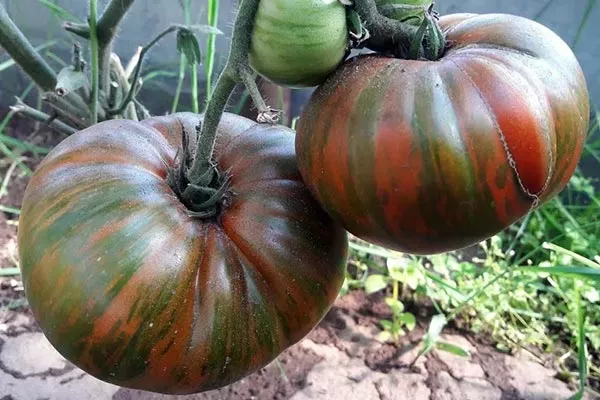
Striped Chocolate is a very unusual variety of American origin. It not only has a bright, eye-catching name, but also amazing fruits, multicolored and striped. Individual specimens can weigh up to 1 kg.
The history of the creation of the "chocolate" variety
The Chocolate Stripes tomato is a large-fruited variety bred in the United States in 2010 by a team of breeders from Ohio, led by J. Siegel. The variety has not yet been added to the Russian State Register.
Description of the plant
The bush is determinate, so its shoots are limited in growth. The height of the bushes is up to 1.5 m. The plant's growth is complete when it has formed 6 to 8 clusters. The leaves are dark green and have a wrinkled surface.
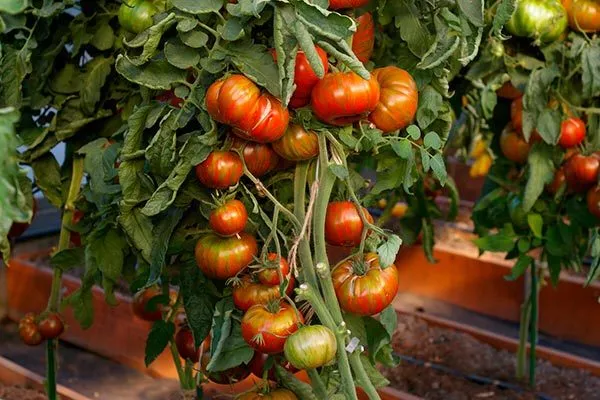
The bush's stems are strong, with sparse foliage and robust roots. Inflorescences begin to form at the 8th leaf, and are spaced every 2-3 leaves on the plant. A single cluster produces 4 to 6 tomatoes.
What do the fruits look like?
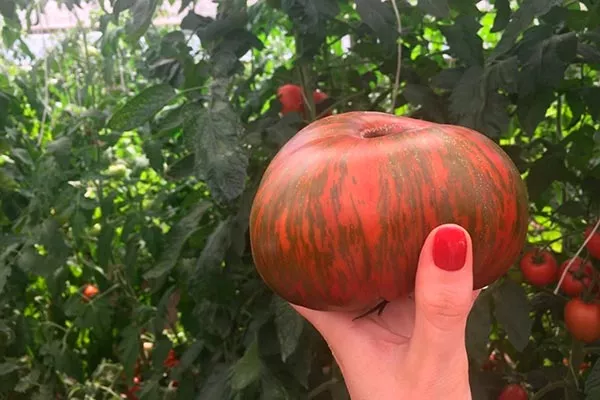
The main feature of this variety is the unique appearance of its fruits. Not only are they multicolored, but they are also very large.
Brief description:
- Color of unripe fruit: green.
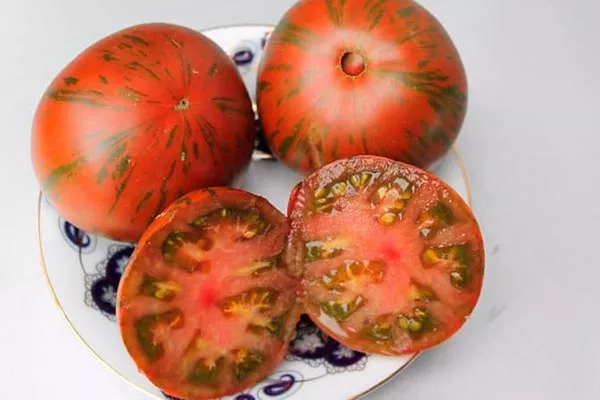
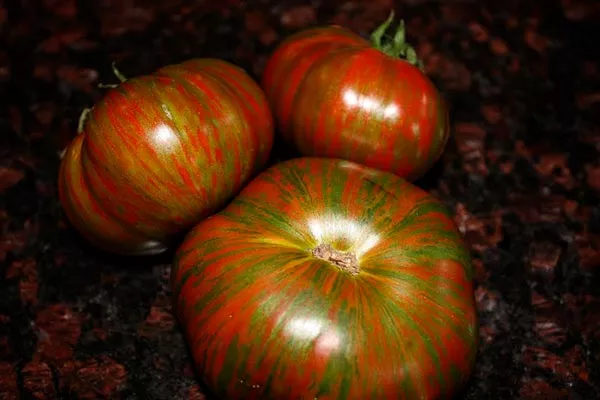
- The ripe fruit is bright red, brown, or burgundy in color. The background color is marked with green, yellow, orange, or chocolate stripes.
- Flesh color: brown or pink. Greenish veins may be present.
- Skin: thin, smooth, glossy.
- Shape: rounded-flattened with slight dents. Ribbed at the base.
- Weight: 300-600 g. In rare cases it reaches 1000 g.
Taste and purpose of fruits
The fruit's flesh is juicy and aromatic, with a sweet, slightly tomato-like tartness. Striped tomatoes have very thin skin, so they are not canned whole.
They are eaten fresh, used in salads, in the preparation of various dishes, and in all kinds of preparations - tomato paste, ketchup, sauces, etc.
Varietal qualities
This American striped variety, in addition to its excellent taste and unique fruit appearance, boasts excellent agronomic characteristics, which have already been appreciated by gardeners and summer residents who have tried growing this variety in their plots.
Average yield
This variety is considered high-yielding. On average, 8 kg of tomatoes are harvested per square meter. A single bush can yield 4.5-5.5 kg of ripe fruit, and when trained into two-stemmed bushes, 10 kg. In commercial cultivation, 50-70 tons of tomatoes are harvested per hectare.
Ripening time
This variety has a mid-early ripening period. From germination to harvest, it takes 105-110 days. The exact ripening time depends largely on climate, weather, and cultivation methods.
Frost and drought resistance
This variety is heat-loving, like all nightshade crops. It is completely frost-intolerant, so in regions with long springs and late summers, it is grown under cover. Drought is generally tolerated by this variety, but it negatively impacts both the growth of the entire plant and the condition of the fruit.
Immunity to diseases
The Striped Chocolate variety is quite young, having been developed overseas, so there is no precise information yet about its resistance to diseases in Russia.
According to reviews from gardeners who have already planted and grown this variety, it has fairly strong immunity to late blight, powdery mildew, blossom-end and root rot, and tobacco mosaic.
Pros and cons
This original variety with striped fruits has many attractive advantages for gardeners. However, it also has some drawbacks, which are best learned before planting.
Landing features
When growing American tomatoes, it's important to plant them correctly, select a good location, and provide them with the necessary growing conditions. This variety is recommended for growing from seedlings.
Site selection and preparation
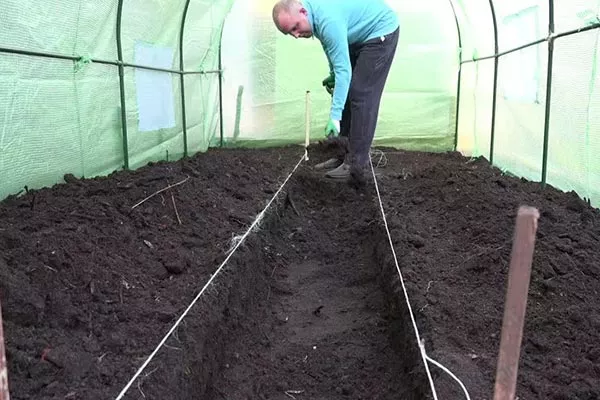
Choose a warm, well-lit, level, and draft-free site. It's important that the groundwater level isn't too high, as moisture at the roots is harmful to tomato plants. The minimum water level above the soil surface is 1.5 meters.
Timing of sowing for seedlings
The timing of sowing seedlings depends on where the tomatoes will be grown—in the open ground or in a greenhouse. If the seedlings are to be grown under cover, they can be sown as early as early March. For open ground, tomatoes are sown in mid-April.
How to prepare seeds
It's recommended to prepare planting material in advance. They need to be disinfected, sorted, and germinated. The most important thing is to first ensure that the seeds haven't expired.
How to prepare seeds:
- First, the seeds are immersed in salt water for 30 minutes. Any seeds that float to the surface are discarded as they are not viable. The remaining seeds are thoroughly rinsed to remove the salt solution.
- Next, the seeds are immersed in pink potassium permanganate for about 20 minutes to disinfect them. Another antiseptic can also be used. Since potassium permanganate is difficult to find these days, gardeners recommend replacing it with a soda solution, which not only disinfects the seeds but also stimulates their growth.
- To speed up germination, soak the seeds in damp cheesecloth for 12 hours. Use warm water, and it's recommended to add a growth stimulant.
- ✓ Use only hardwood ash, as it contains more potassium and phosphorus, which are essential for plants.
- ✓ Avoid ash from coniferous trees and treated wood due to the high content of resins and chemicals.
Preparing the planting container
Tomatoes are sown in containers or directly into individual cups. The containers are filled with store-bought soil or a homemade potting mix. For example, you can mix turf and compost in a 1:1 ratio. Sand can also be added to the mixture for loosening and wood ash.
Plastic containers, pots, cassettes, or any homemade containers can be used as planting containers. Seedlings can also be grown in peat pellets or pots. The latter method allows for better establishment and faster growth. Any soil, whether store-bought or homemade, must be disinfected.
Fill the disinfected containers with nutrient-rich soil, prick the seeds into it, and cover them with potting mix. Maintain a 3-cm spacing between rows and a 1.5-cm spacing between seeds. Place 2-3 seeds at a time in individual pots to ensure 100% germination. Later, select the strongest of the emerging seedlings, and discard the rest.
Growing and planting seedlings
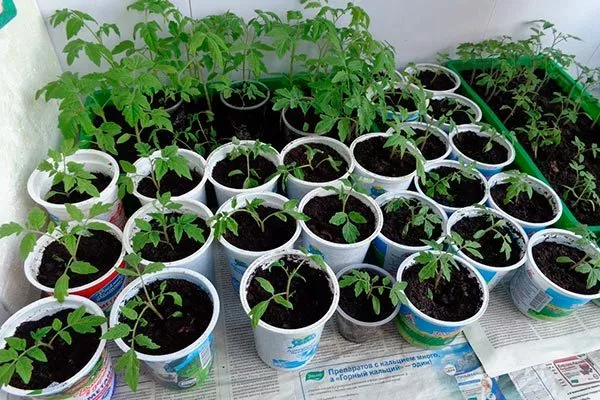
The crops are covered with glass or film, which is removed when seedlings emerge. The seedlings are grown in a warm, well-lit area. The optimal temperature is 25°C. Tomatoes typically germinate within a week of sowing.
How to grow seedlings:
- The soil is regularly moistened with a spray bottle, avoiding over-watering, otherwise mold may develop in it, and the seedlings risk getting black leg disease.
- The seedlings must be illuminated to ensure long daylight hours. After the first true leaves appear, the seedlings are transplanted into individual containers (if they were previously grown in containers or boxes).
- Seedlings are fertilized with organic matter, such as vermicompost. The first application is two weeks after germination.
- A couple of weeks before transplanting into the ground, the seedlings begin hardening off by taking them outside for 15-20 minutes at first, then increasing the daily hardening time to 1-2 hours.
Features of planting tomato seedlings:
- Holes or rows are dug for planting. Space adjacent plants 40 cm apart. The width between rows is 50 cm.
- The holes are pre-watered; once the water has soaked in, the seedlings are planted. The roots are covered with soil, compacted, and watered again.
Care
This variety requires standard care. To ensure a good harvest of large, tasty tomatoes, the bushes require regular watering, fertilizing, loosening, and staking.
Watering
Water the bushes as the top layer of soil dries out. Typically, watering occurs 1-2 times a week. The first watering is not recommended until 10 days after planting. The recommended watering rate is 700 ml per plant.
Subsequently, tomatoes are watered 1-2 times a week, depending on the weather and soil conditions. In open ground, tomatoes are watered in the evening, and in a greenhouse, in the morning. The watering depth should be 40 cm. In hot weather, tomatoes are watered frequently, even daily, in small doses of approximately 1.5 liters per plant.
When the fruit begins to ripen en masse, watering becomes more frequent and abundant. Immediately before harvesting, it's recommended not to water the tomatoes for several days. This will reduce the risk of cracking.
Fertilizing
The first fertilizer application is done a week after planting the seedlings. Organic fertilizer, such as diluted cow manure, is typically used. Alternatively, mix manure with water in a 1:8 ratio and add 20 g of superphosphate to the solution.
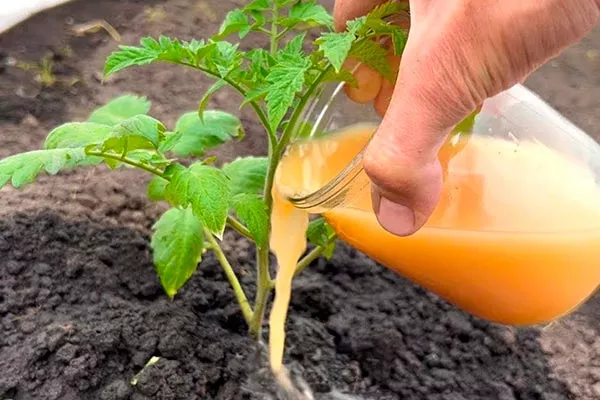
- A week after planting the seedlings, add a solution of mullein (1:8) with the addition of 20 g of superphosphate per 10 liters of water.
- Two weeks after the first feeding, add mineral fertilizers: ammonium nitrate (10 g), superphosphate (20 g), potassium salt (15 g) per 1 sq. m.
- Repeat mineral feeding after two weeks to maintain growth and fruiting.
After two weeks, I feed the young tomatoes with mineral fertilizers. I add ammonium nitrate (10 g), superphosphate (20 g), and potassium salt (15 g) per square meter. Repeat this feeding after two weeks.
Loosening and weeding
Before watering, hill up the tomatoes. The first time, do this a week after planting the seedlings. Subsequently, hill up the tomatoes approximately every three weeks. After watering, loosen the soil and weed it. The soil can also be mulched with hay, straw, peat, compost, etc.
Formation
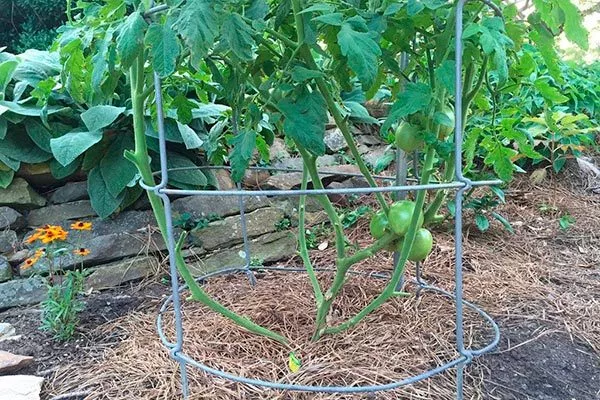
Tomato plants can be trained to have one, two, or three stems. Side shoots are always removed, meaning shoots growing in the lateral leaf axils are removed. It's also important to tie the plants to a support, such as a trellis, in a timely manner, otherwise the shoots will break under the weight of the fruit.
Diseases and pests
The variety has strong immunity, but under unfavorable conditions it can be affected by certain fungal diseases or other infections.
Preventing the occurrence of diseases can be achieved by following agricultural practices, as well as preventative spraying with Bordeaux mixture, effective fungicides, and biological preparations.
The variety is susceptible to aphids and Colorado potato beetles. A soap solution is effective against aphids, and biological products such as Fitoverm, Baktofit, and others can be applied a few days before harvesting ripe tomatoes.
Harvesting and storage
Striped tomatoes ripen in midsummer. They are harvested during dry weather. Don't delay harvesting, as ripe tomatoes can crack in the sun. Fruits picked unripe can be stored in a dark, dry place to ripen.
Reviews
The Striped Chocolate tomato will certainly appeal to lovers of unusual new varieties and exotic cultivars. Despite its unusual appearance and foreign origin, this American variety has proven to be a great success among Russian gardeners.