
The Pink Paradise tomato attracts gardeners with its disease resistance and excellent flavor. This hybrid is ideal for both greenhouses and open ground, delivering a consistent harvest of large, fleshy, and sweet fruits. With proper care, you can increase productivity and obtain good yields.
Breeding history
The variety was developed by breeders at Sakata Vegetables Europe, a subsidiary of the Japanese Sakata Seed Corporation. An application for its registration in Russia was submitted on November 30, 2005.
In 2007, the variety was included in the State Register of the Russian Federation and recommended for cultivation in private farms as a greenhouse crop.
Description of the variety
Foreign varieties always attract attention with their originality and unusual flavor, and the Pink Paradise hybrid is no exception. Despite its relatively recent arrival in Russia, it has already gained popularity among both novice and experienced gardeners.
Appearance of the plant
This indeterminate species reaches a height of approximately 2 m. Its strong stems are well-foliated, and its small, light-green, carved leaves are odd-pinnate in shape.
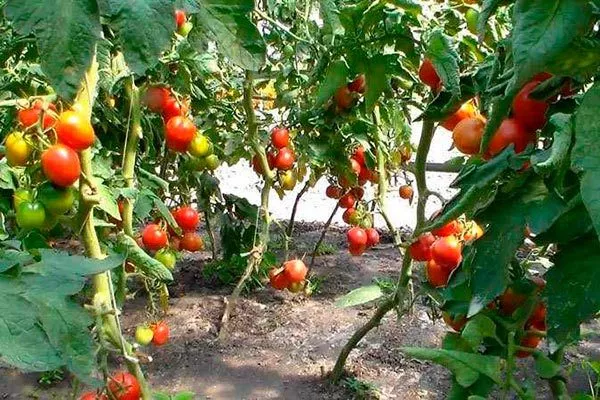
The plant blooms with modest yellow flowers gathered in clusters. The first cluster forms above the 6th or 7th leaf, each containing 4 to 6 flowers that develop into ovaries.
Fruits and their taste qualities
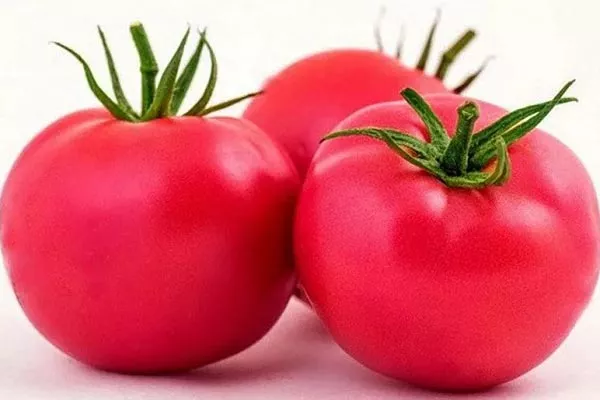
The tomatoes are large, flat-round, and have subtle ribbing. Unripe tomatoes are light green, turning a rich pink as they ripen.
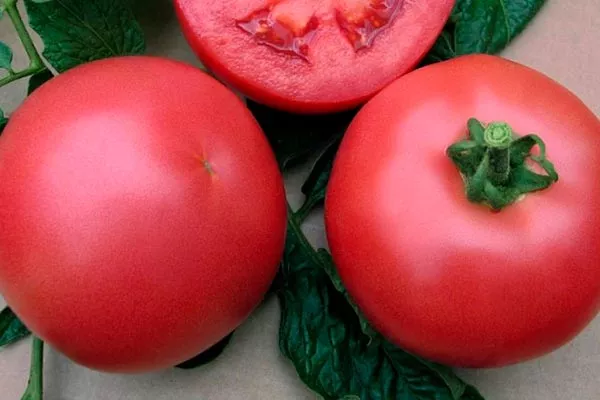
The fruits have a fleshy texture and a rich, sweet flavor. The skin is thin but crack-resistant. The weight of a single tomato ranges from 125 to 140 g, and with proper care, some can reach 200 g. Ripe tomatoes have a good shelf life, retain their marketable appearance for a long time, and withstand transportation well.
Characteristic features
When choosing tomatoes for planting, gardeners pay special attention to their descriptions, and Pink Paradise is no exception. It's important to carefully study the variety's characteristics: fruit appearance, yield, and the crop's growing requirements.
Scope of application
This versatile variety is eaten fresh, added to salads, pickled, and preserved. The thick skin prevents cracking during pickling. The juicy flesh makes them ideal for juices, smoothies, sauces, and tomato paste.
Ripening period and yield
The Pink Paradise tomato is a mid-season variety: the fruits ripen 95-100 days after ovary formation. This period may be extended under adverse weather conditions or improper care. This hybrid is characterized by a long fruiting period – harvesting begins in July and continues until August.
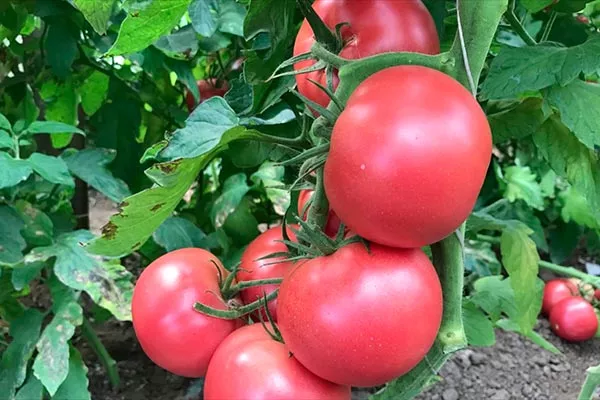
The crop has good productivity: more than 1 kg of tomatoes can be harvested from one bush, and the yield from 1 square meter is about 3.9 kg.
Timing of planting seedlings and transplanting into the ground
The sowing time for seeds depends on the regional climate. Sowing should be done 55-60 days before the expected planting in the ground or greenhouse. This is usually done in late February or early March.
Transplant seedlings to their permanent location when the threat of night frost has passed and the soil has warmed to 12-15°C. For greenhouses, transplanting is possible in late April or early May, and for open ground, in late May or early June.
Pollination of bushes when grown in a greenhouse
A distinctive feature of this variety is its ability to self-pollinate. During flowering, gently shake the stems to ensure the leaves touch. This will increase the yield.
Growing seedlings
If you decide to grow your own bushes from seeds rather than buy ready-made seedlings from experienced gardeners, it's important to familiarize yourself with the basic rules. Healthy and strong seedlings will form the basis for a strong plant and a bountiful harvest.
Preparing the seeds
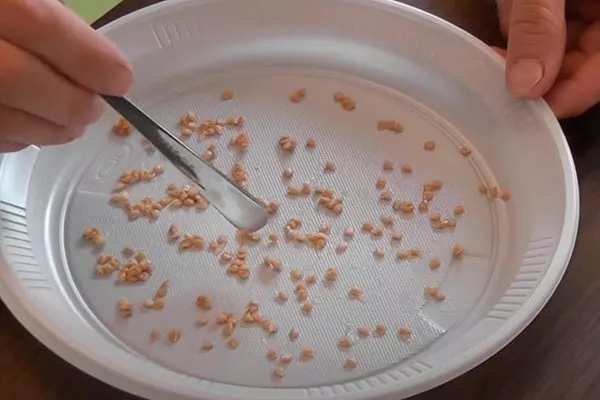
Before starting the project, make sure the planting material hasn't expired, as stale seeds have a low germination rate. Seed preparation involves several steps:
- Select any damaged, moldy or fungal seeds and discard them.
- Disinfection is not required, as the producer has already carried out all necessary measures to protect the grains from diseases.
- To speed up germination and increase viability, treat the planting material with a growth stimulant, such as Epin, by soaking it for 12 hours.
- After this, remove any floating specimens, as the likelihood of them sprouting is extremely low.
Selecting a container
Use a variety of containers for sprouting seeds. The choice isn't critical. Long plastic trays or wooden boxes are the most convenient. Some vegetable growers prefer to use cut-down five-liter bottles or juice cartons.
Once the seedlings have sprouted, transplant each seedling into a separate container. Small peat pots, disposable cups, and similar containers are best for this.
Soil requirements and substrate preparation
Pink Paradise tomatoes require light, nutritious, well-drained soil with a neutral or slightly acidic pH (6-7). For best growth and development, it's important that the soil is loose, permeable, and retains moisture well.
- ✓ The pH level should be strictly within 6-7; for accurate measurement, use a pH meter.
- ✓ The soil must contain at least 30% organic matter to provide nutrition.
Before planting, prepare the substrate. Follow these recommendations:
- Dig over the area thoroughly, removing all weeds and old plant debris.
- Add organic fertilizers, such as humus or compost, to improve the soil structure and provide the plant with nutrients. Additionally, add complex mineral fertilizers containing phosphorus and potassium.
- If the soil is heavy or poorly drained, amend it with sand or perlite to improve drainage. If the soil is too acidic, apply lime to achieve a neutral pH.
This preparation will provide optimal conditions for the growth and fruiting of tomatoes of this variety.
Sowing seeds
Sow the seeds in a spacious container, burying them 1.5 cm deep in the soil. Cover the container with plastic wrap and place it in a well-lit area, such as a windowsill. The optimal temperature for germination is 25 degrees Celsius.
To prevent moisture stagnation, ventilate the seedlings regularly. This can be accomplished by opening the film for a few hours during warmer periods.
Rules for growing seedlings
When cultivating seedlings, it's important to follow several recommendations to ensure strong, healthy plants. Follow these important rules:
- Moisten the soil as it dries using a spray bottle. The water should be at room temperature.
- Maintain optimal temperature and humidity levels.
- When the seedlings develop true leaves, transplant them into separate pots, preferably made of peat.
- After the plants have adapted, feed them with complex fertilizers.
- Water the seedlings in individual pots using a watering can, adjusting the frequency of watering depending on how quickly the soil dries out.
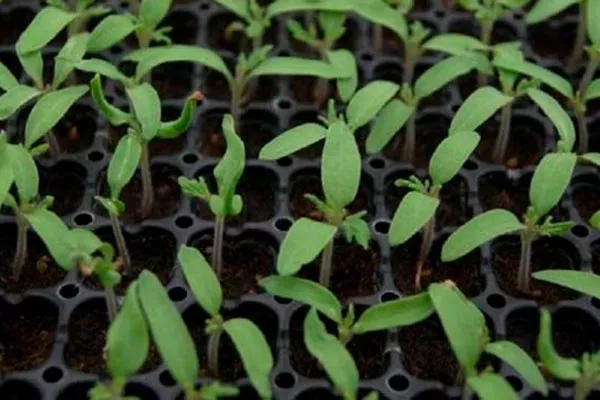
Two weeks before planting outdoors or in a greenhouse, begin hardening off the seedlings. During warmer periods of the day, take the pots with the seedlings outside, starting at two o'clock in the morning, gradually increasing the time spent outdoors.
Transplantation into the ground
Plant tomato seedlings in the last ten days of May, when the soil has warmed to the desired temperature. To improve growth, add ash and compost to the holes. Plant the plants deep enough to reach the first cotyledon leaves to encourage additional root formation.
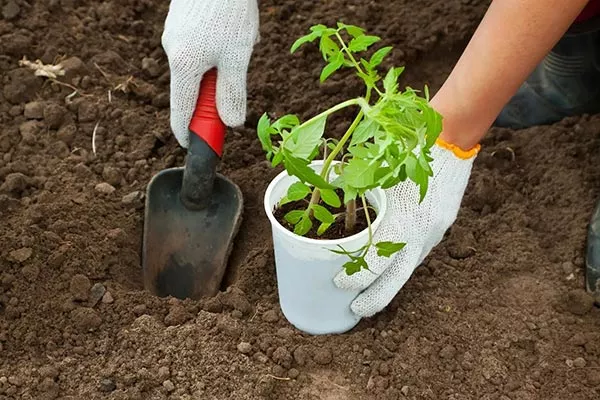
The distance between plants should be 60 cm, and between rows 40 cm. Tie the tomato stems to a wooden support for support. Water the seedlings for the first time one week after planting them outdoors, and also apply the first fertilizer.
Care instructions
Caring for tomato seedlings is the key to a healthy and bountiful harvest, as timely watering, fertilizing, and removing side shoots promote proper plant development. Providing the plants with comfortable conditions will significantly improve the quality and quantity of the produce.
Watering
The hybrid is more sensitive to excess moisture than drought. After planting, the bushes do not require additional irrigation for the first 30 days, as they obtain sufficient moisture from the soil thanks to their well-developed roots.
However, keep an eye on the soil in the holes: if it dries out, lightly moisten the seedlings at the roots. After the first month, water once a week or install a drip system for more convenient water delivery.
Top dressing
After planting tomatoes, apply the first nitrogen fertilizer, then repeat during fruit set. Once ripening begins, use potassium-phosphorus fertilizers, as potassium promotes fruit growth, while phosphorus improves plant development.
To stimulate fruiting, use succinic acid or Rastvorin during one of your waterings. When using the latter, follow the package instructions precisely.
Pinching out side shoots and shaping the bush
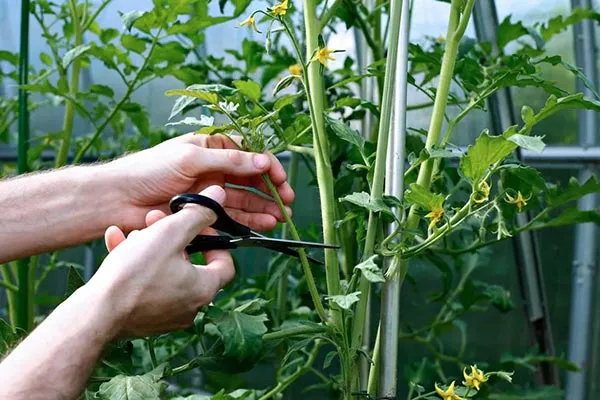
The plant produces side shoots that form into two stems. As soon as a new stem begins to grow, carefully trim it off. Check the plants once or twice a week and remove all side shoots to leave only one main stem.
The nuances of growing tomatoes in a greenhouse and in open ground
The manufacturer recommends growing Pink Paradise tomatoes in greenhouses or hotbeds, as these conditions produce the best yields. Caring for this hybrid in a greenhouse is straightforward: regularly moisten the soil, tie up the plants, and remove any side shoots.
Planting seedlings in open ground is possible, but this may reduce the hybrid's performance. Try to create greenhouse-like conditions in your garden as much as possible; for example, cover the bushes with plastic at night to create a greenhouse effect.
Keep in mind that growing this variety outdoors increases the risk of late blight, especially in rainy weather. Therefore, harvest even unripe fruits to prevent infection. Experienced gardeners claim that growing in a greenhouse yields better results.
Pests and diseases
Pink Paradise is highly resistant to most plant diseases, significantly reducing the need for frequent treatments. Therefore, even a novice gardener will find this variety easy to care for.
- Before planting, treat the soil with a solution of Fitosporin (10 g per 10 l of water).
- Two weeks after planting, spray the bushes with a solution of copper sulfate (1%).
- During the flowering period, use biological preparations to prevent late blight.
However, plants may be subject to various difficulties:
| Disease/Pest | Symptoms | Methods of control |
| Phytophthora | Brown spots on leaves, dark spots on fruits, rot. | Treatment with drugs: Quadris, Mikosan, Previkur. |
| Powdery mildew | Whitish streaks on leaves, forming a white coating, wilting and drying out of plants. | Spraying with solutions: Topaz, Fitosporin, colloidal sulfur. |
| Root rot | Darkening of roots, yellowing and wilting of lower leaves. | Preparations: Fitosporin, Vertimek, elimination of over-watering. |
| Aphid | Curling and yellowing of leaves, sticky marks on bushes, presence of ants. | Insecticides: Aktar, Iskra, Tanrek. |
| Whitefly | White insects on the underside of leaves, yellow spots. | Use of insecticides: Aktara, Confidor, Neoron. |
| Spider mite | They leave yellowed spots and cobweb-like formations on the leaves. | Use of insecticides: Akarin, Fitoverm, Talstar. |
| Tomato mosaic virus | Light streaks on the green mass, which leads to curvature and yellowing, reducing yield. | There is no specific treatment; it is necessary to remove diseased bushes and control the vectors (aphids). |
| Fusarium | Wilting and yellowing of the lower leaves, brown spots on the stem, wilting of the plant. | Treatment with Previkur, Fundazol, Topsin. |
Collection and use of fruits
Begin harvesting when the first tomatoes reach maturity. Each morning's harvest involves carefully removing the ripe tomatoes with scissors. Continue harvesting until the first frost sets in.
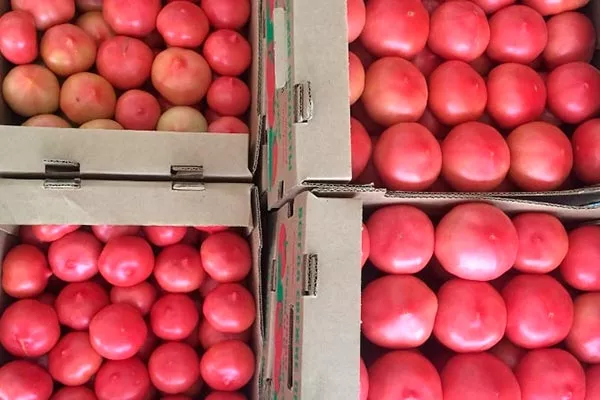
During rainy weather, pick large, unripe tomatoes. They will ripen at room temperature if left with the stems on. Pink Paradise tomatoes have a sweet flavor and are most often eaten fresh. They make a delicious puree or tomato juice.
Analogues
| Name | Plant type | Plant height | Fruit color | Fruit weight |
|---|---|---|---|---|
| Pink Paradise | Indeterminate | 2 m | Deep pink | 125-140 g |
| Prime Minister | Indeterminate | 2 m | Red | 200 g |
| Bobcat tomato | Determinant | 1-1.2 m | Red | 180-240 g |
If you want to increase your yield and harvest more vegetables, plant several similar varieties in your garden. The Pink Paradise hybrid has several similar varieties:
- Premier. The fruits are red, weighing approximately 200 g, and have a rounded shape. This variety grows tall, reaching 2 m in height. The ripening period is 115-120 days.
- Bobcat tomato. This hybrid, developed in Holland, boasts red skin, but weighs between 180 and 240 grams and has a flat, round shape. The bushes reach 1-1.2 m in height, and the ripening period reaches 120-130 days.
Positive and negative qualities
Before growing a crop in your garden, carefully consider its advantages and disadvantages. The Pink Paradise hybrid has many advantages:
Some gardeners cite the average yield, the inability to use seeds from their own vegetables, and the need for tying and pinching as negative qualities of the hybrid.
Reviews
The Pink Paradise tomato is the ideal solution for vegetable growers seeking a high-quality variety with exceptional flavor. Despite its minimal care requirements, it guarantees a consistent harvest of large, sweet fruits. This variety will definitely not disappoint and will provide a joy to grow.