
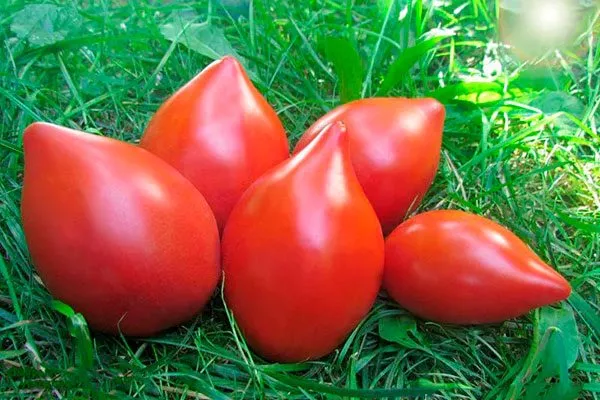
Pink Horn is a hybrid tomato with a unique pepper-shaped fruit and a rich pink color. The plants grow vigorously and easily tolerate changing weather conditions. The tomatoes have a pleasant dessert flavor, making them ideal for fresh consumption. They are also used for processing.
Description of the bush and fruits
This variety was developed by American breeders and is semi-determinate, allowing the plants to continue growing after reaching a certain height. The bushes are robust and have short internodes.
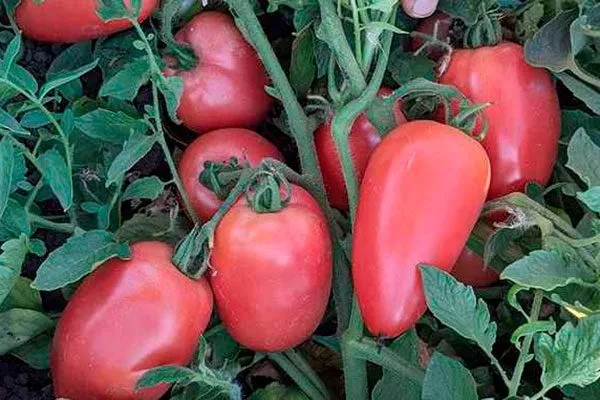
Distinctive characteristics of vegetables:
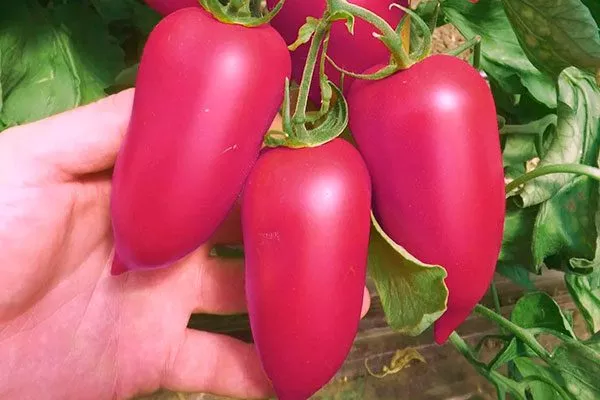
- form - unusual pepper-shaped;
- color – deep crimson;
- length - 10 cm;
- weight - varies from 140 to 180 g.
These tomatoes have a distinct dessert flavor, with sweet, juicy, and aromatic flesh. They are perfect for eating fresh and for preserving for the winter.
Main characteristics
This hybrid's tomatoes ripen in July-August, taking 59-63 days from sowing to emergence. Fruiting is uniform, ensuring a consistent harvest. A single cluster can produce up to 50 fruits, making this variety highly productive and attractive for commercial cultivation.
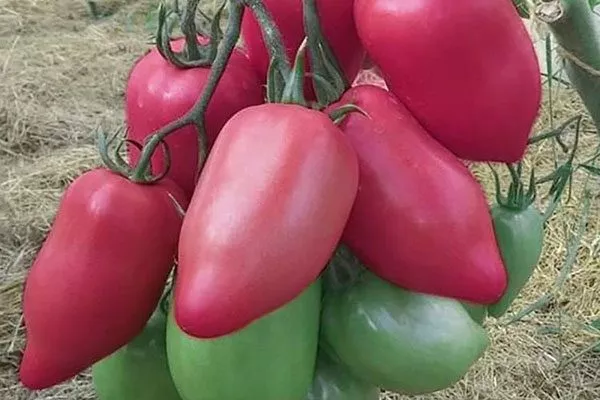
To preserve the quality of the vegetables, it is recommended to harvest them at full maturity. This variety is resistant to blossom-end rot, fusarium wilt, and verticillium wilt. It is successfully grown both in open ground and in greenhouses or tunnels.
Boarding order
Medium loamy and chernozem soils are ideal for growing the Pink Horn tomato. This variety performs best in the North Caucasus and Volga regions. Before planting, ensure the plants are protected from drafts, as these can negatively impact tomato development.
Proper preparation of the site
In the fall, start cultivating your garden beds. Follow these simple steps:
- Dig the soil to a depth of 20-25 cm.
- Remove the weeds.
- Spray the soil with Fitolavin to prevent diseases.
In the spring, four days before planting the seedlings, loosen the soil again and add chicken manure mixed with sodium humate. This fertilizer will provide the plants with the necessary nutrition. Prepare furrows with a spacing of 70-75 cm between rows.
Conditions for seed germination
Begin sowing Pinkhorn tomato seeds in the first week of March. Follow these recommendations:
- Soak the seeds in Energen-Aqua for 10 hours.
- Use containers or boxes to grow seedlings. Fill them with a sandy-peat mixture.
- Place 3-4 seeds per container at intervals of 4 cm.
- Before germination, seedlings need adequate light, so install grow lights. Keep them at 18°C, then increase the temperature to 24°C.
Exact numbers and planting pattern
In the central part of the country, transplant Pinkhorn tomato seedlings into open ground at the end of May; in the south, transplant 20 days earlier. In northern regions, begin the process two weeks later.

The bushes are considered ready for transplanting when they have formed 7-8 leaves and have reached a height of 35-40 cm. When planting, deepen the plants by 2.5-3.5 cm above the root collar, and leave a distance of 50 cm between plants.
Important nuances of care
To accelerate ripening and produce a high-quality harvest, the crop requires regular cultivation. Plants are trained into 2-3 stems, with no more than 5 clusters per stem, which promotes uniform fruit development and ripening.
Basics of watering
Provide ample moisture to the plants. In moderate temperatures and rainfall, water the bushes every 3-4 days, and daily in hot, rainless weather.

Carry out the procedure in the morning after the dew has cleared. Use 3 liters of water per plant, preheated to 25°C to prevent potential diseases.
Subtleties of feeding
The Pinkhorn hybrid requires four applications of fertilizer, combining minerals and organic matter. Fertilizing schedule:
- 15 days after landing – boric acid mixed with nitrophoska and carbon chips;
- during flowering – chicken manure diluted with potassium sulfate;
- during active growth of vegetables – Superphosphate in combination with potassium humate;
- at the beginning of fruiting – humus mixed with calcium nitrate.
Diseases and pests
The crop has high resistance to bacterial and fungal diseases. The only potential threat under unstable weather conditions or inadequate care is blossom-end rot.
It appears as gray-brown, damp spots on ripening tomatoes due to calcium deficiency and soil contact. The disease is not bacterial or fungal. Remove severely damaged tomatoes, and treat the plants with calcium nitrate or cuprozate.
Sometimes bushes can be attacked by pests:
- Melon aphid. A small, light beige insect that appears in hot, dry weather. Its presence is indicated by dark spots on the leaves. For control, use Fufanon-Nova or Ultor.
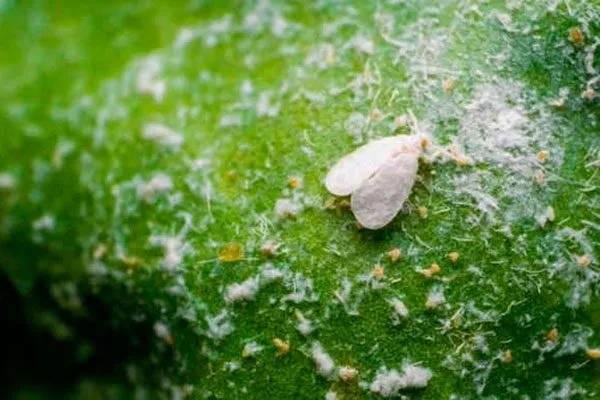
- Whitefly. In closed beds, plants may be attacked by grayish-white butterflies, which leave tiny white larvae on the leaves. To control these pests, use Admiral or Matrin-Bio.
Harvest timing and principles
Gardeners can begin harvesting tomatoes as early as late June. The fruits don't ripen very quickly, so pick the ripened ones once a day, usually in the late afternoon. Use scissors or a knife to trim them, leaving a third of the stem intact—this will help them last longer.
After harvesting, place the vegetables in a transparent bag and refrigerate. Brown fruits ripen in a bright room at 21°C.
Pros and cons
The Pinkhorn tomato has many advantages that vegetable growers appreciate. However, it's important to also consider the variety's drawbacks to avoid potential problems in the future.
Reviews
Pinkhorn is an ideal choice for those who appreciate interesting tomato shapes with excellent flavor and high marketability. Despite the need for regular watering and care, this variety will repay the effort with a stable harvest and low maintenance. It is also highly tolerant of adverse conditions and diseases.