
The Pink tomato is a striking example of the pink variety, with beautiful and delicious fruits. This tomato was developed by Russian breeders relatively recently, but has already gained popularity among our gardeners.
The history of the Pink tomato
The Pink tomato was developed by a team of breeders from the Scientific Research Institute of Vegetable Crop Breeding and Gavrish Breeding Firm. The variety was approved for use in 2006.
Recommended for the Northern, Northwestern, Central, Volga-Vyatka, Central Black Earth, North Caucasian and Middle Volga regions.
Description of the plant
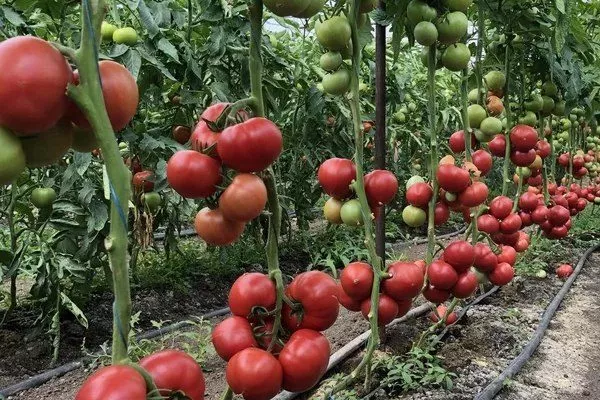
Pink tomato plants grow tall, indeterminate, reaching 1.5 m in height. They have moderate branching and medium-sized, dark green leaves. The inflorescences are simple, with clusters containing approximately six fruits.
Description of fruits
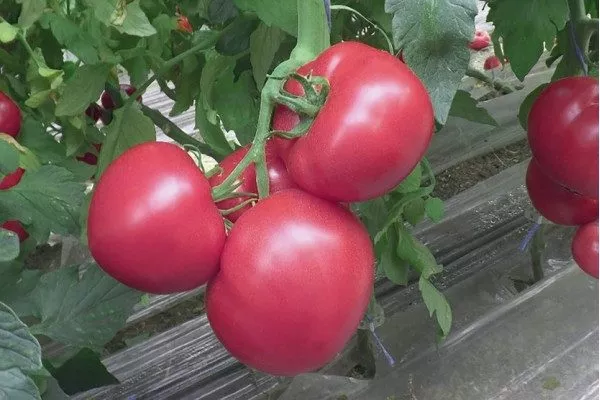
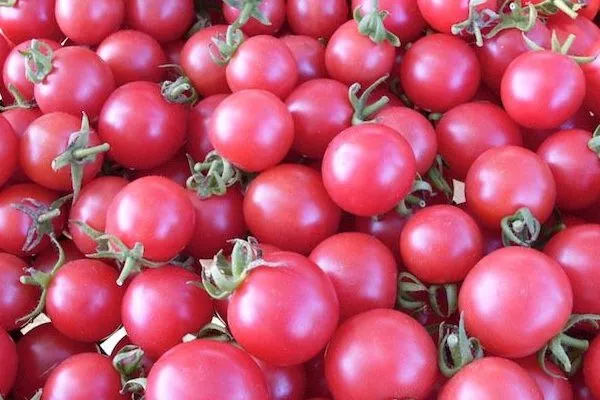
The fruits of the Pink tomato are medium-sized, bright and beautiful, and have an excellent marketable appearance.
Brief description of fruits:
- Color of unripe fruit: light green.
- Colour of ripe fruit: pink.
- Shape: round.
- Skin: smooth.
- Weight: 120-125 g.
Taste and purpose
Pink tomatoes have a light, harmonious flavor. These tomatoes are delicious in summer salads and sliced, and they also make a wonderful addition to any hot dish.
Pink tomatoes are ideal for pickling and canning.
Characteristics
The Pink variety has quite good characteristics, but it is not intended for industrial cultivation; this tomato is suitable for gardeners and lovers of pink tomatoes.
Productivity
The Pink variety has a medium yield. With proper cultivation practices and favorable growing conditions, a single bush can yield 4-5 kg of tomatoes. The average yield per square meter is 3.9-4.4 kg.
Ripening time
The Pink tomato is an ultra-early variety. It takes 90-95 days from germination to fruiting. The first fruits ripen (in temperate climates) in early July, and even earlier in the south.
Frost resistance
The Pink tomato is frost-resistant, which is crucial when growing in temperate climates where sudden cold snaps are possible. The variety also tolerates dry periods well, but these can negatively impact yield, so during droughts, increase the frequency of watering.
Disease resistance
Thanks to its early ripening period, the ultra-early Pink variety is highly disease-resistant. It is virtually immune to late blight, the most common tomato disease.
Pros and cons
The Pink tomato is deservedly popular among gardeners and summer residents. It has many advantages that fans of pink varieties simply cannot fail to appreciate. However, it also has a couple of significant drawbacks.
Landing
Pink tomatoes are typically grown from seedlings. The grown seedlings are transplanted into a greenhouse, hotbed, or open ground—the choice depends on climate conditions and planting timing.
Seed preparation
To ensure successful sowing, use only high-quality seeds. Before sowing, test them for germination by dipping them in a salt solution and discarding any seeds that float. If the planting material is purchased, there's no need to disinfect it—the manufacturer has already done this.
- ✓ Make sure the stimulant is compatible with tomatoes, especially the Pink variety.
- ✓ Check the expiration date of the stimulant before use.
To speed up germination and increase growth energy, seeds are treated with a stimulant (Kornevin, Epin, etc.). Before planting, the seeds are germinated by wrapping them in a damp cloth.
Selecting a site
The Pink tomato is planted in warm, windless areas. It does not thrive in low-lying areas, shade, high groundwater, or drafts. The variety prefers neutral (pH 6–7), loose, and fertile soil.
The plot must have good air circulation, as a lack of it can lead to fungal infections. Crop rotation rules must also be followed: do not plant tomatoes in the same spot for more than 2-3 years in a row. Also, avoid planting tomatoes after nightshade crops.
How to prepare the soil?
The Pink tomato will thrive in light, nutritious, well-drained, moisture-retentive, and breathable soil. The soil is usually prepared in the fall, dug over to the depth of a spade, removing all weeds and plant roots.
Organic fertilizers such as humus or compost, and mineral fertilizers containing phosphorus and magnesium are added during digging. In overly acidic soils, slaked lime, dolomite flour, or wood ash are added to reduce acidity. The acidity level can be determined using special test strips. In heavy or poorly drained soils, sand or perlite is added to improve water drainage.
Growing and planting seedlings
When growing seedlings, it is important to maintain the temperature regime, provide long daylight hours, and water and feed the seedlings on time.
Features of growing Pink tomato seedlings:
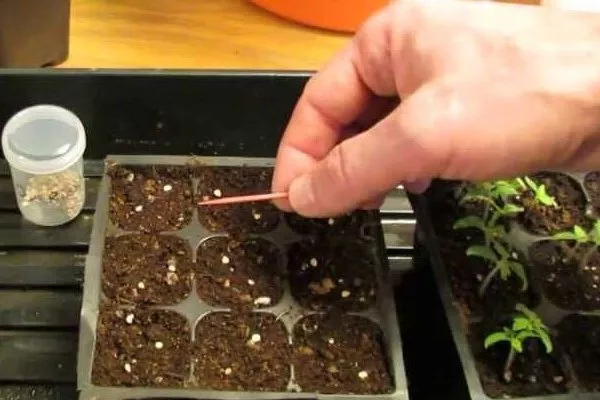
- Sow seeds in containers filled with nutrient-rich substrate or in peat pots. If sowing in larger containers, sow the seeds in rows spaced 3-4 cm apart. Plant the seeds 1 cm deep, and space adjacent seeds 1-2 cm apart.
- The seedlings, covered with plastic film, are placed in a warm, well-lit room. The optimal temperature for germination is 25°C. The cover is removed after the seedlings emerge, and the temperature is simultaneously lowered slightly to prevent the sprouts from stretching.
- The seedlings are watered regularly, misting the soil with a spray bottle. When true leaves appear, they are pricked out and transplanted into individual containers, simultaneously pinching out the roots. This procedure stimulates root branching and strengthens the seedlings. Once the seedlings have adapted, they are fertilized with a complex fertilizer.
- 2-3 weeks before transplanting into the ground, the seedlings are taken outside to harden off.
The process of planting in the ground
Pink tomato seedlings are grown for approximately 30-35 days and planted around the beginning of May. Selection is based not only on the age of the seedlings but also on weather conditions.
Planting should only occur after the soil has warmed to at least +14°C (to a depth of 20 cm). A stable temperature of +18…+22°C should also be established.
Features of planting Pink seedlings in the ground:
- For planting, prepare holes according to a 30 x 50 cm pattern. The holes should be large enough to accommodate the roots of the seedlings.
- Fertilizers are added to the hole—rotted manure, wood ash, and superphosphate. The holes are watered with warm, settled water, and the seedlings are planted after the water has soaked in. The plants are planted deep down to the first cotyledon leaves.
- After planting, the tomatoes are watered again and then mulched with straw, grass, etc.
- Supports are installed next to the planted seedlings for tying.

Care
It's important to provide the Pink tomato with water and nutrients to maintain its yield. Proper care ensures high fruit quality, quantity, and flavor.
Watering mode
Bushes are watered on average 1-2 times a week. The soil should not dry out, but there should also be no stagnant moisture. The number, frequency, and volume of waterings depend on weather conditions and soil conditions.
Fertilizing
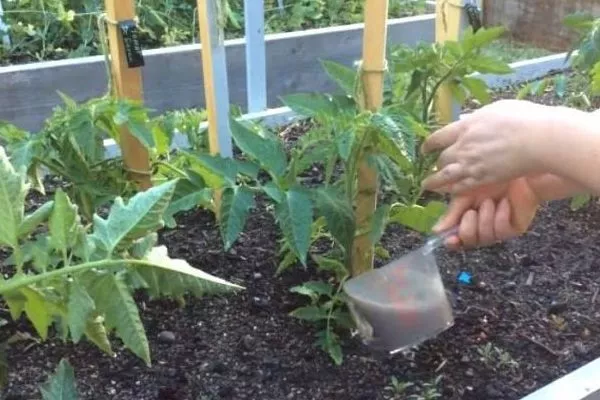
Pink tomatoes are fed every two weeks. Once the tomato plants bloom, a complex fertilizer containing nitrogen, phosphorus, potassium, and micronutrients, such as the concentrated BioMaster, is applied to the roots.
Loosening and weeding
Tomato beds must be weeded and loosened. It's important to remove weeds promptly, as they promote the spread of diseases and pests and absorb nutrients intended for tomatoes.
Loosen the tomatoes carefully, to a depth of 5-6 cm, and hill them a couple of times to stimulate the formation of lateral roots.
Mulching
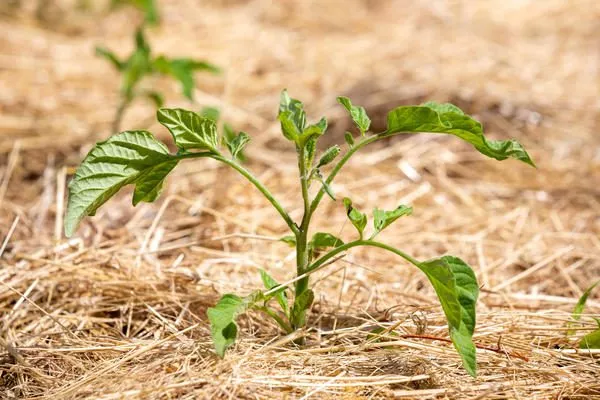
To reduce the frequency of watering and loosening, the soil is mulched with straw, peat, humus, or other loose organic matter. A layer of mulch not only retains moisture in the soil but also effectively prevents weed growth.
Diseases and pests
This variety is virtually immune to late blight, but is not immune to other diseases. To prevent fungal and other diseases, spray the bushes with Topaz, Fitosporin, or similar products.
Pink tomato bushes can be affected by aphids and whiteflies, which can be controlled with Aktara, Confidor, and other insecticides. Spider mites can also damage tomato bushes, which can be controlled with Fitoverm, Akarin, and other insecticides.
Harvesting and storage
The first fruits are harvested in July, carefully cut with scissors to avoid damaging the stems. Harvesting is recommended in the morning, on a dry, clear day.
The fruits are stored in wide containers in a single layer. The boxes of tomatoes are placed in a cool room, where they can be stored without losing their flavor or appearance for 3-4 weeks.
Reviews
The Pink tomato will undoubtedly appeal to gardeners and summer residents seeking ultra-early varieties. If you want to get your first tomatoes before anyone else, delicious and aromatic, the Pink variety is perfect for you.