
The Peach tomato is an unusual variety with velvety skin and a sweet flavor, which has gained popularity among gardeners for its decorative qualities and taste. The fruits have a distinct aroma, juicy flesh, and an unusual texture reminiscent of peach peel. The crop is resistant to diseases and pests and is characterized by good productivity.
History of creation
The hybrid was developed by breeders at Agrofirma Gavrish LLC in Moscow, Russia. Variety trials were conducted across the country for four years, and in 2002, Peach was added to the State Register of Breeding Achievements of the Russian Federation under number 9806105.
This tomato is recommended for early cultivation in all regions of the country. It is successfully grown in garden plots and on small farms, both under greenhouse covers and in open ground.
Characteristics of the variety
This peach belongs to a series of varieties with a unique skin, which is lightly pubescent, creating a velvety texture. This particular characteristic of the fruit inspired the name chosen for this line.
Description of the bush and fruits
The plant is determinate, compact, up to 50 cm tall, with strong and vigorous stems. Distinguishing characteristics:
- The leaves are large, rich dark green.
- The first inflorescence is formed above the 7-8th leaf, and the subsequent ones – every 1-2 leaves.
- The tomato produces fruit even in challenging weather conditions. The peduncle is jointed, and each cluster produces 5-6 fruits.
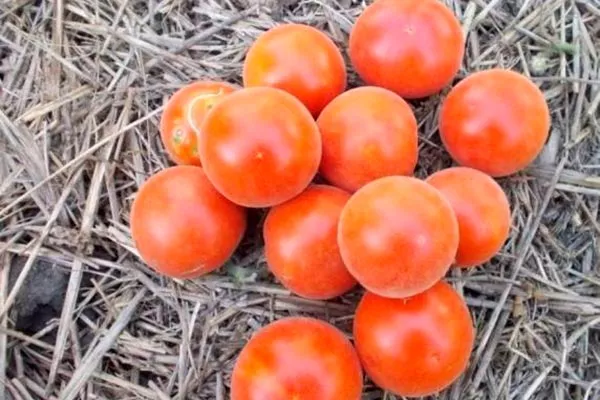
- The tomatoes are small, smooth, round, and ribbed. Their weight ranges from 98 to 106 g.
- At the technical ripeness stage, tomatoes are creamy-orange in color, indicating a high beta-carotene content. The skin is smooth and slightly pubescent.
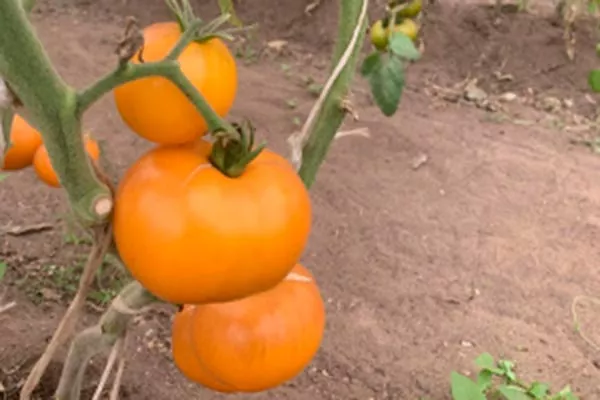
Ripe vegetables do not fall off the bush, and the harvested crop has good shelf life and is resistant to transportation.
Taste and uses of tomatoes
Tomatoes have a distinctly sweet flavor without a hint of acidity. Their juicy flesh contains minimal dry matter, and the sugar level reaches 10%, providing an exceptional sweetness.
Tomatoes are ideal for baby food and dietary nutrition. They make delicious juices and are canned whole. But they reveal their best qualities especially when eaten fresh.
Productivity and fruiting
The peach is an early-ripening hybrid. Full technical maturity is reached in 85-95 days. Harvesting begins in July and continues until September. Productivity in open ground is 6-8 kg per square meter, and in greenhouses it reaches 9-11 kg.
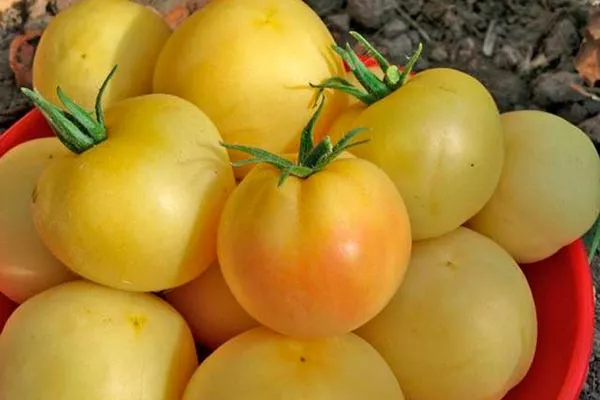
Characteristics of different varieties of peach
| Name | Ripening period | Disease resistance | Peel characteristics |
|---|---|---|---|
| Red | 115 days | High | Velvety fluff |
| Orange | 80 days | Very high | Velvety |
| Pink | 85-95 days | Exceptional | White fluff |
| Yellow | 85-95 days | High | Orange tint |
There are several subspecies of this unusual tomato. They differ in appearance and size:
- Red. The medium-sized fruits are a rich cherry-red hue. A whitish coating on the skin, reminiscent of velvety fuzz, is a distinctive feature. Ripening in open ground occurs on the 115th day. The variety grows successfully both in greenhouses and in open fields.
- Orange. It is distinguished by its large fruits, weighing up to 170 g. It is an early-ripening variety, reaching full maturity by the 80th day. It is characterized by resistance to diseases and low temperatures, and has excellent shelf life.
- Pink. This hybrid surpasses other varieties in its resistance to most diseases and is virtually pest-free. The yield is high—up to 18 fruits can be harvested from a single cluster, significantly exceeding the yield of conventional varieties with 5-6 fruits.
The tomatoes are light cherry in colour and covered with characteristic white fluff. - Yellow. The Cocktail subvariety produces small tomatoes weighing 40 to 50 grams. The tomatoes have a pleasant yellow color with an orange tint. Fertile, light, and neutral soils are preferred for growing this variety.
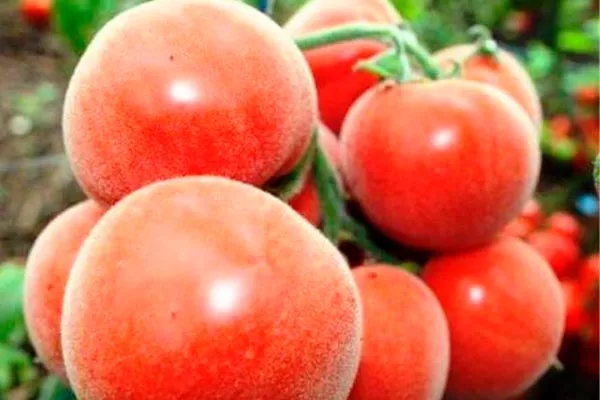
Peach tomato varieties attract the attention of both novice and experienced gardeners. Planting several hybrids at once can improve productivity.
Growing seedlings
It's important to properly prepare seedlings to ensure the plants have the best conditions for growth and development. Sowing timing, preparation of planting material, proper seedling care, and maintenance procedures all play a crucial role in this process.
Sowing dates
The optimal time to sow seeds is February or March, depending on the region and growing conditions. On average, seedling preparation takes about 60-70 days.
Carry out this procedure 2-2.5 months before the planned planting in open ground or a greenhouse, which usually occurs in mid-May. This will allow the plants to reach the required age and size for successful transplantation.
Seed preparation
To ensure good germination of peach seeds, they must be properly prepared. Follow these recommendations:
- Check the seeds for germination: place them in a weak salt solution (5 g salt per 200 ml water) and let sit for 10-15 minutes. Discard any seeds that float to the surface, as they likely won't germinate well. Rinse the remaining seeds with clean water.
- Disinfect the seeds. Use a potassium permanganate solution to prevent potential diseases. Soak the seeds in this solution for 20-30 minutes. Then dry them on a paper towel.
To improve germination and accelerate sprouting, soak the seeds in growth stimulants such as Epin or Zircon. This will boost their energy and accelerate growth.
Sowing seeds
Prepare the soil—it should be loose and well-aerated. Use special tomato soil mixes, available at the store, or make your own by mixing equal parts peat moss, compost, and sand.
Step-by-step algorithm:
- Plant the seeds 1-1.5 cm deep, leaving 2-3 cm between them to prevent seedlings from competing for nutrients and light.
- Cover the containers with film or glass to create a greenhouse effect.
- Place the container in a warm place with a temperature of about 25-27°C. This will ensure rapid germination.
For sowing, use containers that are not too deep, but spacious enough to allow the roots of the seedlings to develop freely.
Caring for seedlings
After the seeds have sprouted, provide the seedlings with optimal growing conditions. It's crucial that the seedlings receive sufficient light. To achieve this, place the containers on a bright windowsill or use grow lights if natural light is insufficient. Ideally, 12-14 hours of light per day is ideal.
Temperature plays an important role in caring for sprouts. During the day, the temperature should be around 22-25°C, and at night, reduce it to 18°C.
Picking and hardening of seedlings
When the seedlings develop 2-3 true leaves, begin transplanting them into individual containers for further growth and development. This prevents overcrowding and allows the seedlings to thrive in more open spaces.
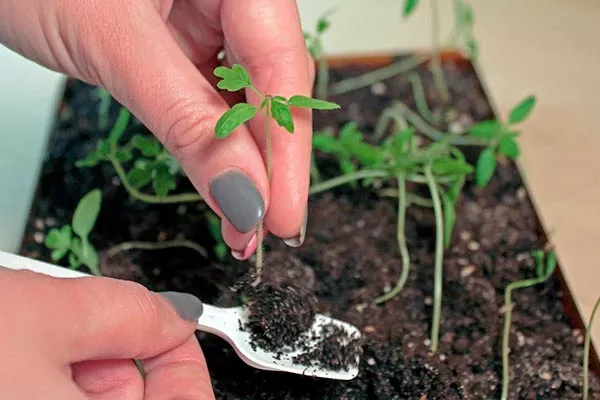
Helpful tips:
- For transplanting, use individual 7-10 cm diameter pots or plastic cups. Gently handle the roots to avoid damaging them. Plant the seedlings deep down to the first leaves to encourage additional root formation.
- After picking, provide the plants with good lighting and watering.
- Before transplanting into the ground, harden off the seedlings to help them adapt to outdoor conditions. To do this, gradually acclimate them to the outdoors: start with 30-40 minutes of fresh air, then increase the time spent outdoors each day to help them tolerate cold nighttime temperatures.
Growing Peach tomato seedlings requires attention and care, but the right approach at every stage will ensure a good start and help achieve an excellent harvest.
Transplantation and further care
Transplant the seedlings into open ground or a greenhouse in mid-May, 50-60 days after sowing the seeds. By this time, the plants should have at least eight developed leaves, and the soil temperature should be above 15°C.
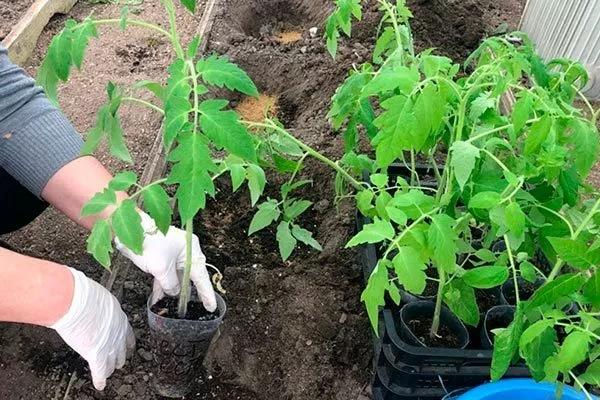
- ✓ The optimal soil temperature for transplanting seedlings should not be below +15°C, which is not mentioned in the article.
- ✓ The distance between plants when planting should be 40 cm to ensure sufficient space for growth and ventilation.
Choose a sunny location for planting, working on a cloudy day or in the evening to avoid direct exposure to bright sunlight. Dig holes and fertilize them with humus and mineral fertilizers. Space the seedlings in a staggered pattern, spacing them about 40 cm apart.
Provide your bushes with comprehensive care. Follow standard agricultural practices:
- Watering and spraying. Water the plant according to weather conditions: infrequent but deep irrigation is preferable. Apply water only at the roots, avoiding overhead spraying, as water droplets can cause sunburn.
Mulch the soil with sawdust or straw to retain moisture. Replace the layer regularly to prevent mold and rot. - Top dressing. This variety doesn't require any mandatory fertilizers, but adding nutrients promotes growth and fruiting. In the early stages, apply nitrogen fertilizers to stimulate foliage development. Once flowering and fruit set begins, replace nitrogen fertilizers with potassium fertilizers.
Throughout the season, use an ash solution (100 g of ash per 10 liters of water, let steep for 4-5 hours). Apply 500 ml of the solution under each bush or 200 g of dry ash per 3-4 plants. Once fruit begins to form, stop applying mineral fertilizers, but continue ash fertilizing every two weeks. - Pinching and shaping. The compact nature of the bushes makes regular pruning unnecessary. To improve aeration, remove lower leaves and shoots up to the first flower cluster. This reduces the risk of fungal diseases.
To increase yield, train the bush into two stems, directing the growing point toward the side shoot. This will double the plant's size. - Tying up. This isn't a necessary step, but if the harvest is heavy, fruiting shoots may break under the weight of the tomatoes. In such cases, secure the branches to a support.
Due to their limited growth, tomatoes don't require pinching. However, when the weather gets cold, trim the tops of the shoots to speed up ripening.
Prevention of diseases and pests
To protect plants from various problems, it is recommended to follow basic agricultural practices. The Peach tomato variety is highly resistant to the following diseases:
- powdery mildew;
- mosaic virus;
- late blight;
- rot;
- brown spot.
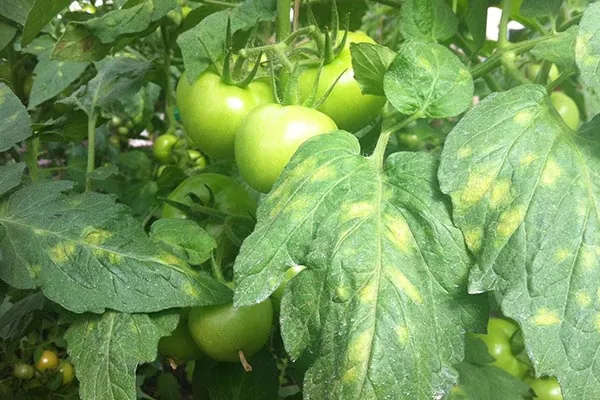
The crop is not affected by spider mites, aphids, or mole crickets. However, late blight remains the most common fungal infection. It appears as brown spots that cause the leaves to dry out in hot weather and rot in cold weather. Unripe tomatoes are most susceptible to the disease.
- Carry out the first treatment with Fitosporin 10 days after transplanting the seedlings into the soil.
- Repeat the treatment every 10 days to prevent the development of late blight.
- Use biological products such as Baktofit or Planriz as an alternative to Fitosporin.
Advantages of Fitosporin:
- biologically safe;
- can be used for prevention and treatment;
- compatible with other chemical additives;
- Processed tomatoes can be eaten after washing.
Instructions for preparing the solution:
- Dissolve 2 teaspoons of the preparation in 10 liters of warm water (not higher than 35°C).
- Use a non-metallic container.
- Leave the solution in the sun for a couple of hours to activate the beneficial microorganisms.
Treat plants every 10 days.
In addition to Fitosporin, you can use other preparations with similar compositions and methods of application to protect against late blight and other diseases: Baktofit, Planriz, Baikal-EM, Fitoftorin.
Pros and cons
Peach is a rare tomato variety, perfect for collectors and lovers of unusual vegetables. It is not widely cultivated due to its average yield, so it is rarely used commercially. This hybrid is often chosen for planting in small plots.
The disadvantages of the crop include average yield, susceptibility to late blight, poor tolerance of shade, and a short shelf life of tomatoes.
Reviews
The Peach tomato is an excellent choice for lovers of exotic varieties. It combines excellent taste and decorative qualities. It requires little care, and the harvest is pleasantly surprising in its abundance and flavor. It is resistant to most diseases, making it a reliable choice for gardeners.