
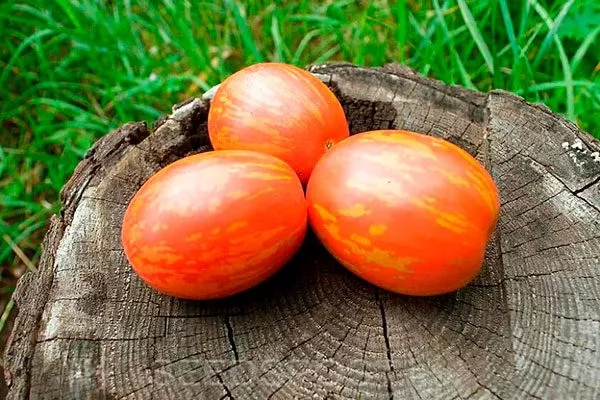
The Easter Egg tomato is well-known among connoisseurs of unusual tomato varieties. Its egg-shaped form with golden patterns on the sides and top gives the variety its unique name. It is an indeterminate variety and requires regular pruning of side shoots to control growth.
Distinctive features of the variety, bush and fruits
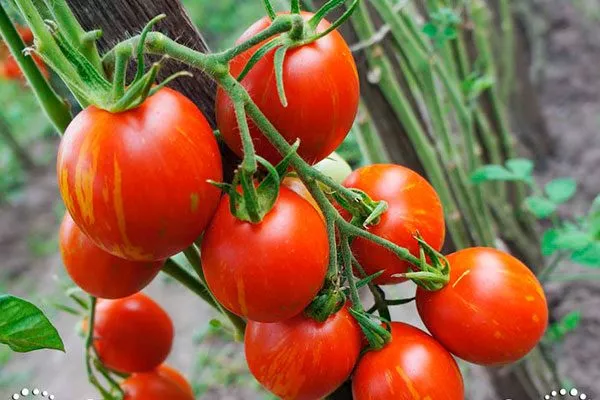
Among cocktail tomato varieties, the Easter Egg most closely matches its festive name. Its fruits are perfectly ovoid and painted in vibrant red and yellow hues. Many say they resemble masterpieces of art, as if they were not fruits of nature but the famous Easter eggs by Carl Fabergé.
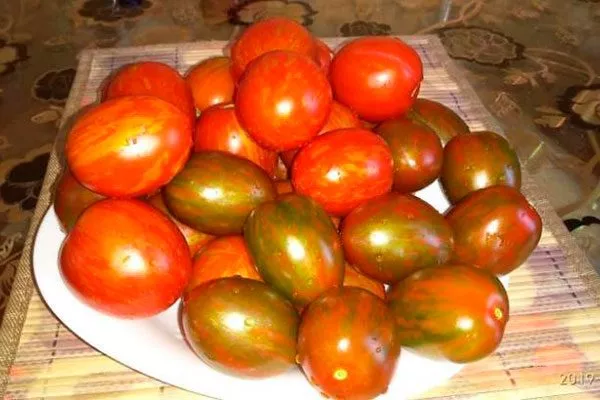
Cocktail varieties stand out from others with their extravagant appearance. They represent a new milestone in tomato breeding, which came to Russia from Europe. The name refers to the vegetable's intended use—to decorate tables at buffets and cocktail parties.
Features and varietal characteristics of the Easter egg:
- The variety was developed by breeders for open-ground farming, but in risky gardening conditions, it is recommended to grow it in greenhouse structures.
- The attractiveness of this species lies in its decorative appearance – the fruits are exquisite and richly colored.
- It has undeniable qualities that make it a favorite for consumption: a unique aroma, a sweet, slightly sour taste, increased density, and a long shelf life. It's ideal for growing by novice gardeners.
- Easter Egg is an indeterminate variety whose main stem can grow up to 200 cm in height. Because this variety produces small, rather than large, fruits, experienced gardeners often train the plant into three or even four stems to achieve maximum productivity.
- The tomato leaves are medium-sized and do not cover the golden, smooth fruits that adorn the plant.
- Clusters contain 5-7 tomatoes. The first ripe fruits weigh about the same as a chicken egg – 55-60 g. As they ripen, the tomatoes decrease in size and resemble quail eggs, weighing 25 to 40 g.
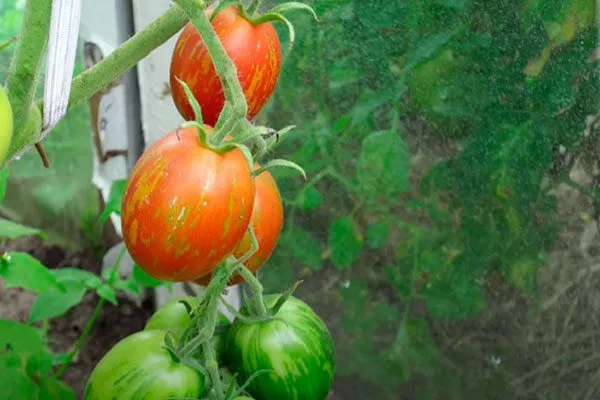
- The ovary immediately becomes striped. It is initially golden with green hues. The green tone then gradually changes to orange and finally to red.
- When you cut the fruit, you can see:
- multiple seed chambers;
- juicy pulp;
- absence of voids;
- small seeds in small quantities.
- When you bring a ripe tomato to your nose, you can smell a pleasant fruity aroma and even detect a hint of tomato from a distance.
Main characteristics
The origin of this variety remains a mystery. It is not yet listed in the official register of Russian breeding innovations. Legend has it that it was created by a Bulgarian breeder, but this has not yet been confirmed. Despite this, tomato collectors are eager to share their seeds.
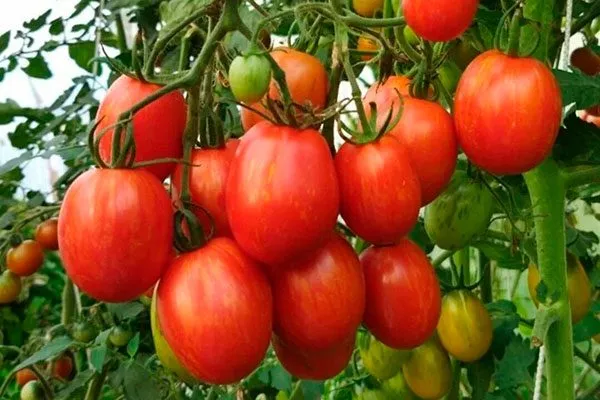
Regardless of who is behind the creation of the Easter egg, it has gained recognition from both gardening enthusiasts and connoisseurs of taste.
Ripening and fruiting, productivity
Fruit ripening occurs in 110 days, making the Easter Egg variety a mid-early variety compared to other tomatoes. Fruiting continues until the first frost. Key factors influencing this variety's yield include:
- fertility of the site;
- frequency and volume of watering, as well as the use of fertilizers;
- the specifics of the local climate.
Experienced gardeners confirm that Easter Egg is a variety that gives back everything it's given—provided with sufficient water and fertilizer, the tomato will reward its "feeders" with a bountiful harvest.
The productivity of this variety may vary depending on growing conditions:
- Some gardeners report getting 5-7 kg of fruit from each bush;
- others say about 5-7 kg per 1 sq. m;
- Considering that two plants are usually planted per square meter, the difference in yield can be significant.
This diversity of results is explained by the fact that the Easter Egg variety is particularly sensitive to agricultural care conditions.
How to use and store?
The tomato has a delicate aroma, combined with a vibrant yet subtle flavor. The organic acids are perfectly balanced, balancing the sweetness and imparting a pleasant aftertaste.
Subtleties of application:
- Mini tomatoes are ideal for whole canning – their skin is quite strong and does not crack, which makes them resistant to heat treatment;
- It is also resistant to mechanical damage, so it tolerates transportation and long-term storage at low temperatures and dry conditions well;
- When it comes to producing juices or pastes, the Easter Egg variety is inferior to larger tomatoes.
Ripening occurs gradually, spreading out over time. To ensure tomatoes reach their largest size throughout the growing season, it's recommended to pick them while they're still brown, allowing subsequent fruits time to develop sufficiently.
Subtleties of preservation:
- If you place tomatoes in a warm, dark place, they will quickly ripen and develop flavor;
- to keep them in this state longer, you should choose a cool place, but in this case the taste will not be as bright;
- collection starts from the lowest brushes and continues upwards;
- at temperatures up to +4°C the harvest can be stored for up to 45 days;
- In cold summers, it is recommended to collect unripe fruits and place them, on the contrary, in a warm place to ripen.
Resistance to diseases and pests
The Easter Egg variety boasts excellent resistance to most tomato diseases, a fact confirmed by virtually all gardeners who grow it. It is also resistant to the tobacco mosaic virus, a constant enemy of nightshades. It also successfully resists various pests.
Tomatoes may develop blackening in low temperatures and excess moisture. To avoid late blight, it's important to choose a planting site with good ventilation and light. If necessary, the use of fungicides is recommended.
Among the arsenal of protective agents against late blight, it is worth noting the drug Oxyhom, which effectively protects tomatoes from this problem.
Climate requirements and growing regions
This variety maintains its quality well despite fluctuating temperatures. However, the plants do not tolerate excessive moisture. When growing in greenhouses, ensuring adequate ventilation is critical. Tomatoes demonstrate high resilience in dry weather and are ideal for hot climates.
This variety can be grown across a wide range of climate zones. It thrives in both southern regions and cooler parts of the central Russian region. For growing in the northern regions, it is recommended to use frost-protected rooms. This variety is ideal for regions with short summers.
How to grow seedlings?
Since the Easter Egg is a cultivar, not a hybrid, its seeds are considered pure and can be collected independently. However, you will need to protect them from bacterial and mold damage.
Optimal growing times
Seeds are sown 45-60 days before transplanting to their permanent location, where they will develop for another 1.5-2 months. It's important to plan the dates carefully, taking into account local climate conditions.
The choice of time for sowing Easter eggs depends on the type of their future cultivation:
- for heated greenhouses – from February 20;
- for greenhouses without heating – from March 1;
- for vegetable gardens in the southern regions – from March 1-5;
- for vegetable gardens in the Central Belt – since March 15.
Seed preparation
When using seeds collected from your own garden, it's important to take precautions and treat them yourself to remove potential pathogens. One option is to use a common hydrogen peroxide solution from a pharmacy.
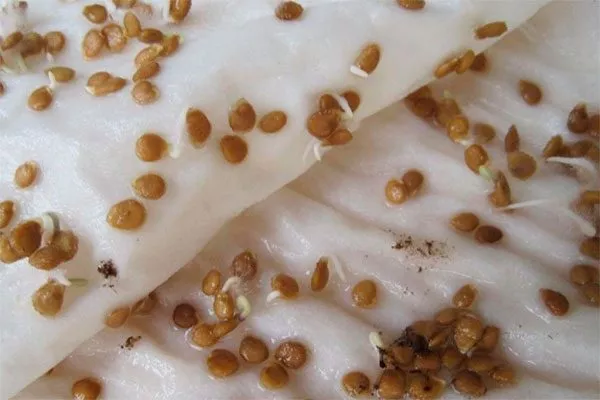
The processing process is as follows:
- create a 0.5% peroxide solution;
- we pour seeds into it;
- leave for processing for 20-25 minutes;
- We wash them with water and dry them.
After this, warm up the seeds:
- Place a paper napkin or piece of toilet paper, slightly moistened with water, in a plastic container.
- Place the seeds.
- Cover the container with a lid and place it in a warm place, but not too hot.
Containers and soil
To sow seeds in groups, use boxes and shared containers. If the number of seeds is small, consider placing each seed in a separate container. A variety of options are available:
- plastic boxes;
- disposable cups;
- cut bottles;
- containers of juices and dairy products.
The industry offers excellent and affordable seedling containers. They consist of a container, a tray, and a lid that creates a greenhouse-like microclimate. These containers are reusable and have earned positive reviews.
For sowing, you can purchase a ready-made substrate from specialty stores. It's already saturated with nutrients and disinfected. If you prefer to create your own mixture, you should combine:
- compost;
- humus;
- sand;
- garden soil.
All these components are mixed proportionally. For every 10 kg of this mixture, it is recommended to add 200 g of wood ash and 20 g of superphosphate. Disinfection is mandatory – by heating in an oven, pouring boiling water, or applying a potassium permanganate solution.
Sowing and growing
The prepared substrate is gently warmed and placed into containers, compacting it lightly. The seeds are then spread over the surface and covered with a layer of potting soil, followed by watering with warm water.

Growing features:
- In order for the seeds to germinate successfully, it is necessary to maintain a temperature of around 22-23°C, which guarantees an effective start to growth.
- Plantings are protected from moisture by covering them with glass or film.
- In a week and a half, you can expect the first green shoots to emerge. When they reach 70%, the protective covering is removed.
- During this period, it is important to monitor the following parameters:
- provide sufficient lighting during the day;
- maintain the temperature during daytime hours at 22-24°C;
- at night keep the temperature between 16-17°C.
Critical parameters for successful cultivation- ✓ Optimum temperature for seed germination: 22-23°C.
- ✓ It is necessary to maintain the temperature at night in the range of 16-17°C.
- ✓ Mandatory use of fungicides at the first signs of late blight.
- After 12-15 days, the seedlings should form two true leaves and will be ready to continue growing by transplanting them into individual pots.
- The seedlings are transferred to their final location after they have hardened off for a week. They are then placed outdoors, gradually increasing the time spent there from 20 minutes to 5 hours per day.
The dive process looks like this:
- individual pots are filled with soil and a depression is made in it;
- Using a stick, carefully lift the seedlings;
- cut off a third of the root;
- the plant is planted in a hole so that the ground level is at the level of the cotyledon leaves;
- press the soil against the stem;
- water the plant with warm, settled water.
Subsequently, caring for the seedlings is limited to regular watering and maintaining optimal microclimate conditions.
How to grow Easter egg further?
The seedlings are transplanted when they are two months old. At this point, they tolerate the transplanting process well.
It is recommended to plant two Easter Egg bushes per square meter of land. Maintain a 60-80 cm spacing between rows to ensure sufficient space for the bushes to develop and for easy maintenance.
Transfer
The choice of planting location depends on the climate and the plant's readiness to cope with potential climate change. This can be a greenhouse or outdoors. It is not recommended to plant in areas previously used for growing potatoes, peppers, tomatoes, and other nightshade crops, as these crops significantly deplete the soil.

Sunny areas with adequate drainage are best. Seedlings should be planted in holes appropriate for the size of the peat pots or root system, in beds 75-80 cm wide and 25-30 cm high.
The process of transplanting seedlings:
- Add superphosphate and a small amount of stove ash to the planting holes, which should be thoroughly mixed with the soil.
- Remove the plants.
- Place the seedlings in holes a few centimeters deeper than they were in the cups. Water them daily after transplanting until they are fully established.
Plants can be planted either parallel or staggered, with no special requirements. Install supports or structures to support the bushes at planting time. It is not recommended to do this later to avoid damaging the roots.
Watering and fertilizing
When growing tomatoes, don't forget about the need for regular watering. Watering should be deep enough to cover the entire root system, but not too frequent—the top layer of soil should be allowed to dry out slightly. It's recommended to combine watering with fertilizing.
The ideal nutrition for tomatoes is organic fertilizer. Features:
- Using chicken manure or chicken droppings will provide the plant with optimal growing conditions;
- After preparing the solution, let it stand for 24 hours;
- then the solution is added to the water for irrigation or applied directly under the tomato bushes in the amount of 0.5 l;
- recommended frequency of feeding is once every 15 days;
- Tomatoes absorb nutrients best from a liquid solution.
The frequency of fertilizing depends on the amount of rainfall and the lightness of the soil: the more rain and the lighter the soil layer, the more often the procedures should be carried out.
Pinching out side shoots and shaping the bush, weeding
To ensure a fruitful harvest, the Easter Egg bush must be properly formed with two or three shoots. Young stems should be pinched off while they are still soft and flexible. When the main part of the bush reaches the height of the greenhouse, the top should be pruned to stop further growth.
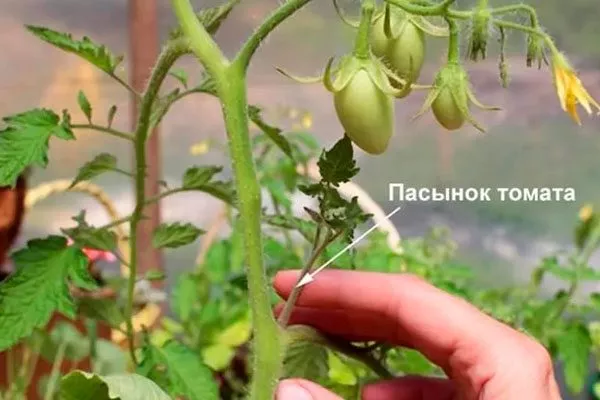
In open ground conditions, it is recommended to cut the tops of the shoots in August so that the fruits have time to ripen and gain sugar content.
Roots also need to be cared for, keeping the garden bed clean. Weeds not only look unsightly in the garden, but also drain water from the plant, compete for nutrients, and can attract pests and spread diseases.
Features of cultivation and possible difficulties, mistakes
Growing the Easter Egg tomato isn't particularly difficult, but this variety is tall and requires supports to support the shoots and stems. Key points to consider include:
- formation of a plant from three stems;
- regular fertilization;
- abundant watering.
During sudden cold or hot weather, flowers may begin to fall off. In such cases, the plant needs treatment with boric acid, which can help preserve the ovary. To do this, consider the following:
- Prepare a 0.5% solution of crystalline boric acid by adding 1 g of the substance to a glass of water (200 ml).
- Strain after mixing thoroughly.
- Apply directly to tomato buds before they open, in sunny, wind-free weather. Apply every 10 days.
The main mistakes in growing are usually related to microclimate violations, including:
- excess moisture;
- insufficient ventilation in the greenhouse;
- overheating of the room at night;
- cooling the room during the day;
- excessive watering;
- insufficient lighting.
Pest and disease control
Vegetable growers use insecticides and fungicides to prevent damage. But once symptoms are noticeable, it's crucial to immediately save the crop. Effective methods for combating various diseases include:
- Quadris;
- Fitosporin-M;
- Fitolavin – 300;
- Hom;
- Strobe;
- Trichodermin.
| Method | Efficiency | Period of application |
|---|---|---|
| Quadris | High | At the first signs of illness |
| Fitosporin-M | Average | Preventatively |
| Fitolavin – 300 | High | At the first signs of illness |
It's important to periodically change pesticides to prevent microorganisms from becoming accustomed to the same product. Sticky traps are particularly effective in greenhouses for controlling whiteflies.
Pros and cons
Tomato gardeners note the many advantages of the Easter egg and rarely mention its disadvantages. The advantages of this crop include:
A potential drawback is the high growth rate and the need for regular shoot pinching. However, this is more a unique characteristic of all tall varieties than a true drawback.
Reviews
Easter Egg is a young but highly promising tomato variety, a true discovery for breeders. It requires minimal care and can be grown both in greenhouses and open fields. It boasts versatile harvesting options.