
The Orange Fountain tomato is an ideal choice for those who appreciate tasty, juicy, medium-sized tomatoes. This variety is also characterized by increased productivity, making it a popular choice for any garden plot. Growing it requires no special skills or experience, making it suitable for both beginner and experienced gardeners.
Description of the bush and fruits
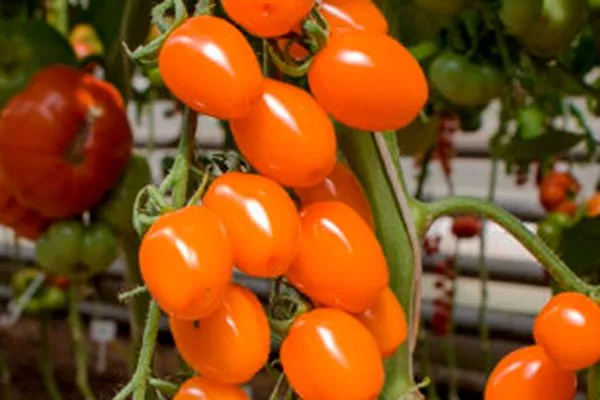
Orange Fountain bushes are indeterminate, so they continue to grow and produce fruit throughout the season. This variety can reach an impressive 200 cm in height, sometimes even more.
Other varietal characteristics:
- the leaves are bright green in color and can be quite large;
- the flowers are white or yellow in color and small in size;
- each brush contains from 14 to 28 ovaries, which makes the variety suitable for commercial cultivation or personal consumption;
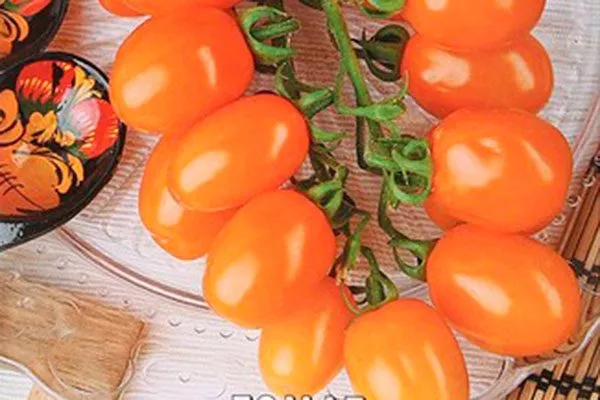
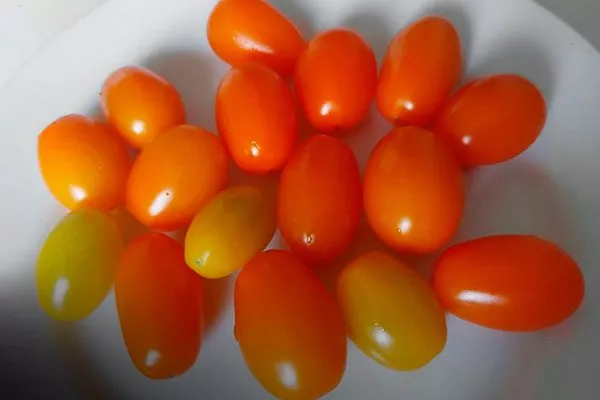
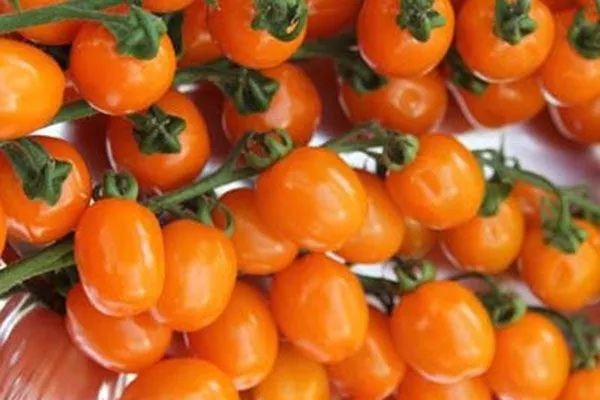
- the variety stands out for the bright orange color of its fruits;
- the weight of each vegetable can vary from 15 to 45 g;
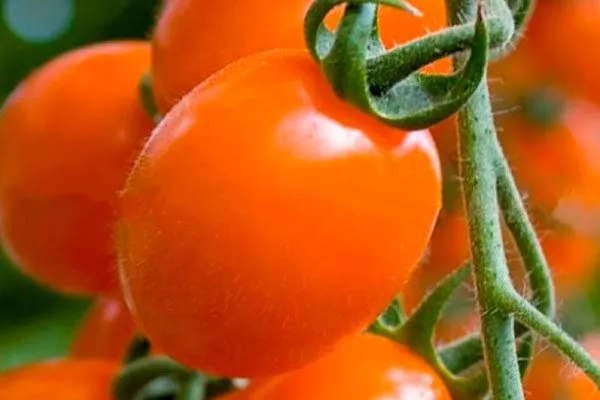
- Orange Fountain fruits have a strong skin that is not prone to cracking;
- the coloring of the surface and pulp is uniform;
- the shape is elongated-cylindrical, the skin is smooth and shiny;
- pulp with three nests;
- The taste is sweet with a slight hint of acidity, which is typical for yellow-fruited varieties.
Main characteristics and history
The company "Center Ogorodnik" is the developer of tomatoes under this original name. This high-yielding variety was developed by domestic breeders and included in the State Register of the Russian Federation in 2019. It is recommended for cultivation in plastic greenhouses or under other shelters.
Key indicators:
- Tomatoes have a thick skin, which allows them to withstand transportation and storage well. They are resistant to cracking and can be stored in a cool place for up to 1.5 months.
- Caring for the bushes is relatively simple, making them accessible for growing even for novice gardeners.
- This is an early-ripening tomato variety; the first fruits can be harvested 90-100 days after the first shoots appear in the garden and 80-90 days in a greenhouse. The fruiting period typically begins on July 15 and continues until August 25-31. The exact timing depends on the regional climate. Gardeners in hot regions harvest the Orange Fountain variety first.
- With proper care, you can harvest up to 5 kg of tomatoes per square meter. The fruits can be harvested mechanically, plucked in groups if they ripen simultaneously on long trusses (depending on the intensity of the sun).
- Orange cherry tomatoes have remarkable resistance to various diseases and insects. However, if growing conditions aren't right or they aren't cared for properly, they can be susceptible to problems typical of the Solanaceae family, including various types of leaf spot, leaf spot, and tobacco mosaic.
At the planting stage, plants may be attacked by pests such as aphids, cutworms and nematodes. - The variety is successfully cultivated in the central and southern zones, where open-field farming is available. For residents of northern regions, greenhouses are preferable.
- Tomatoes are rich in antioxidants, including xanthophylls and carotene, which makes them beneficial for health and helps reduce the risk of cancer and cardiovascular diseases.
- The fruits are ideal for canning due to their small size and unique appearance, especially when paired with red or light yellow varieties. They are also widely used for barrel pickling.
Small tomatoes are a great addition to salads and can be eaten raw. They can also be used to make delicious sauces and juices.
Landing conditions
To ensure a bountiful and high-quality tomato harvest, special attention must be paid to sowing. Proper planting of the Orange Fountain tomato is key to its successful cultivation.
Growing seeds
To harvest your own seeds, select ripe, undamaged Orange Fountain fruits. Remove them and wash them to remove pulp and juice. Spread them evenly on paper or filter cloth and dry for several days to prevent rotting.
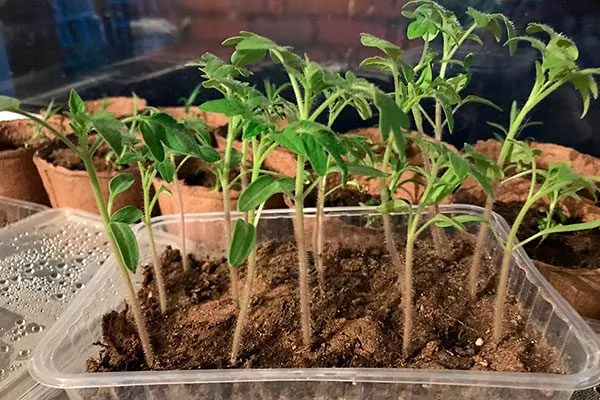
Carry out sowing work according to the instructions:
- Fill individual pots or shared containers with loose substrate or special potting mix.
- Ensure good drainage by placing expanded clay or similar material on the bottom.
- Make shallow indentations (about 1 cm) and place 2 to 3 Orange Fountain seeds in each.
- Cover with a layer of soil.
- When the plants reach 6-7 cm in height and form the first true leaves, transplant them into separate pots with a capacity of at least 500 ml.
Before planting outdoors, ensure the seedlings are strong and healthy, and most importantly, that the danger of frost has passed. Transplant Orange Fountain when the plants reach a height of 15-20 cm.
Preparing the site and planting seedlings
Orange Fountain, like most tomatoes, thrives in full sun and well-prepared soil. Compost or humus can be used to improve soil. Basic guidelines:
- Tomatoes prefer to grow in soil with a neutral or slightly acidic content, rich in nutrients.
- The best time to begin work is April 25 (in the south), when the risk of night frosts has passed. In other regions, the deadline is delayed by 2-4 weeks.
- 2-3 weeks before planting the seedlings, prepare the soil by digging it to a depth of half a meter and removing weeds.
- The holes should be at least 10-12 cm deep, and the distance between rows should be about 100 cm. Seedlings are planted at intervals of 50-60 cm from each other, without shaking the soil off the root system, so as not to damage it.
- Add wood ash to each hole, remove the lower leaves and plant the plant in the hole so that only the top leaves remain on the surface.
- After transplanting, compact the soil lightly; you can mulch the plantings with hay, dried grass or straw.
- To support each bush, you should install a support made of wood, a metal rod, or use a special support that can be purchased at a garden store.
- ✓ The optimal soil temperature for planting should be at least 15°C.
- ✓ The distance between plants should be at least 50 cm to ensure sufficient ventilation and prevent diseases.
Rules for caring for tomatoes
Caring for vegetable crops doesn't require much effort. Simply follow basic guidelines. This will not only make growing easier but also ensure tasty and healthy fruits.
Humidification and fertilization
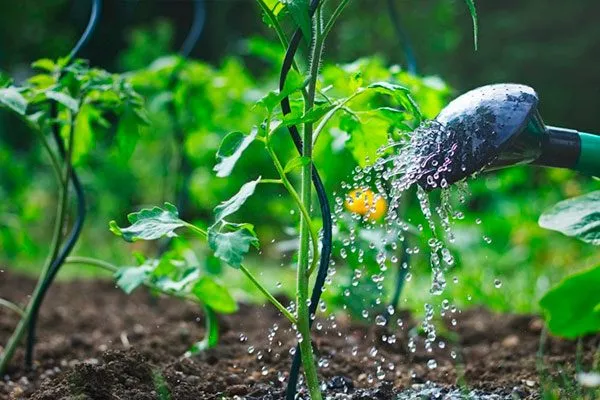
Don't neglect regular watering of the Orange Fountain - the soil moisture content should be optimal:
- Water moderately to avoid overwatering, which can lead to root rot;
- Pour water from below to prevent liquid from getting on the leaves and contributing to the development of diseases;
- water every 1-2 weeks using settled water;
- each plant needs 3-5 liters of water;
- It is important that the soil around the roots does not dry out completely.
Cherry tomatoes require several feedings during the growing season:
- The first feeding is done using a 10% solution of mullein and superphosphate. The fertilizer is applied two weeks after transplanting the seedlings.
- Every two weeks, it is recommended to apply a mixture of 15-25 g of superphosphate, 12-15 g of potassium salt, and 10-12 g of ammonium nitrate to the soil. To do this, simply dig the granular fertilizer into the soil before each watering.
An important step in care is loosening the root zone. Using a fine rake, loosen the soil to a depth of 4-6 cm. This not only improves soil aeration but also removes weeds that can compete with tomatoes for water and nutrients.
How to shape Orange Fountain tomatoes?
Many vegetable growers recommend structuring this variety's bushes into 3-5 shoots. Pinching promotes the growth of larger fruits, as shoots drain the plants of energy, which they use for foliage growth rather than fruit production.
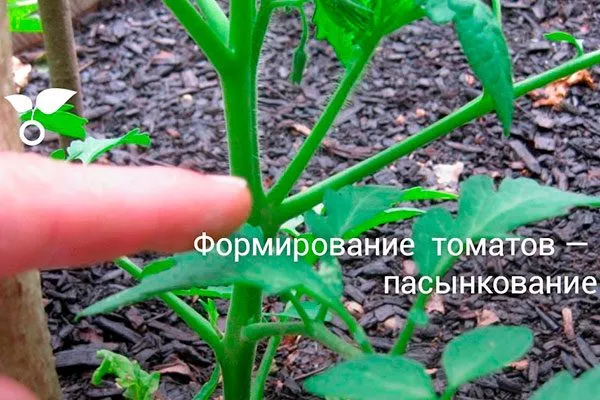
When vegetables begin to ripen, the leaves underneath them should be removed so that the plant can focus all its growth force on ripening the remaining fruits.
Pest and disease control
Orange Fountain tomatoes, like other non-hybrid varieties, are susceptible to various pathogens and pests. It's important to constantly monitor the plants and take measures to protect them. Here are the most common problems vegetable growers encounter when growing the Orange Fountain variety, along with prevention methods:
- Powdery mildew. This is a fungal disease that causes a white coating to appear on leaves and stems. Use fungicides and ensure good ventilation in the greenhouse.
- White-winged insects. These small insects can damage leaves, causing them to turn yellow and wilt. Use a soapy solution to control whitewings.
- Locusts. Large caterpillars can quickly destroy tomato leaves. Collect them by hand and destroy them.
- Slugs. They can damage young shoots and leaves. Use bait or traps to prevent them.

Disease prevention:
- Inspect leaves regularly for pests and signs of disease;
- If problems are detected, take immediate action to combat them.
Collection and storage
Tomatoes ripen unevenly on the vine, so they should be harvested only when fully ripe. Tomato skins are thick enough to keep the fruit fresh for some time, although their aroma and flavor will gradually diminish.
Some recommendations:
- To extend the shelf life of cherry tomatoes, store them in a dark place with a temperature between 15-18 degrees Celsius. This will ensure the quality of the fruit remains intact.
- Ripe orange tomatoes have a rich color, soft texture, and a pleasant aroma. They should separate easily from the plant when twisted and gently pressed. This is a sign of full ripeness.
- When harvesting vegetables, avoid causing severe mechanical damage. Handle with care to avoid damaging the fruits, stems, and plants themselves.
Pros and cons
These tomatoes are distinguished by their sweetness and slight tartness, creating a harmonious flavor combination. But these aren't the variety's only advantages. Gardeners most often highlight the following:
Reviews
Small but delicious, Orange Fountain tomatoes are an excellent choice for both experienced and novice growers. By following simple gardening guidelines, you can achieve an impressive harvest of premium tomatoes. They boast an exquisite flavor and retain their quality for a long time.