
The Orange Strawberry tomato is a unique variety that attracts attention not only for its large, tasty fruits but also for its high yield. These low-acid tomatoes are ideal for those with gastrointestinal issues. They are easy to care for and resistant to diseases and climate fluctuations.
History and regions of cultivation
The variety's origin is in the state of Indiana, USA. It arose accidentally during the breeding process of another species, without any targeted breeding efforts. Over time, it began to be grown throughout Russia.
The variety is suitable for cultivation in any climate, but in the central part of the country, good yields can only be achieved in a greenhouse. In regions with a mild climate (Krasnodar Krai and the North Caucasus), Orange strawberries are successfully grown outdoors.
Description of the bush and fruits
This is an indeterminate variety, meaning the bush's growth is unlimited. Before planting, carefully study the following characteristics:
- This vigorous and tall plant reaches 1.7-2 m in open ground and up to 3.5 m in greenhouses. The stem is greenish-gray, covered with soft hairs, and the root system is massive.
- The yellow flowers are collected in simple racemes. The first appears above the eighth leaf, and subsequent ones appear every four leaves. About six racemes form on a single stem, each raceme producing 4-6 fruits. Self-pollination ensures the absence of "empty" ovaries.
- The plant has medium foliage. The leaves are deep green, narrow and long, with large teeth, arranged oppositely, and have short internodes.
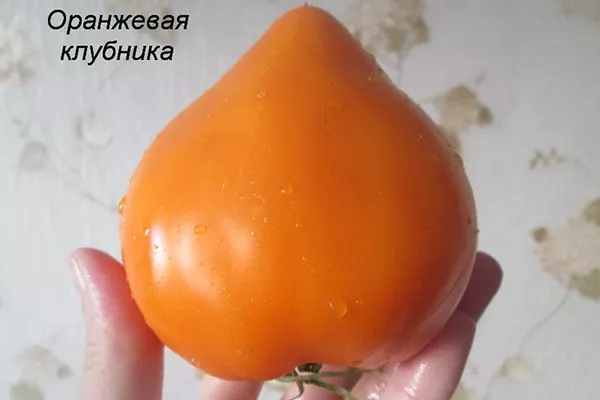
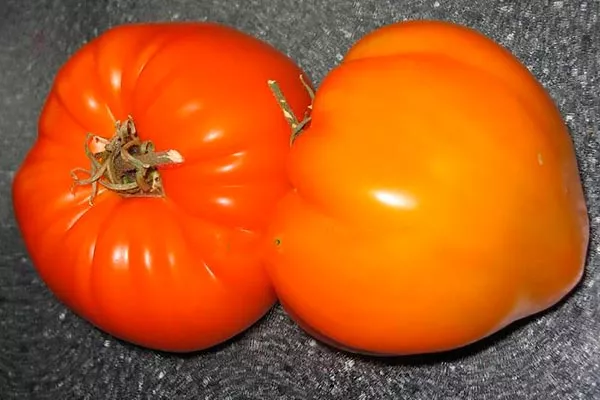
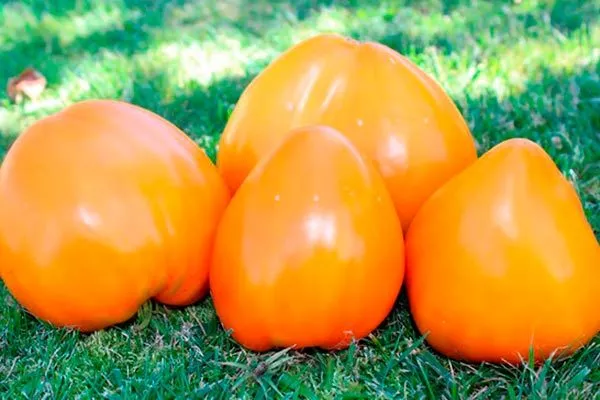
- Tomatoes are heart-shaped with an elongated or slightly blunted “nose”, reminiscent of strawberries.
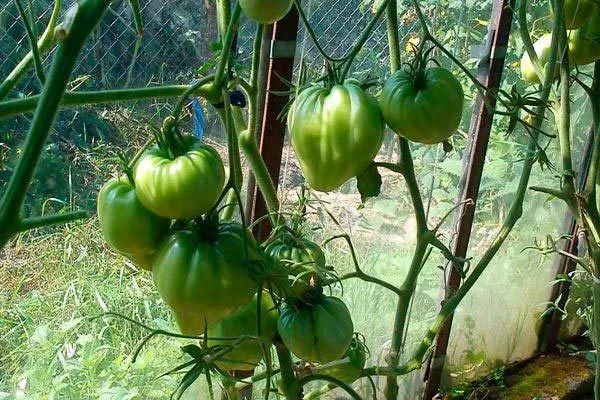
- When unripe, tomatoes are light green without a distinctive spot near the stem. As they ripen, they turn orange, similar to the hue of young carrots.
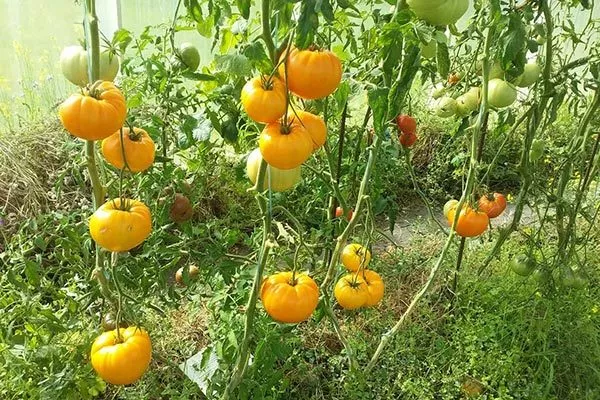
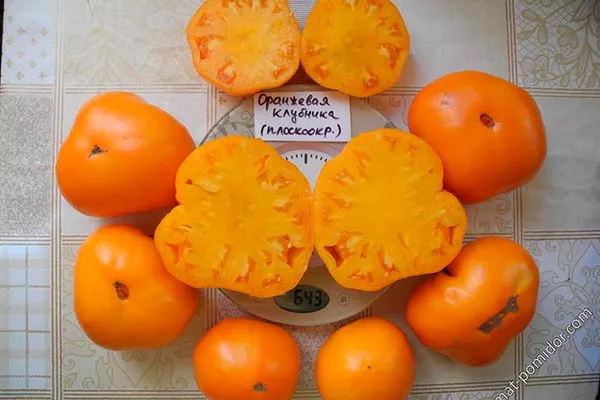
Fruit weight in open ground ranges from 400 to 500 g, while in a greenhouse it can reach 900 g. The better the growing conditions, the larger the fruit. Tomatoes have four seed chambers.
Main characteristics
Over the years, the Orange Strawberry variety has earned the love and recognition of many gardeners. It is prized for its pleasant flavor, excellent marketability, and high yield.
Features of the culture:
- Ripening time and yield. This is a mid-season variety. The tomatoes are ready for harvesting 100-110 days after planting, and the fruiting period lasts from July to October. A single bush can yield approximately 6 kg of fruit, up to 17 kg per square meter in open ground, and up to 20 kg in a greenhouse.
- Taste and scope of application of fruits. The taste of these tomatoes is described by tasters as harmonious, sweet, and slightly tart. This variety is versatile: it's eaten fresh in salads and used to make condiments, pastes, ketchup, and juice.
Small vegetables are suitable for pickling whole, while large ones are suitable for preserving in slices. - Resistance to diseases and pests. The crop has good immunity but is susceptible to late blight. To protect the plants, spray with copper-based products. Use insecticides or celandine infusion against pests.
The flesh of Orange Strawberry tomatoes is meaty, has a buttery texture, is firm, and has a glossy sheen. The stem is slightly ribbed.
How to grow seedlings?
Seeds are sown in late March, approximately two months before transplanting into the ground. This variety is grown exclusively from seedlings.
Seed preparation
Varietal tomatoes allow you to harvest the seeds yourself. However, this material requires proper preparation and disinfection:
- Conduct a cull: remove any warped or darkened seeds. Check for empty seeds by placing them in a solution (5 g of salt per 200 ml of water) for 10 minutes. Discard any seeds that float to the surface, as they will not germinate.
- To disinfect, soak the beans in a weak solution of potassium permanganate for 20 minutes, then rinse under running water and dry thoroughly. You can use 2% hydrogen peroxide instead of potassium permanganate.
- To increase germination, sprout the seeds on damp cheesecloth. Place them on the cloth, moisten with warm water, and leave in a dark place for 2-3 days until sprouts appear. Moisten the cheesecloth regularly to prevent it from drying out.
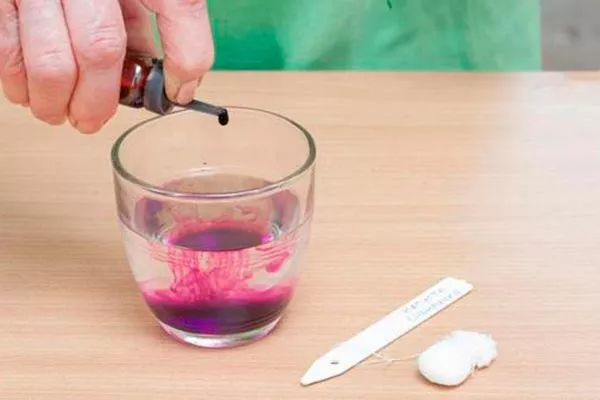
By following these recommendations, you will be able to obtain high-quality planting material for growing strong seedlings.
Container and soil
To germinate the seeds, prepare a nutrient-rich soil by mixing equal parts of turf, sand, peat, and wood ash. Mix the mixture thoroughly and disinfect it using one of the following methods:
- pouring a hot solution of potassium permanganate;
- preheat in the oven at 50°C for 15 minutes.
This procedure is necessary to destroy pathogenic spores that can harm crops.
Place the prepared soil in containers with drainage holes to allow excess moisture to drain. Both shared wooden boxes and individual containers, such as paper honeycomb, plastic cups, or peat pots, are suitable for planting.
Sowing and caring for seedlings
Plant the seeds 2 cm deep in the soil, leaving at least 1.5 cm between them. Sprinkle the seeds with peat, compact lightly, moisten with warm, settled water using a spray bottle, and cover with plastic wrap or glass to create a greenhouse effect.
Next, follow the recommendations:
- Place the containers in a bright room with a temperature of +22°C. Once seedlings appear, move the containers to a windowsill.
- For normal seedling development, at least 16 hours of light per day are required. If light is insufficient, install phytolamps.
- Moisten the soil as the top layer dries. Use warm, settled water, gently watering from a shallow watering can or with a spoon around the edges of the containers. Overwatering is unacceptable, as it can lead to root rot and fungal diseases.
- After watering, carefully loosen the soil to improve oxygen access.
- When the seedlings have three true leaves, transplant them into individual containers or increase the distance between plants in the same container to 15 cm. At this stage, apply the first fertilizer – a complex mineral fertilizer. Combine this with watering.
Two weeks before planting, begin hardening off the seedlings. To do this, place them outside daily at 16°C (61°F), starting with one hour and gradually increasing the time spent outdoors to 10 hours. At the same time, reduce the nighttime indoor temperature to 12°C (55°F).
Transplanting seedlings
Plant outdoors when the soil warms to 18°C and the danger of frost has passed, which usually happens in early May. For greenhouse planting, do so in mid-May. The optimal planting density is 3 plants per square meter.
- ✓ The optimal soil temperature for planting seedlings should be at least +18°C, which is not mentioned in the article.
- ✓ The distance between plants when planting should be at least 50 cm to ensure sufficient space for the root system to grow.
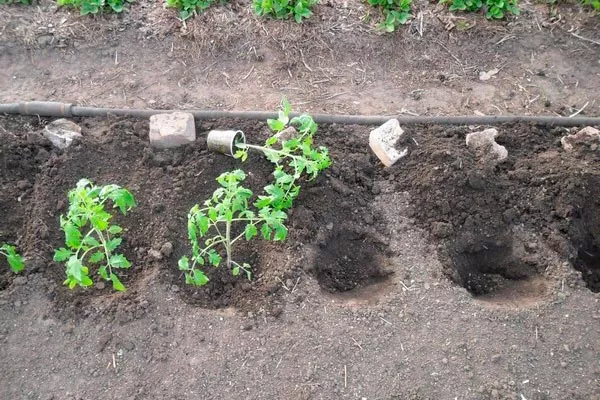
Landing algorithm:
- Dig up the area and add organic fertilizer.
- Make furrows 15 cm deep.
- Place seedlings vertically.
- Cover with soil, leaving only the top with leaves on the surface.
After 10 days of planting, hill up and mulch with straw.
Further care of tomatoes
The Orange Strawberry tomato is a low-maintenance crop. Timely implementation of agricultural practices is essential to ensure bountiful harvests of high-quality vegetables.
Watering
Experienced vegetable growers recommend using a drip irrigation system in greenhouses—it helps maintain optimal soil moisture. In sheltered areas, water the plants twice a week, and in open beds, adjust the irrigation according to precipitation.
Water the bushes only with warm, settled water. During dry periods, when there's no rain for extended periods, apply water daily to the roots. In most cases, watering the plants 2-3 times a week is sufficient.
Loosening and weeding
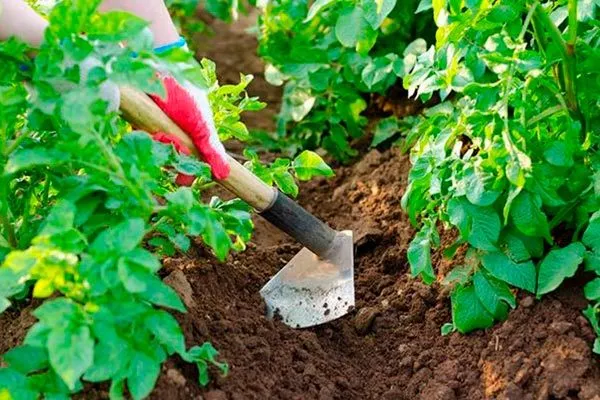
Every two weeks, loosen the soil around the plants, simultaneously removing weeds, which drain nutrients and slow growth. Weeds can harbor pathogenic fungi that can cause root rot. Loosening the soil improves aeration and water retention.
Top dressing
The crop responds well to fertilizers, which play an important role at different stages of development. Folk remedies recommended include eggshells, yeast, iodine, and bird droppings.
Helpful tips:
- For maximum yield, complex mineral fertilizers are essential. Apply the first application when the seedlings are actively growing.
- After planting and during the flowering period, the crop especially needs organic matter.
- Prepare your own root dressing: dissolve slurry (1 part per bucket of water), add a handful of ash and 20 g of superphosphate. Pour 500 ml of the solution under each bush. Use it during the period of foliage growth.
For fertilizing during fruit ripening, use fertilizers containing potassium, phosphorus, and phosphates. Prepare a solution of 5 g of potassium humate and 20 g of nitrophoska per 10 liters of water. The application rate remains the same.
Thinning and shaping the bush
Orange strawberries are known for their prolific production of side shoots, which should be removed by pinching when they reach 5 cm in length. Leave the stub no longer than 1 cm. Perform this procedure in cloudy weather, before sunrise, or in the evening after sunset.
Follow the rules:
- In August, remove all flowers and ovaries to direct the plant's energy to fruit formation.
- Tie the bushes as they grow using twine or other soft material. Place the support on the north side of the plant, burying it 40 cm deep. Choose the size of the support based on the maximum height of the bush.
- The plants are tall, so train them into two shoots, removing all excess stems. Trim off any leaves below the fruit clusters.
To form two stems, leave the strongest shoot under the cluster. Each stem should have at least four flower clusters. After this, pinch the plants to limit their growth and direct their energy toward fruit development.
Pest and disease control
The Orange Strawberry tomato has good resistance to fungal and viral diseases, as well as insect attacks. To prevent infection, irrigate the soil with a potassium permanganate solution prepared according to the package instructions before planting.
The main diseases of this variety, their symptoms and methods of control:
| Disease | Signs of defeat | Treatment methods |
| Powdery mildew | A whitish coating on the leaves, which over time spreads to the stem. | Application of copper-containing preparations to foliage. |
| Late blight | Brown spots on the underside of the leaf, wilting and dropping of flowers, light brown spots on the fruit. | Spraying with fungicides at an early stage of infection. |
| Tobacco mosaic | Yellowing of tomatoes, spots on leaves resembling a mosaic. | The disease is incurable. Destroy affected bushes and weeds, and treat nearby tomato plants with folk remedies. |
Insect pest control is crucial. To control cutworms, whiteflies, and Colorado potato beetles, use solutions of Opperkot or Aktara, but these should only be used before fruit set.
Collection and storage
This mid-season tomato variety ripens in late July to early August, and thanks to its extended fruiting period, the harvest can continue until October. To harvest, cut the entire fruit cluster.
Store tomatoes in different ways, depending on their degree of ripeness:
- Green tomatoes. Store in a cool, dark place (such as a basement or the bottom shelf of the refrigerator) at 10-12°C. This will slow down the ripening process, and they will ripen within 2-3 weeks.
Place tomatoes in cardboard boxes or paper bags, avoiding contact with other vegetables and fruits to prevent rotting. - Ripe tomatoes. If you plan to eat them within a few days, store them at room temperature in a dark place to prevent them from overripening. When refrigerating, keep ripe tomatoes in the crisper drawer, but not for more than 3-5 days, as low temperatures can affect the flavor and texture.
Store canned tomatoes for the winter in jars in a cool, dark place (pantry or basement) at a temperature of 5-20°C. They can be stored this way for up to a year.
Pros and cons
Carefully consider the advantages and disadvantages of the crop before planting. The main advantages of the Orange Strawberry variety include the following:
The dense pulp of tomatoes ensures their safety during transportation, helping to maintain their marketable appearance.
Reviews
Orange Strawberry is a variety that combines excellent flavor and high yield. Large, juicy tomatoes with a fruity flavor, low maintenance, and high resilience make this crop ideal for growing in a wide range of climates.