
The Orange tomato is an unusual variety, the characteristics of which are easily discerned by its name. This orange tomato will definitely appeal to fans of exotic vegetables, and it will also appeal to allergy sufferers who are not suited to red fruits.
Description of the variety
The Orange tomato plant has low-growing, determinate-type bushes. They are semi-spreading and moderately foliated. The leaves are standard, medium-sized, and richly green. The inflorescences are simple, and the stems are articulated.
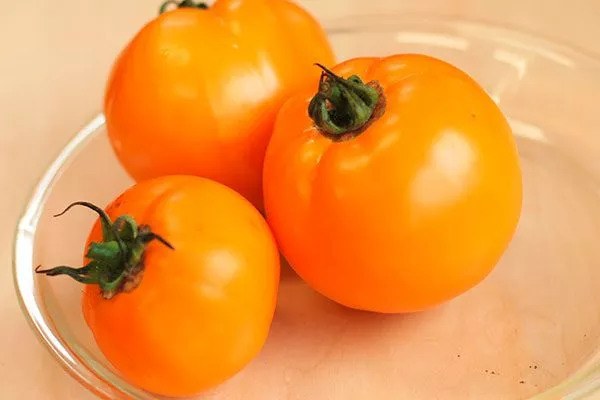
The Orange variety is characterized by a unique inflorescence pattern: the first inflorescence forms on the 6th or 7th leaf, with subsequent inflorescences occurring every 1-2 leaves. The bushes reach a height of 70–80 cm.
Brief description of fruits:
- Color of unripe fruits: green with a dark green spot near the stalk.
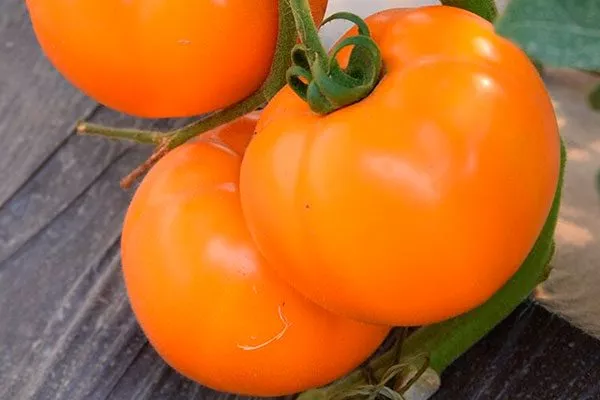
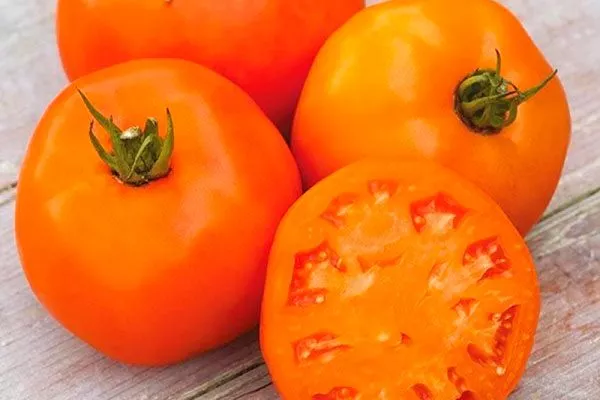
- Color of ripe fruits: orange.
- Form: flat-round.
- Skin: smooth, medium density.
- Weight of one berry: 90-100 g
The history of the Orange tomato
The Orange variety was developed by Russian breeders over a quarter century ago. It was approved for use in 2000. The Orange tomato is recommended for cultivation in all climatic zones of Russia. The authors of this variety are V.I. Kozak, A.P. Samovol, V.N. Gorobets, and S.N. Kosenko.
Taste and purpose of fruits
Orange tomatoes are sweet in taste, with fleshy, moderately firm, and juicy flesh, containing few seeds. The flavor is sweeter than sour, and the aroma is pleasant and dessert-like. The tartness is very light, harmoniously complementing the sweetness.
Characteristics
The orange variety has excellent agronomic characteristics; its unusual appearance has not affected its ability to withstand drought, cold, or other adverse influences.
Main characteristics:
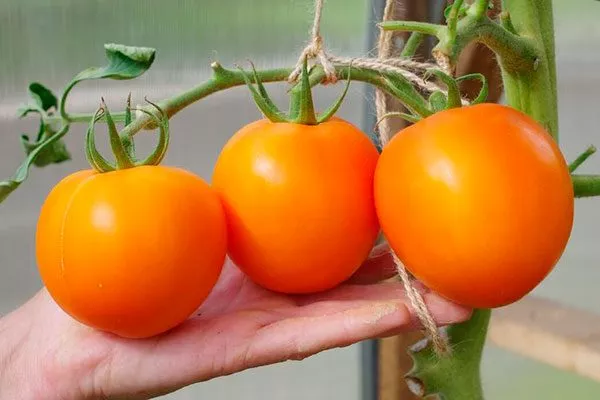
- The Orange tomato is an early-ripening variety, with fruits ripening approximately 100 days after germination. This tomato ripens evenly, allowing you to harvest entire clusters of ripe fruits at once.
- Resistance to diseases is high, especially blossom-end rot. However, under adverse conditions and poor agricultural practices, there is a risk of blackleg, various forms of rot, spotting, and mosaic.
- The variety is high-yielding, with 4.9 to 6.5 kg harvested per square meter.
Pros and cons
Before planting an unusual orange tomato in your garden, it's helpful to evaluate all of its advantages and find out if it has any disadvantages.
Landing
Orange tomatoes can be grown in greenhouses or open ground, but either way, the seedling method is used. This produces strong, healthy plants and, most importantly, an earlier harvest.
Preparing the planting container
For sowing Orange tomato seeds, individual containers with a capacity of at least 400 g (14 oz) with drainage holes in the bottom are suitable. They can also be sown in plastic trays with high sides, cassettes, large containers, or individual peat or peat-humus pots. The recommended height of the planting containers is 8-10 cm.
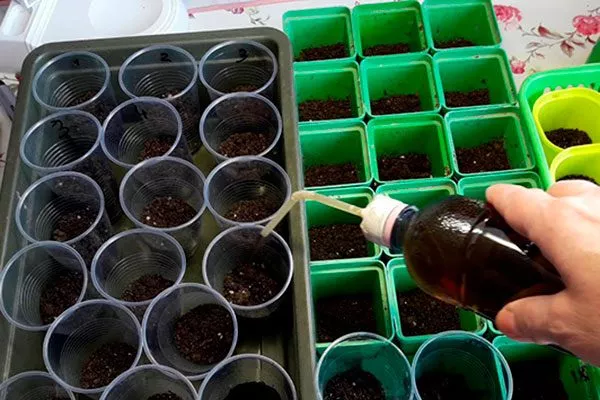
New containers must be washed, and old ones must also be disinfected. It's advisable to soak the containers in a Deochlor solution, then rinse them under running water. A solution of potassium permanganate or hydrogen peroxide can also be used to disinfect planting containers.
Sowing seedlings
Before planting Orange tomatoes in a greenhouse or open ground, grow seedlings. Sowing is usually done in late March, but the timing varies by region, depending on climate conditions. When calculating the sowing time, it's important to know when tomato plants are planted in the ground in your specific area. Seedlings typically take 60-65 days to grow.
Features of growing seedlings:
- Before planting, seeds are calibrated and tested for germination. If self-harvesting is used, the seeds are disinfected in a solution of potassium permanganate or hydrogen peroxide. It is also recommended to soak the seeds in a growth stimulant solution and then germinate them. To do this, wrap them in a damp cloth, place the cloth on a saucer, and place them in a warm place. The seeds should sprout within a couple of days.
- Tomatoes prefer light, loose, and nutritious soil. It's best to buy a ready-made potting mix—it contains all the nutrients and has the ideal acidity for tomato seedlings.
- You can prepare your own soil mixture for growing seedlings by mixing equal parts humus, garden soil, and peat. Add 10 g of ammonium nitrate, 3 g of superphosphate, and 1.5 g of potassium chloride to the mixture. It is also recommended to add 200 ml of wood ash and 3 kg of sand per 10 liters of mixture.
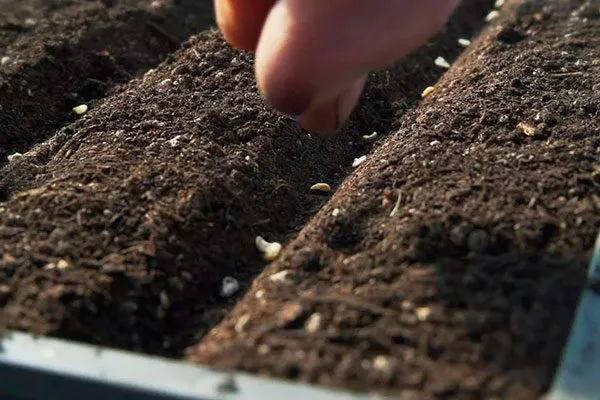
- If the containers don't have drainage holes, make them with a sharp tool. Each planting cup should have 2-3 drainage holes. Then fill the container with soil and water it with settled water. Make holes in the soil about 0.5 cm deep and lay the seeds on top. Add soil and lightly moisten with a spray bottle. Cover the seedlings with transparent plastic film to maintain optimal humidity.
- Rows are made in the containers, and the seeds are placed at intervals of 2-3 cm. The distance between rows is 4-4.5 cm. Until the seeds sprout, they should be kept in a room with a temperature of 25…27 °C. Seedlings usually appear after 3-4 days.
Caring for seedlings
The most important step in growing any tomato, including the Orange variety, is caring for the seedlings. The success of this process, quite literally, determines the fate of the harvest. Mistakes can lead not only to disease, weakening, or stretching of the seedlings, but also to their death.
Features of seedling care:
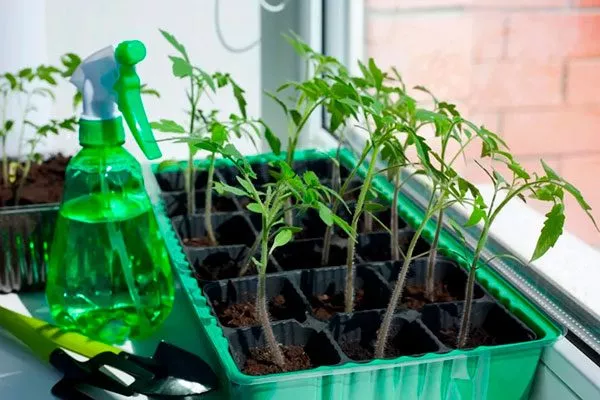
- Immediately after germination, the cover is removed and the temperature is lowered a few degrees to prevent the seedlings from becoming too tall. A temperature of 18°C is sufficient. This temperature also stimulates root formation.
- Seedlings require 11-12 hours of daylight. If sowing is done early and the natural daylight is too short, supplemental light is provided with phytolamps.
- Three weeks after germination, when the seedlings have two true leaves, they are pricked out. The seedlings are transplanted into individual cups, pinching their roots along the way to encourage lateral branching. If the seedlings were initially planted in individual containers, they are transplanted into larger containers.
- Before transplanting, water the seedlings approximately once a week. During this period, overwatering is extremely dangerous, as it can cause blackleg. After transplanting, water more frequently, and a week before planting, water daily. The key is to ensure the soil neither dries out nor becomes overwatered. Water the seedlings as soon as the top layer of the soil dries out.
- Seedlings are fertilized approximately four times during the growing season. The first time, a calcium nitrate solution (10 g per 10 l) is added to the roots to ensure strong, vigorous seedlings. This is done when the plants develop their third leaf. A week later, the seedlings are fertilized with monopotassium phosphate (10 g per 10 l) to promote root development. A week later, the seedlings are fertilized with magnesium sulfate (10 g per 10 l). The final fertilization is a watering of the seedlings with a complex fertilizer containing equal parts nitrogen, phosphorus, and potassium, along with micronutrients (10 g per 10 l).
- Tomato seedlings can be fed with both complex mineral and organic fertilizers. Biostimulants such as Kornevin and Epin are also recommended.
A week before transplanting the seedlings outdoors, begin acclimating them to the new conditions by taking them outside daily. Increase the time spent outside each day, gradually building up to several hours. The day before planting, the seedlings can be left outside overnight, as long as the temperature is above 10°C.
Selecting a site
Tomatoes should be planted in a level, well-lit area free from shade, gusty winds, drafts, and waterlogging. Low-lying areas are unsuitable for tomatoes, as rainwater accumulates there, and excessive moisture promotes rot.
It's recommended to plant tomatoes in areas previously used for onions, carrots, cabbage, and legumes. Poor predecessors include tomatoes themselves, potatoes, eggplants, peppers, and corn. Good neighbors for tomatoes include radishes, beets, garlic, lettuce, marigolds, bush beans, parsley, basil, oregano, sage, asparagus, celery, spinach, and calendula.
How to prepare the soil?
Soil preparation begins in the fall; it should be fertile, loose, and permeable to moisture and air. Tomatoes grow best in light loamy or sandy loam soils. The plot is dug to the depth of a spade, adding organic matter such as humus, compost, and rotted manure.
The optimal soil acidity for the Orange tomato is between 6 and 6.5 pH. If it's too acidic, add slaked lime or dolomite flour, dilute them in a small amount of water, and water the soil with the resulting solution. If the soil is heavy and clayey, add coarse river sand.
- ✓ Optimum soil temperature for planting seedlings: +14 °C.
- ✓ The soil acidity level should be within 6-6.5 pH.
Transplanting
Seedlings are planted when the soil warms up to 14°C and the air temperature reaches 20°C. In the south, tomatoes are planted outdoors in early May, in central regions from mid-May to late June, and in Siberia in mid-June. Tomatoes can be planted in greenhouses a few weeks earlier than in open ground.
Features of planting seedlings:
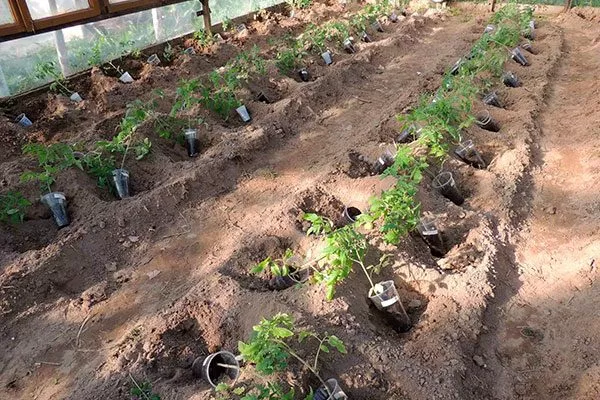
- For planting, prepare holes approximately 15 cm deep and 20 cm wide. The optimal planting pattern for the Orange variety is 40 x 40 cm.
- Pour 3-5 liters of water into the prepared holes and leave for half an hour to an hour to allow the soil to settle a little.
- The seedlings are watered generously to soften the soil and allow them to be easily removed from the cups. Each plant is placed in a hole, the roots are covered with soil, the soil is compacted to form a small depression, and then watered.
Care
Planted tomatoes require regular care. Without it, a good harvest will be impossible. Tomato plants need regular watering, fertilizing, loosening the soil, and other agricultural practices.
Watering mode
Tomatoes shouldn't be watered for 10-12 days after planting. This allows the seedlings to establish themselves better, focusing all their energy on root formation. If the weather is unusually hot, young tomatoes will need to be watered.
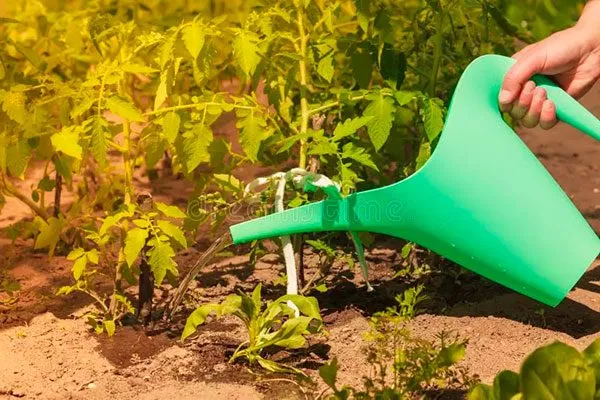
Subsequently, watering frequency depends on weather conditions. During hot and dry periods, tomato beds should be watered daily; in normal weather, water 2-3 times a week. Water the plants at the roots, being careful not to spray on the above-ground parts to avoid burning.
Fertilization
Tomatoes are fertilized 3-4 times per season. The first application is two weeks after planting, the second after flowering, and the third during fruit formation. It is recommended to alternate organic and mineral fertilizers.
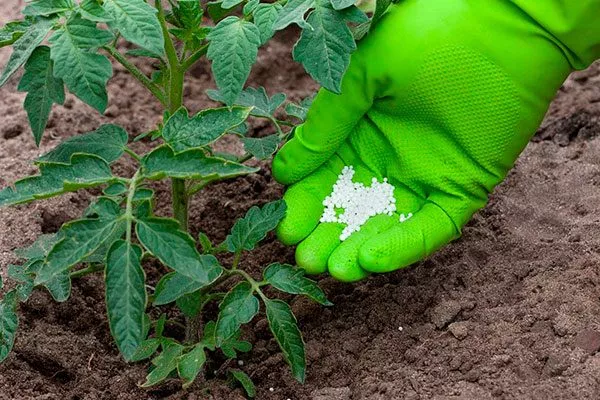
When the fruits ripen, the bushes are fed with potassium-phosphorus fertilizers, for example, a solution of potassium humate and nitrophoska - 5 g and 20 g, respectively, are diluted in 10 liters of water.
Loosening and weeding
To ensure the root system grows and develops well and the plant receives the necessary oxygen, the soil in tomato beds should be loosened at least once every two weeks. The soil should be loosened to a depth of 8-10 cm initially, and later to 5-7 cm. If the soil is dense, it is recommended to loosen it more frequently.
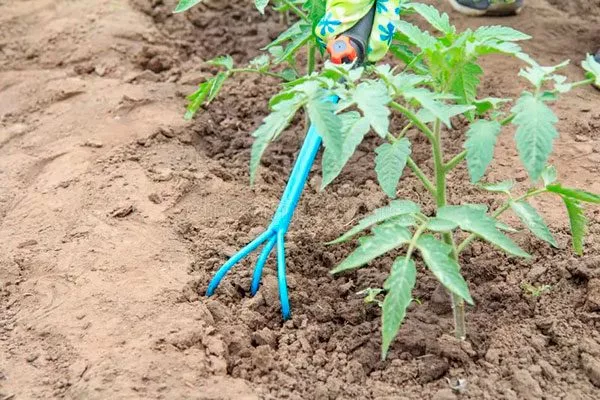
While loosening the soil, weeds are pulled out as they grow. To slow moisture evaporation and weed growth, the soil is mulched with humus, compost, peat, sawdust, straw, or other organic material.
Garter and shaping
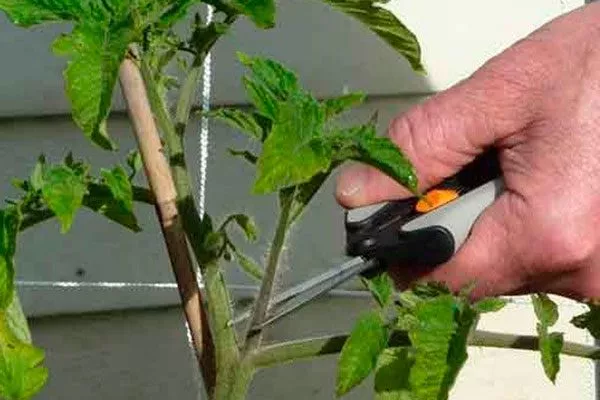
Orange tomato plants grow quite compactly and low, requiring no staking or shaping. You just need to promptly remove side shoots—those that grow in the leaf axils.
Diseases and pests
The Orange tomato has fairly strong immunity, particularly to blossom-end rot, tobacco mosaic virus, and late blight. However, under unfavorable growing conditions, it can be susceptible to blackleg, various forms of rot, spotting, and mosaic.
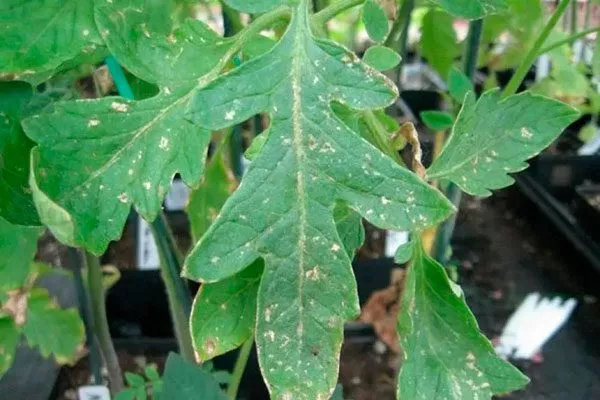
When disease symptoms appear, use Hom (copper oxychloride), Oxyhom, copper sulfate, and other fungicides. Biopreparations, such as Fitosporin-M, are also recommended.
The most dangerous pests for Orange tomatoes are mole crickets, whiteflies, aphids, wireworms, and thrips. Preventative spraying can help protect plants from insects. Suitable products include Fosbecid, Citcor, Batrider, and Biotlin. Folk remedies and biological preparations, such as Fitoverm, can also be used.
Harvesting
The harvest is from mid-July to late August. The fruits are cut with their stems and stored in wide containers. Harvesting takes place in dry weather. The fruits can be picked unripe; they ripen perfectly indoors. It's best to store the tomatoes in a single layer, no more than 2-3, with paper between each layer.
Reviews
The Orange tomato is an interesting, exotic variety with excellent flavor and growing characteristics. It will definitely appeal to lovers of unusual varieties and those who, for one reason or another, cannot eat red tomatoes.