
Olya F1 is an early tomato variety suitable for growing outdoors, indoors, and in containers. Gardeners love it for its highly productive plants, their resistance to disease, adverse weather, and low light. It is popular not only with private growers but also with small farm owners.
Historical background
This tomato hybrid emerged in the second half of the 1990s. It was developed by domestic breeders representing the Ilyinichna seed company and the Federal Scientific Center for Vegetable Growing:
- Ignatova S. I.;
- Gorshkova N. S.;
- Moskvicheva V. T.
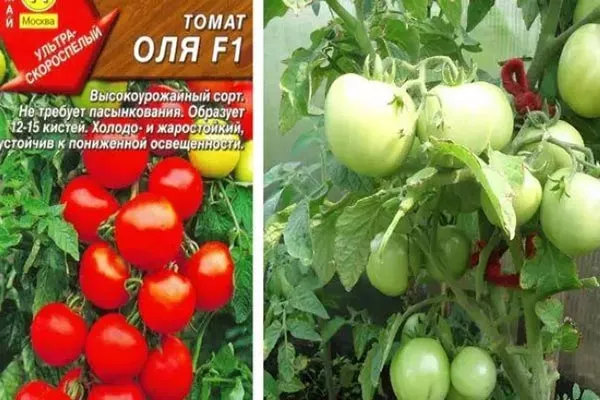
In 1997, their brainchild was added to the state register of the Russian Federation as a variety of tomato intended for cultivation in open beds or protected soil, in spring-summer, winter-spring, and extended rotation.
Description of the bush and fruits
Olya plants are determinate (low-growing) and fairly compact. In open ground, their height does not exceed 0.9 m; under cover, they grow no more than 1.2 m. They have the following characteristics:
- weak branching;
- low shoot formation capacity;
- moderate foliage;
- not very thick stem with short internodes;
- leaves: light green, shortened, twice pinnate, with a slightly wrinkled surface;
- simple intermediate inflorescences, the first of which is laid above the 7-9 leaf, and the rest - through the leaf or in the next internode;
- fruit cluster consisting of 7 tomatoes.
- ✓ Light green, shortened, twice pinnate leaves with a slightly wrinkled surface.
- ✓ Simple intermediate inflorescences, the first of which is laid above the 7-9 leaf.
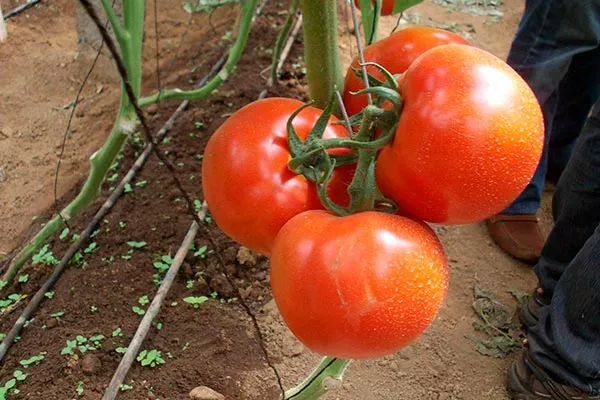
The Olya vegetable crop is attractive in appearance. It is characterized by uniformity. The fruits have distinctive external characteristics:
- regular round shape;
- slightly expressed ribbing;
- medium sizes;
- weight - 120-180 g;
- with a rich red skin, not thick, but strong, with a slight shine;
- red flesh, dense, fleshy, with 3-4 seed nests, with thick walls.
Key characteristics of the variety
Olya F1, like most hybrids, boasts many excellent characteristics. It boasts good cold tolerance (it forms flower clusters even at night temperatures of 7°C), heat and shade tolerance, and resistance to diseases (Fusarium, Cladosporiosis, and tobacco mosaic virus).
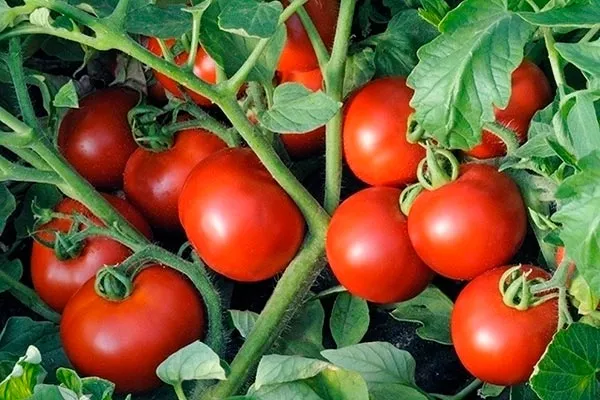
This tomato variety is considered versatile: it is grown for both personal consumption and commercial sale. It is suitable not only for spring planting, yielding fruit in the second half of summer, but also for extended rotation and for winter-spring cultivation in a greenhouse (due to its good tolerance of low light).
The taste and scope of use of tomatoes
Hybrid tomatoes have excellent tasting qualities. Their flesh is sweet and juicy, with a rich flavor. Fruits grown in the summer, with plenty of sun, have more sugar than acid. Harvests grown in the cooler months (greenhouse cultivation) have a distinctly sour taste.
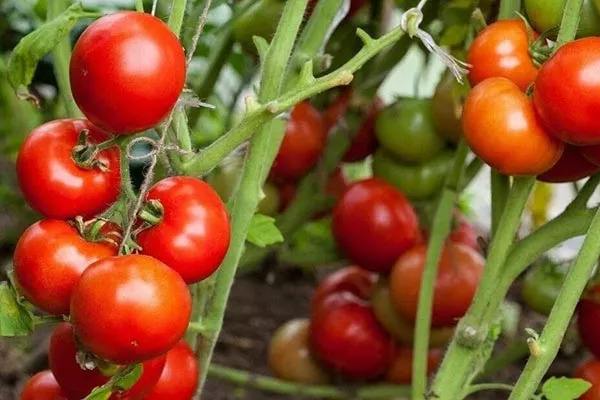
The purpose of Olya tomatoes is universal:
- fresh consumption;
- processing into juice, puree, tomato paste;
- home cooking (adding to various dishes: salads, soups, side dishes, sauces, pizza, etc.);
- canning, including whole fruit;
- pickling;
- drying;
- freezing.
The hybrid's fruits store well and can be transported over long distances without losing their marketable appearance. They do not crack during heat treatment. They retain their shape and attractive appearance when pickled and salted. They look beautiful in jars containing canned vegetables.
Ripening, fruiting and productivity
This vegetable variety represents a group of early-ripening cultivars and hybrids. Its harvest ripens within the following timeframes:
- 95 days after emergence - with classic cultivation by sowing seeds for seedlings in early spring (in this case, the fruits are harvested in July-August);
- in 105 days - with extended turnover.
The harvest ripens uniformly. The harvest period is short. Yield indicators are quite high:
- 10-15 kg per 1 sq. m – spring-summer turnover;
- 26-27 kg per 1 sq. m – greenhouse cultivation, extended turnover;
- 12-15 fruit clusters, 7 tomatoes in each – the average productivity of the Olya hybrid bush.
How to collect seeds?
Gardeners don't collect seeds themselves when growing Olya tomatoes. This is impractical because the hybrid tomato doesn't produce seed material that can reproduce its characteristics and quality.
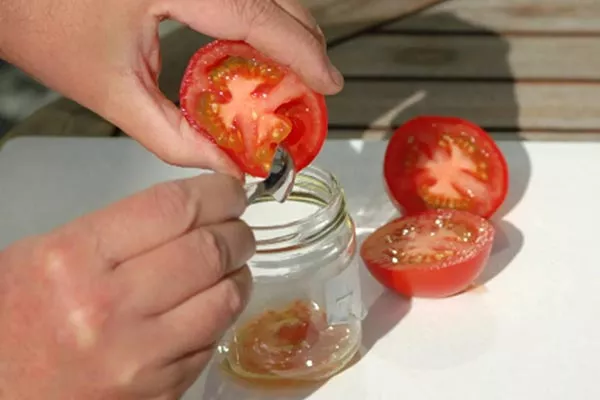
If you still want to collect the seeds yourself, follow these step-by-step instructions:
- Select the largest, most beautiful and healthy fruits from the bushes that have shown the best productivity.
- Allow them to ripen fully if necessary.
- Cut each fruit into several pieces.
- Carefully scoop out the seeds using a teaspoon.
- Leave them in a non-metallic container at home for 2-4 days to ferment. The room temperature should be 24°C.
- Wash the seed thoroughly and let it dry.
- Place the seeds in a paper envelope for storage.
Growing regions
The Russian State Register has approved a vegetable crop variety for cultivation in the following regions of the country:
- Northern;
- North-West;
- Central;
- Volga-Vyatka;
- Central Black Earth Region;
- North Caucasian;
- Middle Volga;
- Lower Volga;
- Ural;
- West Siberian;
- East Siberian;
- Far Eastern.
Thanks to its cold tolerance, this hybrid grows well in unheated greenhouses and open garden beds. It is popular in the south due to its good heat tolerance. Its bushes produce fruit at higher temperatures, unlike other varieties, which stagnate in the summer heat.
Timing of planting seedlings and transplanting into the ground
Sow the seeds to obtain Olya tomato seedlings, following the manufacturer's recommended timeframes:
- the last ten days of March, the first week of April - sowing seedlings for classical cultivation of vegetable crops;
- second half of May/first week of June – transferring seedlings that have reached the age of 45-50 days under film/to an open bed;
- second ten days of December/beginning of March – sowing seeds/transferring seedlings to a greenhouse with an extended growing scheme;
- July - sowing seeds for autumn-winter rotation (they are sown directly into the soil in the garden, and the harvest is received in December).
Sowing rules
Grow hybrid tomatoes using seedlings. Follow the planting and care instructions for seedlings to ensure a bountiful harvest.
Seed preparation
Before preparing your seeds for planting, sort them thoroughly. High-quality seeds that will delight gardeners with good germination meet the following requirements:
- large;
- full-bodied;
- without defects and damage;
- showing no signs of disease.
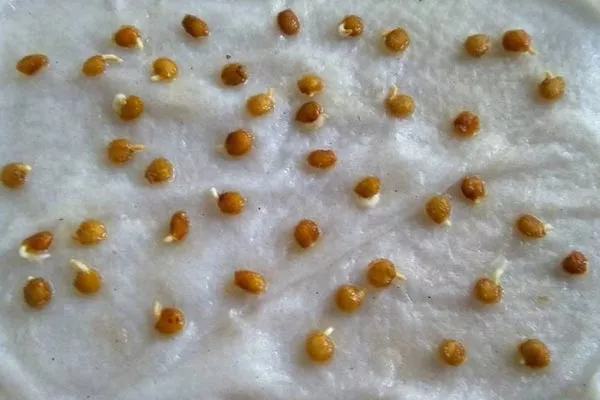
Hybrid seeds purchased from a trusted producer are of high quality. They require no dressing or other treatment other than heating. Follow the procedure step by step:
- Spread the seeds on a damp cloth.
- Wrap them in it.
- Place the bundle in a plastic bag.
- Leave it in a warm place for 24 hours. The temperature should be no lower than 22-24°C.
Preparing containers with soil
For growing Olya hybrid seedlings, use special reusable containers, available at flower shops. They're convenient, safe, washable, and reusable. They come with a water collection tray and a lid to create a greenhouse-like microclimate.
If you already have reusable containers for seedlings, before using them, rinse them in hot water and then treat them with a solution of potassium permanganate.
To save money on purchasing special containers, gardeners grow seedlings in the following containers:
- any plastic or wooden boxes of suitable size;
- containers from yogurt, kefir;
- juice cartons;
- plastic or cardboard cups, including disposable ones.
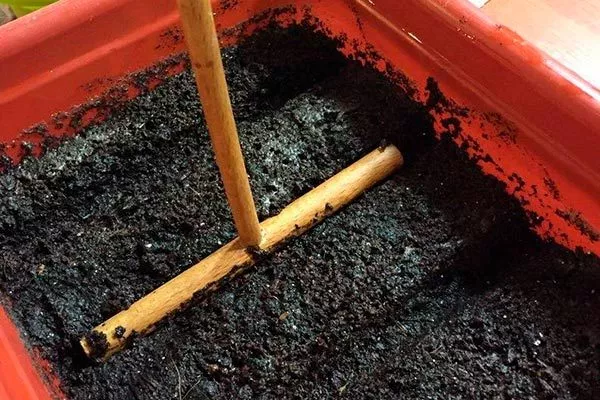
Sow the hybrid seeds in nutritious soil free of weed seeds and pathogens. It should be light, loose, permeable to moisture and air, and neutral or slightly alkaline. A universal soil, purchased at a flower shop, is ideal. It's clean and enriched with nutrients.
If you don't have the opportunity to use purchased soil, make your own soil mixture from the following ingredients:
- garden soil;
- compost;
- mullein or bird droppings;
- sand.
Take all the listed ingredients in equal parts. Disinfect the resulting soil mixture by baking it in the oven or watering it with a potassium permanganate solution. Enrich it with mineral fertilizers, such as superphosphate (25 g per 10 kg of substrate).
Sowing
Fill the box with potting soil. Make 1.5 cm deep furrows in it. Place the seeds in the furrows, leaving 3 cm between them. Cover the seeds with soil. Gently moisten them with a spray bottle. Cover with plastic wrap and keep in a warm place.
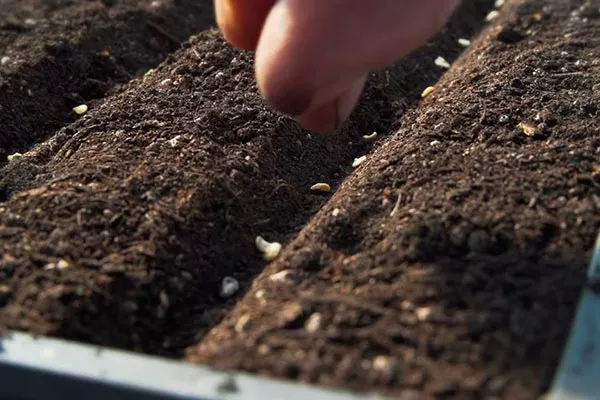
This sowing method requires picking the seedlings after they develop two true leaves. You can avoid this procedure by sowing the seeds directly into peat pots or plastic cups.
How to grow seedlings?
For the first ten days after sowing, maintain the room temperature where the seed trays are located at 25°C. After the sprouts emerge, remove the plastic wrap and move the seedlings to a sunny windowsill in a cooler location (21°C). Care for them using the following procedures:
- watering (water the seedlings generously and infrequently with warm, settled or rainwater, approximately once a week);
- loosening (gently loosen the soil under the plants);
- ventilation of the room, where the seedlings are located (carry out the procedure at midday, limit yourself to opening the window for a short time);
- top dressing (the first time, water the plants with a solution of complex fertilizer for nightshade crops 2 weeks after picking, the second time, add superphosphate or potassium sulfate after another 14 days);
- supplementary lighting (keep the seedlings under phytolamps to provide them with plenty of light and prevent them from stretching out).
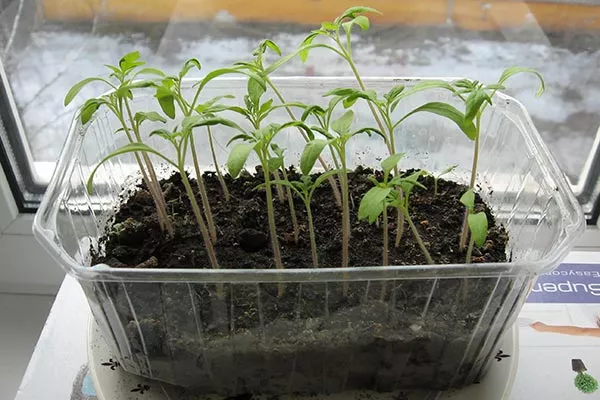
When the plants have two true leaves, transplant them into individual cups. Carefully, using a toothpick to help. When transplanting, you'll need to pinch off a third of the seedling's root. Plant the seedlings deep enough to reach the cotyledons.
Ten to fourteen days before transplanting the seedlings to the garden, begin increasing their cold tolerance. To do this, harden them off by gradually lowering the room temperature to 13-16°C or by placing them on the balcony. The first time, leave the seedlings outside for three hours. Then, add an hour to the time they are outside.
Transplanting seedlings
Once the seedlings reach 50 days of age, transplant them to an open garden bed or greenhouse. If you prefer the first growing option, select a plot with the following characteristics for tomato planting:
- well-lit by the sun;
- protected from wind and drafts;
- non-floodable;
- not used last season as a bed for nightshade crops;
- previously served as a bed for beets, cabbage, radishes, garlic, pumpkin, basil;
- with fertile, light, loose, neutral or slightly alkaline soil, loam or chernozem.
- ✓ The pH level should be between 6.0-6.8 for optimal nutrient absorption.
- ✓ The soil must be well-drained to avoid waterlogging and root rot.
Begin preparing the chosen site for planting the Olya tomato in the fall: dig it over, remove weeds and their roots, and add river sand (if the soil is heavy) and wood ash or chalk (if the soil is acidic). Fertilize with cow manure, using 4-5 kg per square meter.
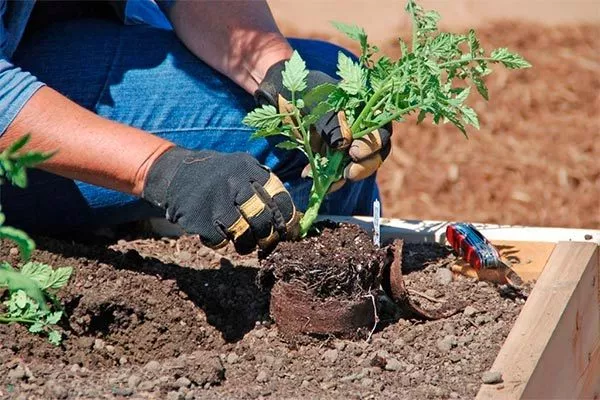
In the spring months, add mineral compounds to the soil where you plan to grow hybrid tomato bushes:
- Superphosphate (20 g per 1 sq. m);
- ammonium nitrate (consumption - 30 g per 1 sq. m).
Seven days before transplanting the seedlings, loosen the soil again. Two days before, water it with a potassium permanganate solution. This measure is aimed at destroying all pathogens living in the garden soil.
If you plan to transplant Olya seedlings into a greenhouse, make sure the soil there is warmed to 10°C. For good growth, maintain a temperature of 17-19°C during the day and 12-14°C at night. Air humidity should be 60-70%, soil humidity 70-75% (80% during the fruiting period). Don't forget about ventilation.
Increase the fertility of greenhouse soil using organic and mineral compounds:
- manure, humus (consumption rate - 4-6 kg/sq. m);
- ammonium nitrate (8 g/sq.m);
- Superphosphate (30 g/sq.m);
- potassium magnesium sulfate (10 g/m2).
Plant Olya tomato seedlings in an open bed or greenhouse, spacing 4-5 plants per square meter. Plant them deep down to the first true leaf. Don't forget to add ash, eggshells, and some compost to the planting holes. Follow the instructions below:
- distance between plants - 40 cm;
- row spacing - 50 cm.
Caring for tomatoes
The Olya F1 tomato hybrid is relatively easy to grow. Standard agricultural practices are sufficient to ensure maximum productivity.
Fertilizing vegetable crops
Don't neglect fertilizing when growing crops. Fertilizing promotes strong plant growth, good immunity, and abundant fruiting. Fertilizing is especially necessary in the following cases:
- if you planted seedlings in poor soil;
- if there has been a prolonged period of heavy rains.
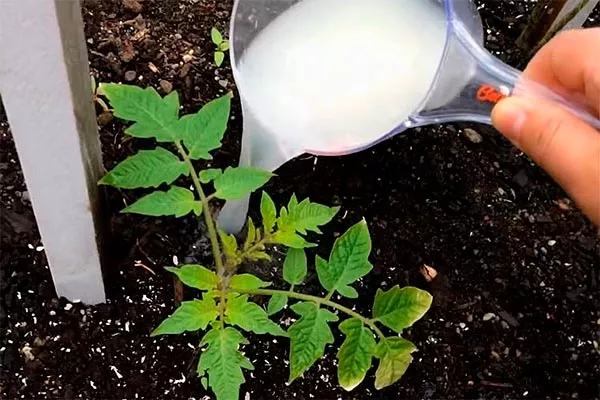
Fertilize the hybrid planting with organic and mineral fertilizers. It responds particularly well to nutrient solutions prepared with the following substances:
- cattle manure (1:10);
- poultry manure (1:20);
- ammonium nitrate (20 g per 10 l of water);
- Superphosphate (20-25 g per 10 l of water).
Apply liquid fertilizer after watering the tomato bed. Apply once every 15-20 days. Apply 0.5 liters of nutrient solution per plant.
Watering
Tomato plants' root systems are unable to absorb nutrients from dry garden soil. They require moisture to dissolve micronutrients and convert them into a form that can be absorbed.
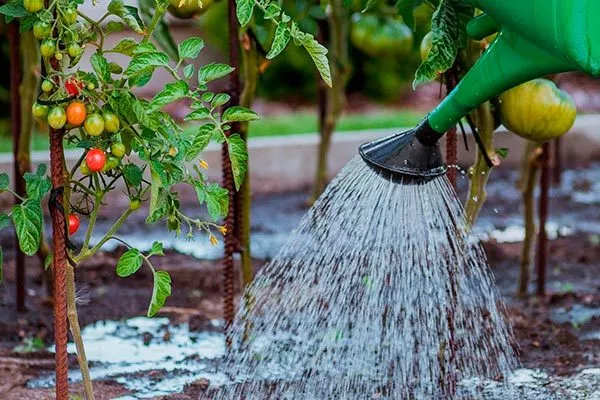
Water the Olya tomato planting according to the following rules:
- Provide infrequent but regular and deep watering of the soil under the plants;
- use warm, settled water to irrigate the beds;
- perform the procedure in the afternoon, but not at night;
- completely wet the soil in the area where all roots are located;
- To determine when to water your tomatoes again, take a handful of soil and squeeze it in your fist: if the lump of soil does not crumble after you open your fingers, there is no need to water;
- water tomatoes growing in an open bed 1-2 times every 7 days;
- Water plants growing in greenhouse conditions once every 3-5 days;
- use 3-5 liters of water for each plant;
- During the flowering period of the crop, reduce the amount of moisture consumed to 1-2 liters per 1 bush.
Pinching out the side shoots and tying up the bush
Olya hybrid bushes don't require maintenance such as side-sonning. They are genetically programmed to avoid producing "fat" (superfluous) shoots during growth.
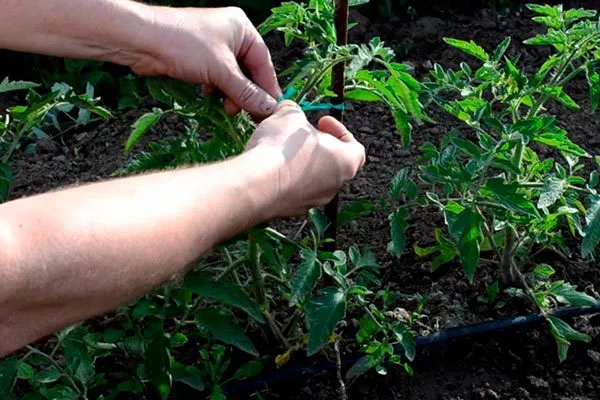
Despite their low stature, the plants require shaping and support. Remember that the main stem bears a heavy load, carrying numerous fruit clusters containing fairly large tomatoes. As they ripen, the risk of shoot breakage increases.
To prevent this problem, use a bush fixing system:
- group;
- individual.
Attach each plant to a stake using soft rope or secure the bush to a trellis.
Soil care
Weeds are crops' main competitors for water and micro- and macronutrients found in garden soil. If harmful weeds are not controlled, tomatoes will suffer from nutritional deficiencies. Furthermore, they become a breeding ground for pests and pathogens.
By planting tomato seedlings in well-dug and weed-free soil, we prevent the problem initially. Regular weeding will be necessary afterward. Combine this with other garden soil care routines:
- loosening;
- mulching.
After watering or rain, break up the dense crust that forms on the soil surface and gently loosen the soil. This will improve oxygen supply to the tomato roots.
Don't neglect mulching the soil. This procedure helps retain moisture and suppress weed growth. It helps gardeners minimize the need for watering, cultivating, and weeding. Cover the soil under bushes with a layer of organic matter:
- straw;
- hay;
- peat;
- compost;
- mown grass;
- sawdust.
Furthermore, organic mulch serves as an additional source of nutrients for vegetable crops. As it gradually decomposes, it increases soil fertility and enriches it with elements beneficial for tomatoes.
Features of cultivation and possible difficulties
If you're planning to plant the Olya hybrid at your dacha, consider a few growing tips:
- the bushes yield their harvest early (you can remove them from the plot immediately after fruiting ends and plant the second crop in the vacated space);
- Tomatoes ripen almost simultaneously (in a short period of time, you will get a large mass of fruits that will need to be quickly processed or eaten).
According to gardeners, this hybrid tomato is easy to grow, even for novice gardeners. It's hardy and easy to grow, requiring little care.
The nuances of growing in open ground and greenhouses
Growing hybrid tomato varieties in open beds and protected soil has its own peculiarities:
- There's no exact date for transplanting Olya seedlings to uncovered plots. Consider the region's climate and the seedlings' readiness for transplanting to the garden. Transplant the plants once they reach a height of 25-30 cm and have developed 3-5 pairs of leaves. By this time, the soil should already be warm to 13-15°C.
- When planting seedlings early (in mid-May) in an open bed, make sure to protect them from the cold using film.
- Plant tomato seedlings in a checkerboard pattern in the garden if you are growing them outdoors.
- Plant the seedlings 3-4 cm deep in open soil (until the first true leaves appear). This technique encourages additional roots to develop on the shoot. These roots will allow the plant to better extract nutrients and water from the soil.
- The timing of transplanting seedlings into protected soil depends on weather conditions and the type of greenhouse. At the end of April, transplant tomato plants into a greenhouse covered with plastic film. Transfer seedlings to a polycarbonate shelter 7 days earlier, and to a heated greenhouse at the end of March.
- Before planting seedlings in protected soil, inspect the greenhouse for cracks in the glass, tears in the film, or gaps. Close all vents. Dig over the soil. To ensure better warming, create a mound of fertile soil and humus (30-40 cm high and 60 cm wide). Cover it with black plastic. Use the resulting warm bed to plant the first row of seedlings.
- Maintain a favorable temperature in the greenhouse for tomatoes (17-19°C during the day, 12-14°C at night), especially in summer. Ventilate it regularly.
- Tie the bushes growing in the greenhouse to trellises or stakes.
Harvesting and use of the crop
The Olya hybrid tomato harvest ripens quickly and uniformly. Pick tomatoes when they're fully ripe or brown if you want to prolong their lifespan. You can also pick tomatoes in clusters, waiting until all the tomatoes in the bunch are ripe.
Store your harvested Olya fruits at 12-15°C. You'll ensure their maximum shelf life by keeping them in the right conditions:
- in a dark place, away from sunlight;
- spread out in 1 layer on a flat surface;
- ensuring free access of air to the fruits;
- storing them separately from other vegetables and fruits;
- wrapping each tomato in a paper napkin;
- by placing the tomatoes in the refrigerator (in the vegetable compartment) or leaving them on a cool balcony in a box.
Diseases and pests
The hybrid is renowned for its strong immunity. Its bushes are resistant to the following diseases and pests:
- tobacco mosaic virus;
- fusarium;
- Cladosporiosis (relative resistance)
- root-knot nematode.
Pest and disease control
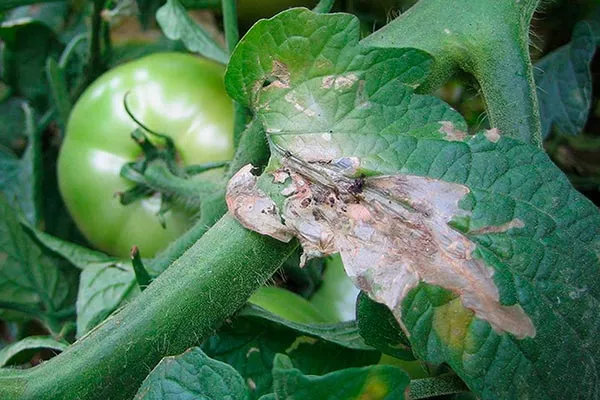
With poor care and unfavorable weather, Olya tomato plants can suffer from late blight, rot, and brown spot. Factors contributing to this disease include:
- growing on poor soil;
- sudden temperature changes;
- waterlogging of the soil
If signs of disease appear on your crop (brown spots on foliage and fruit, white plaque, etc.), treat the bushes and the soil beneath them with a copper sulfate solution. Fungicides such as Fitosporin-M can also help solve the problem.
Oli's plants are plagued by insects such as mole crickets, whiteflies, and aphids. Treatments such as Grom, Fosbecid, Fitoverm, and Actellic can help control these pests. Apply these treatments in the evening, during calm and dry weather. You can also manually remove pests and wash them off the leaves with moderate pressure water.
Preventive treatment
To prevent disease on hybrid tomato bushes, use fungicides such as Fitosporin, Ordan, Bordeaux mixture, HOM, Quadris, Trichodermin, and Ridomil Gold. Apply these treatments prophylactically at the following times:
- 7 days before transplanting seedlings into the garden or a week after transferring the seedlings to the garden bed;
- when there is a threat of spreading fungal infections.
If the weather is cool and damp, spray the plants immediately after fruit set. Repeat treatments every 15-18 days.
Pros and cons
The hybrid is loved by summer residents for its many advantages, such as:
Gardeners consider the only drawback of Olya to be the uneven flavor of its fruits. It varies under different growing conditions.
Reviews
Olya F1 is a domestically bred achievement favored by local gardeners and farmers. This hybrid has gained popularity due to its early ripening, excellent marketability, high productivity, and robust plant health. It's an excellent choice for those who grow tomatoes in a greenhouse for most of the year.