
The Nina variety has gained popularity due to its low maintenance and consistent productivity. Despite some care requirements, it produces excellent results even with minimal effort. The fruits have excellent presentation and flavor, making it an ideal choice for growing.
History of creation, description of the bush and fruits
The variety was developed by renowned breeder Blokhin-Mechtalin. Development took several years, and in 2017, an application for inclusion in the State Register was submitted. Nina was officially included in the list of varieties recommended for cultivation in 2019.
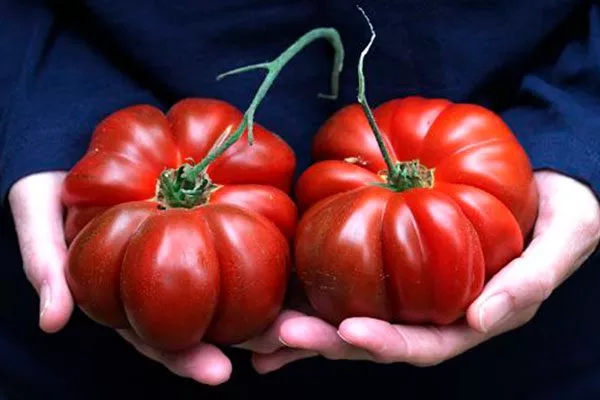
Features of the culture:
- The plants are tall—in open ground they grow up to 180 cm, and in greenhouses they can reach 200 cm or more. Gardeners note the need for growth control, as unchecked plants can stretch up to 3 m, making them difficult to plant.
- The bushes are powerful, with strong stems and medium-length leaves of a classic green color.
- The foliage is dense, providing good protection from sunburn.
- The inflorescences are predominantly simple, sometimes semi-compound or compound. The first inflorescence appears above the ninth leaf, and subsequent inflorescences form every three leaves. The flowers are small and lack a distinct fragrance.
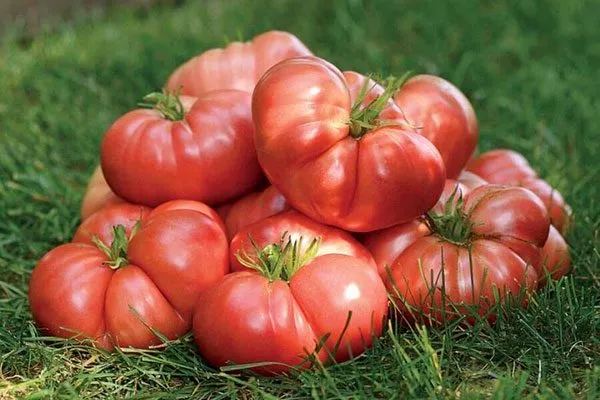
- The tomatoes are bright red, with a glossy surface. When ripe, they initially turn green, with a dark spot near the jointed stem. The average weight is about 340 g, but some can reach 700 g, although this is rare.
- The vegetables have a round shape with pronounced ribbing, giving them a unique cross-section. The flesh is firm, a rich raspberry-red hue, with multiple seed chambers and a generous number of seeds.
- ✓ High resistance to temperature fluctuations, which makes the variety suitable for regions with unstable climates.
- ✓ The need to form a bush into one stem to achieve maximum yield.
Key characteristics of the variety
While growing traditional tomato varieties in their gardens, many gardeners consider adding something more unusual to their arsenal—a variety that combines an exotic appearance, high yield, and ease of care. One such variety is the early-ripening Nina tomato.
Taste and uses of tomatoes
The fruits have a harmonious flavor, dominated by sweetness and minimal tartness. Thanks to their unique shape, this variety is ideal for professional vegetable slicing. These tomatoes are often used in salads, soups, and borscht, as they add excellent color to the broth.
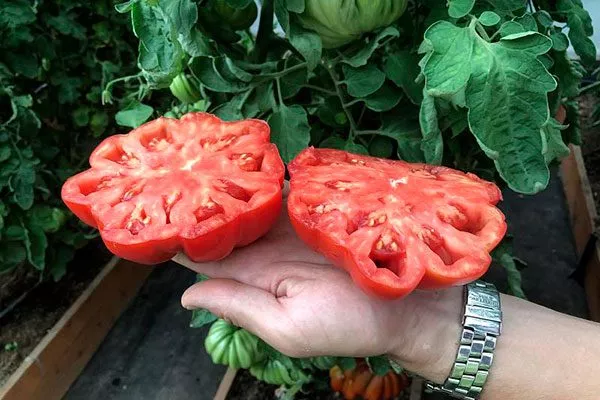
The absence of white, dense spots makes Nina a suitable choice for making juice, paste, and ketchup. However, it is not suitable for canning.
Ripening, fruiting, sowing and transplanting times
This is an early-ripening variety. It takes about 100 days from germination to the first fruits ripening. The tomatoes ripen gradually but fairly quickly, with the most productive period from late June to August.
Seeds can be purchased or harvested, as Nina is a cultivar, not a hybrid. To obtain seedlings, seeds are sown in the first half of March, approximately 60 days before transplanting. The seedlings are transferred to the greenhouse in early May, and planted outdoors in mid-May.
Productivity and ways to increase yields
This variety attracts gardeners not only for its striking appearance but also for its abundant fruit. To achieve maximum yield, follow these guidelines:
- grow tomatoes in a greenhouse;
- form bushes into one stem;
- remove lateral shoots in a timely manner by pinching out side shoots;
- ensure regular watering and ventilation of the greenhouse;
- apply fertilizer every two weeks.
If you follow proper agricultural practices, you can harvest up to 17 kg of aromatic and delicious tomatoes per square meter per season. In a greenhouse, this figure is even higher—18 to 20 kg per square meter.
Required climatic conditions and regions
The crop is characterized by resistance to adverse weather conditions, including temperature fluctuations, short-term cold spells, heat, and short periods of drought.
Plants are sensitive to drafts, strong winds, prolonged absence of sunlight and high humidity, which can provoke the development of diseases.
This variety is successfully grown in various regions, including the Central, Far Eastern, Western Siberian, Northern, Ural, and Central Black Earth regions. The bushes are widely cultivated by gardeners in Ukraine and Moldova.
Planting and care features
The Nina variety requires careful attention and adherence to the rules. Care begins with seed selection and seedling production and continues until harvest.
Growing seedlings
Sow seeds dry or pre-soaked, as there's virtually no difference in germination speed. Before sowing, soak the seeds in a nutrient solution. Use commercially available solutions or prepare an ash solution (dissolve 40 g in 1 liter of boiling water and let steep for 2 days).
Use containers, seedling trays, or plastic cups. You can buy ready-made soil or make your own: mix humus and sand with chopped sphagnum moss, or combine sand and sawdust (1:2). The containers should have drainage holes.
Step-by-step algorithm:
- Fill the container with drainage (pebbles, eggshells).
- Fill with prepared soil and water with warm water.
- Place the seeds to a depth of 2 cm.
- Cover the containers with film and place in a warm place with a temperature of up to +28°C.
- After the seedlings appear (after 5-7 days), move them into the light.
Provide the seedlings with proper care:
- After the seedlings emerge, increase the light and reduce the temperature for a week. Then return the seedlings to a warm location with a temperature of 22°C.
- Water moderately, but avoid overwatering.
- Ten to fourteen days after germination, transplant the seedlings, watering them two hours beforehand. Carefully lift the seedlings out using a wooden stick. Pinch the central root and place the seedlings in new containers, burying them up to the lower leaves. Spread the roots, cover with soil, and compact them.
Place in a shaded area for 14 days. Water 1-2 times a week until the plants are established.
Two weeks before transplanting, begin hardening off the seedlings: Place them outside for 10-15 minutes, gradually increasing the time to 1.5 hours. Maintain a regular schedule to acclimate them to the fresh air.
Transplanting seedlings into open ground
Dig over the area and add organic (humus, compost) or mineral fertilizers. Make sure the soil has warmed to 15-18°C and the risk of frost has passed.
- ✓ The optimal soil temperature for transplanting seedlings should be no lower than +15°C to avoid stress on the plants.
- ✓ The distance between plants should be at least 50 cm to ensure sufficient air circulation and reduce the risk of diseases.
Follow the instructions:
- Water the seedlings thoroughly 1-2 days before transplanting to facilitate root extraction. The plants should have 6-8 true leaves and strong stems.
- Choose a sunny location with good air circulation and no drafts. Dig holes 50 cm apart and 40 cm between rows.
- Carefully remove the seedlings from the container, being careful not to damage the roots. Place them in the holes, deepening them to the first true leaves. Cover the roots with soil, compacting them lightly.
After replanting, water the seedlings thoroughly.
Care instructions
The Nina tomato requires regular watering, as it is a moisture-loving crop. Use drip irrigation to prevent overwatering and provide the plants with the necessary water, reducing the risk of late blight.
Perform the following care procedures:
- Water the bushes in the evening with settled water, making sure to water them at the roots. Loosen the soil in the root zone to improve air access to the roots.
- To ensure good growth and fruiting, fertilize tomatoes 2-3 times per season. Use mineral fertilizers, which can be replaced with herbal infusions or cow manure. Apply them in liquid form to ensure better absorption by the root system.
- Remove side shoots (stepchildren) every 7-10 days. Do this in the morning. Leave stumps 3 cm long.
- Form the bush as a semi-determinate plant with two stems. Leave one strong shoot directly under the first flowering cluster.
Due to the heavy fruit and medium height, the Nina tomato requires staking. This will prevent stem breakage and ensure better ventilation.
Fruit harvesting and storage
Begin harvesting tomatoes when they are fully bright red and slightly yielding to pressure. For tomatoes intended for long-term storage, harvest them a little earlier, before they are fully ripe, and let them ripen at room temperature.
Store the harvest in a cool, well-ventilated area, stacking the vegetables in a single layer to prevent damage. At temperatures around 10-12°C, the fruits will retain their appearance and flavor for up to two weeks. For longer storage, can or freeze them.
Treatment and prevention of diseases and pests
A week before or immediately after transplanting outdoors, perform a preventative spraying. Use various fungicides for this purpose. The most popular are:
- Tattoo;
- Quadris;
- Fast;
- Fitosporin;
- Bordeaux mixture.
Dilute the preparations according to the instructions and apply them to the bushes late in the evening in dry, windless weather. It's important that there be no rain for the next two days.
For insect control, use effective insecticides:
- Fitoverm;
- Aktara;
- Spark;
- Karbofos;
- Confidor.
Initially, remove pests manually or wash them off with moderately strong water pressure. Folk remedies such as a solution of baking soda and ammonia, or an infusion of onion peels, garlic, and chili peppers are effective against insects. For prevention, disinfect greenhouses with tobacco or sulfur candles.
Pros and cons
Before planting a crop, it's important to carefully study all its characteristics to avoid potential difficulties. Nina has many advantages:
Among the disadvantages, gardeners note the high growth rate and the need to shape and tie up the bushes.
Similar varieties
| Name | Ripening period | Disease resistance | Growth type |
|---|---|---|---|
| A cheerful neighbor | 115-120 days | High | Indeterminate |
| Tlacolula | Mid-early | Average | Indeterminate |
| Mushroom Basket | Early ripening | Low | Indeterminate |
| Puzata Khata | Early ripening | High | Indeterminate |
| Marmande | Early ripening | High | Indeterminate |
There are many varieties of tomatoes, all with similar characteristics, but each has its own unique qualities. Comparing different varieties helps you choose the most suitable one. Nina has the following similar varieties:
- A cheerful neighbor. Bred in Russia, this indeterminate variety ripens in 115-120 days. It requires shaping and support, delivering high yields with fruits weighing up to 300 g. The tomatoes are flat-round, but less ribbed, and the flesh is firm and sweet with a slight tartness.
- Tlacolula. The shape of the fruit is the same as Nina's, but the tomatoes are larger – weighing up to 400 g. It belongs to the mid-early indeterminate varieties.
- Mushroom Basket. It has a more robust stem with short internodes. The bushes are tall, but the yield is lower. The tomatoes are large, similar in appearance to Nina, weighing up to 500 g. The flesh has a balanced sweet and sour flavor.
- Puzata Khata. A tall, early-ripening variety. The fruits are large, ribbed, weighing up to 400 g, with fleshy, sweet, and free-flowing pulp.
- Marmande. An early-ripening indeterminate variety developed by Dutch breeders. The fruits are small (approximately 150 g). They have a flattened, round shape, a ribbed surface, and fleshy pulp with a rich, sweet flavor. It is disease-resistant and well suited for cultivation in Russia.
All the varieties considered have similar characteristics to the Nina tomato, but have some differences that are important to consider.
Reviews
The Nina tomato is a high-yielding variety ideal for both greenhouses and open ground. Its indeterminate bushes require minimal care and are resistant to diseases and environmental factors. This variety produces generous harvests of high-quality tomatoes when properly managed.