
The Nastenka tomato variety is quite popular in Russia and the CIS. It's an early-ripening, standard, determinate variety. This means it can be grown year-round (in both open ground and greenhouses).
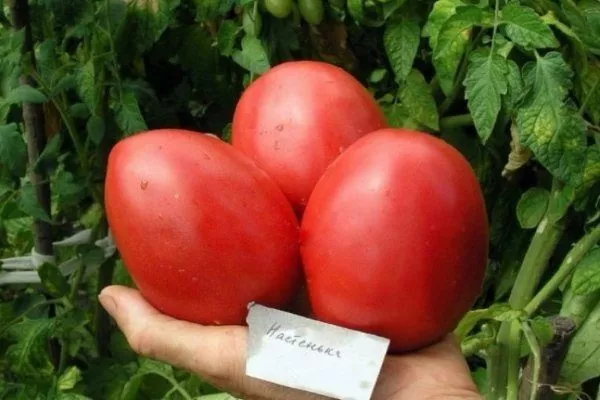
Tomatoes of the "Nastekka" variety
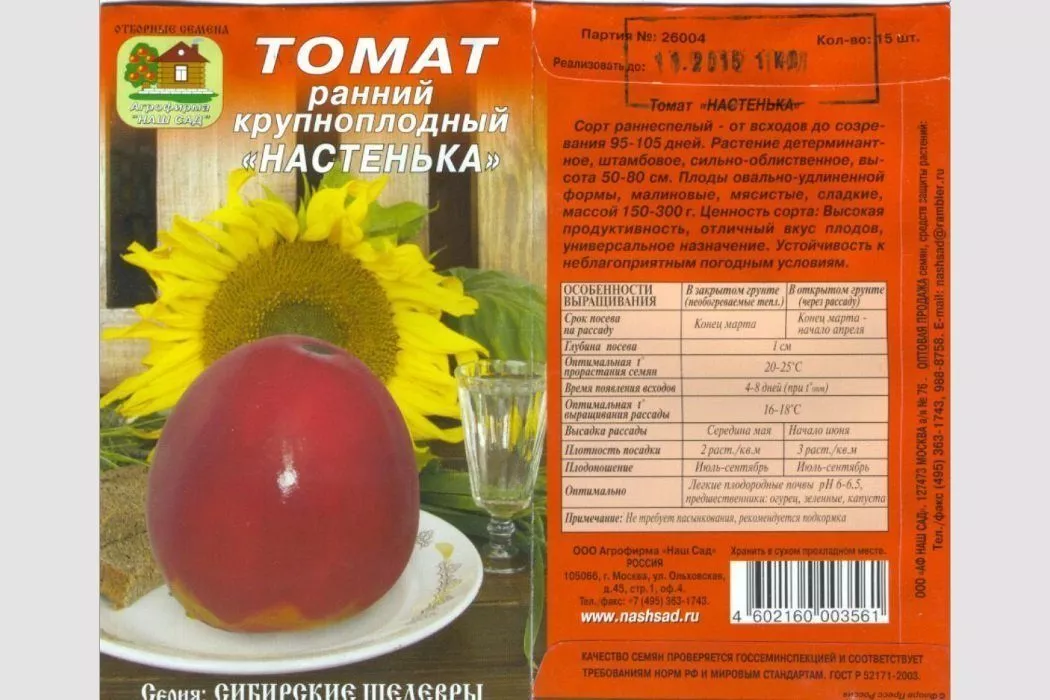
Tomato seeds of the Nastenka variety
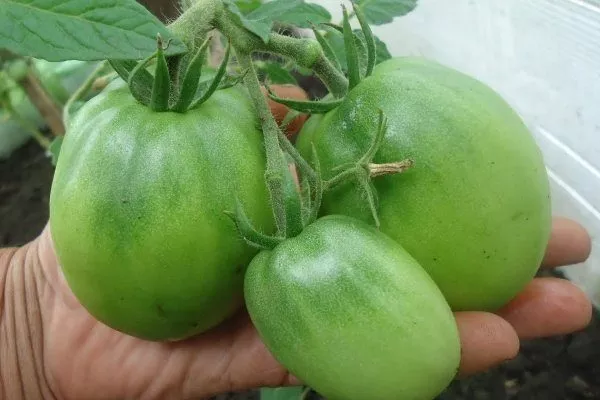
Tomatoes of the “Nastenka” variety are ripening
General characteristics of the variety
Breeding of this hybrid began back in 2008, but the variety was officially registered in 2012. Nastenka easily adapts to all temperature conditions and has excellent flavor and juiciness. It is used for salads, juices, and canning.
Appearance of bushes
The top of the bush doesn't need to be pinched, as stem growth stops after the flower clusters appear. The bush grows from 50 to 70 cm tall and is characterized by foliage and a stocky habit. The side branches of the bush don't have many shoots, and the foliage is bright green, small, and slightly corrugated.
Each inflorescence contains no more than five flowers. The fruiting cluster forms on the 6th or 7th leaf; the remaining clusters are separated by a maximum of two leaves.
This variety boasts a strong stem, but the fruits are quite large and heavy. Therefore, staking is required.
Characteristics of fruits
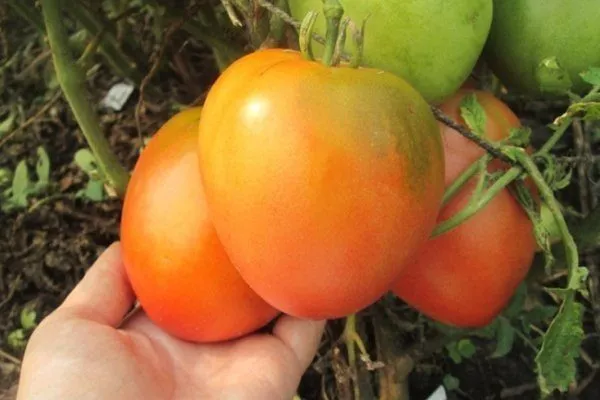
The fruits have sweet flesh (3.35% sugar per 100 grams), a firm texture, and a red hue. The shape is round, slightly elongated, with four to six chambers.
The minimum weight of one fruit is 150 grams, the largest – 200. But tomatoes growing in the lowest inflorescence can reach up to 250 grams.
Ripening time
Nastenka fully ripens in about 100 days. The harvest is ready during this period. However, the first fruits are ready for consumption much earlier, as ripening occurs gradually.
Productivity
If the plant is planted in protected soil, the yield is up to 12 kilograms per 1 sq. m. growing in open soil From one bush you can collect up to 2 kg of fruit, that is, only 8 kg per 1 sq. m.
Planting, growing and care
Agricultural practices are fairly traditional and simple, but additional fertilization is required to increase yields. A wide range of fertilizers can be used for this:
- ash;
- iodine;
- organics;
- boric acid;
- ammonia;
- hydrogen peroxide;
- yeast.
- ✓ Use only wood ash from deciduous trees, excluding oak and walnut, due to their high tannin content.
- ✓ Ash must be completely cooled and stored in a dry place to avoid loss of potassium.
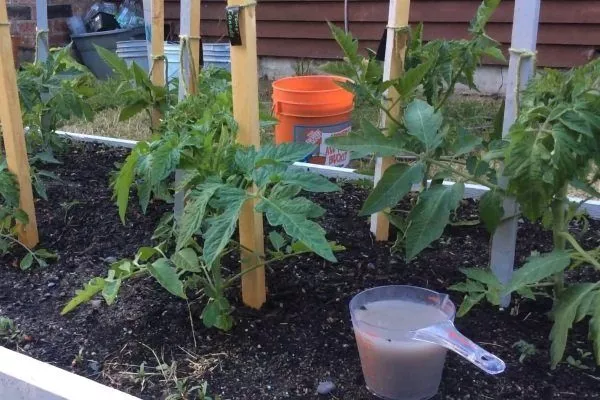
Planting seedlings
The Nastenka variety can be grown in any way, but it is recommended even in the South first grow seedlingsThe following rules apply:
- Deadlines planting seeds for seedlings – Late February – early March. The seeds need to be prepared (germinated). This involves several stages: checking for germination, disinfecting, warming, and hardening. Read more about how to germinate tomato seeds. Here.
- The container is shallow.
- The soil should be purchased and treated. If using home-grown soil, it must be disinfected with a potassium permanganate solution or roasted.
- Before planting the seeds, the soil must be moistened and compacted.
- The seed planting depth is maximum 1 cm.
- Next, cover the containers with plastic or glass to maintain the required humidity. The temperature inside should be 23-25 degrees Celsius.
- When the first shoots appear, the film should be removed. The temperature should now not exceed 16 degrees Celsius. The sprouts should remain in this state for 7 days, after which the temperature should be increased to a maximum of 22 degrees Celsius.
- The soil must be watered with slightly warm water.
- Picking seedlings This is done after one or two leaves have formed. Separate pots or cups are used for this. Their volume should be 8 x 8 cm.
- The seedlings are provided with sufficient lighting.
To ensure that the lateral rhizomes grow, you need to pinch one root when transplanting into separate containers.
Planting in a greenhouse
After about two months, the seedlings are transplanted into a greenhouse (in southern regions, they can be transplanted directly into open ground). The seedlings should have at least six leaves and at least one cluster of flowers.
In greenhouse conditions, plants are poorly ventilated, so seedlings are planted at a distance of 45 cm from each other. There should be at least 60 cm between rows.
Transplantation into open ground
The bushes are transferred to the garden only when the weather is favorable and there is no risk of frost. Depending on the region, this could be April or even June.
The following landing rules must be followed:
- Before moving the seedlings outside, it's necessary to periodically open the greenhouse to further acclimate the plants to the outdoor conditions. Initially, the temperature should be lowered for a couple of hours, then gradually increased.
- Outdoor soil is prepared in the fall. The top layer is removed, then dug over and composted. It's best if beans, beets, or cabbage have previously grown in the soil. Sun exposure is also important (Nastya loves warmth and plenty of light).
- Planting pattern - 40x50 cm.
- The depth of the hole is 20 cm.
- Watering is carried out immediately after transplantation.
- During the first 7-10 days, it is recommended to cover the seedlings with film at night.
Watering activities
Nastenka should be watered moderately. If there's insufficient moisture, the flowers will fall off and the leaves will curl. If there's too much moisture, the roots will rot and the risk of disease increases.
- ✓ Yellowing of lower leaves due to nitrogen deficiency.
- ✓ Curling of leaves upwards due to excess moisture.
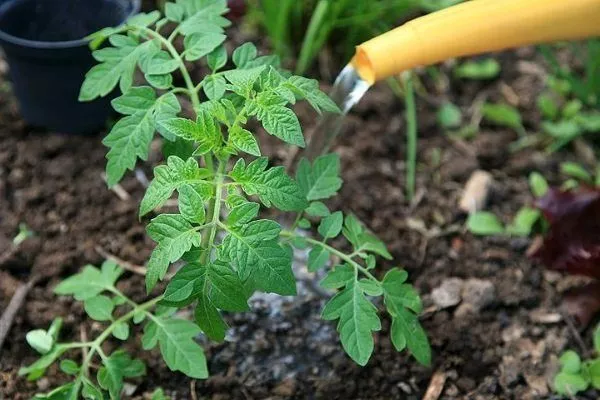
Watering rules:
- The water shouldn't be cold. It's best to let it settle in containers.
- Water carefully so that water does not fall on the leaves and roots.
- The procedure is performed in the evening or early morning.
- Until the flowers appear in large numbers, water each bush at a rate of 2 liters, watering twice a week.
- When the inflorescences are fully formed, the amount of water increases (5 liters per bush).
- When green fruits appear, 3 liters of water is enough, but watering is carried out every 4 days.
- During fruiting and reddening, moisture is added once a week.
- After each procedure, it is necessary to hill the trunks and loosen the soil.
Fertilizing plants
First top dressing begins with seedlings, and the next one is done a week after transplanting into the garden. Fertilizing recommendations:
- First, a phosphorus solution is added. It's easy to prepare: add 30 grams of superphosphate to 10 liters of water. Apply it right to the roots. This helps the plants grow strong.
- After ten days, potassium is added to improve the taste of the fruit. Potassium sulfate is diluted in water in the same way as superphosphate. The fertilizer is applied along with watering the tomatoes.
- During flowering, spray the foliage with a boric acid solution. To do this, use 5 grams of the solution per 5 liters of water.
- If you'd like to use ash instead of minerals, prepare it as follows: either place it in the soil under the bushes or make an infusion (3 kg of wood ash per 5 liters of water). In the latter case, let the mixture steep for 24 hours, then add another 5 liters of water and water the bushes.
Diseases and pests
Nastenka is quite resistant to diseases, but is afraid of the following pests:
- Spider mite. To prevent insects from attacking, you need to spray the bushes with a soap solution.
- Whitefly aphid. The drug Confidor is used against it.
- Slugs. To get rid of them, just sprinkle ash with ground red pepper.
A common problem for Nastenka is tomato cracking. To prevent this, it's important to maintain proper soil moisture.
How to harvest and store crops?
Collection rules:
- Tomatoes are harvested at varying levels of ripeness. For example, if you need tomatoes for canning and long-term storage, they should be blanched. However, if you need tomatoes for salads and juice preservation, they are picked at a perfectly ripe stage. This increases yield.
- The final harvest should be carried out at a minimum temperature of 7-8 degrees Celsius at night. Extremely low temperatures have a negative impact on the fruit, making it impossible to preserve them.
Storage rules:
- Before placing the tomatoes in containers, carefully inspect them for damage. There should be no spots, blemishes, or other imperfections.
- It is not advisable to pick off the stalks – this way the tomatoes will be stored longer.
- Containers are wooden boxes lined with breathable material.
- The maximum temperature is 23 degrees.
- Air humidity is 85%.
- The room must be dark and dry. A ventilation system must be installed.
Pros and cons of Nastenka tomatoes
Advantages:
- excellent yield performance;
- early maturity;
- ease of care and maintenance;
- minimum costs;
- disease resistance;
- there is no mandatory requirement to transfer to a greenhouse;
- versatility of fruit sizes (suitable for consumption and canning).
Flaws:
- It is difficult for beginners to grow seedlings;
- To increase yields, it will be necessary to apply mineral fertilizers.
Tomato Nastenka (video review)
This video explains what makes Nastenka so appealing to gardeners, as well as the specifics of tomato care:
Gardeners' reviews
The Nastenka tomato is an easy-to-care-for variety, but growing it requires some skill, especially during the seedling growth period. This variety has earned the attention of consumers and gardeners thanks to its excellent taste, long shelf life, and ease of cultivation (even if it's not the first time you've grown it).