
To increase tomato yields, experienced gardeners use a special technique: covering the soil with special materials, or mulching. What this technique is, how to perform it correctly, what substances are used for mulching tomatoes, and what should not be used as mulch—all of this is covered below.
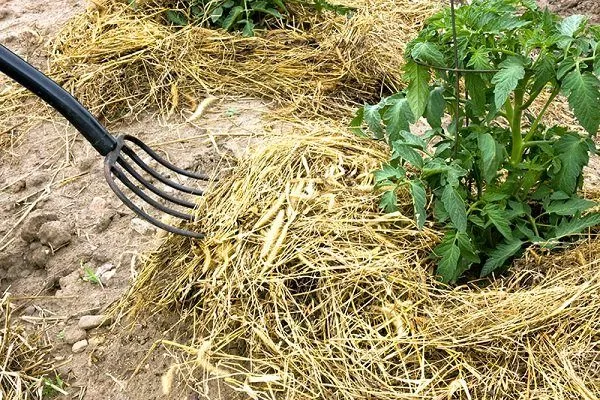
What is mulching and what is it used for?
Mulching is the process of covering the surface layer of soil with mulch, which helps protect the soil from drying out, improves its properties, and prevents weed growth. The undoubted benefits of this procedure include:
- Saving time. Soil covered with mulch stays moist longer, meaning less watering is required.
- Protection of the root system from adverse weather conditions. The plant is not afraid of wind, overheating and cold.
- Attracting earthworms to the site. Mulch is a breeding ground for them.
- Protective function. It acts as a barrier, protecting leaves and stems from fungal diseases and rot.
- Regulatory function. Soil acidity is regulated.
Various materials are used for tomatoes. Not all of them have a positive effect on the crop, and some are detrimental. Therefore, it is important to choose the right material carefully and carry out the procedure in a timely manner.
Organic materials
Organic mulch is made from natural ingredients. Most gardeners choose it because it not only protects plants from weeds, diseases, and frost, but also enriches the soil with essential minerals, including nitrogen. In fertile soil, mulch decomposes faster than in poor or depleted soil.
| Name | Material type | Impact on soil acidity | Rate of decomposition |
|---|---|---|---|
| Compost | Organic | Neutral | Fast |
| Mown grass, weeds | Organic | Neutral | Average |
| Sawdust, wood chips, tree bark | Organic | Increases | Slow |
| Straw, hay | Organic | Neutral | Slow |
| Pine needles and fallen leaves | Organic | Increases | Average |
| Peat | Organic | Increases | Very slow |
Compost
Compost, which also acts as a nitrogen-containing fertilizer, is considered one of the most effective types of mulch. However, the key with compost is to be careful not to overdo it. Apply it with caution, as there's a high risk of overfeeding tomatoes with nitrogen compounds, which will negatively impact yield.
For best results, use it in a mixture with other components. Sawdust is the best companion for compost. Sawdust requires a large amount of nitrogen to decompose, which it mercilessly draws from the soil. The components neutralize each other, and plants benefit from them.
The downside of compost is that the mulch layer quickly disappears, as worms rapidly process it. This necessitates adding a new layer throughout the growing season.
Mown grass, weeds
As the grass decomposes, it nourishes the soil with microelements and increases its fertility, but there is a risk of infestation of tomatoes by insect pests that often live on weeds.
Therefore, it is first thoroughly dried in the sun, turning it over several times. Ultraviolet radiation kills most microorganisms. The grass should be one that has not yet set seed. Otherwise, the seeds will ripen and germinate during drying.
The ideal option is to mow the grass while it's flowering. This is when it accumulates the most macro- and microelements, which are then released into the soil.
The layer of mown grass in the garden bed should not exceed 3 cm. Once the mulch has dried, add a new layer. If you lay down a higher layer of grass, it will begin to compact during watering, impeding oxygen flow to the plant's roots.
Sawdust, wood chips, tree bark
Fresh materials cannot be used for mulching tomatoes without additional preparation, since when they decompose they draw a large amount of nitrogen from the soil, which negatively affects seedling growth and the amount of the future harvest. Before use, sawdust is soaked in a nitrogen fertilizer solution, such as a 5% urea solution.
Bark and wood chips are left outdoors for a year to "age." After a year, they won't acidify the soil and will only benefit the tomatoes.
When purchasing sawdust (bark or wood chips), inquire about the tree species they come from. Coniferous wood waste significantly increases soil acidity, so dolomite flour or slaked lime are added along with it.
Straw, hay
One of the best types of mulch is considered to be grass straw. It prevents tomato infections:
- rot;
- leaf spot;
- anthracnose.
Straw also acts as a thermal insulator, protecting the soil from freezing. Moisture evaporates slowly beneath it, keeping the soil moist and loose for a long time.
Rodents often nest under straw. Therefore, straw or hay is turned over and removed periodically to prevent the mouse population from growing.
Pine needles and fallen leaves
Don't immediately place pine needles or fallen leaves in the garden bed. First, dry them thoroughly in the sun. Then, be sure to check the collected foliage for parasites, which like to spend the winter in them.
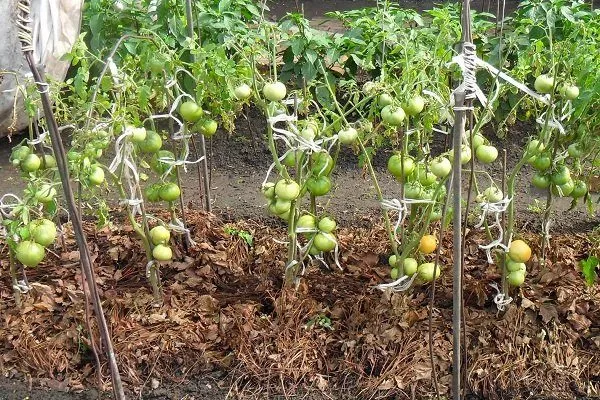
To prevent soil acidification, pine needles are mixed with chalk or dolomite flour before use. Fallen leaves are finely chopped. This will prevent the foliage from clumping and allow the plant roots to receive sufficient air.
Peat
Peat is highly acidic, so it's not used in its pure form. It's mixed with other materials:
- with chalk;
- dolomite flour;
- slaked lime;
- compost.
Any substances that can neutralize the acidity of peat are used.
Inorganic mulch
Inorganic mulch is a more durable material than natural components. It lasts for years and performs the following functions:
- protects the root system well from overheating and cooling;
- prevents weeds from growing;
- the soil retains moisture for a long time and remains loose.
| Name | Material type | Breathability | Durability |
|---|---|---|---|
| Cardboard, newspapers, paper | Inorganic | Low | Short-term |
| Non-woven fabric | Inorganic | High | Long-term |
| Sackcloth | Inorganic | High | Average |
| Film | Inorganic | Low | Long-term |
Cardboard, newspapers, paper
Pulp and paper materials are used in greenhouses and hothouses. In open ground, they fly apart and spoil the aesthetic appearance of the garden. Thick paper and cardboard are used sparingly as mulch because they are less breathable.
Don't be afraid to cover the soil surface with printed materials like newspapers. Printing ink is now lead-free, preventing heavy metals from leaching into the soil.
Non-woven fabric
They use lutrasil, a black non-woven material. It's breathable and water-permeable, protecting tomatoes from pathogenic fungi and pests. This material comes in various thicknesses and lasts 3-5 years. The only drawback of lutrasil is its high cost.
Sackcloth
This is a cheaper material, but it's just as breathable and water-permeable. The soil under burlap dries out quickly, so you'll need to water more frequently. Water can be poured directly onto it, which will prevent soil erosion.
Film
Black film is recommended for mulching. White or transparent covering materials are not suitable for this purpose, as they allow sunlight to pass through, which encourages weed growth underneath. Black film also retains moisture well, reducing the need for watering.
Black film is suitable for mulching during the cold season. When applied tightly, it increases the soil temperature by 1-2°C. In hot weather, it should be removed from the beds, as it can cause overheating of the plant's root system.
What should not be used as mulch?
Not all materials are suitable for mulching tomatoes. For example, the following are not used for this purpose:
- Fresh manure. It contains a high concentration of nitrogen compounds. Excess nitrogen negatively affects the growth and development of tomatoes. Plants begin to grow rapidly, become elongated, produce numerous side shoots, and bloom abundantly, but fruit set and develop poorly, and yields decline.
- Roofing felt. As well as other materials that release toxic substances when decomposing. During watering, these toxic compounds enter the soil and are then absorbed by plant roots.
When and how to properly mulch tomatoes?
Tomatoes are mulched only after the soil has warmed and the risk of frost has passed. Don't rush this process. Covering cold soil with mulch will overcool the seedlings' roots and kill the plant, as mulch only maintains the temperature but doesn't actually warm the surface layer.
In the greenhouse
In a heated greenhouse, tomatoes are mulched at any time of year; in an unheated greenhouse, wait until the soil temperature at a depth of 30 cm exceeds +15°C.
Watering in greenhouses depends on the type of mulch. For example, sawdust must absorb a lot of water before releasing moisture to the soil, so plants need to be watered generously. Tree bark and straw absorb virtually no water and allow it to pass directly through, requiring less water for irrigation.
In greenhouses, mulching is applied after planting the seedlings. Often, several different layers of mulch are applied at once to protect tomatoes from weeds, retain moisture, and enrich the soil with minerals:
- On the surface cleared of weeds, first place a small layer of hay, mown grass or compost, which will nourish the soil as they decompose.
- Then lay a layer of straw or hay on top, about 6 cm thick. This will prevent weeds from growing and retain moisture.
The downside of this “pie” is that it decomposes quickly, so you will have to add new layers periodically.
For more information on mulching tomatoes in a greenhouse, watch the following video:
Newspapers are laid in 1-2 layers, sprinkled with hay, straw or humus, and weeded weeds are also suitable for this.
In open ground
In open ground, a layer of mulch is applied before planting seedlings, so inorganic materials are often used. Generally, the procedure is not much different from mulching in a greenhouse. It is applied when the soil at a depth of 20-30 cm has warmed above 15°C. The mulch layer is placed on loose soil from which all weeds have been removed.
Loose material is poured between the bushes, leaving a small space near the stems. The layer of foliage should be at least 3-4 cm thick, hay – 5 cm, straw – about 6 cm, and the layer of pine needles – no more than 20 cm and no less than 5 cm.
- ✓ For foliage, the minimum layer is 3-4 cm, the optimal is 5-7 cm.
- ✓ For hay, the minimum layer is 5 cm, the optimal is 6-8 cm.
- ✓ For straw, the minimum layer is 6 cm, the optimal is 8-10 cm.
- ✓ For pine needles, the minimum layer is 5 cm, the maximum is 20 cm.
It is important to remember that the thicker the mulch layer, the longer it retains moisture.
First, cover the entire area with plastic or non-woven fabric. Then, make crosswise slits at the desired distance, into which the seedlings are planted. Remove the plastic periodically for ventilation.
Learn more about growing tomatoes outdoors — read here.
Properly applied mulching will help gardeners save time on watering, weeding, and tilling, and will also serve as an excellent preventative measure against diseases and insect pests. This will not only help maintain the health of tomato plants but also increase their yield.