
Agronomic innovation has led to the creation of the Moskvich tomato, characterized by increased frost resistance and ease of care. This variety stands out from others in that its yield consists of fruits without green spots at the base and can be successfully cultivated even in northern regions of Russia due to its high resistance to low temperatures.
Description of fruits and bush
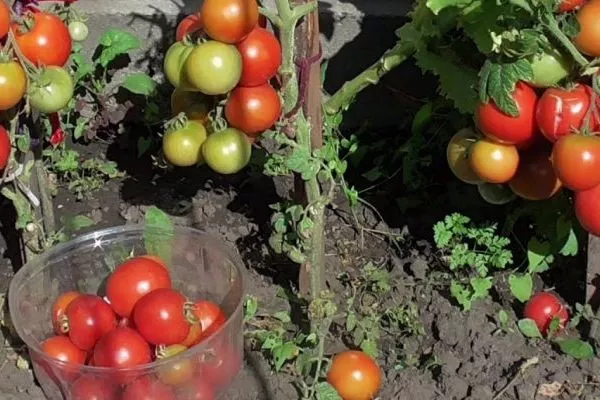
Moskvich tomatoes grow on low, determinate bushes, averaging 30-40 cm in height, making them ideal for growing not only in greenhouses and open ground, but also on balconies and windowsills. Growth stops after 3-4 clusters form on the main stem.
Other varietal characteristics include the following:
- the bushes are characterized by strength, medium branching and the same amount of foliage;
- the leaves of the plant are dark green, corrugated and medium-sized;
- The variety has simple inflorescences, the first one appears above 6-8 leaves, and the subsequent ones - after 1-2 leaves;
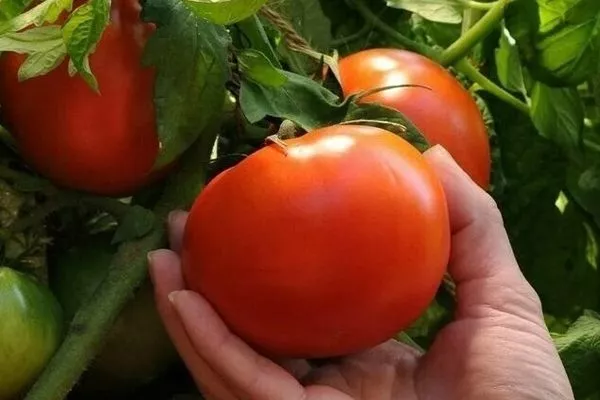
- tomatoes are bright red in color, have a regular round shape with slight ribbing at the base;
- the weight of one fruit ranges from 55 to 80 g, although sometimes there are specimens up to 100 g;
- the taste is sweet and sour, the inside is fleshy, containing 5-6 nests for seeds with a small number of grains;
- 3 to 6 tomatoes are formed on the brushes;
- unripe tomatoes have a greenish tint with a dark green spot near the stem, while ripe ones do not have it;
- The consistency of Moskvich tomatoes is juicy – the dry matter content reaches 6%, the sugar content is about 3%.
Main characteristics
This variety was developed for cultivation in the northern regions, where the climate is particularly harsh. It is distinguished by its frost resistance and the ability to produce a good harvest within three months of planting.
Ripening and fruiting, productivity
The variety is able to tolerate night frosts, making it an ideal choice for gardeners who prefer minimal care.
The tomato has early ripening:
- in open ground conditions, the harvest is collected 90-95 days after sowing;
- On cool summer days, this period can increase by 10-14 days (maximum 110 days), fruit harvesting occurs between June 25 and August 15-20.
If the bushes are not side-sonned, they grow vigorously, but if the side-sons are removed from the lower flower cluster, fruiting begins earlier and the tomatoes become larger, but their overall production decreases. With moderate side-sonning, the bushes are planted at closer intervals, which increases the yield.
Scope of application
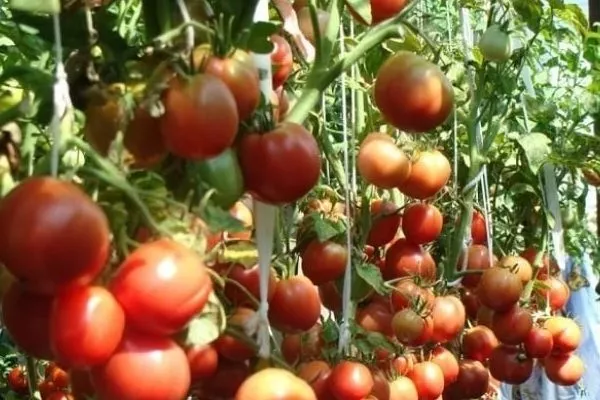
These tomatoes are characterized by a rich, aromatic flavor. The Moskvich variety is ideal for eating raw. However, it can also be used to make tomato juice, sauces, and dressings. Thanks to their firm skin, these tomatoes preserve well when canned whole.
The tomato flavor is sweet and sour, so it's not to everyone's taste. However, some people prefer sour tomatoes, and for making juices, pastes, and other things, it's essential to use these types.
Historical background
The development of the Moskvich tomato variety is closely linked to the achievements of leading Soviet breeders. It is the result of the long and persistent work of scientists from the N. I. Vavilov Institute of General Genetics, including R. D. Glavinich and M. N. Toropkina.
Selection features:
- In 1976, after years of studying and crossing various varieties, Moskvich was created and successfully passed the state registration process. It is based on two original varieties—Smena 373 and Nevsky—which were noted for their increased productivity, resistance to adverse weather conditions, and excellent taste.
- The breeders' goal was to develop a variety that would ripen early and be suitable for cultivation in Russia's diverse climates, including regions with short, cool summers. The original varieties were chosen for their excellent adaptability.
The Moskvich variety has become a shining example of effective breeding work aimed at creating a highly productive and sustainable tomato variety for Russian vegetable growing.
Planting Moskvich tomatoes
Seeds should be sown for seedlings 55-60 days before transplanting the tomatoes to their permanent location. For the Moskvich variety, the ideal time to begin growing seedlings is from March 1st to 20th.
- ✓ Check the expiration date of seeds; it is best to use seeds no older than 2 years.
- ✓ Pay attention to the manufacturer, give preference to proven agricultural firms.
Seed preparation
Careful seed preparation will positively impact their germination ability. The process is quite simple:
- Start by culling the seeds by soaking them in slightly salted water for 30 minutes. Discard any that float to the surface—they won't germinate.
- Seeds that sink to the bottom should be rinsed and soaked in a light pink solution of potassium permanganate for 20 minutes. This will disinfect them. Make sure the potassium permanganate crystals dissolve completely to prevent damage to the seeds.
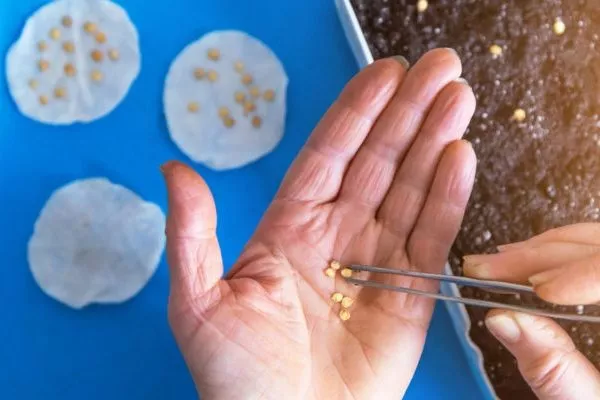
- To stimulate growth, use a special solution of rooting agents (Epin, Kornevin, etc.). Soak pieces of gauze in this solution and place the seeds in them.
Container and soil
There are two main approaches to sowing seeds, each with its own pros and cons:
- Use of a single container. You can place all the seeds in one large container—a special garden tray, a cut-out box, a juice box, or a cake stand. Once the seeds germinate, they'll need to be transplanted into individual pots.
The advantage of this approach is cost savings and ease of seedling cultivation. However, there is a disadvantage: the need for transplanting. - Placing seeds in individual pots. You can sow seeds directly into individual cups or peat pellets. This will avoid replanting and will protect the plants' root system over time.
The disadvantage is the high cost of peat products, especially when using tablets. However, using plastic cups and similar containers is acceptable; in this case, the seedlings will require additional feeding, as with common containers.
For repotting plants, you can use not only commercially available pots but also homemade ones made from plastic cups, bottles, and other items. It's important that the container isn't too small.
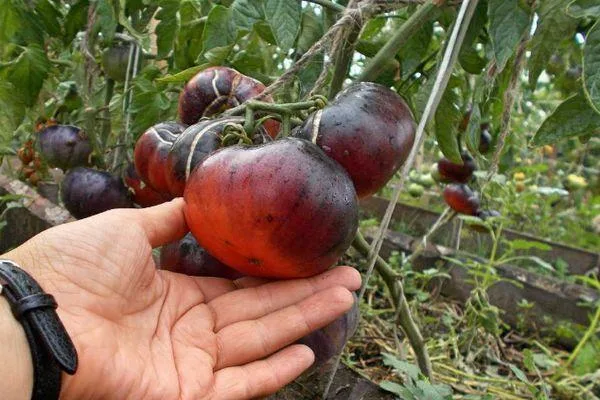
For growing tomatoes, it's recommended to use a universal soil mixture labeled "For seedlings," which is available in stores. To make your own soil, you'll need the following ingredients, mixed in equal proportions:
- garden soil;
- sand;
- peat;
- compost or humus.
The resulting substrate must be disinfected to prevent diseases and pests. There are several methods for disinfecting the potting mix:
- Sterilization in the oven. Spread the soil evenly on a baking sheet to a depth of 5 cm, pour boiling water over it, and place it in a preheated oven at 90-100°C. Bake the soil for 45 minutes.
- Steam treatment. Line a colander or sieve with cheesecloth and place it in the substrate. Place the sieve over a pan of boiling water and cover with a lid. Sterilize the soil for 80 minutes, stirring occasionally.
- Disinfection with a solution of potassium permanganate. Dissolve 3 g of potassium permanganate crystals in 10 liters of water. Pour the solution generously over the soil, then rinse with water after 30 minutes. Strain the soil through a sieve to remove excess moisture.
Sowing seeds
The process of sowing tomatoes begins with a simple but important algorithm:
- First, fill the bottom of the growing container with a thin layer of drainage material, approximately 1 cm deep. Fine pebbles, sand, or crushed polystyrene foam can be used as drainage.
- Fill the container with sterilized substrate, leaving a gap of 2 cm between its surface and the edges of the container.
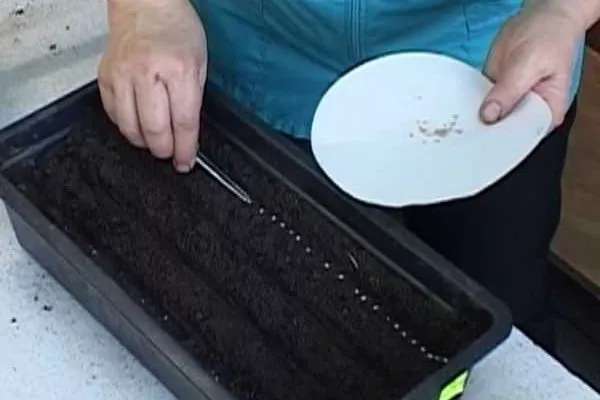
- Make the surface of the substrate level, water it and create furrows with a depth of 1.2-1.5 cm.
- Plant one seed at a time, leaving a distance of 2-2.2 cm between them. Place the sprouted seeds with the top facing up.
- Cover the planting material with a thin layer of dry substrate no more than 2 cm thick. If possible, place a layer of snow on top to stimulate germination and strengthen the future seedlings.
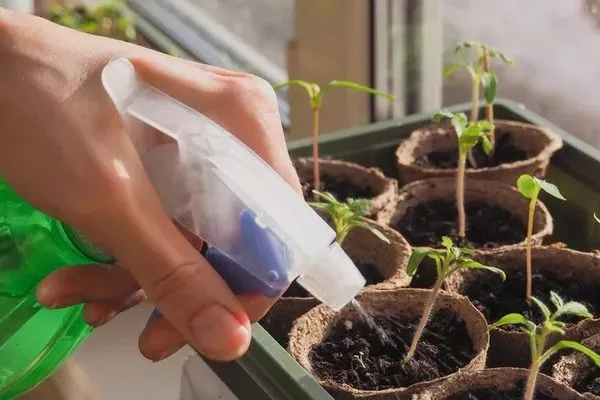
- Cover the planting with a lid, glass, or transparent film and place it in a dark place with a temperature between 22 and 25°C until loops appear. Be sure to ventilate the greenhouse daily, removing any condensation that forms on the covering. Avoid overwatering the soil; regularly mist it with warm water from a spray bottle to prevent it from drying out.
Once the shoots emerge, remove the covering. Move the seedlings to a location with bright but indirect light. Maintain a temperature around the seedlings of 18–20°C during the day and around 16–17°C at night.
Caring for seedlings
To ensure high-quality seedlings from seeds, care for them properly. Key recommendations:
- Once the seeds have sprouted, move the seedlings to a location with adequate light. If natural light is insufficient, artificial lighting can be used.
- Water as the soil dries out. After the seeds germinate, it's important to water carefully, avoiding water from getting on the leaves. Pipettes or syringes are suitable for this.
- If the plants have become lighter in color and have lost their elasticity, don't rush to increase watering. These symptoms can also be caused by overwatering. Therefore, if the soil is damp, allow it to dry out slightly.
- Tomatoes are transplanted into individual containers after the first leaves appear on the seedlings.
- The first feeding is done a week after repotting. Use a general-purpose fertilizer.
- Preparing seedlings for planting outdoors involves acclimatizing them two weeks before transplanting. To do this, place the tomatoes outside during warm weather, starting with 15-20 minutes and gradually increasing the duration.
Preparing the beds
Young plants can be planted when the soil temperature reaches +15°C, and they should be 45-55 days old.
It is recommended to grow in well-lit, open areas. The variety description emphasizes that it is not suitable for low-lying areas or areas with high groundwater levels. When choosing a growing site, it is important to follow crop rotation rules:
- It is not recommended to plant tomatoes in the same place two years in a row or after crops such as eggplants, peppers, potatoes, as this can lead to the development of diseases;
- It is better to choose areas where zucchini, corn, cabbage or legumes were previously cultivated.
Garden bed preparation begins in the fall. Instructions:
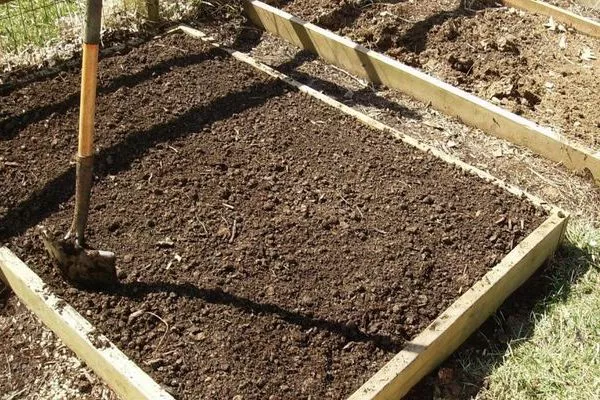
- Dig the area to a depth of a spade, clearing it of any remains from last year's harvest, weeds, and debris. Add 8-10 kg of compost, 25 g of superphosphate, and 120 g of wood ash per square meter.
- In the spring, before planting tomatoes, dig up the garden again, adding 25 g of ammonium sulfate and 5 kg of compost per 1 square meter, then thoroughly loosen and level the soil with a rake.
Transfer algorithm
The planting procedure is quite simple – even a novice gardener can handle it:
- Dig holes 25 to 30 cm deep, space them 40 to 45 cm apart, and keep a distance of 50 to 60 cm between rows. Install a support or stretch a rope near the bed.
- Remove the seedlings from the container with soil. This will be easier if you thoroughly moisten the soil in the containers an hour or two before planting. It is recommended to simply cut the plastic cups. If the seedlings were transplanted into peat pots, you can skip this step.
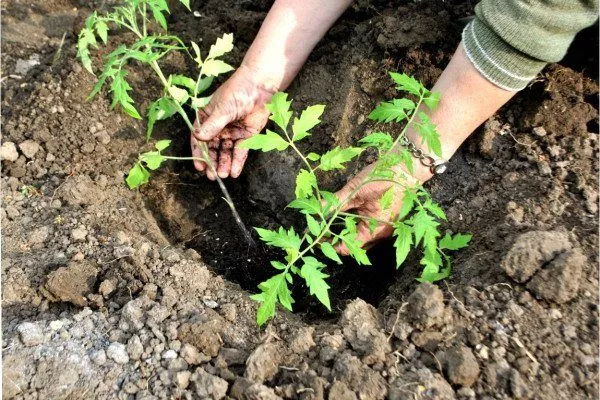
- Pour 5 to 8 liters of warm water into each hole. Once it's absorbed, carefully place one plant in each hole.
- Slowly fill the voids with soil so that the stems are submerged to the level of the cotyledon leaves.
- Lightly tap the surface of the bed to compact it.
If there's a risk of recurrent frost, it's recommended to cover the bed with plastic film or lutrasil. The cover can be removed after 1-2 weeks, once the plants have settled into their new location.
Plant care
Care measures are also standard, but there are some nuances regarding the variety’s requirements.
Shaping and tying up the plant
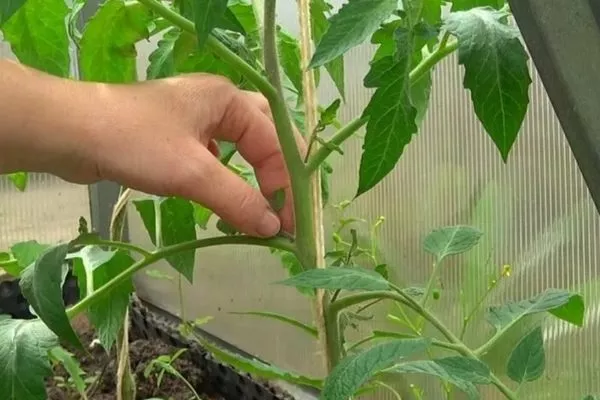
When growing, it is recommended to form bushes from two stems, which are secured to a pole or special structure using fabric or twine.
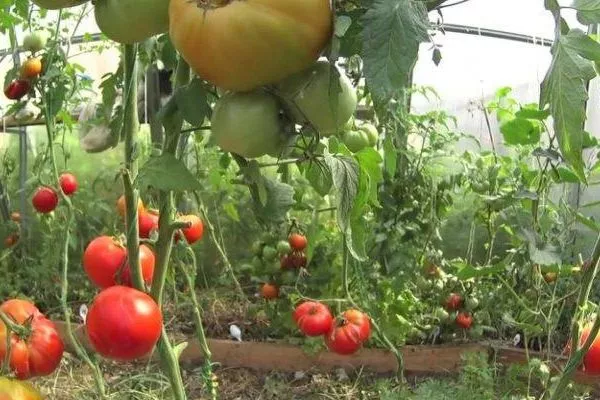
Although staking is not a critical step, as the plants reach a small height of 50 cm, without it the stems often bend under the weight of the fruit, which can lead to late blight infection upon contact with the ground.
Watering and nutrition
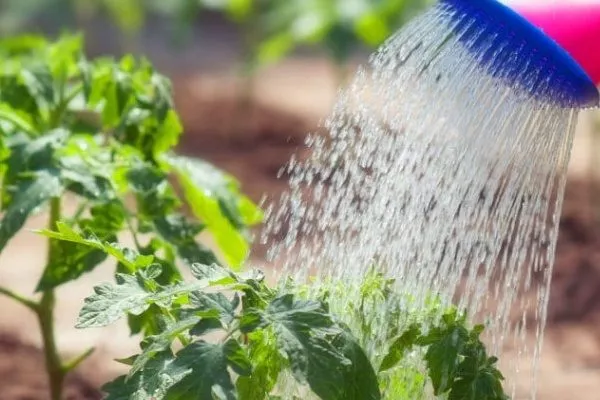
During the period before tomatoes growing in garden beds begin to bud, it is recommended to water them once a week, using 2-3 liters of water per 1 sq. m.
When flowers and fruits appear on the bush, increase the frequency of watering to twice a week and triple the volume. Once the crop is fully developed, reduce the number of treatments.
For optimal development of tomatoes, they need to be fed every 10-15 days:
- The best fertilizer to use is a complex containing soluble components suitable for feeding tomatoes;
- When the first flowers appear, the potassium level in the diet should be increased, and to protect against rot, it is recommended to use calcium nitrate.
What rules should be followed when growing tomatoes?
To avoid problems when cultivating the Moskvich variety, you should follow certain recommendations.
Principles of cultivation of the Moskvich variety:
- Plant tomatoes not in the brightest areas, but in secluded, semi-shaded places.
- Avoid planting tomatoes in the same areas where other tomato varieties or nightshade plants, such as potatoes or eggplants, were previously grown. Moskvich tomatoes will grow better in beds previously occupied by cabbage, cucumbers, and onions.
- If the plant produces excessive fruit, causing it to bend toward the ground, it may need support or staking. It's important to ensure the fruit doesn't touch the ground.
- Watering tomatoes should be done early in the morning or late in the evening, carefully pouring water near the roots, avoiding contact with the leaves and stems.
- Regularly remove weeds around tomatoes, especially in the first weeks after transplanting into open beds, to avoid the threat of death of young plants and increase their resistance to diseases.
- Loosening the soil around tomatoes helps improve aeration of the root system and, accordingly, the growth and development of the plant.
Differences between growing tomatoes outdoors and in a greenhouse
The Moskvich variety is primarily grown outdoors, with greenhouse conditions preferred only in harsh climates. There are some proven tips to help maintain the plant's health even in harsh climates, even when temperatures fluctuate:
- It's important to protect the young plant from the cold at night during the first few days after planting in the garden, using plastic film. This will prevent frost damage.
- Daily ventilation is essential in a greenhouse structure. Otherwise, humidity will become too high, which will promote mold and fungal growth.
Moskvich achieves its best results when grown in open ground, where it produces larger fruits, compared to greenhouse cultivation, where the plants grow in width but produce smaller fruits.
Harvesting, preservation
The Moskvich variety is distinguished by its early maturity. The first fruits can be harvested by early July:
- It is recommended to pick tomatoes immediately after they are fully ripe;
- overripe fruits can become a source of disease for other tomatoes;
- You can pick vegetables that are not quite ripe and they will continue to ripen at home;
- The harvest must be stored in a cool room.
Resistance, pest and disease resistance
Protecting Moskvich tomatoes from diseases is an important aspect of caring for these plants, as even early-ripening varieties can be vulnerable to various diseases.
If plant protection measures are not taken, they can be affected by fungal diseases, mosaic, and late blight. Tomatoes are also susceptible to attacks from a variety of pests, which can significantly reduce yields.
Diseases
Tomato problems are often parasitic or infectious in nature and are caused by pathogenic microflora such as fungi, viruses, bacteria, and mycoplasmas. These can affect tomatoes both in the open field and in greenhouses and hotbeds.
To protect bushes, every gardener must closely monitor the condition of the plants and take measures to eliminate problems at the first signs:
- One of the most common tomato diseases is late blight. To get rid of it, you can use a simple method: hang bottles of iodine around the garden at a rate of one bottle per 2 square meters.
- Another unpleasant disease is brown rot (phoma). Unfortunately, it's impossible to cure, as the spores develop too quickly. If symptoms are detected, affected fruits should be removed and destroyed.
- Macrosporiosis, also known as dry brown spot, can affect this variety. It begins on the lower leaves and can spread throughout the plant, eventually leading to stem death. To protect your tomatoes from this disease, treat the plants and soil with a copper-containing product.
- Another common disease is brown olive spot (cladosporiosis). It progresses similarly to macrosporiosis and can be treated in a similar way, namely by spraying the plant and soil with any copper-containing product.
Pests
One of the most destructive pests is the whitefly, an insect with shiny white wings. It attacks leaves and stems, feeding on the sap found in the soft tissues of the plant. Controlling this pest is not particularly difficult: simply prepare a garlic infusion and spray it on your tomato plants. After the first treatment, the whiteflies will disappear from your plants immediately.
Other issues:
- Colorado beetle, Known for its love of potatoes, it's also interested in tomatoes. To repel it, it's recommended to plant plants such as marigolds, marigolds, and garlic around the tomatoes.
- Mole cricket, The fungus, which often attacks tomatoes by eating the root system, requires a different control strategy. Chemical treatments are not recommended. An effective folk remedy is to bury half-filled beer bottles in the ground, leaving the necks slightly exposed.
The mole cricket, having caught the smell of beer from afar, will crawl into the bottle, but will not be able to get out.
Pros and cons
Gardeners eagerly choose the Moskvich tomato variety, noting that its advantages far outweigh its minor drawbacks. Key benefits:
Negative qualities:
Reviews
Moskvich is easy to grow and highly frost-resistant. It's frost-tolerant and generally resistant to various diseases. This variety is ideal for gardening, even for beginners. If you accidentally forget to water it, the plants won't die. Moskvich fully meets gardeners' expectations and fulfills all its advertised properties.