
For inexperienced gardeners or those who grow tomatoes in challenging conditions, dwarf varieties are suitable. The most striking example of a dwarf tomato variety is the Mongolian Dwarf.
Origin of the Mongolian Dwarf
This tomato variety is believed to have been developed by Russian breeders from Novosibirsk. It is not currently listed in the state register of plant breeding. This means its seeds are not readily available. However, many specialized online resources and vegetable markets sell these seeds.
Mongolian dwarf is an undemanding plant. It can grow in northern regions from late spring to early fall, as well as in arid areas.
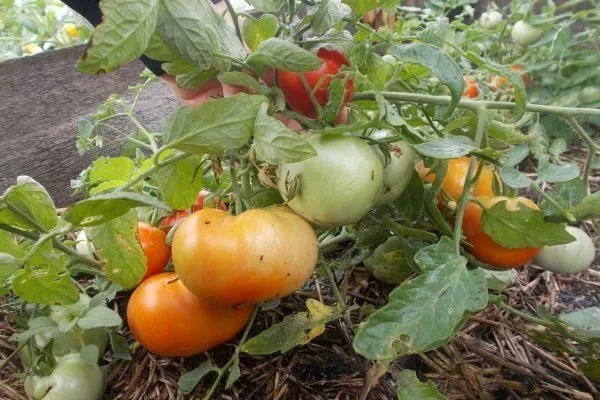
Mongolian Dwarf tomatoes are the shortest growing variety.
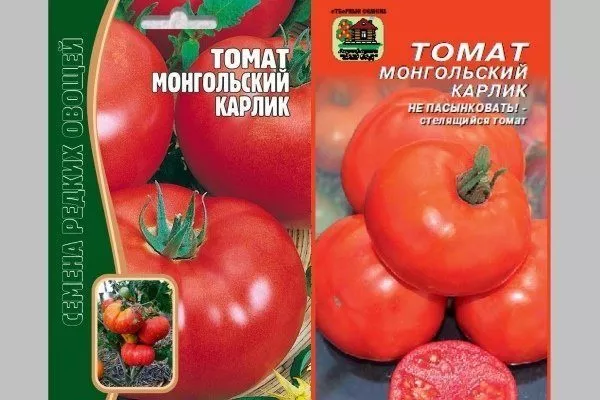
Mongolian Dwarf tomato seeds are difficult to obtain.
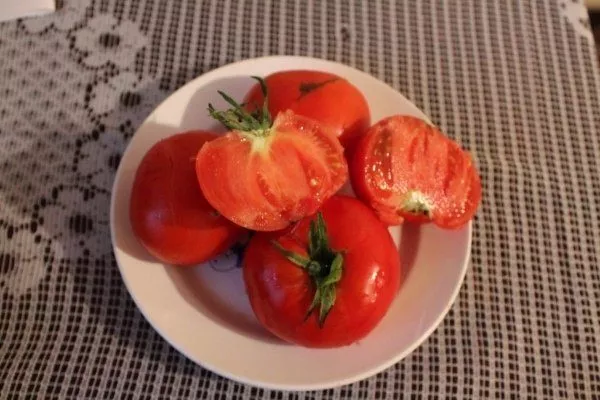
Mongolian Dwarf tomatoes can reach a weight of 200g.
Description and characteristics of dwarf tomato
Before choosing this variety for planting in your garden, it's important to understand its characteristics and features. We'll discuss these further.
Appearance
This is currently the shortest tomato variety. The bush height does not exceed 30 cm, which does not negatively affect the size of the fruit.
The bush spreads along the ground, forming new side shoots. As a result, the width of the bush can reach 1 meter or more. The leaves are narrow and heavily pubescent. Numerous small leaves can be seen on the bush.
The stems are thin and fragile. The root system is shallow, but sufficient to support the bush during strong winds. The fruits are collected in clusters.
Main qualities of fruits
Despite the low bushes, Mongolian Dwarf fruits weigh up to 200 grams, which is quite a good figure. This early-ripening variety makes the fruits resistant to late blight with proper care.
The bright red fruits are firm and juicy inside. The taste is not much different from regular tomatoes. You could say the flavor is standard "tomato." A bush can yield up to 10 kg of high-quality tomatoes.
Advantages and disadvantages
Experience shows that Mongolian Dwarf grows well in the eastern and southeastern regions of Russia, where summers are short. However, before deciding to plant in a specific location, it's best to familiarize yourself with the pros and cons of this variety. Let's start with the pros:
- high bush productivity;
- there is no need to tie up or remove side shoots;
- there is no need to create special conditions for growing, it can be grown in a greenhouse or in a garden bed in the open air - the variety is universal, resistant to temperature changes;
- does not like excess moisture;
- bears fruit until late autumn;
- Due to its early maturity, the dwarf variety is slightly susceptible to late blight;
- Low bushes can withstand strong winds well and do not break.
Every variety has its drawbacks. While the Mongolian Dwarf has few, it does have some:
- grows poorly in acidic and heavy soils, as well as in areas with a humid and hot climate;
- The initial growth phase is very long. At first, the plant shows no signs of growth, but then begins to rapidly expand;
- This variety is not yet included in state registers, so you won't be able to buy it at your local seed shop.
Features, differences from other varieties
It's easy to distinguish the Mongolian Dwarf from other tomatoes. The bush grows to a maximum height of 50 cm. The main trunk, reaching a height of 20 cm, begins to bend sharply downward, a characteristic of the variety. Side shoots emerge from the main trunk and also trail along the ground.
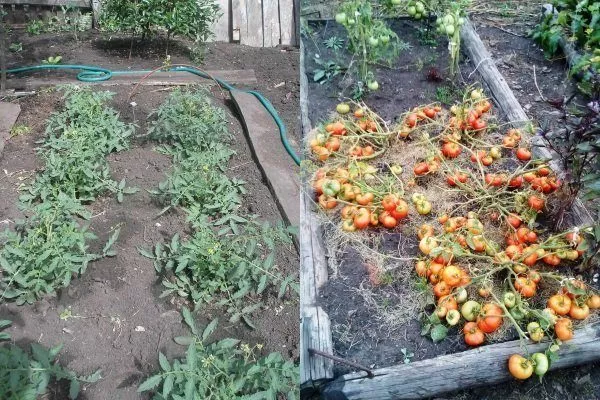
This variety can tolerate long periods without watering, but don't overdo it. Before planting the soil is mulchedMoreover, as noted earlier, harvesting can be carried out until late autumn, when the first frosts arrive.
The fruits are not very susceptible to spoilage; even lying on the ground covered with leaves, they retain their properties for a long time, do not crack or rot.
Features of growing and planting early varieties
The Mongolian Dwarf was originally intended for cultivation in eastern Russia, but experience has shown that, thanks to its low maintenance, it can be successfully grown in other regions as well. It is not recommended to plant this variety in areas with high humidity. The cultivation technology is not much different from that of other varieties.
Seedling and non-seedling growing methods
The Mongolian Dwarf variety is grown from seedlings and seeds. The non-seedling method is used in the southern regions of the country. Five to six seeds are placed in a hole. After two to three leaves appear, the soil is thinned. Only strong plants are left.
In places with harsher conditions, seedling sowing is used. The seeds are germinated in a pot or greenhouse at home. The seeds are sown early enough to plant the bush in the garden in May at the beginning of flowering, and to harvest the first crop by the end of June.
- ✓ The optimal soil pH should be in the range of 6.0-6.8. Acidic soils require preliminary liming.
- ✓ The soil should be well-drained and rich in organic matter. Heavy clay soils should be loosened by adding sand or compost.
Use slightly acidic sandy soil. This type of soil is sold in gardening stores. Soil for nightshades or any vegetable crops is suitable. You can also fertilize this soil yourself.
To harvest a good crop, you should follow a number of recommendations:
- in the fall, the beds for planting tomatoes need to be thoroughly plowed;
- per 1 square meter in early spring the following is added: 50 g of superphosphate, 20 g of ammonium sulfate, 25 g of potassium salt;
- pre-treat seeds;
- plant seedlings and grow them according to recommendations;
- Proper care of tomato bushes.
Preparing and planting seeds
Before sowing, the seeds must be treated. First, check the expiration date. Mongolian Dwarf seeds have a shelf life of 2 years.
Calibrate the seeds and treat them with a disinfectant solution. A mixture of aloe vera juice and 1% potassium permanganate is suitable. Next, pre-soak and germinate.
Rules for planting and caring for seedlings
Process sowing seeds for seedlings consists of several stages:
- pour into the container soil that is pre-disinfected;
- make furrows or holes about 1 cm deep. If the seeds were germinated in advance, then the holes and furrows need to be watered;
- sow seeds in previously created depressions at a distance of 1-2 cm;
- sprinkle with earth and water;
- Cover the container with soil and seeds with plastic wrap and place in a warm place (25-30 degrees Celsius) until seedlings appear. The first shoots usually appear within 5-6 days.
Perhaps you will find our other article useful - How to Grow Tomato Seedlings: Helpful Tips
Water with warm, settled water as the soil dries. When 2-3 leaves appear, transplant the plant into individual pots. Plant seedlings 45 to 60 days old in the beds. These seedlings typically have 7-8 leaves by now.

Rules for planting seedlings in open ground
Plant in a sunny, wind-protected location. A week before planting, treat the beds prepared in the fall with magnesium sulfate and add fertilizer. The following guidelines are recommended:
- plant seedlings in 2 rows, leaving a distance of 50-60 cm between plants and rows;
- seedlings are planted 2-3 cm deeper than they grew in containers;
- Before and after planting, water the soil with water at room temperature;
- 3 days after planting, water the seedlings again;
- plant more sprouts in place of the dead ones;
- it is necessary to mulch the holes with straw;
- This variety does not require tying, but you can install pegs.
Planting in a greenhouse
Mongolian Dwarf is typically grown outdoors. Those who wish to grow it in a greenhouse can do so, but it's important to remember that yield directly depends on good ventilation. This is because this variety does not tolerate high humidity, and the crop can simply perish from excess moisture.
The greenhouse will need to be opened on warm days, as excess heat also negatively impacts the dwarf variety's yield. This should be taken into account if other varieties, which, on the contrary, require a lot of heat and moisture, are growing in the greenhouse.
There's no point in occupying the entire greenhouse solely with Mongolian Dwarf. Furthermore, the beds in the greenhouse need to be wide enough, as this variety's bushes spread along the ground. Otherwise, growing Mongolian Dwarf in a greenhouse is no different from growing other tomato varieties. Just follow the recommendations mentioned above.
Advice from experienced specialists
Caring for Mongolian Dwarf seedlings is not at all difficult, but it is recommended to follow certain recommendations:
- 10 days after planting, you need to water with a 2% solution of potassium permanganate to prevent infection with late blight;
- The beds should be made slightly higher than for other tomato varieties, since the Mongolian dwarf spreads along the ground, otherwise higher beds will reduce contamination of the stems and leaves with soil;
- The plant needs to be watered moderately, because the dwarf does not like excessive moisture;
- Experienced vegetable growers recommend placing black film or planks under tomatoes to reduce the likelihood of damage to the fruit by soil pests.
Mongolian Dwarf Cat Care Techniques
Caring for the bushes consists of weeding, fertilizing, watering, and loosening the soil. Watering is most frequent during the flowering period of Mongolian Dwarf tomato plants. The optimal watering schedule is every 5-7 days, as needed. However, avoid overwatering the plant, as this variety does not like excessive moisture.
Fertilizers and their quantity
You should limit your feeding to the roots, as it's best not to over-wet tomato leaves. Before fertilizing, water the plants. Fertilize according to the following schedule:
- the first one is carried out 2 weeks after planting in the garden bed;
- the next time the plant is fed before the fruits appear;
- the third one is carried out 2 weeks later.
- The first feeding should be carried out 2 weeks after planting, using a solution of ammonium nitrate (20 g per 10 l of water).
- The second feeding should be carried out before flowering, using phosphorus-containing fertilizers (80 g per 10 l of water).
- The third feeding should be carried out 2 weeks after the second, using potassium fertilizers (50 g per 10 l of water).
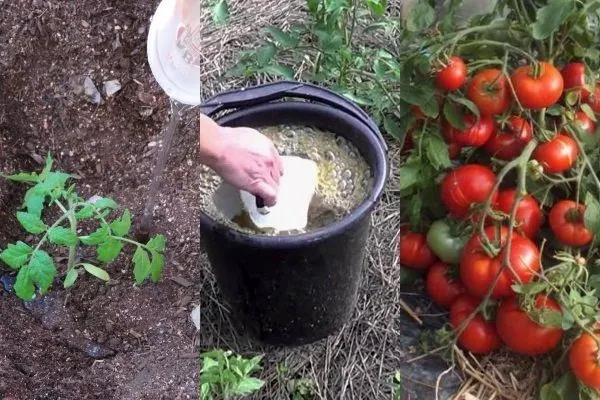
Fertilizers are diluted in 10 liters of water:
- ammonium nitrate 20 g;
- phosphorus-containing fertilizers 80 g;
- potash fertilizers 50 g.
To increase the yield, you can use the following additives:
- Dissolve 0.5 manure in a bucket of water.
- Mix 0.5 liters of manure infusion, 2 tablespoons of phosphorus-containing fertilizer, and 1 tablespoon of potassium fertilizer in 10 liters of water. Phosphorus-containing fertilizers are soaked beforehand, as they dissolve poorly.
- Add 0.5 liters of manure, 1 tablespoon of potassium sulfate, and 7 grams of boric acid to 10 liters of water. Apply 1.5 liters of the prepared solution under each plant.
- An ash solution is also very popular. 200 g of ash per 10 liters. Let it steep for 2 days. This fertilizer contains many microelements.
- You can use ready-made supplements sold in stores.
- "Green fertilizer" has recently become popular. For 200 liters of water, mix 1 kg of ash, 0.5 kg of manure, 2 liters of whey, 100 g of yeast, and fresh grass. The mixture should completely cover the greens. Stir the mixture daily for two weeks. Once the fertilizer is ready, add grass under each plant as mulch, and use the mixture for watering—0.5 liters per plant. Sugar can be used instead of yeast. Mix 150 g of sugar per 3 liters of water and let it sit for three days. This mixture can be added instead of baker's yeast.
Cow or chicken manure is used. It's best to apply fertilizer before sunrise or after sunset, otherwise the fertilizer may dry out. If tomatoes are grown in a greenhouse, apply fertilizer before sunrise, and ventilate the greenhouse afterward.
Harvesting and storage
Tomatoes can be harvested from May to October, until the first frost. The first harvest is at the milky stage of ripeness. This crop ripens in a warm environment. The heaviest tomato harvest occurs in August. Tomatoes keep well in the ground, even if left for a long time, but experienced gardeners recommend not overexposing them to avoid disease and speed up the ripening of new tomatoes. Tomatoes are stored as standard.
Reviews
Mongolian Dwarf is an ideal choice for beginning gardeners because it's very easy to grow. This variety is easy to grow, producing fruit from May to October, and its flavor rivals that of other varieties. However, experienced gardeners will also appreciate it. This variety is well suited for growing in areas unsuitable for other varieties.