
The Monetochka tomato is a yellow-fruited cherry tomato variety that has already gained popularity among gardening enthusiasts. This new and promising variety boasts good yields, excellent flavor, and uniform ripening. It is easy to care for and low maintenance, making it attractive to many gardeners.
Description of the bush and fruits
To fully realize this variety's potential, it's essential to create optimal conditions for its growth and development, meeting its basic requirements. It has a spreading, abundantly foliated appearance—the plant's branches are well developed, without a central trunk. The shoots require support.
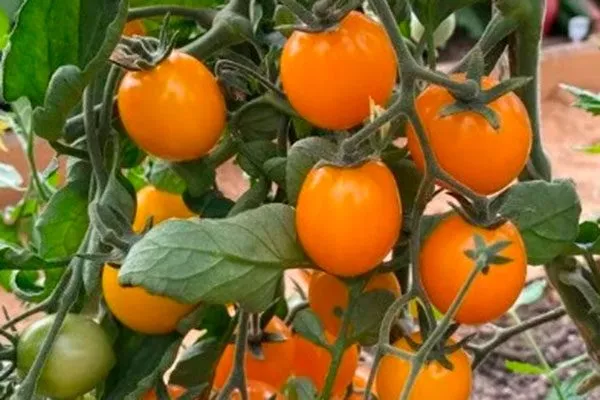
Other varietal characteristics and indicators:
- The leaves are medium-sized, light green, and have a matte, corrugated surface. The shape is classic leaf-type.
- Depending on growing conditions, the height of plants of the Monetochka variety can reach:
- in the greenhouse – up to 120 cm;
- in open ground – about 70 cm;
- on the balcony or at home At temperatures no higher than 30°C the plant will be from 50 to 70 cm, and in hotter conditions it can grow up to 120 cm.
- The fruits form in complex clusters, each of which divides into 2-4 smaller clusters. Fruit set occurs at intervals of one leaf.
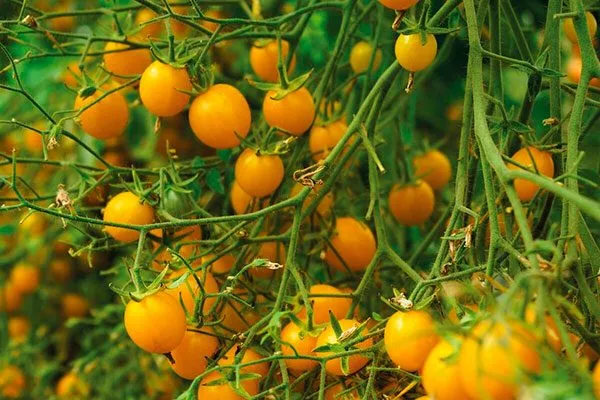
- The tomatoes are small and belong to the cocktail variety. They are round in shape, and their average weight ranges from 15 to 20 grams. Under favorable conditions, individual tomatoes can reach a weight of up to 35-40 grams, which is more common in greenhouses or home gardens.

- When fully ripe, the vegetables acquire a uniform orange hue, and in sunny areas, the tops of the fruits may exhibit a reddish hue.
- The fruits are collected in irregular clusters of 15-18 berries. The first cluster forms above the fifth leaf, and the remaining ones form above each subsequent leaf. The average cluster weight for the Monetochka variety is 250-350 g.
- The skin is thin but strong enough to transport well. The flesh is plump and juicy, with a pleasant sweet flavor and a slight tartness. When cut, the tomatoes retain their juice.
- The seeds inside the fruits are few in number and can be used for further sowing, and the stalk is very small.
Main characteristics and history
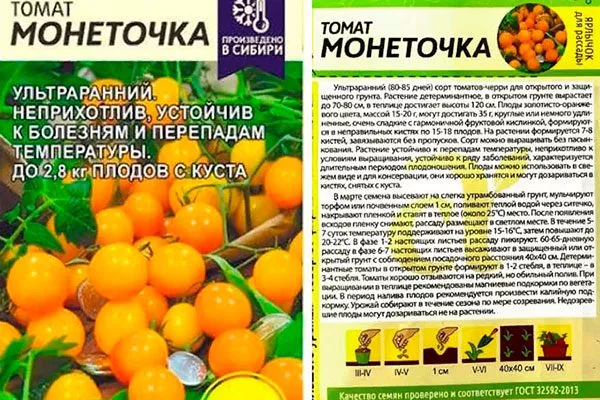
The Semena Altaya agricultural company, renowned for its development of high-quality planting material, developed the Monetochka tomato variety. It was created by crossing such well-known tomatoes as Zvany Vecher, Zolottse, and Ozherelye Zheltoye, inheriting their best characteristics.
Application and taste
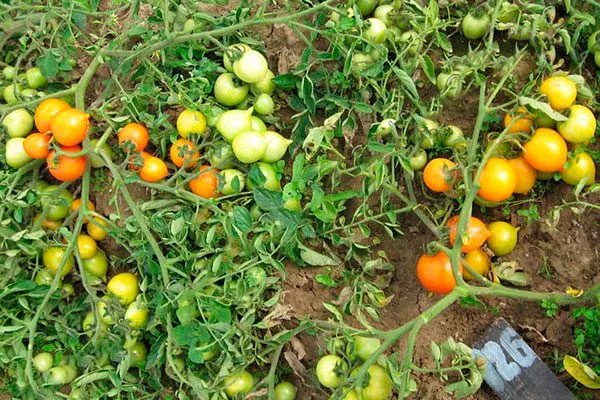
Monetochka tomatoes have the perfect balance of sweetness and acidity. Sweetness is rated 3-4 out of 5, and acidity is rated 2-3. Technically ripe tomatoes have a sweet-sour flavor, while fully ripe ones are sweet. The aroma is fruity and tomato-like.
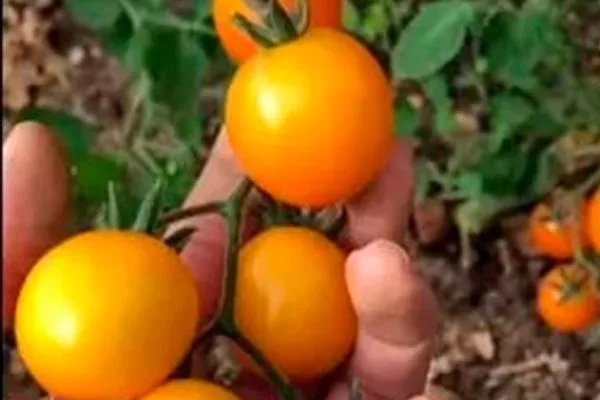
These tomatoes are excellent for eating raw and pairing with greens in salads. They are also used for canning:
- lecho;
- ketchup;
- assorted vegetables;
- pastes;
- sauce;
- juice.
Monetochka tomatoes continue to ripen after harvest and store well. They are suitable for drying, freezing, and whole-fruit canning, with the skin remaining intact and not cracking during cooking.
Productivity, ripening time
Monetochka is characterized by its early maturity: the first berries are ready for picking just 75 days after sowing, and mass harvesting begins 85-90 days later. If the bush begins flowering in late May or early June, then ripe fruits can be harvested as early as mid-summer.
This variety is characterized by a long fruiting period, allowing harvesting throughout the growing season. Monetochka tomatoes have firm flesh and can withstand transportation without damage. Furthermore, even overripe tomatoes that haven't undergone rotting are not affected.
The Monetochka variety is renowned for its good productivity – up to 3-3.5 kg of ripe fruit can be obtained from 1 square meter of cultivated area.
Weather tolerance and growing regions
The Monetochka variety tolerates cold, heat, and sudden weather fluctuations well. In a greenhouse, it can be sensitive to high temperatures, which often causes leaf curl. Therefore, it is important to regularly ventilate the greenhouse and provide shade.
One cooling method is to use a mixture of clay, sand, and water, which is sprayed on the walls of the greenhouse, which lowers the thermometer reading during the day and prevents a sharp drop in temperature at night.
This variety is recommended for cultivation in various regions of the country. It demonstrates high yields even in areas with risky farming. Monetochka is ideal for both open ground and greenhouse cultivation.
How to plant correctly?
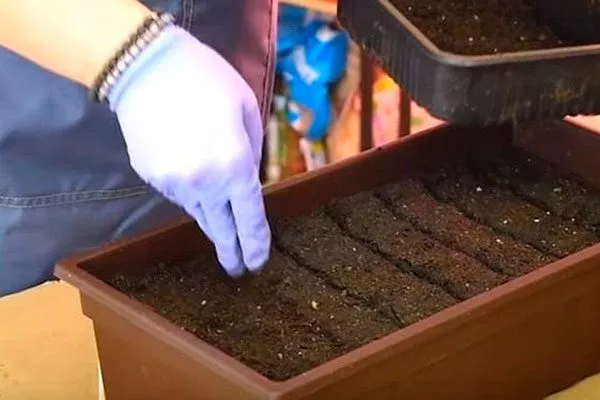
When growing Monetochka, it's best to use the seedling method. Following this approach, sowing should be done 55 days before transplanting the seedlings into the garden or greenhouse, which corresponds to early to mid-March. Here are some recommendations for doing this correctly:
- For sowing, use wide containers approximately 10-12 cm high with a drainage system. They are filled with a nutrient-rich, neutral-pH substrate consisting of turf, humus, sand, and leaf mold in a 2:1:1:1 ratio. Two days before sowing, it is recommended to water the substrate with a Fitosporin solution and allow it to dry until it becomes loose.
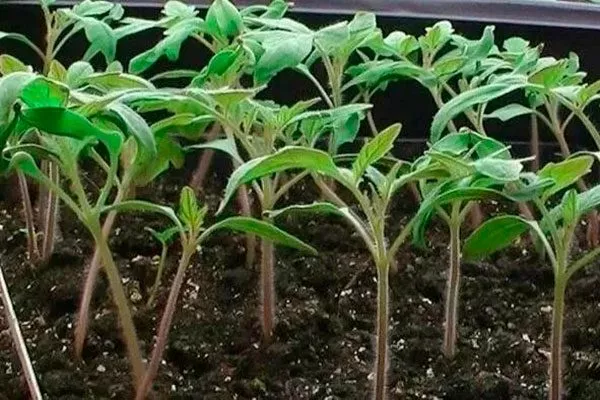
- Plant at a depth of 0.8 to 1.2 cm in a breathable substrate. After sowing, carefully level the surface and add additional moisture with a spray bottle. Cover the container with plastic wrap and place in a dark place with a temperature of approximately 23 degrees Celsius. If you follow all instructions, Monetochka sprouts will appear in 3-5 days.
- Later, the seedlings should be moved to a bright windowsill and the temperature reduced to 18 degrees Celsius to stimulate root development. After a week, the temperature is increased to 20 degrees Celsius.
- Once the plants have established themselves, they need to be adapted to the conditions and the plastic film removed completely. Initial care for Monetochka seedlings includes regular watering and loosening of the soil mixture.
- When the seedlings have two true leaves, transplant them into 0.4 to 0.6 liter containers. A week after transplanting, apply the first fertilizer using Kemira Lux.
- It is recommended to transplant into a greenhouse in late April or early May, and into open ground after the threat of frost has completely disappeared.
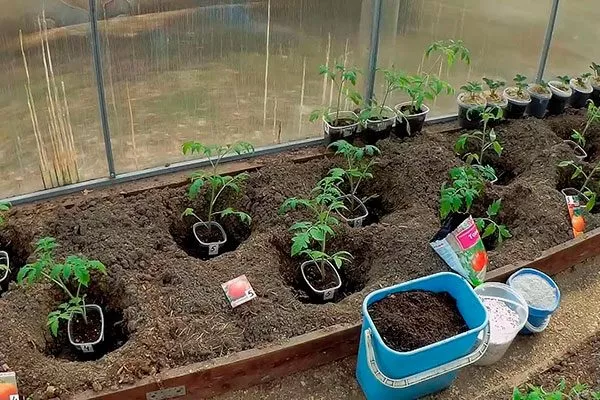
The recommended planting pattern for Monetochka tomatoes is 4 plants per square meter. When planting, the seedlings should be buried to the level of the first leaves to strengthen the root system. It's important to immediately install support for tying the bush.
Caring for the Monetochka tomato
Begin watering immediately after replanting, and then repeat after 8-12 days. Subsequent watering schedules depend on weather conditions and soil characteristics. If you're planting in sandy or sandy loam soils, where water is quickly absorbed, more frequent watering is required.
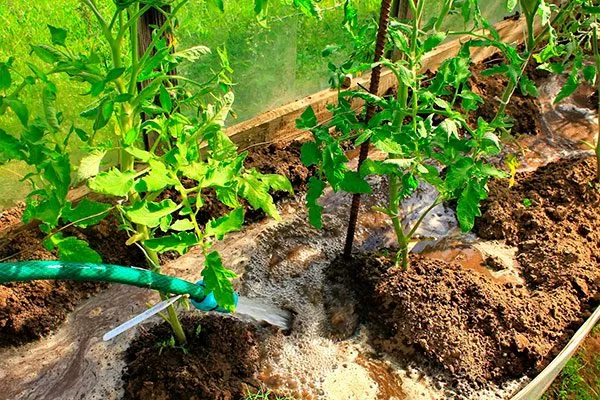
The volume of water and intervals between waterings will be as follows:
- from planting to the beginning of flowering – 2-4 liters per bush every 3-4 days;
- from the moment of formation of the ovary until the ripening of the fruit - 5-7 liters per bush with the same time interval.
The water should be warmed to 15-22 degrees Celsius. It's best to water in the morning, before 9-10 a.m. Cherry tomatoes prefer stable conditions, so a drip irrigation system is recommended.
Fertilizers are applied after irrigation, while the soil is still moist, and at the dosage recommended by the manufacturer on the packaging. When and what to apply:
- one to one and a half weeks after the transplant Use mineral fertilizers with microelements, such as Kristalon Special, Plantafid, or Fertika Lux.
- during the period of budding and fruit setting use the tomato preparation Kristalon;
- during the filling of fruits – Plantafide or potassium monophosphate.
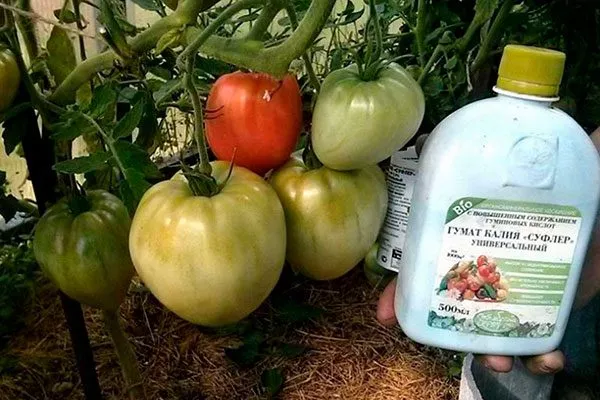
You can grow the Monetochka in any way you like – structuring it into one or two stems, but if you don’t train it, then up to five or six stems will grow on one bush with an excessive number of tomatoes with smaller tomatoes.
Other features:
- Sometimes this variety produces too many flower clusters. In open ground, it's best to remove them to speed up ripening. In a greenhouse or indoors, they can be left on for additional harvest.
- Ten to fourteen days after planting, when the tomatoes begin to grow vigorously and new leaves appear, it's best to tie the bushes to a trellis or stake positioned 10-11 cm from the stem. Wrap the twine around the stem in a loose loop, avoiding twisting the foliage.
- This variety can be grown without pinching. However, in a greenhouse, experienced gardeners recommend removing emerging side shoots before the first flower appears. This will significantly reduce the harvest time.
- Weeding and loosening of the soil around the bush is essential to ensure that the root system receives sufficient nutrients and oxygen.
Treatment against diseases and pests
The Monetochka tomato variety boasts exceptional resistance to many fungal infections common to this crop. It is not susceptible to blossom-end rot. The potential threat of late blight is also less severe, as the plants will have already produced the bulk of their harvest before the disease begins to spread.

Preventative treatments are only necessary during prolonged rainfall. Fungicides such as Quadris, Ridomil Gold, and Ordan are recommended for protection. Spider mite attacks on Monetochka bushes are possible, so use Fitoverm at the first sign of their presence.
Pros and cons
This variety has proven to be particularly popular among both novice and professional vegetable growers due to its numerous advantages, although it also has its own negative characteristics that should be taken into account when choosing.
Reviews
The Monetochka tomato is a variety that doesn't require much attention from farmers and gardeners, yet promises a bountiful harvest. To ensure a bountiful harvest, it needs adequate light, regular watering, fertilizing, and soil loosening.