
The "Mishka Kosolapyi" tomato is the result of the work of Russian breeders, whose goal was to create a disease-resistant variety with large fruits. This hybrid boasts a variety of color shades and a meaty texture. The plant is ideal for growing in virtually any climate.
History of the variety's creation
This is a relatively new variety, so complete information about its creators, other than the fact that it originated in Russia, is virtually nonexistent. However, specialists such as V. N. Gubko, T. V. Steinert, N. S. Teplova, A. V. Aliluyev, L. M. Avdeenko, and V. Yu. Poldnikova from Heterosis Selection LLC participated in the creation of the Mishka Kosolapy hybrid.
This hybrid was only registered in the state registry in 2020. Its creation was made possible by crossing the VM:22 and C-17 varieties.
Features of the species
Its versatility and ability to grow both in greenhouses and outdoors make it popular among gardeners. This variety boasts decent yields and belongs to the mid-season group. In temperate climates, the crop ripens in open fields, while in cooler regions, it is preferable to grow it in sheltered conditions.
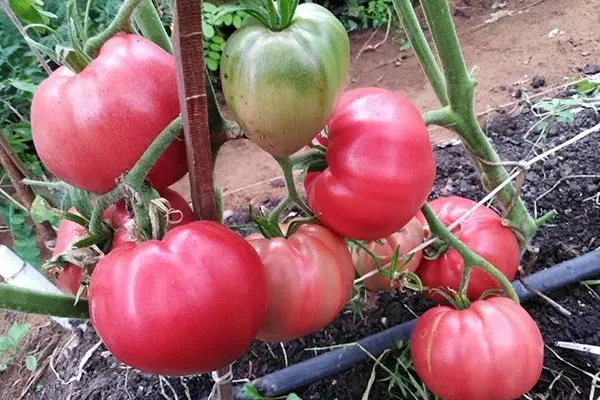
The key characteristics of the Mishka Kosolapy variety include the following:
- This is a tall, but not very branched bush with few leaves, which makes it easy to care for and allows for better aeration of the stem. It also ripens at a moderate rate.
- The inflorescences are complex, with a characteristic articulation of the peduncle.
- The fruits are round or heart-shaped, with firm, rich flesh and high juice content. They are produced in clusters of 3-5 and are characterized by their fruitfulness, ripening gradually.
- Tomatoes begin to bloom almost immediately after transplanting the seedlings to a permanent location and bloom very abundantly.
- Mishka Kosolapy is a variety capable of self-pollination.
- The fruits of this variety are not only suitable for transportation but also for long-term storage. Unripe vegetables, picked before ripening, can ripen naturally on a windowsill or in a pantry.
- The leaves of the bear's club are small and dark green, appearing in moderate numbers.
- When growing tomatoes, it is important to take into account the characteristics of the plant, in particular the need to trim the top of the stem, which allows you to regulate its growth.
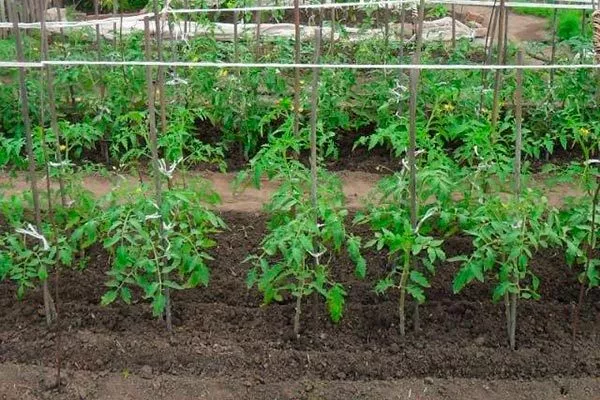
As the variety ripens, its fruits rapidly change color—initially a brownish-green, then turning bright red. This process affects not only the skin but also the flesh, with the center appearing more saturated.
Varieties
The clubfoot bear is divided into several subvarieties depending on its shade. Each has its own characteristics.
| Name | Bush height (cm) | Fruit shape | Fruit color | Disease resistance |
|---|---|---|---|---|
| Yellow tomato | 200 | Cord-shaped ribbed | Golden yellow | Alternaria, tobacco mosaic, fusarium |
| Raspberry tomato | 180-200 | Heart-shaped | Rich raspberry | Resistance to common diseases |
| Orange tomato | 150 | Heart-shaped | Orange | Disease resistance of nightshades |
| Pink tomato | 120-140 | Big pink drops | Pinkish | Not specified |
Yellow tomato
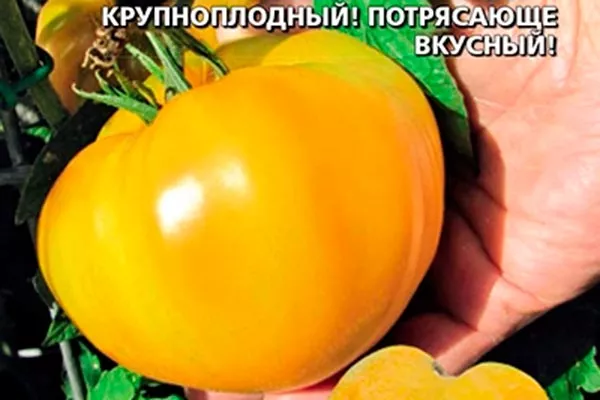
This vegetable variety is distinguished by its golden-yellow skin and flesh that matches its color. Other characteristic features:
- The plant reaches a height of 200 cm.
- The fruits have fleshy, sweet-tasting pulp.
- The average weight of tomatoes is 400-800 g.
- Ripe fruits have a heart-shaped, ribbed form.
- One bush can produce up to 20 kg of high-quality fruit.
- A distinctive feature of this crop is its resistance to such common nightshade diseases as alternaria, tobacco mosaic and fusarium.
Raspberry tomato
This variety is one of the most popular. It's also known as the red variety. The plant reaches a height of 180-200 cm, but it's best grown indoors. Features:
- The fruits and pulp have a rich raspberry hue, a fleshy consistency, and a sweet and delicate taste.
- With proper care, one bush can yield up to 5.5-6 kg of tomatoes, and 1 square meter can yield about 20 kg.
- This variety is distinguished by its resistance to common diseases.
- A distinctive feature of this variety is its increased yield when grown in protected soil conditions.
- The stems are strong and dark green.
- The leaves have an attractive green hue and are compact in size, allowing the fruits to receive sufficient light.
- The shape of tomatoes resembles a heart, which attracts the attention of gardening enthusiasts.
- The bushes produce large red fruits, weighing from 700 g to 1 kg, with a sweet taste and minimal acidity. The tomato aroma is particularly rich and vibrant.

Orange tomato
This tomato impresses with its vibrant color when ripe. Its fruits have a sweet flavor and rich juice, and are distinguished by a meaty texture. They are delicious both fresh and canned.
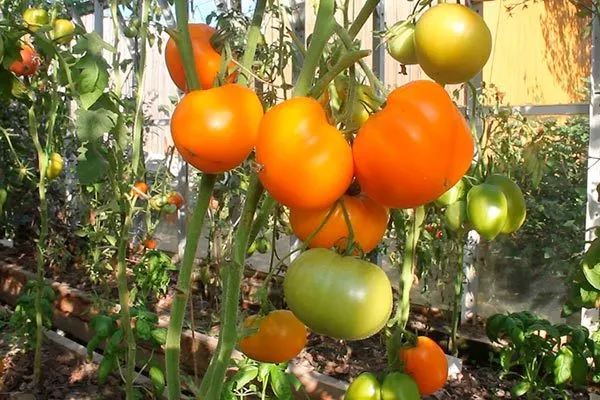
The bushes are vigorous and reach a height of 150 cm. To shape the plant, remove excess shoots, leaving two main stems. The leaves of this variety are large and dark green.
Fruit characteristics:
- heart-shaped;
- manifestation of edges on the surface;
- orange peel;
- fragrant smell;
- dense pulp with high juice content;
- a small number of seeds;
- The yield of this species reaches 16 kg per bush.
Pink tomato
This subvariety is distinguished by a slight pinkish hue, giving its fruits the appearance of large pink drops hanging from the branches. Tomatoes often weigh between 800 and 900 grams, and a single bush can yield up to 6 kg.
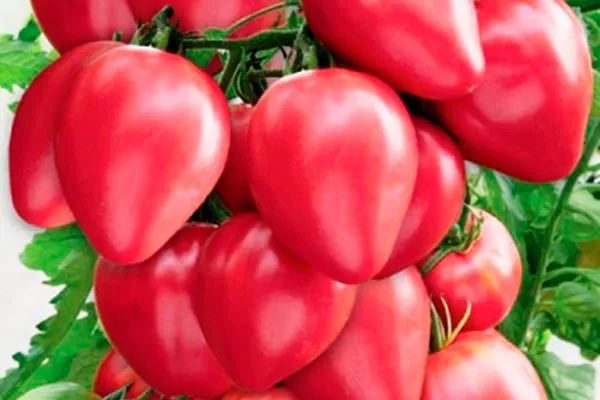
Other features:
- The bushes can reach a height of 120-140 cm, with medium-sized, light-green leaves. The main stem is strong, preventing deformation.
- Productivity can reach 20 kg from one plant.
- The average tomato weight is 550-600 g. Thanks to its juicy flesh, this variety is ideal for fresh consumption or for making juice. The fruit has a pleasant flavor and a typical tomato aroma.
Taste and purpose
The taste of these tomatoes is simply amazing; even toddlers happily devour them, thanks to the incredible sweetness of each variety. These tomatoes are ideal for fresh salads, tomato juice, and for creating drinks, cocktails, and sweet desserts.
Their large size makes them especially convenient for freezing and making pastes. Mishka Kosolapy tomatoes are also used to make marinades and ketchups.
Productivity, ripening time
The first tomatoes of the Mishka Kosolapyi variety usually ripen 90-110 days after planting, indicating this variety's early ripening period. A unique feature is the ability to harvest unripe tomatoes before the onset of cold weather, which will then continue to ripen at room temperatures of 20-22 degrees Celsius.
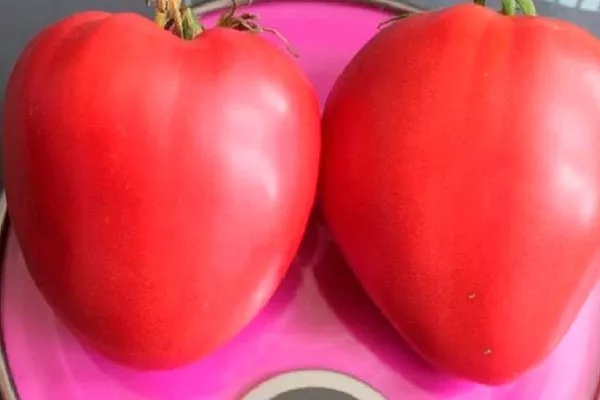
By following all recommended growing guidelines, you can achieve a substantial harvest. A single Mishka Kosolapyi tomato plant can yield up to 5.5 kg of tomatoes, a significant yield compared to other varieties.
Keep in mind that with such abundant fruiting, it can sometimes be difficult to harvest all the ripe tomatoes. Experienced gardeners recommend not leaving tomatoes on the vines, as this can lead to rot and subsequent disease spread.
How to grow seedlings?
The best time to start growing seedlings from seeds is between March 20 and April 10.
Seed preparation
Before planting, sort the seeds, eliminating any that are unsuitable for sowing. To do this, add 1 tablespoon of salt to a glass of warm water, mix thoroughly, and pour in the seeds. After 15 minutes, the unsuitable seeds will float to the surface.
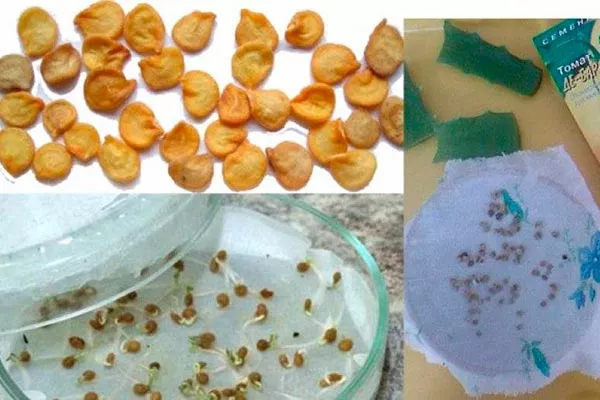
It's equally important to protect future seedlings from fungal diseases that may be present on the seeds. Preventative methods include:
- Soaking in a disinfectant solution. Typically, seeds are immersed in a 3% hydrogen peroxide solution for 10 minutes.
- Heat treatment. The best way to kill fungal spores is to place the seeds on a baking sheet and leave them in an oven preheated to 50 degrees Celsius, stirring occasionally, for two hours.
- Biological stimulation. Aloe juice, in which the seeds are kept for 12 hours, ensures not only health, but also a bountiful harvest.
Container and soil
When propagating plants, various materials are used for the initial stage: from traditional wooden or plastic boxes to recycled bottles, milk cartons, and even peat pots or tablets. Peat-based varieties are considered the most favorable, as they already contain the nutrient substrate necessary for initial growth.
When it's time to transplant the seedlings, the peat pot containing the young plant is placed directly into the soil. Gradually, the pot's walls dissolve into the soil without damaging the root system. The plant experiences this process without stress, thanks to the natural state of its roots.
To create the ideal substrate for seedlings, the following mixture is recommended:
- manure mixture - one part;
- river sand – one part;
- neutral peat - one part;
- garden soil - three parts.
30-48 hours before sowing the seeds, treat the soil with a strong solution of potassium permanganate. This promotes the flourishing of beneficial microorganisms in the soil, which contribute to the successful development of plants.
Sowing
Immediately pour the substrate into the disinfected containers, moisten thoroughly, and leave for 24 hours. During this time, the soil will settle, after which you can add a small amount. Then, proceed as follows:
- Using small spatulas, loosen the top layer of the substrate.
- Create deep grooves or wells.
- Carefully place one or two seeds in each of them, then add soil, creating a -2 cm layer.
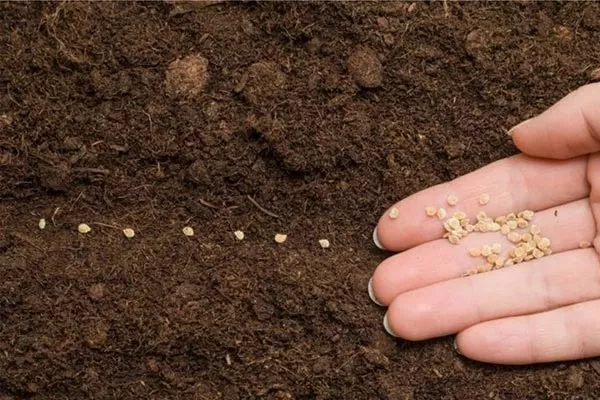
After this, water the container again using a spray bottle filled with warm water. Cover the container with plastic wrap or glass and place it in a warm place.
Growing seedlings
To ensure strong and healthy plants, it's important to water them regularly and provide them with adequate light. Seedlings are kept indoors at a temperature of approximately 25°C. When the young plants develop two true leaves, they are transplanted into individual pots.
For optimal growth of seedlings you should:
- When replanting, deepen to the level of cotyledon leaves.
- Treat plant roots in a weak solution of potassium permanganate to protect against pathogens.
- 10-14 days after transplanting, tomatoes are fertilized for the first time with a mullein infusion. Subsequent fertilizing is done every 10-14 days.
- Tomato seedlings are hardened off: two weeks before the expected planting, the plants are taken out into the fresh air for 1-2 hours, gradually increasing the time spent outside or on the balcony.
Transfer
Young plants are transplanted approximately 55-65 days after sowing, when the tomatoes already have five leaves. Seedlings for open ground are planted in early June, while those for greenhouses are transplanted in late May.
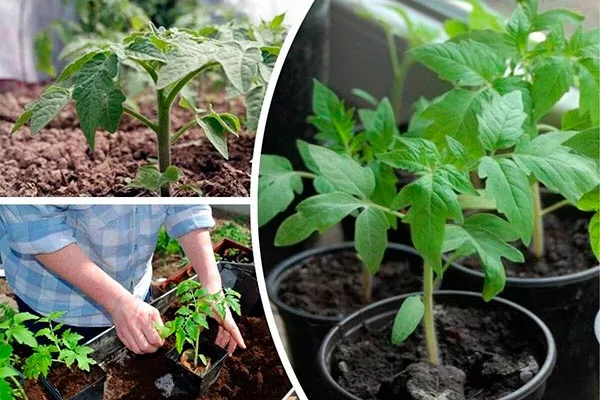
- ✓ The optimal soil temperature for planting seedlings should be at least +15°C.
- ✓ The distance between bushes when planting should be 40-50 cm to ensure sufficient space for growth.
To ensure proper development, the bushes require space, so they are spaced 40-50 cm apart, with rows spaced 50-55 cm apart. After planting, the seedlings should be thoroughly watered and then left without additional watering for 5 days.
How to care for Mishka Kosolapy tomatoes?
It is not difficult to care for this variety – you just need to perform standard actions, but take into account the varietal requirements.
Watering, weeding
When tomatoes are transplanted into open ground, their root system is still considered immature, but after some time, the roots begin to grow actively, so the plant requires nutrients that it can only absorb in dissolved form. This requires water.
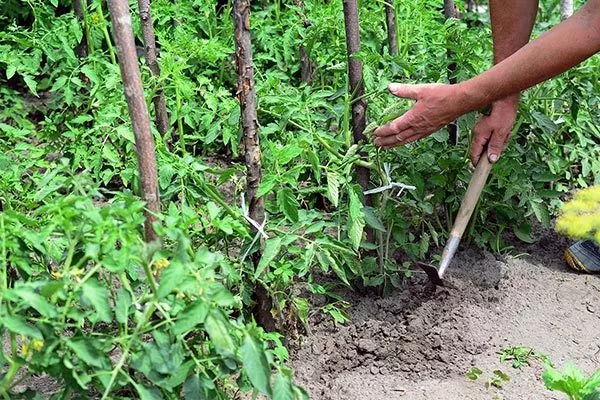
Watering should be:
- regular depending on the amount of precipitation;
- deep enough so that moisture reaches the entire root system.
Mulching the soil
Protecting the soil around tomatoes, both outdoors and indoors, is a popular gardening technique that reduces watering and saves water. Mulching also helps prevent weed growth.
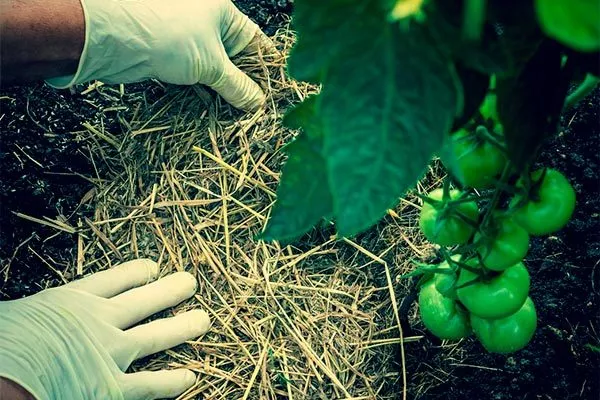
According to the results of experiments in home gardening, proper and timely mulching of tomatoes in a greenhouse can increase yield by 25%, as well as reduce the ripening time of vegetables by an average of one to two weeks.
The most commonly used material is:
- Organic mulch – in addition to its protective properties, it enriches the soil with elements essential for healthy vegetable growth. This includes plant waste such as leaves, straw, shredded wood, manure or compost, as well as simply weed clippings.
- Inorganic materials are easy to use. These include roofing felt, Agril, Agrotex, Lutrasil, Spunbond, and other non-woven materials, as well as black polyethylene film.
Fertilizing bushes
Reviews of the Mishka Kosolapyi tomato confirm that this hybrid is particularly sensitive to fertilizer. Significant foliage growth and large fruit formation are impossible without external fertilization, and dry and heavy soils are unable to realize the variety's full potential.
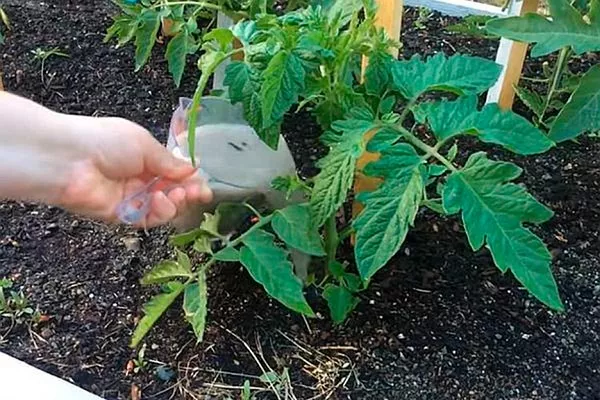
Organic components are recommended as the basis for fertilizers. They are rich in various nutrients and facilitate their rapid conversion into a form accessible to the root system.
Organic components may include:
- cow, horse, pig manure;
- chicken waste;
- products after rabbits and goats.
To prepare the mixture, use a ratio of 1:10, and for chicken waste, 0.5:10. The process is as follows:
- fill the container with water;
- add organic components;
- stir;
- leave to settle for 24 hours;
- add 1 liter of mixture to irrigation water (per 8-12 liters of water);
- 500 ml is added under each bush.
Apply the first fertilizer a couple of weeks after transplanting the tomatoes into the soil. If the garden is sufficiently moist, apply fertilizer every 15 days. If the soil is rich in minerals, applying fertilizer once a month is sufficient.
Pinching out side shoots and garter
The Mishka Kosolapy tomato plant requires careful maintenance of the bush itself. It is recommended to leave two main shoots on the plant. All side shoots between 100 and 150 cm long should be promptly removed, as they can rob nutrients, which can delay fruit ripening.
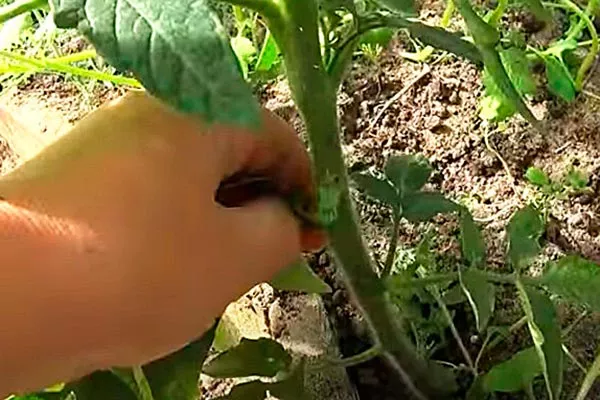
The large size of the shoots and fruits makes it difficult for even the strong stems of the club-footed bear to support them. Therefore, the plant needs some help. Temporarily securing the stems to posts or stakes will help prevent them from breaking and damaging the fruit. To secure the stems, use soft rope or twine, which can be made of either natural or synthetic materials.
Features of cultivation and possible difficulties
Selecting tomatoes isn't that difficult, but some challenges may arise on the way to successful fruiting:
- Cracking of tomatoes – This may be due to excess moisture or excessive nitrogen fertilizer application, which leads to excessive growth. To correct this, monitor the amount of water used for irrigation and the humidity level. When applying fertilizer, follow the recommended rates.
- Danger of sunburn – requires the creation of artificial shading over tomato beds, for example, using lightweight structures with woven curtains.
- Changes in the color of leaves or their deformation – Temperature fluctuations may cause some damage, but the tomato flavor will remain unchanged. To avoid such problems, carefully select a planting time when the difference between night and day temperatures is minimal.
- Putrefactive diseases – These can occur due to overwatering or a calcium deficiency. These cases require removing affected vegetation and regularly aerating the soil.
Diseases and pests
All cultivars of this variety are characterized by increased resistance to diseases and pests typical of nightshades. However, they are susceptible to diseases such as gray mold and white mold. Unfortunately, these tomatoes also suffer from root rot, which is incurable.
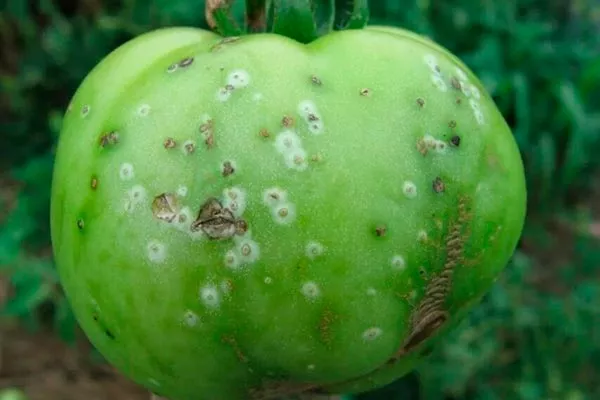
Effective protection against these ailments includes simple steps:
- regular fertilization of the soil;
- use of mulch;
- removing the lower leaves on the stems.
Caterpillars can sometimes be found on the foliage of these tomatoes. Treatment is simple: treat the bushes with a solution of ammonia and water.
The nuances of growing in open ground and in a greenhouse
Transplanting seedlings into the greenhouse occurs approximately between April 12-15 and May 8-10. Greenhouse conditions are ideal for tomatoes, as long as regular ventilation and humidity levels are maintained, while preventing cold air from entering.
Seedlings are transplanted into open ground when they reach 60-65 days of age and have 6-7 true leaves. The first flowers may also appear. This usually occurs in early June. Nights in May can be very cool or even frost-prone, which is dangerous for young tomatoes, so it's recommended to cover them with geotextile or polyester film to prevent frost.
A particular feature of growing tomatoes outdoors is the need to create protection from various negative factors: pests, pathogens, direct sunlight, which can damage plants, as well as from drying out or excessive waterlogging of the soil.
Fruit harvesting and storage
Tomatoes are harvested in order of ripening, avoiding overripe ones to prevent rot. The Mishka Kosolapy variety is known for its excellent self-ripening properties, so its fruits are often picked before they're fully ripe and then stored on a windowsill to continue ripening. To achieve this, maintain a room temperature of 20°C or higher.
Pros and cons
The Mishka Kosolapyi tomato variety is deservedly beloved by farmers and gardeners thanks to a number of its exceptional qualities:
In agricultural technology, some disadvantages of this variety should also be taken into account: the need for pinching shoots, regular tying of branches with adjustment of the clamp level, and the demanding quality of the soil mixture.
Reviews
The Mishka Kosolapyi variety produces high-yielding, high-quality tomatoes. This plant can be grown both outdoors and indoors, making it an ideal choice for greenhouse cultivation. Furthermore, its resistance to various diseases significantly facilitates the cultivation of this hybrid.