
The Minibell tomato is a dwarf variety with small, red cherry tomatoes. This decorative yet delicious tomato can be grown outdoors or indoors, as well as on a windowsill or balcony.
The history of the Minibel variety
The Minibel variety was developed by breeders of the Sedek Agrofirm company in 2014. Its authors are A. N. Lukyanenko, S. V. Dubinin, and I. N. Dubinina.
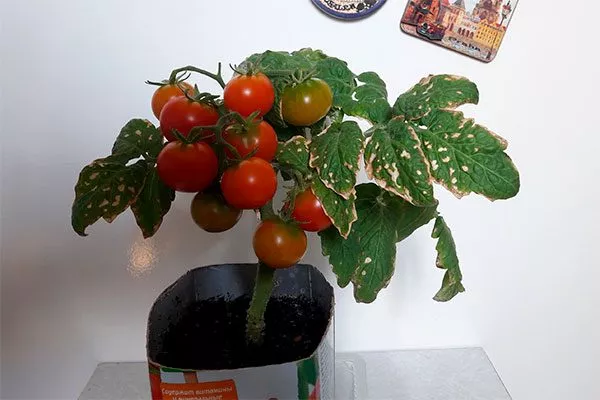
In 2015, the Minibel tomato was added to the State Register of the Russian Federation and approved for cultivation throughout the Russian Federation.
Description of the Minibell tomato
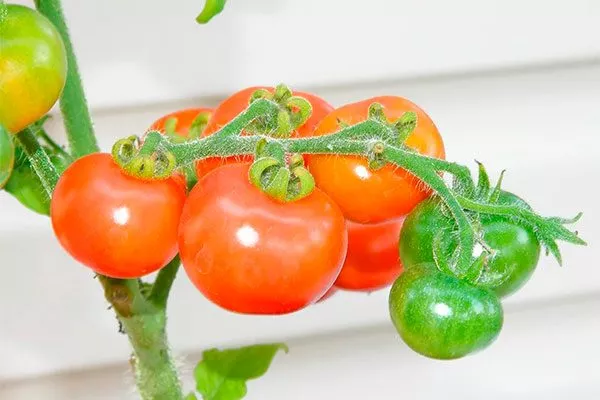
Minibelle tomato plants are low-growing and compact, belonging to the determinate type. They reach a height of 20-25 cm, reaching a maximum of 30-40 cm. This tomato has short, green leaves, and simple inflorescences. The fruits are small, fleshy, and borne in clusters.
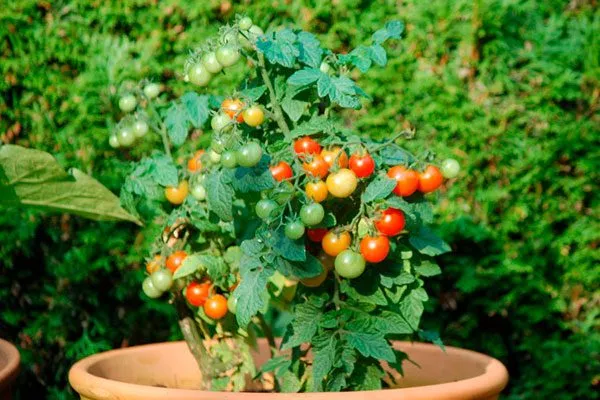
Fruit characteristics:
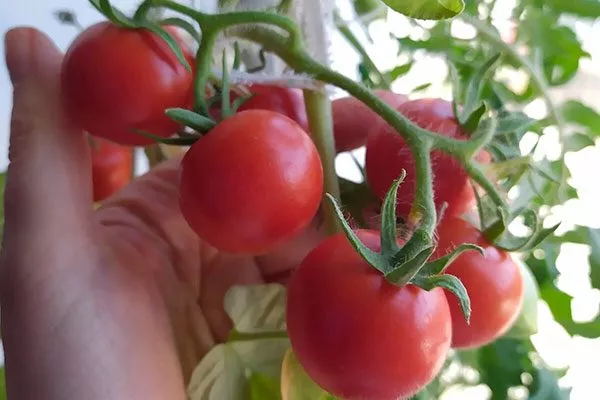
- Color of ripe fruit: red.
- Unripe fruit color: light green.

- Form: rounded.
- Weight: 15-20 g.
- Skin: smooth.
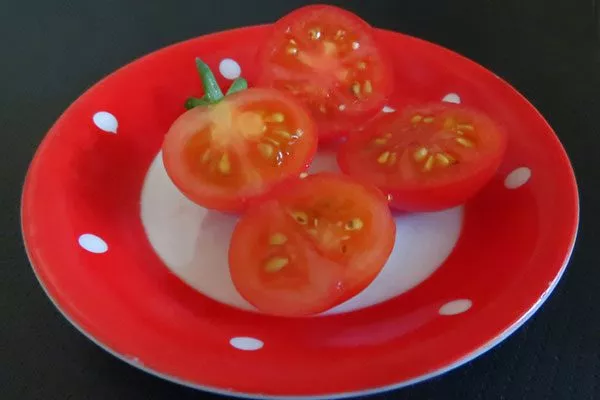
- Pulp: medium density.
Taste and purpose
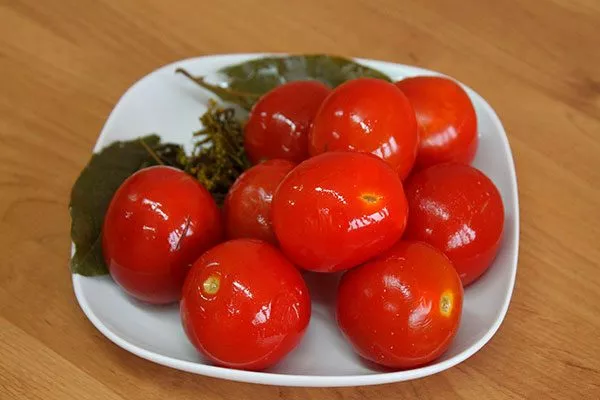
Minibell tomatoes have a sweet, slightly tart flavor. These cherry tomatoes are eaten fresh, pickled, canned, and used in cooking.
Characteristics
The Minibell tomato is a high-yielding variety. Despite its short planting height, it yields nearly 5 kg of tomatoes per square meter.
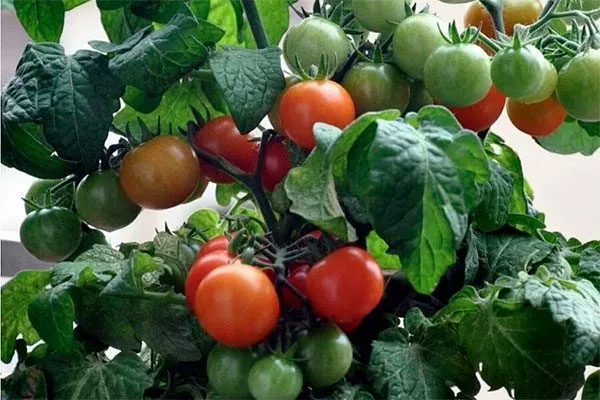
The variety is early, the fruits ripen 90-95 days after emergence, it has a fairly high resistance to diseases and cold.
Pros and cons
The Minibell tomato has many advantages that deserve the attention of gardeners, summer residents, and those who love to grow vegetables indoors.
Landing
To get a good harvest of Minibell tomatoes, it's important to plant them correctly. Whether planting outdoors or indoors, it's recommended to grow this variety using seedlings.
Site selection and preparation
If you plan to grow the Minibell tomato outdoors or under plastic, choose a well-lit location for planting. It should be well-ventilated if grown outdoors, but draft-free.
The Minibell tomato prefers loose and fertile soils; it will grow best in light loams and sandy soil mixtures.
Features of site preparation:
- In the fall, the soil is dug up to the depth of a shovel blade, adding organic fertilizers - humus or compost (10 kg per 1 sq. m) during digging.
- For low-fertility soils, it is also recommended to add mineral fertilizers - ammonium nitrate, superphosphate and potassium sulfate (20, 50 and 15 g, respectively).
- If the soil is heavy and clayey, river sand, wood sawdust, and peat are added to it.
- If the soil is acidic, add wood ash or dolomite flour (300 g per 1 sq. m).
- It is recommended to treat the soil against fungal and bacterial infections, for example, with Fitosporin (5 g per 10 l of water).
Seed preparation
Tomato seeds from the manufacturer typically require no additional preparation. They are typically sold already disinfected, treated with growth stimulants, etc.
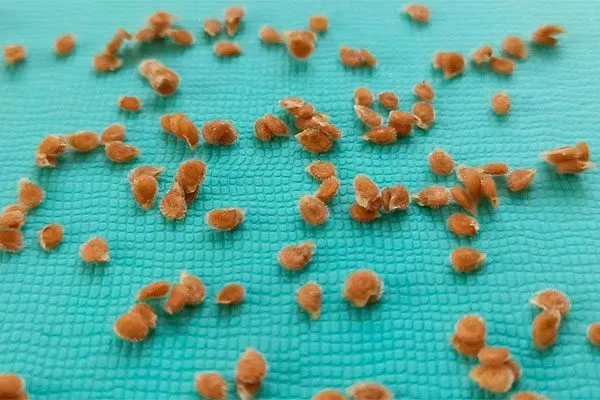
Seeds collected at home must be prepared for sowing. Treatment may also be necessary to increase seed germination.
Features of preparing Minibell tomato seeds for planting:
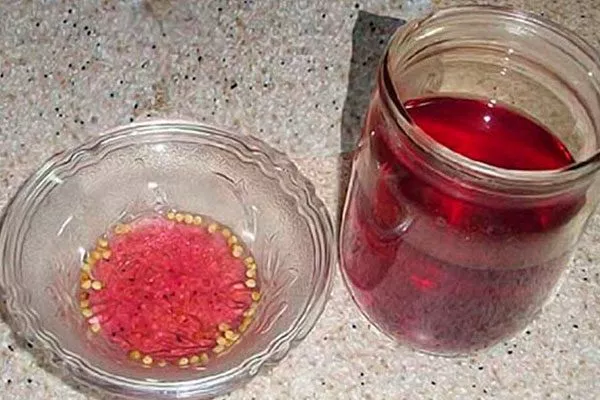
- Rejection. To eliminate non-viable seeds, soak the seeds in a salt solution (30-50 g of table salt dissolved in 1 liter of water). Soak them in the solution for 10-15 minutes. Floating seeds are discarded, and those that settle to the bottom are rinsed in clean water and dried.
- DisinfectionTo kill pathogens on the surface of seeds, use a solution of potassium permanganate (1 g per 100 g of water). Soak the seeds in it for 15–20 minutes. You can also use 3% hydrogen peroxide or the biopreparation "Fitosporin" for disinfection.
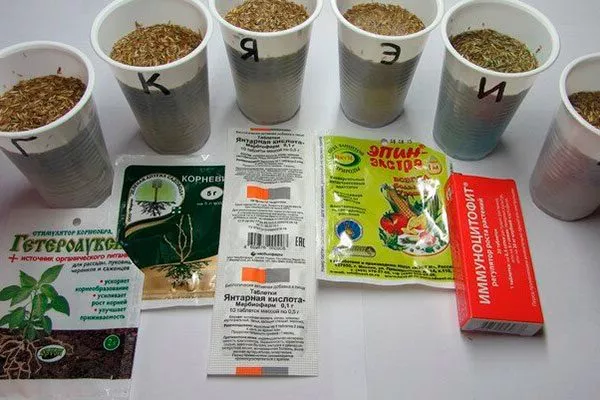
- Stimulation growthThis procedure is aimed at increasing growth energy and saturating the seeds with nutrients. To achieve this, the seeds are soaked in a growth stimulator (Epin or Zircon) diluted with water, according to the instructions.
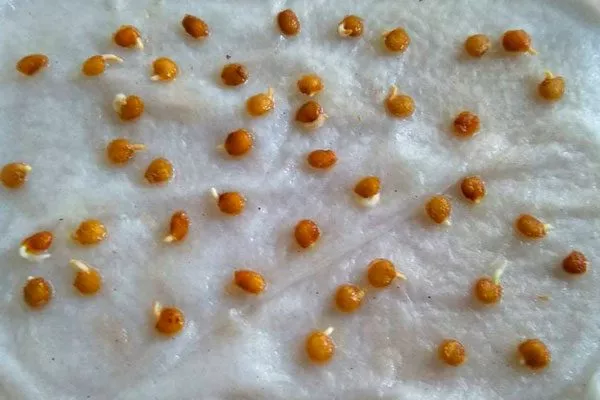
- GerminationTo speed up germination after sowing, soak the seeds—wrap them in a damp cloth (made of natural material), place them in a saucer, and keep them in a warm place. As soon as the seeds sprout, sow them immediately.
Sowing seedlings
Minibell tomato seedlings are sown from the third ten days of March to the second ten days of April. Use containers or individual pots with drainage holes for sowing.
Fill the planting container with light, loose, fertile, and well-drained soil. You can use store-bought soil—there are special seedling mixes available—or prepare your own (from turf, peat, sand, and humus).
Features of sowing seedlings:
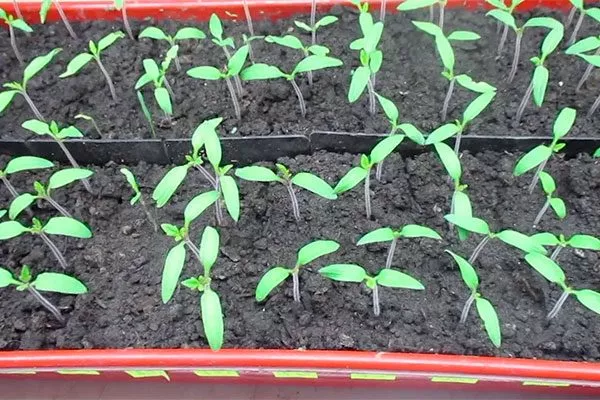
- If you plan to transplant seedlings when they reach the two-true-leaf stage, sow them in larger containers—containers, boxes, etc. If you decide to grow tomatoes without transplanting, sow the seeds directly into individual cups or pots (250-300 ml capacity).
- The planting container is filled with substrate, leaving 2-3 cm from the edge, leveled and moistened with a spray bottle.
- In large containers, make furrows at 3-4 cm intervals and sow the seeds 2-3 cm apart. Cover them with soil and spray with warm, settled water. You can also mark the soil using a 1-2 cm mesh grid, placing the seeds at the intersections of the lines.
- Sow 3-4 seeds at a time in separate containers to ensure germination, and then select the best and strongest seedlings.
The seedlings are covered with a transparent material to create an optimal microclimate for germination. The cover is lifted every day to allow air to circulate. During this stage, the seedling containers are kept in a warm room with diffused light.
Caring for seedlings
The seedlings' seedling containers are placed close to the light. The seedlings are inspected daily, watered if necessary, and the pots are rotated to ensure even light exposure.
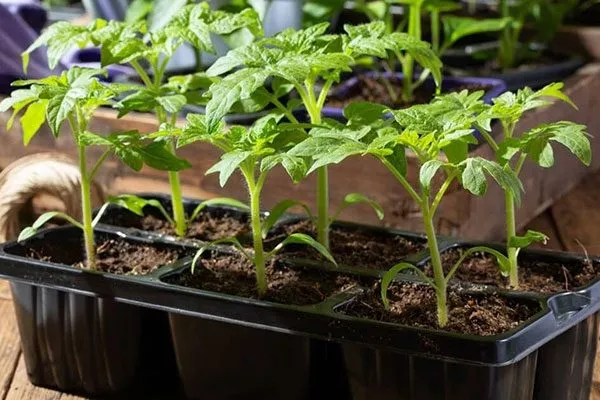
Features of caring for Minibell tomato seedlings:
- The temperature is sharply reduced immediately after germination, from 20 to 25°C to 15 to 16°C. This is necessary to prevent the seedlings from becoming elongated.
- For the first five days, seedlings are provided with 24-hour supplemental lighting. Then, daylight hours are reduced to 18-20 hours, and after a month, to 11-12 hours.
- At first, seedlings are watered sparingly—about once a week. Stagnant water and overwatering should be avoided to avoid the dangerous fungal disease blackleg, which is untreatable and quickly kills the seedlings.
- For watering, use only warm and settled water; cold water can cause the development of various types of rot and other infections.
- After 3 weeks or after picking (if the seedlings are picked), watering becomes more frequent - 2-3 times a week.
- After transplanting, the seedlings begin to be fed. For this purpose, it's best to use a special seedling fertilizer with a balanced composition or potassium humate, diluted according to the instructions. Fertilizer is applied on the second day after watering. Fertilizing frequency is once every two weeks.
- If the seedlings are to be planted outdoors, they should be hardened off approximately two weeks before planting. To do this, the tomato containers are taken outside daily. The time spent outdoors is gradually increased from 1-2 hours to 12-16 hours.
It's important to monitor the condition of your seedlings. External signs can help identify any problems. For example, a nutrient deficiency or improper watering can cause leaf deformation, while a lack of moisture can cause leaves to dry out and fall off.
Transplanting
Seedlings are planted at 45-50 days of age, when the risk of recurrent frosts is eliminated or at least minimal. Before planting, the seedlings are watered to soften the soil, making it easier to remove them from their pots.
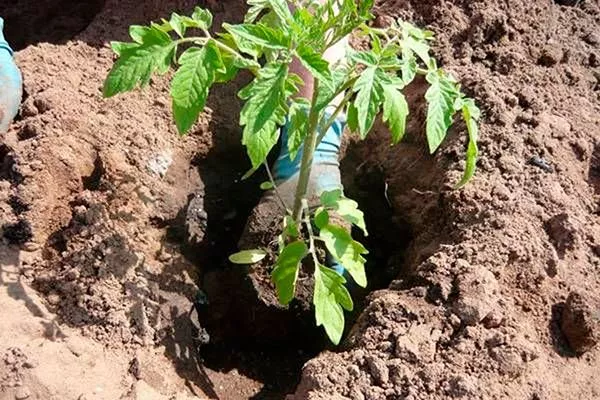
Features of planting Minibell tomato seedlings:
- The variety is low-growing, so intervals of 50 cm are maintained between rows, and 30-40 cm between adjacent holes.
- Add 1-2 handfuls of organic fertilizer—well-rotted manure or compost—to each hole. Fresh manure should not be used, as it will burn the tomato roots. Also add 1 tablespoon of superphosphate and a couple of handfuls of wood ash.
- All fertilizers placed in the holes are thoroughly mixed with the soil so that the roots do not get burned.
- The holes are watered with warm, settled water and after an hour, when the soil has settled a little, they begin planting the seedlings.
- The seedling is placed into the hole by transshipment, being careful not to disturb the root ball or damage the root system. The empty space is filled with soil, compacted, and the tomatoes are watered.
- Once the water has been absorbed, the root zone is mulched with organic material - straw, peat, or simply dry soil.
Care
The Minibell cherry tomato requires standard care. It's not at all complicated, and even novice gardeners can easily manage it.
Watering
Watering should be infrequent but generous. Avoid overwatering, as this will cause root rot. The average watering frequency is 1-2 times a week, and 2-3 times a week in hot weather and drought.
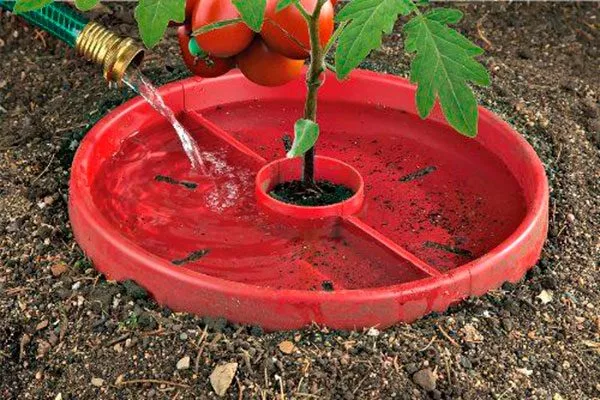
The recommended watering rate is 20-30 liters per square meter. Per bush: 3-5 liters. During the fruit ripening period, watering is significantly reduced or stopped altogether. High humidity during fruit ripening reduces resistance to fungal infections and causes cracking or rot.
In greenhouses, tomatoes are watered exclusively in the morning, before noon. If it's hot and a second watering is needed, it should be done before 5 PM to allow the greenhouse to air out well before evening.
Loosening
Loosening helps prevent the formation of a hard soil crust, which prevents oxygen from reaching the roots.
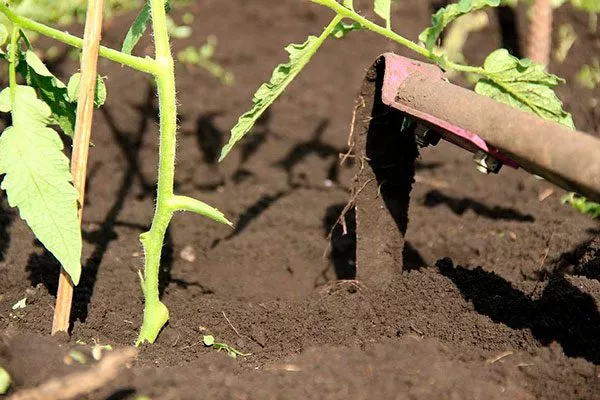
First, loosen the soil to a depth of 4 cm, then to 6 cm. Weeds are removed simultaneously with loosening.
Fertilizing
Tomatoes are fertilized 3-4 times per season. It's best to alternate organic and mineral fertilizers. The composition of the fertilizer varies depending on the growing season.
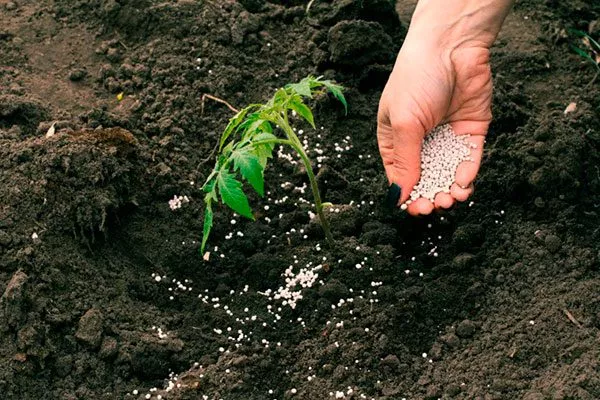
Approximate regime and composition of fertilizers:
- A couple of weeks after planting the seedlings in the ground, tomatoes need nitrogen and phosphorus. You can apply nitroammophoska or azofoska to the roots.
- After the first flowers appear, stimulate the formation of flower clusters and fruit set. At this stage, tomatoes need all the essential nutrients. A complex fertilizer with an NPK (nitrogen, phosphorus, potassium) ratio of 6:14:35 can be applied.
- When fruit set begins, it's best to eliminate nitrogen from the fertilizer. Instead, apply phosphorus-potassium fertilizers, such as double superphosphate with potassium nitrate or monopotassium phosphate.
- During fruiting, tomatoes require potassium, phosphorus, and calcium. Potassium sulfate, monopotassium phosphate, and potassium magnesium sulfate can be added.
It's important to strictly adhere to the recommended dosage, as too much fertilizer can cause more harm to plants than too little. Fertilize your Minibell tomato once every two weeks.
Fighting diseases
The Minibell tomato has a fairly good immunity, but under unfavorable conditions it can be affected by septoria (white spot), gray rot, blossom-end rot, and mosaic virus. To combat the diseases, use:
- Chemicals - Bordeaux mixture, HOM, Oxyhom and other fungicides.
- Biological drugs — Fitosporin-M, Bisolbifit.
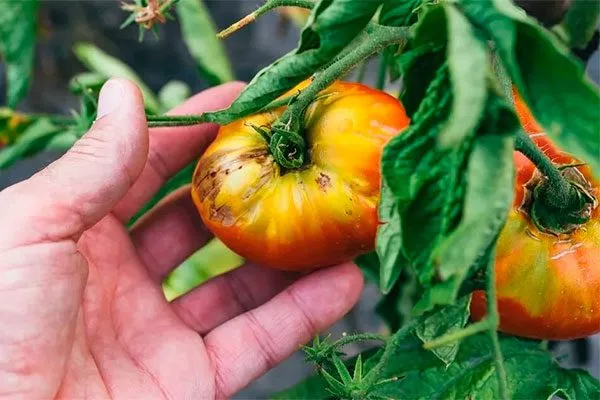
It is recommended to use biological products immediately after planting seedlings, before fruit formation begins, as after this stage their effectiveness is significantly reduced.
Pest control
Tomato Minibell can be affected by tomato leaf miner, aphids, cutworms, and whiteflies.
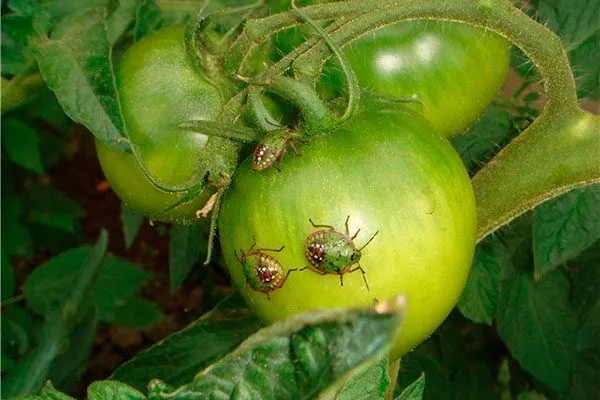
To combat pests of the Minibel tomato, use:
- Insecticides — Confidor Extra, Decis Profi, etc.
- Biopreparations — Fitoverm, Bitoxibacillin.
- Traps for tomato moth - oil and light.
- Preventive measures — destruction of weeds and plant residues, crop rotation, disinfection of greenhouses (when growing indoors), treatment of seeds with insecticides.
Harvesting and storage
Minibell cherry tomatoes are harvested in July and August. If temperatures remain consistently below 10°C, the tomatoes are harvested even if they are unripe. In greenhouses, the tomatoes are harvested as they ripen.
Minibell tomatoes are not picked, but carefully cut off with pruning shears, including the stems. This prevents the fruit from rotting. Harvested tomatoes are placed in wide containers such as baskets, crates, etc. Store undamaged tomatoes. Dirty tomatoes should be wiped with a cloth; there is no need to wash them.
The harvested crop is stored in a cool, dark place. Fruits at biological maturity are stored at a temperature of +1 to +2°C, while those at a milky temperature are stored at +10 to +12°C. Optimum humidity is 75-80%. Tomatoes are regularly inspected, discarding any spoiled specimens.
Reviews
The Minibell tomato is an excellent choice for cherry tomato lovers. This dwarf variety is productive and quite hardy. With proper care, the small-fruited Minibell tomato is guaranteed to provide you with delicious and beautiful cherry tomatoes.