
The Bear's Paw tomato has an unusual name, given to its distinctive fruit shape. This variety promises abundant harvests, and its tolerance to heat and drought will eliminate the need for unnecessary shade. Seeds collected from your own tomatoes can be used the following season—they will fully match the characteristics of the mother plant.
History and regions
Many believe the origin of this variety remains a mystery, with enthusiastic breeders presuming it was created. However, the Bear's Paw tomato variety was approved for cultivation in various regions of Russia back in 2005 and was registered in the State Register at the same time.
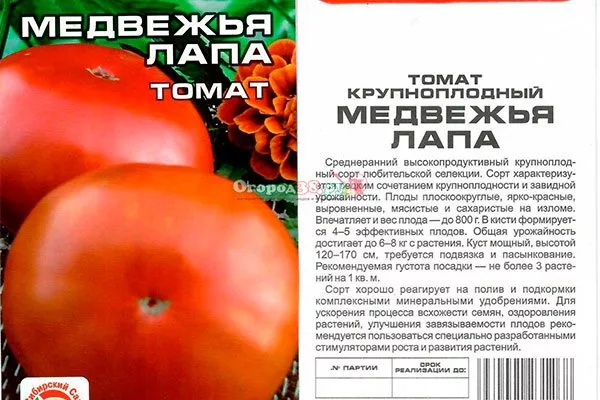
Its creators—V. Dederko, A. Yabrov, and O. Postnikova—developed a cultivar with large fruits, a fleshy, juicy texture, and ease of care. The Bear's Paw tomato was intended for cultivation in open ground and plastic greenhouses.
Description of the bush and fruits
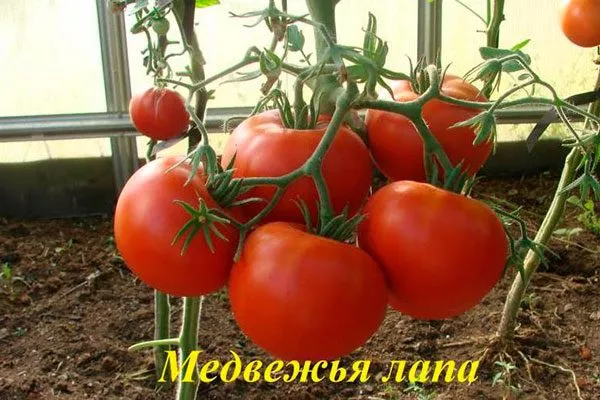
This tomato variety is characterized by good productivity and large fruits. Bushes of this plant reach heights of 120 to 170 cm, with vigorous growth and abundant foliage.
There are also other varietal characteristics:
- The leaves are particularly large, dark green with small wrinkles, which also determined its original name.
- The inflorescences have a simple structure. The first fruit cluster forms above the ninth leaf, after which clusters appear every one or two leaves.
- On the main branch of the bush, 3-5 fruit clusters with 4-5 ovaries are formed.
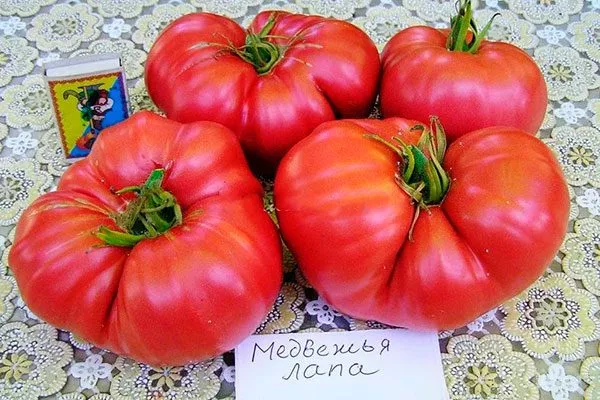
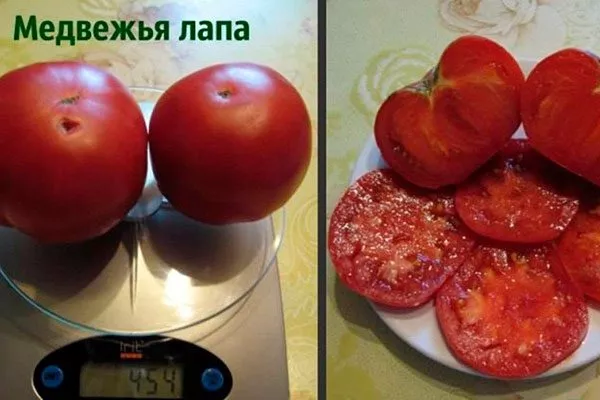
- The fruits have an attractive shape - flat-round, with moderate density, their average weight is 115-300 g, although sometimes there are specimens up to 500 g.
- The skin of the fruit is of medium thickness, with a mirror-like sheen.
- Even before ripening, the fruits are green with a characteristic green spot near the stem. When ripe, the tomatoes turn a bright red hue.
- The pulp of the fruit is fleshy, with a small amount of juice, sugary and moderately dense, with a high dry matter content.
- The seed chambers usually contain 3-4 seeds.
Taste and purpose
Tomatoes have a sweet, slightly acidic flavor. They are consumed fresh (93.9% of the total harvest is commercial). If there is a surplus, they can be used to make a variety of sauces, pastas, and other dishes.
The fruits of this variety can be stored for long periods or transported over long distances. If picked before they are fully ripe, they will ripen quickly under normal room conditions.
Ripening time, productivity
This is a mid-season crop (110-115 days pass from the first green shoots to harvest). The fruits reach maturity gradually throughout the growing season. The harvest period spans July through September.
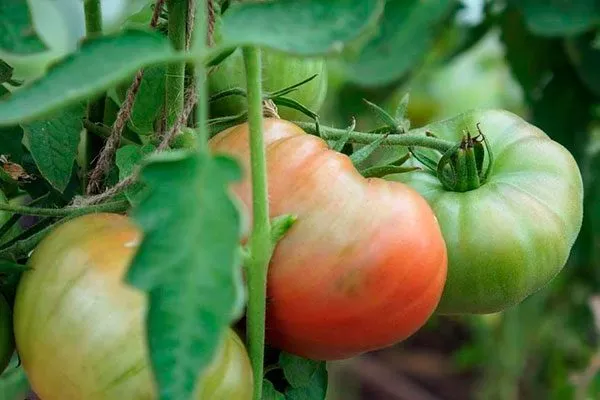
It boasts excellent productivity – up to 7.2 kg per square meter. The percentage of marketable fruit reaches 93.9%. Due to its long fruiting period, up to 30 kg of fruit can be harvested from a single bush throughout the season, making it one of the most productive.
Boarding order
It is recommended to begin preparing for transplanting tomatoes into the greenhouse 60-65 days before this moment, which coincides with the beginning of March.
Tomato seedlings should be grown in regular containers—any plastic container about 10 cm high will do, with holes punched in it to allow excess water to drain. Special seedling growing trays are also available.
Preparing for sowing
Before sowing the seeds, thoroughly wash the containers with laundry soap. For future tomatoes, purchase a universal seedling substrate, which is available at specialty stores. If you prefer to create your own soil mixture, you can mix garden soil, compost, and sand in a ratio of 3:3:1.
However, it's important to keep in mind that such a substrate may contain pathogens and pest larvae. To clean the soil, it must be pre-treated using one of the following methods:
- Place a 5 cm thick layer of soil in any container. Then pour boiling water over the mixture and place in a preheated oven at 90°C (194°F). Leave for 35-40 minutes.
- Sterilize the substrate for 80-90 minutes in a water bath, stirring it occasionally to ensure uniform heating.
- Place the substrate in a glass container, add water, and cover with a lid. Microwave and sterilize the mixture for 15-20 minutes, adding water as needed.
These purification methods destroy not only pathogenic microorganisms but also beneficial bacteria. Therefore, to restore the soil's composition, it will be necessary to treat the soil with a solution containing biofungicides, such as Alirin B, Baikal EM-1, Fitosporin-M, or other similar agents.
It's recommended to thoroughly prepare the seeds before sowing. To do this, follow these steps:
- Create a working solution of Fitosporin-M Tomato fungicide by adding 1.5 g of the product to 1 liter of water. Then soak the seeds in this solution for 40-50 minutes.
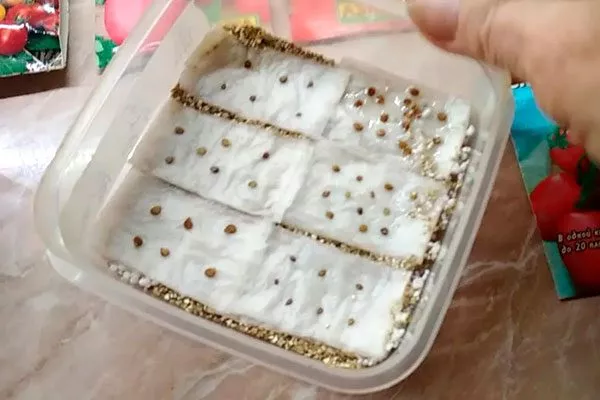
- Rinse the planting material, then place the seeds on a plate with cheesecloth. Spray them with warm water (30–35°C).
- Leave the seeds to germinate in a warm, shaded area for 2-3 days. Remember to spray the gauze with water periodically to prevent it from drying out.
- ✓ Optimum temperature for seed germination: +23-25°C.
- ✓ Required daylight hours for seedlings: 15-18 hours.
When the first sprouts appear on the seeds, you can start sowing.
How to sow tomatoes?
To sow tomatoes, you need to follow several steps:
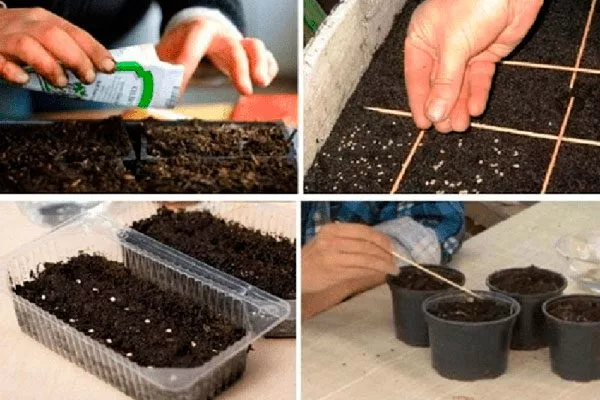
- Place a thin layer of sand or crushed polystyrene foam, 1 cm thick, on the bottom of the pot.
- Then fill the container with processed soil substrate, leaving 2-3 cm free at the top.
- Level the soil surface and moisten it well with hot, filtered water.
- Make holes in the ground 1.5 cm deep with an interval of 2-3 cm between them.
- Distribute the planting material into the holes and lightly cover with soil.
- Cover the pot with seeds with glass and place it in a room with a temperature of 23-25 degrees Celsius.
- When the 5th to 8th day comes and the first shoots appear, remove the glass cap.
- Move the container to a bright location, such as an east- or south-facing windowsill. However, avoid direct sunlight during peak hours, using tulle curtains or gauze to protect the plants.
Growing seedlings
Tomato seedlings require regular, but not excessive, watering during the period when the top layer of soil is slightly dry.
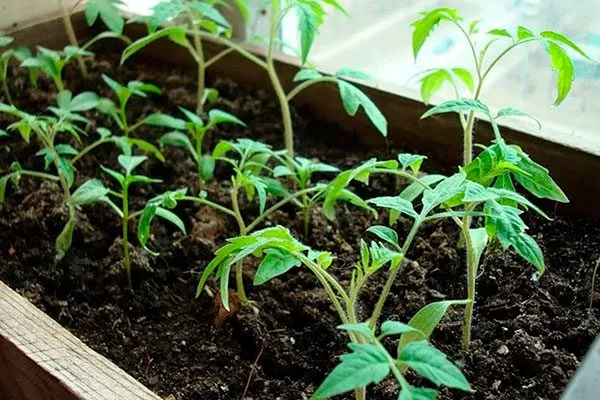
Water for irrigation should be pre-filtered and heated to a temperature of 22 to 25 degrees.
Other important events:
- To ensure healthy and strong seedlings, provide artificial lighting with 15 to 18 hours of daylight. To achieve this, you can install phytolamps near the plants and turn them on at night.
- The temperature around the seedlings should be maintained between 20 and 22 degrees during the day, and lowered to 16-18 degrees at night.
- When true leaves appear on the seedlings, which usually occurs 10-12 days after germination, they should be transplanted into individual peat pots or plastic cups with a capacity of 300 to 500 ml, having first made holes in them to drain excess moisture.
- When repotting plants, use the transshipment method to avoid damaging the root ball. Using a teaspoon makes removing plants from their containers easier. If the roots of seedlings become tangled, they can be easily separated with a toothpick.
- A week later, after the tomatoes are in their new pots, they should be fed with sifted wood ash.
- After 6-7 days, fertilize the young plants with a mineral mixture; liquid fertilizers such as Potassium Humate, Nitroammophoska, or Agricola for vegetables are best. Repeat the fertilizing process twice more, spaced 1.5-2 weeks apart.
- For 7-8 days before transplanting tomatoes to a permanent location, treat them with a solution of Ecogel or Epin Extra.
- Within 2-3 days after this, pinch off the cotyledon leaves from the seedlings. Additionally, to protect the plants from pests, spray with Ridomil Gold solution.
Before planting tomatoes, they need to acclimate to the new conditions. To do this, increase the time the seedlings spend in the greenhouse or on the balcony by 30-60 minutes each day, starting with 15 minutes on the first day. This process should continue for a couple of weeks to allow the plants to better adapt to the new conditions in the garden.
Transplanting into a greenhouse
Greenhouse tomato cultivation ensures the highest yields. This cultivation method is especially suitable for cold climates.
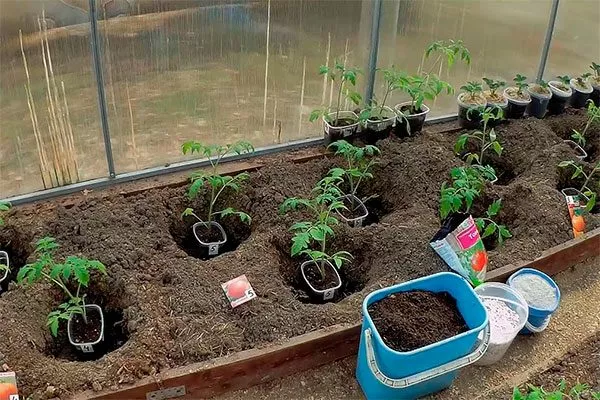
There are some rules to follow:
- Replanting should be done when the seedlings reach 25 cm in height and 5-6 adult leaves have formed.
- The greenhouse substrate is prepared in the fall, when the soil is dug and the remains of the previous harvest are removed. Avoid growing tomatoes in the same area consecutively for two years.
Be sure to renew the top layer of soil in your tomato greenhouse to prevent the spread of diseases and pests in the spring. - Before planting, amend the soil with compost, peat moss, humus, and sand. The substrate should be lightweight and provide good drainage.
When growing tomatoes outdoors, it's important to follow crop rotation rules and avoid planting them after peppers or eggplants. The best predecessors for tomatoes are onions, garlic, cabbage varieties, cucumbers, and legumes.
Care Features
The Bear's Paw tomato variety is a heat-loving crop and produces fruit at temperatures ranging from 18 to 25 degrees Celsius. This tomato is tolerant of hot climates, but watering and good greenhouse ventilation are necessary for fruiting.
Watering tomatoes
The Bear's Paw tomato variety requires a balanced approach to watering. It's important to avoid both drying out the soil and crusting it over.
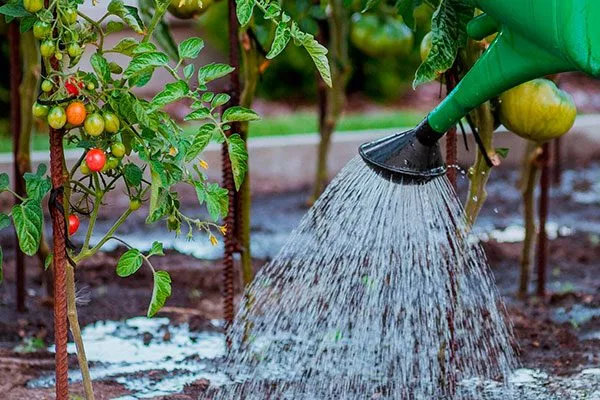
Nuances:
- It is recommended to water once a week, taking into account weather conditions;
- It is advisable to let the water used for irrigation settle and warm it up to a comfortable temperature;
- each bush requires 3-4 liters of water, and during the flowering and fruiting period this norm increases to 5-6 liters;
- moisturize no more than once a week.
During the fruiting period, the intensity of watering should be reduced to prevent cracking of the fruits.
Fertilizing plantings
Apply your first fertilizer one week after transplanting your tomatoes. It's recommended to leave two weeks between applications. What to apply:
- Choose fertilizers containing potassium and phosphorus. Add 25-30 g of superphosphate or potassium sulfate to 9-10 liters of water. Phosphorus promotes the growth and development of a healthy root system, while potassium improves the taste of the fruit.
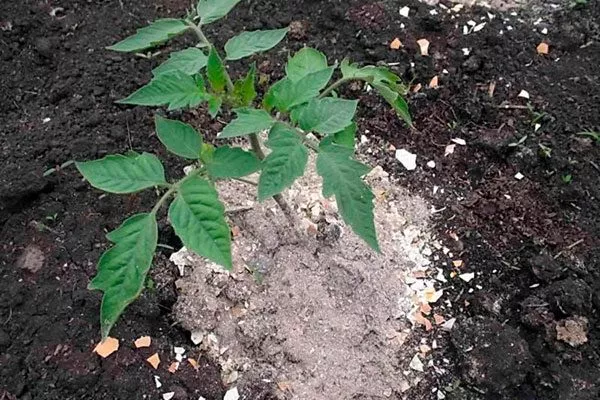
- Among folk fertilizers, ash occupies a special place; it can be mixed with soil or added to water for irrigation.
- During the budding period, boric acid is recommended to stimulate fruit formation. Dissolve one gram of this substance in a liter of water and spray.
- First feeding: a week after transplanting, use potassium-phosphorus fertilizers.
- Second feeding: 2 weeks after the first, use ash or boric acid.
- Third feeding: 2 weeks after the second, repeat the potassium-phosphorus fertilizers.
Shaping and pruning the bush
When growing the Bear's Paw tomato variety, train the bushes to form one or two main stems. Lower leaves and side shoots should be removed to prevent excessive growth. It's important to remove shoots that appear in the leaf axils.
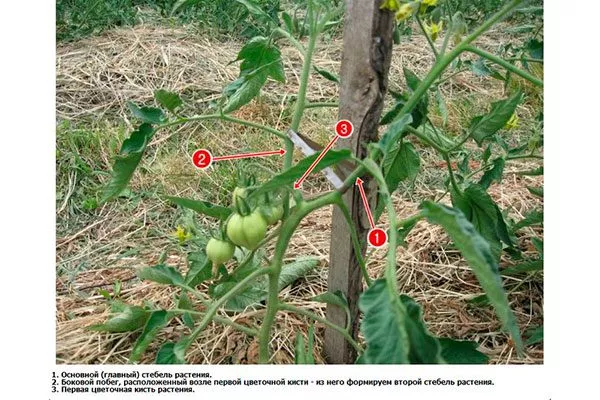
It is important to trim branches that are affected by diseases/pests or that dry out under the scorching rays of the sun.
Garter and pinching
The branches of Bear's Paw tomatoes, unable to support the weight of their own fruit, bend toward the ground, increasing the risk of disease and pest infestation and reducing the yield. To prevent this, carefully tie them to a supporting structure using pieces of fabric or special garden twine.
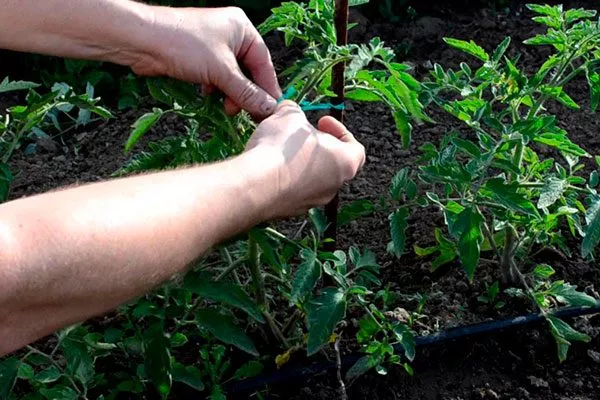
Wooden or metal poles can be used as supports. Tomatoes are secured at top height. A support system can be used, consisting of several poles with wire stretched between them, to which the plants are tied.
Toward the end of the summer season, when autumn is just around the corner, it's recommended to pinch off the top of the main stem to allow the already formed fruits to fully ripen. However, if you're growing tomatoes in a heated greenhouse, this procedure isn't necessary.
Loosening and weeding
After watering, the soil becomes compacted, preventing plant roots from receiving sufficient oxygen, which can impact the yield. To avoid this, loosen the soil the day after watering. It's important to remove weeds during this process, as they promote the spread of diseases and pests.
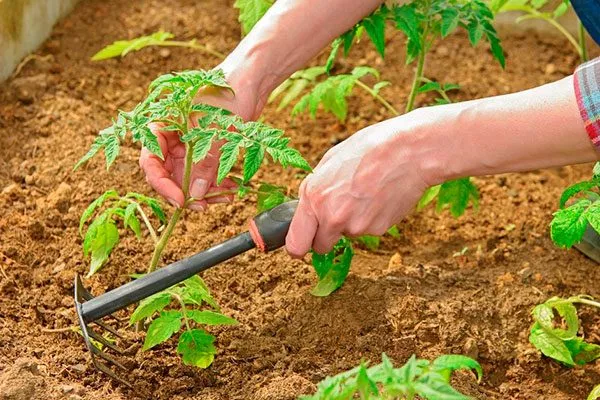
To make tomato care easier, it's recommended to cover the plantings with straw or compost to a depth of about 10 cm. Mulch will help retain moisture in the root zone, prevent compaction, and inhibit weed growth.
Pest and disease control
To prevent diseases, thoroughly treat the soil with a potassium permanganate solution before planting Bear's Paw seedlings. To protect the plants from rot, open the air intake vents in the greenhouses after watering, and place a layer of peat or straw around the roots in the soil.
To protect tomatoes from Colorado potato beetles and slugs, use an aqueous ammonia solution, and to combat aphids, spray with a soap solution. Insecticides are used to protect tomatoes from disease-carrying insects.
What to do as a preventative measure:
- disinfect seeds and soil before sowing;
- observe crop rotation rules;
- disinfect greenhouse surfaces;
- dig up the soil in the beds;
- sprinkle plants with sifted wood ash;
- spray plants with an infusion of garlic or onion peel;
- control watering, avoiding excess moisture;
- ventilate the greenhouse, maintaining optimal humidity and temperature.
Harvesting and storage of crops
Tomatoes ripen in stages throughout the season. It's best to pick the last few tomatoes before the cold weather sets in.
Large, fleshy tomatoes have a long shelf life and can withstand long-distance transportation, while green tomatoes, picked before maturity, ripen quickly at home.
For storage, they should be stored in rooms with low lighting and dryness, where the temperature does not exceed +23°C.
How to collect seeds?
To successfully collect seeds, you need to follow this algorithm:
- From the first fruiting branch, select the largest and healthiest fruits.
- Once the selected tomatoes have developed light scarring, pick them and place them in a warm, dry place out of direct sunlight. Seeds collected from tomatoes that haven't fully ripened on the vine are not suitable for growing.
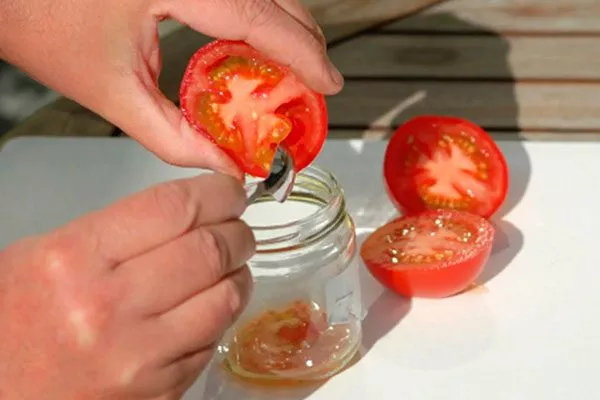
- When the tomatoes reach a bright red ripeness, cut them into pieces and scoop out the pulp and seeds.
- Transfer this mixture into a glass jar, cover with gauze and place in a warm, shaded place.
- After 2-3 days, when the seeds have sunk to the bottom, transfer them to a fine sieve and rinse with water to remove any remaining pulp.
- Spread the seeds on paper to dry in a ventilated and shaded area.
- For long-term storage, transfer the seeds to cloth bags and store them in a dry cupboard. This will ensure they remain viable for 4-5 years.
Pros and cons
Reviews
The Bear's Paw variety is popular for both commercial and personal use. Plant care includes regular watering, feeding, and maintenance. This variety is disease-resistant and tolerant of adverse growing conditions.