
Honey Spas tomatoes are characterized by their large size, meaty flesh, and excellent flavor. This variety is resistant to various weather conditions and diseases, making it an ideal choice for gardeners and farmers. Suitable for fresh salads and processing, it easily adapts to various soil types and produces a consistent harvest.
Features of the variety, description of the bush and fruits
The crop is indeterminate—unrestricted in growth. Key characteristics:
- plants - reach 1.2-1.6 m in height;
- leaves - medium-sized, densely covering the stem, green in color and with serrated edges of the leaf blades;
- shoots – flexible and not too dense, so they require pinching;
- root system – powerful: the main rhizome goes deep into the soil, and small roots are located closer to the surface;
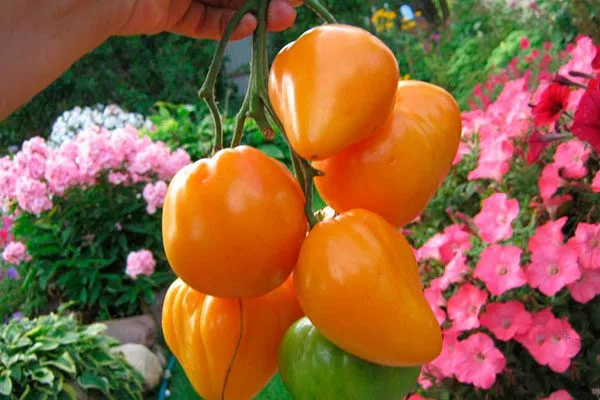
- tomatoes - large, have a rare color - from golden-amber to honey (orange);
- weight - varies from 160 to 220 g;
- configuration – unusual: they can be cone-shaped, heart-shaped or oval with an elongated nose;
- skin – thin;
- pulp – juicy, with five seed chambers containing small grains.
- ✓ Resistance to changeable weather conditions: withstands short-term temperature drops down to +10°C.
- ✓ Fruiting characteristics: the first fruits can reach a weight of up to 400 g.
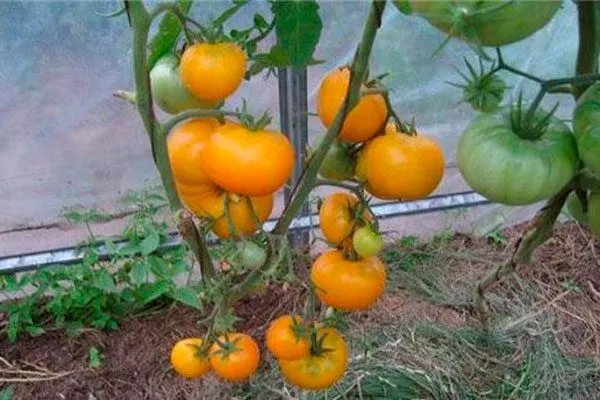
The flavor is richly sweet, with a subtle tartness. Ripe tomatoes do not crack.
Main characteristics and history
The cultivar was created by breeders V. Dederko and O. Postnikova. The Honey Spas variety first gained popularity in 2004, and it remains popular among gardeners in our country. In 2006, the variety was officially added to the State Register of Russia. Its seeds are currently produced by the renowned agricultural firm "Sibirsky Sad."
Ripening and fruiting, productivity
This is a mid-season variety—it takes 110-120 days from germination to full ripening. Tomatoes are picked slightly underripe, as overripe varieties lose their flavor. If left for about two weeks after harvest, the tomatoes will become even sweeter.
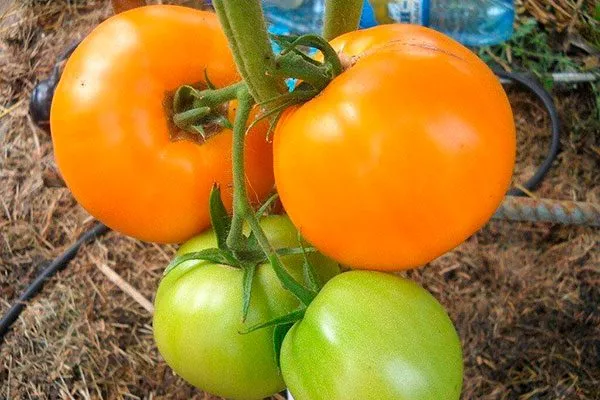
Although the harvest may be somewhat late, it ripens quickly. Even in colder regions, the fruits ripen on the bush. This variety has excellent productivity: gardeners harvest 5.6 kg per square meter in open ground, and 14 kg or more in plastic greenhouses. Harvesting continues from July to September.
How to use and collect seeds correctly?
The fruit, with its pleasant flavor, is especially delicious fresh – it's perfect for salads, sandwiches, desserts, and holiday appetizers. It's also used as a filling for baked goods, as well as in sauces and gravies for meat dishes.
Honey Spas rarely makes it into winter preserves, as it's too delicious fresh. The vegetable is used to make unusual sweet preserves—jam, marmalade, and exotic sauces. It's also popular for traditional preparations: pickled pieces, adjika, juices, purees, and tomato paste.
To obtain seed material, select the best fruits:
- in open ground - from the first brush, in a greenhouse - from the second;
- tomatoes must be fully ripe, without damage or deformation;
- The optimal time for collection is mid-August.
Step-by-step instructions:
- Cut ripe tomatoes crosswise, use a spoon to remove the seeds and pulp and place them in a glass jar, filling them with tomato juice.
- Cover the container with a lid to allow air to enter and leave for 24 hours to ferment.
- When the juice clears, the seeds settle, and a film forms on the surface, the process is complete. Drain the liquid through cheesecloth, rinse the seeds with water, pat dry with a towel, and place on a plate for final drying (approximately 7 days).
Store dried planting material in a paper envelope or cloth bag in a cool, dark place.
Resistance to diseases and pests
The crop is characterized by good immunity, but it cannot be considered completely resistant. The main threats are cutworms and whiteflies.
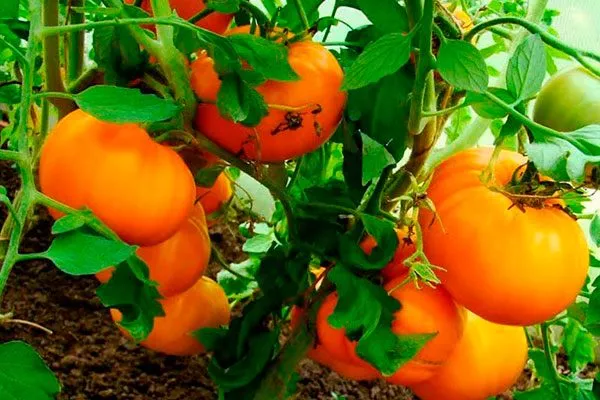
Potential problems to watch out for include copperhead, heartwood necrosis, black spot, and cercospora leaf spot. To prevent these, it's important to maintain crop rotation, ventilate greenhouses, and avoid overcrowding.
Climate requirements and growing regions
During testing, the variety demonstrated excellent results throughout Russia. It is successfully cultivated both in the southern regions and in areas with variable climates.
How to grow seedlings?
Honey Spas is a strong and robust plant. To obtain large and tasty fruits, it's important to consider certain agricultural nuances. Even small efforts can significantly improve productivity.
Seed preparation
Choose planting material only from trusted suppliers. Before planting, disinfect it with a potassium permanganate solution to eliminate germs and infections.
Be sure to harden the grains:
- Place in the freezer for 10 hours.
- Leave at room temperature for 24 hours.
- Repeat the cycle.
- ✓ Optimum soil temperature for sowing seeds: 22-25°C.
- ✓ Required seeding depth: 1.5-2 cm.
This procedure will strengthen the plants' immunity, which is especially important for growing in the central and northern regions.
Container and soil
Any container—wooden boxes, plastic containers, or special cassettes—is suitable for growing Honey Spas seedlings. The main thing is that the container is clean and dry.
Prepare the soil yourself by mixing:
- 3 parts garden soil;
- 1 part humus;
- 1 part peat;
- 1 part ash.
To improve the soil structure, add sand and sawdust to ensure lightness and air permeability. You can purchase a ready-made substrate at the store – it already contains all the necessary elements.
Disinfect your homemade potting mix to eliminate fungi and pest larvae. Use a potassium permanganate solution.
Sowing
The event doesn't require any special skills, but it's important to follow certain rules. Just follow a few simple steps:
- Prepare containers and fill them with treated soil.
- Make small holes 2 cm deep.
- Place one seed in each hole and cover with soil.
- Water generously with room temperature water.
- Place the containers in a warm and bright place.
If there is not enough natural light, install additional fluorescent lamps.
Growing and care
Focus on watering. The soil shouldn't dry out, but overwatering is also undesirable.
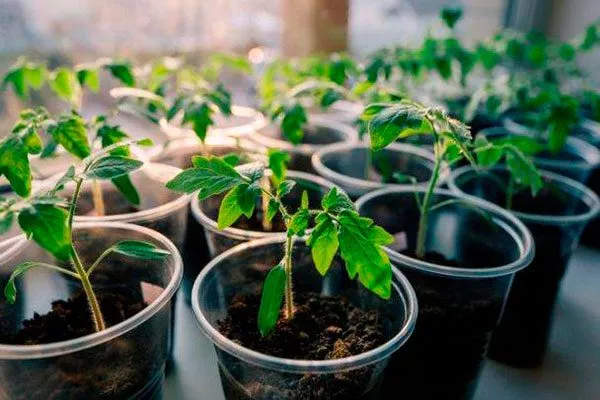
Follow these recommendations:
- Once the first sprouts appear, water the seedlings with a pipette as the soil dries. This will help direct the water directly to the roots and avoid splashing onto the foliage.
- As soon as the bushes begin to form, the first side shoots will appear. Don't wait for them to grow; remove them carefully to avoid damaging the main stem.
- The plant requires regular fertilization. Suitable fertilizers for seedlings include ammonium nitrate, ammonium sulfate, or urea. Apply fertilizer in the morning on cool days.
To protect against insects and infections, use a decoction of onion peels. Soak the onion peels in boiling water, cool, and strain. Pour the resulting mixture onto the roots of the bushes.
How to grow tomatoes further?
Honey Spas can be grown in any conditions. Gardeners plant this variety not only in open beds but also in greenhouses. The main thing is to follow all the growing recommendations when planting.
Transplantation and care
To move the plants to the site, choose a windless, cloudy day. Maintain a 10-12 cm gap between the bushes. The plants need good light to avoid diseases.
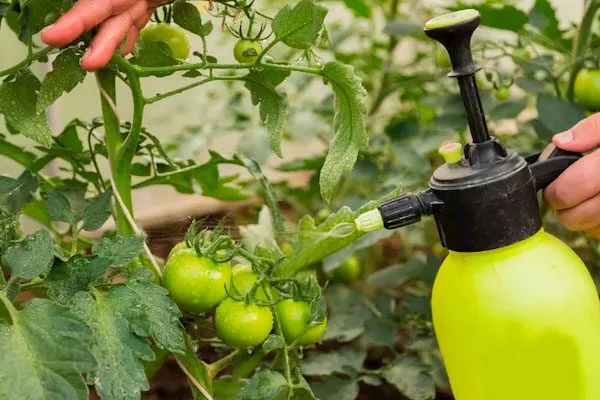
Follow standard agricultural practices:
- Pull out weeds regularly – they take nutrients from tomatoes;
- tie up the branches – they may break under the weight of the tomatoes;
- remove stepchildren every week – lateral shoots growing from the leaf axils affect the development of green mass, not fruits;
- loosen the beds – This event helps improve air permeability and saturate the soil with oxygen.
There are several fertilizing options. You can use natural remedies, for example, treating the bushes with an ash solution—it protects against diseases and promotes productivity. Organic mixtures are also effective. Nitrogen-containing fertilizers are considered beneficial.
The nuances of growing in open ground and in a greenhouse
For successful cultivation in garden beds, soil disinfection is a key step. Green manure crops—such as rye or mustard seeds—will help with this. Sowing them in early spring eliminates harmful bacteria and microbes in the soil.
Some diseases, such as root rot or late blight, can persist in the soil. To prepare the site for planting and avoid these problems, use specialized treatments such as Gamair or Alirin-B.
Pest and disease control
The Honey Spas variety is highly resistant to major tomato diseases and is rarely attacked by insects. It tolerates both humid and hot weather, but may encounter a number of problems:
- Late blight. A fungal disease that attacks the stems and threatens the entire plant. Symptoms include brown spots and a white coating on the leaves. For control, use specialized products such as Fitosporin-M, Hom, or Topaz.
- Tobacco mosaic. It appears as yellow patterns on the leaves. It may be caused by too much nitrogen in the fertilizer. If detected, remove infected bushes and treat the remaining ones with Farmayod or Gamair.
- Powdery mildew. A white coating is visible on plants. The disease can develop in early summer. Optimal conditions are hot and dry weather with fluctuating humidity and temperature. To control the disease, use Tilit, Skor, and Topaz.
- Anthracnose. Signs include dark, sunken spots on tomatoes. Effective treatments like Quadris and Strobi can help combat this problem.
- Aspermia. This disease causes flowers to fuse together, and the leaves to become small and discolored. It is transmitted by insect vectors. Spray the plants with insecticides such as Aktara, Fitoverm, or Confidor. Gardeners recommend folk remedies such as infusions of garlic, onion peels, or ash.
- Wireworm. It damages the roots and stems of tomatoes, causing them to turn yellow, dry out, and stop growing. Bazudin is an effective remedy that can kill this parasite.
- Mole cricket. It damages tomato roots both in greenhouses and in the open ground. Ammonia or garlic placed in the planting holes will help protect against the pests.
- Whitefly. Small white insects carry diseases. To combat them, use an ash infusion.
- Sprout fly. It feeds on seedlings and seeds of bushes. An infusion of tobacco leaves helps get rid of insects.
- Spider mite. A dangerous pest that damages leaves, disrupting metabolism and causing the death of bushes. The best solutions for repelling it are Aktara and Apollo.
Carefully inspect your plantings for diseases and pests to begin addressing the problem in a timely manner.
Pros and cons
Before growing this crop in your garden, carefully review its characteristics, advantages, and disadvantages. The Honey Spas variety has many advantages:
Fruits may be smaller than indicated in the specifications, especially if there is insufficient sunlight, and the plants require reliable and secure support. These are the main disadvantages that arise when cultivating the crop.
Analogues
| Name | Growth type | Fruit color | Fruit weight |
|---|---|---|---|
| Honey Savior | Indeterminate | Golden amber to honey | 160-220 g |
| Yellow giant | Indeterminate | Yellow | Up to 300 g |
| Persimmon | Determinant | Orange | Not specified |
| Yellow banana | Indeterminate | Yellow | Up to 120 g |
| Amber Cup | Indeterminate | Amber | Not specified |
There are several varieties that are similar in characteristics to Honey Spas. The following varieties are distinguished:
- Yellow giant - the fruits are sweet and aromatic, can reach 300 g, and ripen throughout the summer until frost;
- Persimmon – ideal for growing in closed ground, the bushes are low (up to 100 cm), the vegetables are universal for various processing methods;
- Banana is yellow - tomatoes are small (7 cm long, up to 120 g), plants grow up to 300 cm, bear fruit at the end of summer;
- Amber Cup - Tomatoes can be stored fresh for up to 2 months, and the bushes produce fruit well even in unfavorable weather conditions.
Reviews
Honey Spas is a tomato variety that combines excellent flavor and high disease resistance. It's a good choice for both experienced and novice gardeners. With proper care, it will provide delicious and flavorful tomatoes throughout the season, delighting with its appearance and excellent harvest results.
Thank you for the informative article! It was especially important for me to learn about care. It's good to have information about similar varieties, as it's not always possible to purchase a specific variety. But now that I know how to properly collect my own planting material, I can do it myself.