
Honey Salute tomatoes are characterized by their unique name, which they received due to their unusually sweet aroma and two-toned coloring. These fruits are often found in fruit salads and other desserts. This variety is grown both outdoors and in greenhouses – the choice of method depends on the regional climate.
Origin and growing regions
In 2015, Honey Salute was registered in the state registry, demonstrating that it embodies all the progressive achievements of 21st-century breeding. Four renowned breeders participated in its creation: Khovrina, Tereshonkova, Kostenko, and Klimenko.
Although Honey Salute is resistant to temperature fluctuations, experts recommend providing it with additional protection. In milder climates, plastic greenhouses are recommended, but on the Black Sea and Caspian coasts, open plantings are sufficient.
Honey salute can be successfully cultivated in the following places:
- Moscow region;
- Siberian region;
- the coast of the Volga, Don and their interfluve;
- Northern, Northwestern and Central parts of Russia;
- Far East;
- Ural;
- Volga-Vyatka Okrug.
This variety is in demand among gardeners worldwide, especially in Russia and the former Soviet Union. Growers are actively bringing it to market.
Description of the bush and fruits
This tomato attracts experienced vegetable growers with its unique characteristics. However, novice gardeners should choose varieties with less demanding growing conditions. This variety is considered indeterminate, so it grows continuously throughout the growing season.
Varietal characteristics and indicators:
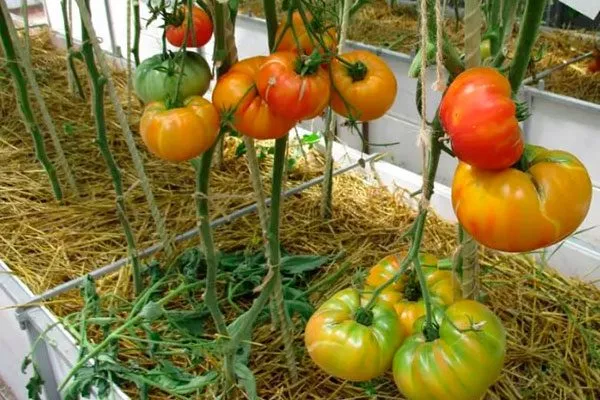
- In a greenhouse, the height reaches 180-190 cm, and in open ground – 140-150 cm. The plant’s stems are strong and thickened, form numerous side shoots and branch out extensively.
- The bushes have a moderate amount of bright green foliage. They are not pubescent and are simple.
- The inflorescence is of an intermediate type, the first of which appears between 10-12 leaves, and subsequent ones every 2-3 leaves. The fruits are formed in clusters.
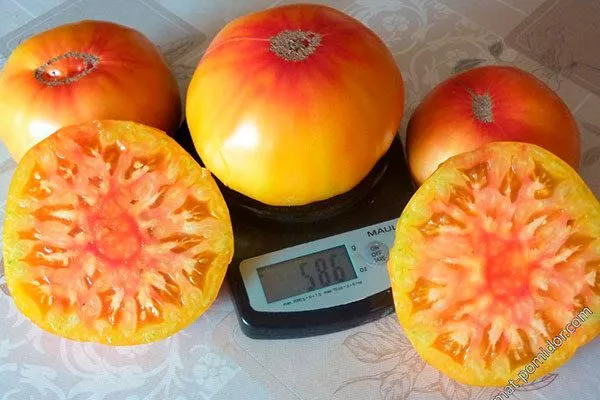
- The fruits are quite large, their average weight is 350-450 g, while individual specimens can weigh up to 900 g.
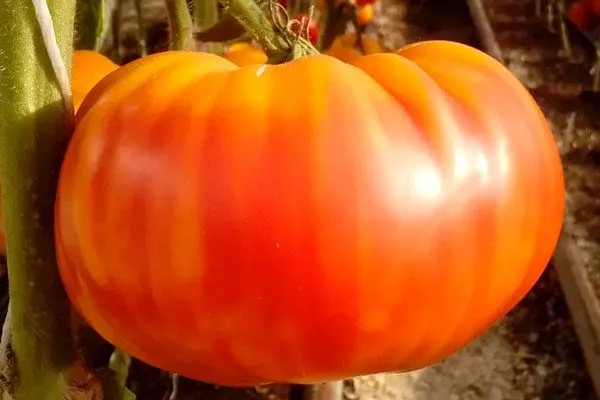
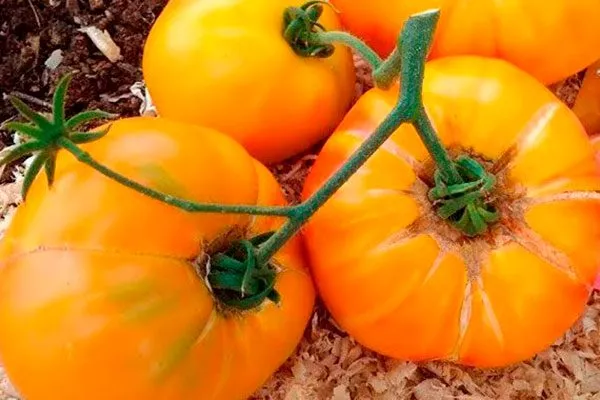
- The tomatoes are yellow with pink and red spots and stripes. The inside of the fruit is dark yellow with pink markings, without greenish or white flecks at the base.
- The tomatoes are round in shape, slightly flattened at the top and bottom, with faint ribbing at the stem.
- The taste is only sweet, with a honey aroma, and the pulp is dense and juicy.
- Each tomato contains 6 seed chambers with a small number of seeds.
Main characteristics
The Honey Salute tomato variety is perfectly suited for cultivation both in open beds and under protective film. Successful cultivation and harvest size directly depend on weather conditions and the length of warm days.
Ripening and fruiting, productivity
Honey Salute is a mid-season tomato. Keep in mind that meteorological factors can affect the standard growing plan, so it's customary to adjust for specific conditions. Therefore, it takes 115 to 150 days from the formation of the first green stems to the harvest of a fully ripened crop.
When trained into two trunks on an area of 1 square meter and under ideal conditions, you can get up to 7-9 kg of a tasty and uniquely striped harvest.
Scope of application
Honey Salute tomatoes are excellent for eating raw. However, they are not recommended for canning whole or in slices, as they are too large and have particularly thin skin. Some experienced home cooks prefer this variety for making juices and sauces.
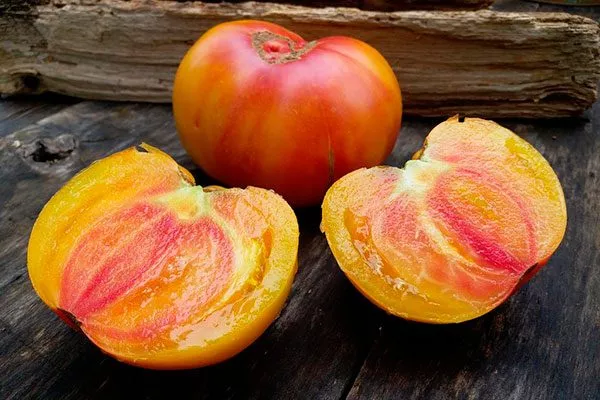
Fresh tomatoes are rich in nutrients. Yellow-red tomatoes are rich in beta-carotene, which has a positive effect on vision, promotes healthy skin, hair, and the cardiovascular system, and strengthens the body's immune system.
Growing seedlings
In March, regardless of geographic location, the seed sowing process begins. This is because in colder and northern regions of the country, it is recommended to plant this variety indoors, protected from the heat, at this time. Transplanting to a greenhouse can be done significantly earlier than to an open garden.
Working with planting material
Before starting to grow seedlings, it's important to carefully prepare the planting material. This reduces the risk of plant infection and promotes faster germination. Before purchasing seeds, it's crucial to check their expiration date. Seeds that are past their expiration date are unlikely to produce a good harvest.
To select the healthiest seeds, soak them in a salt solution for half an hour (use 1 tablespoon of regular salt per 200 ml of water). Discard any seeds that float to the surface, and rinse and use those that sink to the bottom.
Since the Honey Salute variety is susceptible to various tomato diseases, be sure to treat its seeds with a disinfectant. Some producers sell pre-treated seedlings, which is confirmed by special instructions on the packaging and a change in seed color to orange or green.
To disinfect seeds, they are soaked:
- in a light pink solution of potassium permanganate - 30 minutes;
- in soda solution - 12 hours;
- in a solution obtained from aloe juice diluted half and half with water – 12 hours.
| Method | Processing time | Efficiency |
|---|---|---|
| Potassium permanganate | 30 minutes | High |
| Soda | 12 hours | Average |
| Aloe juice | 12 hours | High |
After seed treatment, the seeds are treated with a growth stimulant. One popular product is Epin, in which the seeds are soaked for 3 to 5 hours.
Selection of soil and containers
General-purpose containers are typically used for growing seeds. Specialized wooden boxes and plastic containers are available in stores. Commonly available materials are also used for this purpose:
- disposable tableware;
- tray containers for semi-finished products;
- cut 5-6 liter bottles.
When transplanting plants into individual pots, use 400-500 ml pots. Be sure to disinfect the containers before use.
You can create your own tomato potting mix or buy a ready-made one. The soil for tomatoes should be light and rich in nutrients. To create the ideal substrate, mix various proportions of turf, peat, and compost. You can also add coconut coir or river sand.
The soil mixture is disinfected by dousing it with a solution of potassium permanganate or boiling water. Alternatively, you can warm the soil in the oven.
Sowing seeds
Fill the container with soil, leaving a 2-cm layer up to the top. Make narrow furrows 1 cm deep in the mixed soil, spaced 3 cm apart.
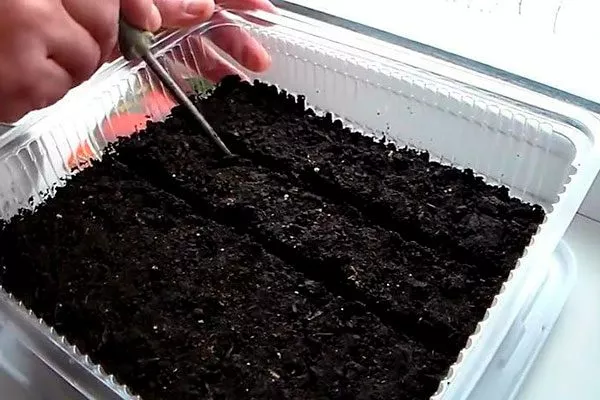
Next steps:
- Carefully distribute the seeds into each groove, spacing them 1.5 cm apart.
- Sprinkle a layer of substrate on top without compacting it.
- Spray the containers with soft, slightly warmed water.
- Cover with transparent film and place in a warm area. Seed germination can take anywhere from three to seven days, depending on the room temperature.
Peat tablets are the most effective way to grow seedlings. Before starting, soak them until they're completely swollen, then insert a seed into each one. Place all the tablets in a common container and cover them with plastic wrap.
Caring for seedlings
To ensure healthy and strong plants, it's important to carefully care for seedlings. Here are some basic guidelines to follow for those deciding to grow them themselves:
- The period before the first green shoots appear is a time when the seeds don't need direct sunlight. They are placed in a warm, dark place. Some gardeners use dark film to stimulate germination.
- As soon as the shoots emerge, the seedlings are moved to a bright location. If dark film was used previously, it is removed.
- To moisten the seeds before germination, use a spray bottle. Once the first shoots appear, switch to watering with a syringe using room-temperature water.
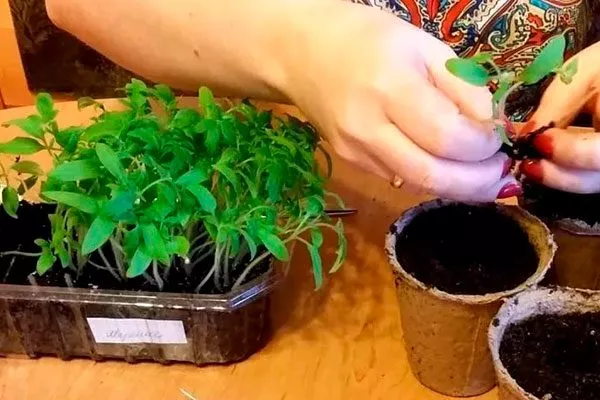
- As soon as the first true leaves form on the plants, the bushes are pricked out into separate pots, being careful not to damage the roots.
- After transplanting the tomatoes, begin watering them using a watering can, but make sure that drops do not fall on the above-ground parts of the plant, which can lead to diseases.
- During this time, the soil is fertilized three times: the first time - two weeks after transplanting, the second time - two to three weeks after the first, and the third - three days before transplanting into the greenhouse/garden.
- Two weeks before transplanting to their permanent location, the bushes begin to acclimate to outdoor conditions. To do this, they are moved to the balcony, gradually increasing the amount of time they spend outdoors.
Transplanting seedlings to a permanent location
Three days before transplanting the tomatoes to their final location, it's important to thoroughly moisten and nourish the soil. Phosphorus and potassium fertilizers are used as nutrients.
- ✓ Optimum soil temperature for planting seedlings: not lower than +15°C.
- ✓ Distance between bushes when planting: at least 40 cm to ensure sufficient space for growth.
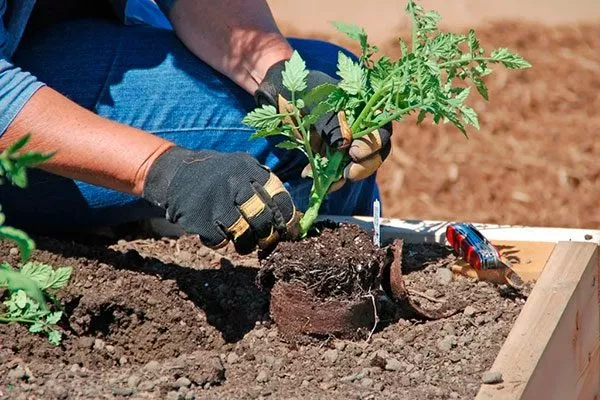
To create favorable conditions for planting tomatoes, do the following:
- In the fall, clear the future beds of any residue from previous crops and dig them over. To improve soil fertility, add cow manure or compost. If necessary, reduce soil acidity by adding dry lime.
- At the beginning of spring, the soil is dug up again and watered with a solution of copper sulfate.
- After this, level the surface and dig deep holes, which are best spaced in a staggered pattern, using a planting pattern of 40 by 70 cm. Four plants are planted per square meter.
- Tomato seedlings are carefully removed from the pots and moved into prepared holes, pouring 1 liter of water into each of them.
- Then the holes are filled with soil mixture and mulch is placed on top to prevent the plants from drying out.
Caring for Honey Salute
Plants are cared for in beds or greenhouses according to a standard scheme, but taking into account certain varietal requirements.
Watering and fertilizing
Honey Salute tomatoes require ample and regular watering. Water should be carefully applied directly to the roots, with each plant requiring approximately 2-3 liters of water.
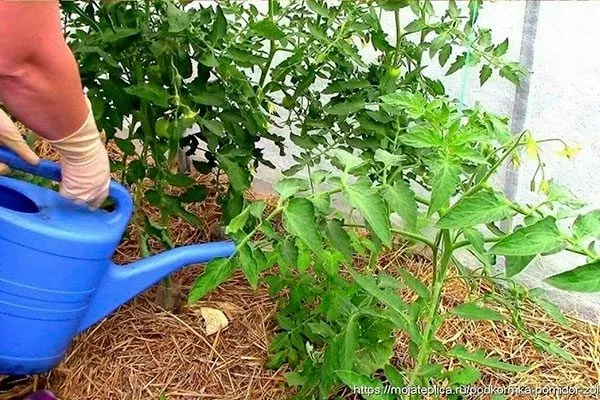
Fertilizing should be done three times during the season:
- nitrogen fertilizers - two weeks after planting seedlings;
- complex mineral preparations - after the size of the ovaries on the second brush reaches 1.5 cm;
- phosphorus-potassium compounds - after the first harvest.
It is permissible to use organic fertilizers, for example, a mixture of manure, cow dung and peat.
Pinching out and gartering, shaping
Tomato plants have the ability to produce numerous lateral shoots, so they need to be trained to have one to two main stems:
- If you choose a single-stem system, after 5-6 flower heads appear on the bush, you should trim the top and systematically remove new shoots. All branches that appear below the first flower head should be pruned.
- If the double-stemmed formation option is chosen, then one shoot is left under the first flower bunch, while the stepsons growing from below are constantly removed.
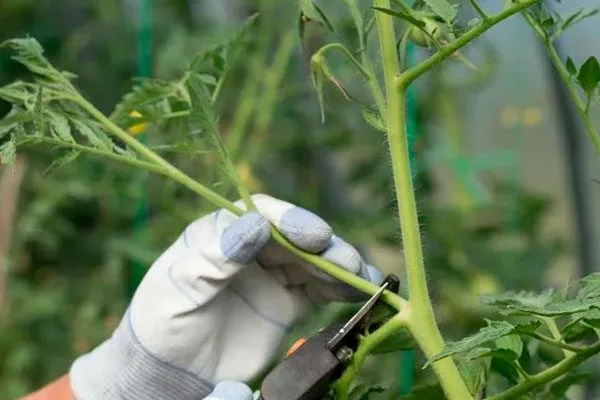
Tomato plants grow tall and produce large fruits, so they require support. Tying them to a support structure will help prevent damage and bending of the branches.
Every two weeks, the soil in the bed should be loosened, which strengthens the root system and reduces the risk of pest infestation. To stimulate the root system, the bushes should be hilled.
Common mistakes gardeners make
Providing proper care for the Honey Salute variety requires special attention. Inexperienced gardeners often make mistakes that increase the risk of plant disease and death:
- Refusal to use mulch. It helps retain moisture in the soil, slows down the appearance of weeds, protects roots from hypothermia and serves as an additional source of nutrients.
- Spraying the bushes with water. Tomatoes don't tolerate liquid spills on their leaves, which can cause them to wilt and die. Water droplets on the leaves attract pests.
- Overfertilization. Over-fertilization can cause excessive foliage growth, resulting in small tomato plants and reduced fruit production.
- Too tight fit. Plants planted too close together can create shading, which reduces productivity.
- Preservation of all flower buds. Incorrectly formed flower buds must be removed so that healthy fruits can ripen and gain weight faster.
- Incorrect neighborhood in the garden. In open ground, it is not recommended to plant tomatoes near other nightshade plants, as this increases the risk of infection. In a greenhouse, tomatoes should be kept separate from other crops.
Cultivation in closed and open ground
Honey salute is usually grown in greenhouse soil, which accelerates fruiting and reduces the risk of disease. It's important to follow these rules:
- Before repotting, treat the walls of the room with a solution of copper sulfate or potassium permanganate to prevent possible infections. It's also helpful to take preventative measures while the plants are growing.
- To keep the air fresh and clean, ventilate the room daily, leaving it closed only on rainy days.
Planting Honey Salute in open ground is only possible in southern regions. Even under favorable climate conditions, tomato yields from tomatoes grown outside a greenhouse will be lower, and the risk of disease will increase significantly.
Honey Salute tomatoes are usually picked in the second half of August, when they are ripe, recognizable by their dark yellow color and red streaks. When harvesting, it's important to preserve the stems to ensure longer shelf life. After harvesting, it's recommended to refrigerate them, where they will stay fresh for up to six weeks.
Pest and disease control
Honey salute offers insufficient protection against tomato diseases, making cultivation more challenging. It's necessary not only to strictly follow preventative measures but also to employ additional plant treatments.
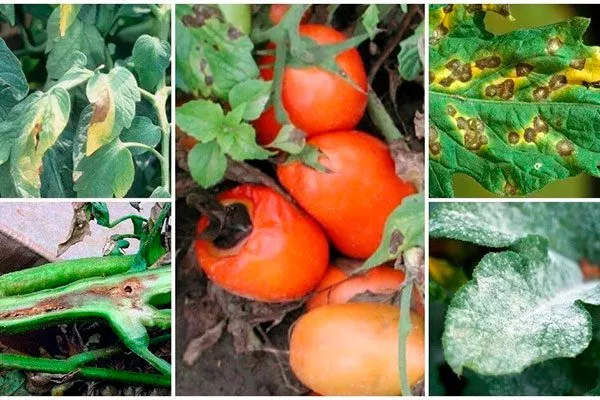
Procedures for preventing tomato diseases:
- Disinfection. Special products are used to disinfect soil mixtures, seeds, containers and garden tools.
- Clearing away last year's plants. It is important to remove plant debris from the garden bed and destroy it, as it can spread infections.
- Optimal watering. Excess or lack of water in the soil promotes the spread of diseases.
- Pest control. To protect against insects, herbal solutions, soap mixtures and colloidal sulfur salts are used, and eggshells are added under the root system.
- Preventive treatment of plants. To prevent fungal infections, tomatoes need to be treated with copper-based solutions or Bordeaux mixture three times a month.
Pros and cons
Analogues
| Name | Growth type | Fruit color | Fruit weight (g) |
|---|---|---|---|
| Orange berry | Indeterminate | Bright orange | 500 |
| Pink fig | Indeterminate | Scarlet | 400 |
| Pink honey | Indeterminate | Pink | 900-1000 |
| Sugar buffalo | Indeterminate | Red | 600-800 |
| Sugar giant | Indeterminate | Red | 700-900 |
The Honey Salute variety is considered exclusive, so there are no exact copies on the market that match all its characteristics. However, there are other varieties and hybrids that differ from the Honey Salute in fruit color and shape, but are similar in flavor:
- Orange berry - Produces large fruits, reaching up to 500 g in weight, with a bright orange color, sweet and juicy. The yield of this variety is comparable to that of the Honey Salute.
- Pink fig - Produces heart-shaped and ribbed tomatoes, weighing up to 400 g, with a scarlet hue. These tomatoes have a sweet flavor, and are characterized by their meatiness and juiciness.
- Pink honey - It is distinguished by its huge fruits, reaching 900-1000 g in weight, with a sweet taste and sugary flesh. The fruit is pink in color.
- Sugar buffalo And Sugar giant – are famous for the sweet taste of tomatoes and their large size.
Reviews
The Honey Salute tomato is a variety with vibrant yellow-red fruits, characterized not only by its attractive appearance but also by its exquisite sweet flavor, rich in vitamins. This variety is not recommended for beginners due to its increased vulnerability to disease and difficulty in care.