
The Honey tomato is a mid-season variety with giant pink fruits. Its name is well-deserved; its ripe tomatoes are delicious and beautiful, with sweet, sugary-pink flesh.
History of creation
The Medovyi variety was developed by breeders at Demetra-Sibir Agrofirm LLC (Barnaul), which develops varieties resistant to the Ural and Siberian climates. The Medovyi tomato was approved for commercial use in 2007, entered into the State Register, and is recommended for cultivation in all regions of Russia.
The Medovy variety is indeterminate, so it's grown outdoors only in southern regions. In Siberia and the Urals, it can only be grown in greenhouses, otherwise the fruits simply won't have time to ripen.
Description of the Honey variety
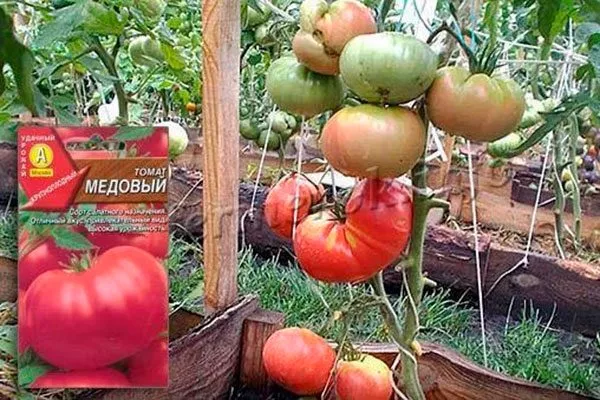
The bushes are characterized by unlimited growth and fruiting throughout the season. They can reach a height of 1.2 m and are strong and compact.
The leaves are large and dark green. Foliage coverage is moderate. The root system is robust and substantial. The inflorescences are simple, with articulated peduncles.
Brief description of fruits:
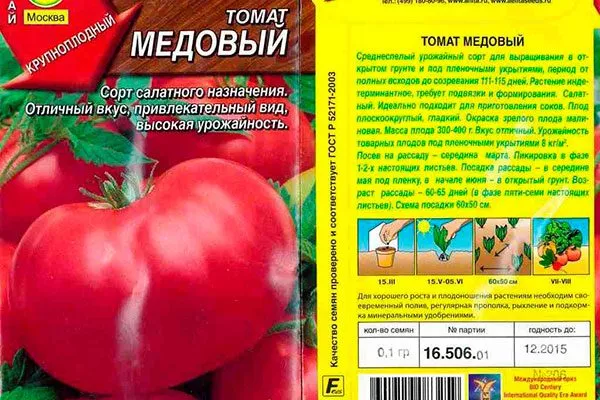
- Colour of ripe/unripe fruits: crimson/green.
- Shape: round, slightly flattened, with barely noticeable ribbing.
- Pulp: dense, multi-chambered, with a small number of seeds.
- Skin: smooth.
- Weight: 300-400 g. Individual specimens can reach 600-800 g.

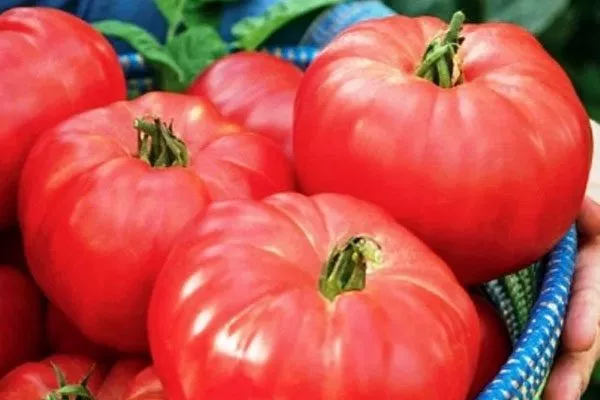
The fruits grow on clusters, with each cluster containing 4 to 6 tomatoes.
- ✓ High sensitivity to the composition of water during irrigation, soft water is preferred.
- ✓ It is necessary to remove lower leaves to improve fruit filling.
Taste and purpose of fruits
Ripe fruits have a very sweet flavor, and the flesh is soft and tender. There are no woody areas inside the fruit, regardless of growing conditions.
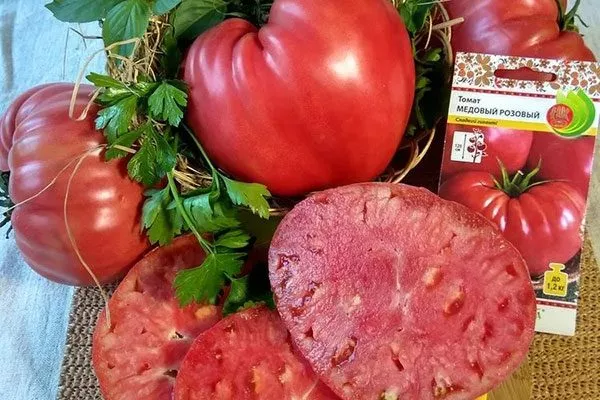
Ripe tomatoes are delicious fresh, used in summer salads, and are also used to make winter preserves, juices, and ketchups.
Characteristics of the Honey tomato
The domestic variety "Medovy" is distinguished not only by its excellent commercial and taste qualities, but also by its excellent agronomic characteristics, allowing it to be successfully grown in open ground and greenhouses.
Productivity
The Honey tomato is a high-yielding variety. 7-8 kg of fruit can be harvested per square meter. With proper cultivation practices, proper watering, and nutrient supplementation, yields can reach 15 kg/sq.m.
Ripening time
The Honey tomato is a mid-season variety. It takes approximately 110-115 days from germination to fruit ripening.
Frost and drought resistance
The Honey tomato was bred specifically for regions with challenging climates. This makes it resistant to cold snaps and temperature fluctuations.
The variety is hardy and resistant to almost all adverse growing conditions, including heat and drought.
Immunity to diseases
The Honey tomato has a fairly strong immune system and is almost immune to diseases and pests. However, due to its medium ripening time, it still poses a risk of infection and insect attacks.
In cloudy weather, it is recommended to harvest not only ripe tomatoes, but also large green fruits - this helps reduce the risk of late blight.
Pros and cons
The Honey variety has many important advantages and is popular among gardeners. But before planting this wonderful variety in your garden, it's helpful to familiarize yourself not only with its advantages but also with its disadvantages.
Landing features
The Medovy variety can be grown by sowing directly into the ground, but this method is rarely used and only in the south. In all other regions, only seedlings are grown.
- ✓ Optimum soil temperature for planting seedlings: +14 °C at a depth of 15 cm.
- ✓ The need for 24-hour lighting in the greenhouse to prevent pollen sterility.
Seed preparation
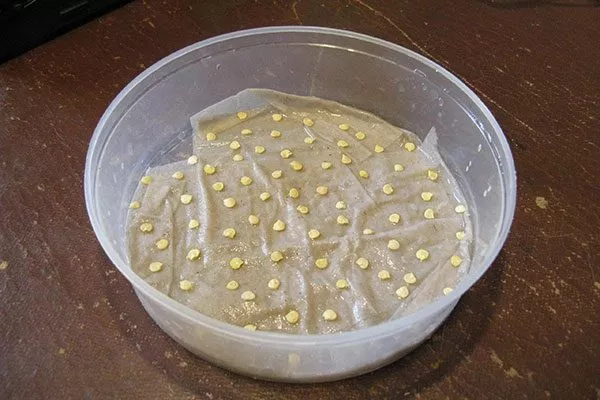
Before planting, it is recommended to disinfect seeds (if they have not been pre-treated by the manufacturer). Seeds are disinfected in a potassium permanganate solution and then hardened by briefly placing them in the freezer. It is also advisable to treat the seeds with a growth stimulant (Epin, Zircon, etc.) and germinate.
Selecting a site
Choose a sunny site for planting. Good lighting not only allows plants to grow quickly and develop properly, but also to produce high-quality fruit. The more sun a tomato plant receives, the larger, brighter, and tastier its fruits will be. Sites with stagnant water are not suitable for planting.
The Honey variety, like all tomatoes, is not recommended for planting after nightshade crops. It also shouldn't be planted near potatoes. It's also important to remember that tomatoes should be grown in the same spot for no more than three years. The best predecessors for tomatoes are parsley, zucchini, and cucumbers.
Soil preparation
The Honey tomato grows well in loose, fertile soils with a pH close to neutral. If the soil is acidic, add lime, wood ash, or dolomite flour.
In the fall, the soil is tilled, adding organic fertilizers such as manure (5 kg per square meter), granulated chicken manure (according to the instructions on the package), and ash (200 g per square meter). In the fall, experienced gardeners sow mustard in the area where tomatoes will be planted. The soil after this is soft, loose, and not sticky.
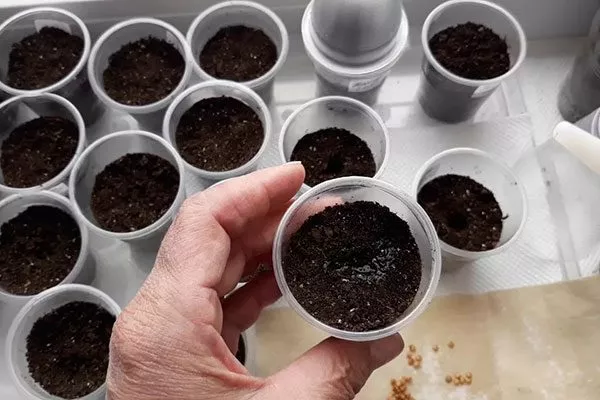
When growing seedlings, the soil is first watered with a pink solution of potassium permanganate or baked in the oven. Seedlings can be grown not only in nutrient-rich soil, but also in coconut coir, peat pellets, or pots.
Sowing seeds in the ground
Sow seeds into the ground when the soil warms to 18°C at a depth of 5 cm. Place the seeds in pre-dug furrows or holes, with 2-3 seeds per hole. Space seeds 2 cm apart. Plant at a depth of 8-10 mm.
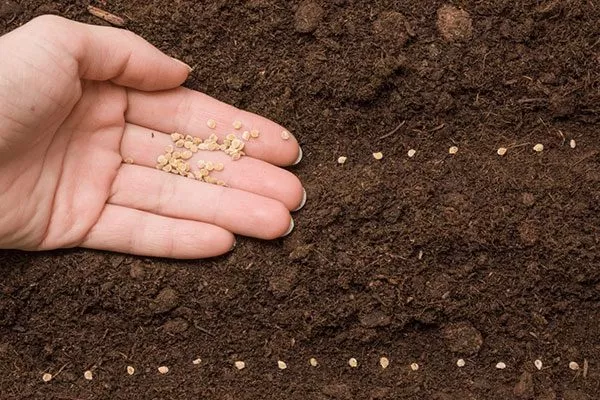
The seeds are covered with loose soil, lightly compacted, and watered with warm, settled water. The seedlings must be covered with plastic or other covering material to protect the crops from temperature fluctuations and sudden cold snaps. The covering is removed when daytime temperatures reach 18–20°C.
Transplanting
Seedlings are planted based on weather conditions. By the time of planting, the soil should warm up to at least 14°C at a depth of 15 cm.
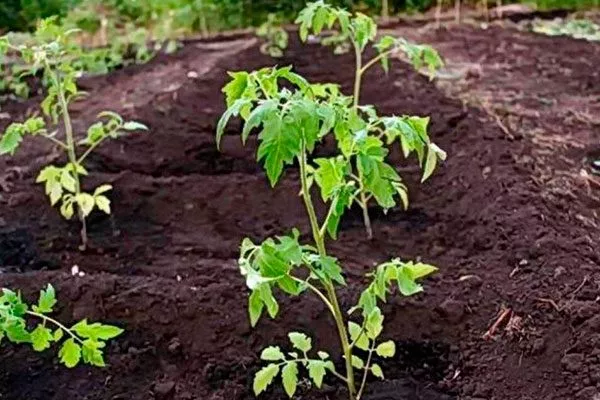
Features of planting tomato seedlings Honey:
- The holes can be dug in rows or in a staggered pattern. Three to four tomato plants are placed per square meter. The optimal planting pattern is 40 cm between plants and 60 cm between rows.
- Add 1 tablespoon of wood ash or granulated fertilizer to the bottom of the hole. Then water the holes—3-5 liters per hole. Then wait 30 minutes to an hour for the soil to settle.
- The seedling is placed in the hole along with the peat cup. If the seedlings were grown in regular cups, they are carefully removed from them, along with the soil ball. To ensure easy removal from the planting containers, the seedlings are watered beforehand.
- The roots of the seedlings are covered with soil, compacted so that there is a small depression around the stem - this will allow you to use water sparingly when watering tomatoes.
- The planted seedlings are watered again, and then not moistened for 10-12 days, unless abnormal heat occurs.
Greenhouse care
Caring for tomatoes in a greenhouse and in the open field each has its own unique characteristics. When growing tomatoes in a greenhouse, it's important to maintain a favorable environment and adhere to a proper watering and lighting schedule.
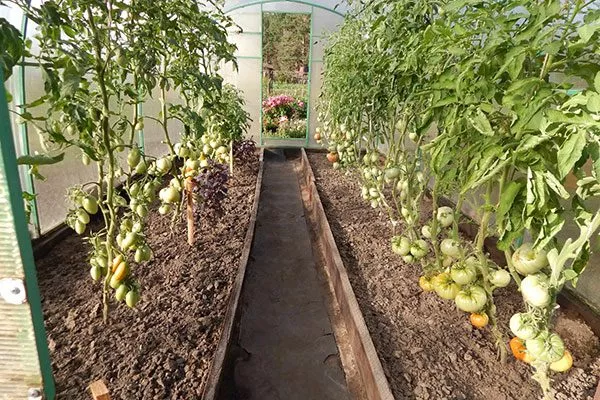
Features of greenhouse care:
- When growing tomatoes in a greenhouse, lighting should be on 24 hours a day. The air temperature should be maintained between 18°C (at night) and 22°C to 24°C (during the day). During hot weather, cross-ventilation is required to prevent the plants from overheating.
- If the temperature in the greenhouse drops to +13°C, tomatoes stop growing; if it exceeds +30°C, the plants are not pollinated, as their pollen becomes sterile.
- Watering should be sufficient but not excessive. Before fruiting begins, water the bushes so that the surface soil remains moderately moist at all times. The water should be warm, but cooler than the air in the greenhouse.
- Water the tomatoes in the greenhouse so that it has time to air out well before nightfall. Avoid allowing the air inside to become humid at night.
Outdoor care
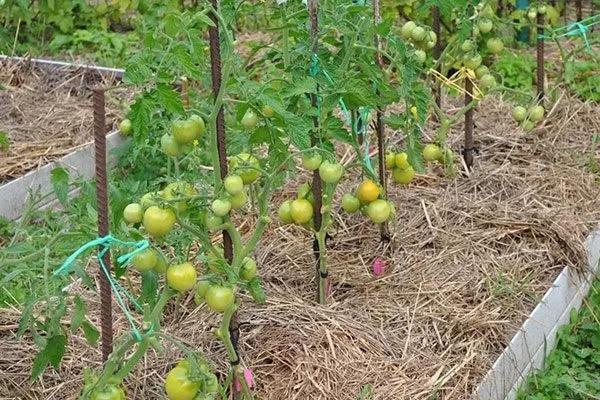
Proper and regular care is the key to a good harvest and high-quality fruit. To grow large and tasty tomatoes, you need to water and feed the plants regularly, as well as tie and shape them.
Watering mode
Water the bushes as the soil dries out. The recommended watering rate per plant is 2 liters. In open ground, water 2-3 times a week. Avoid getting moisture on the leaves and stems.
Fertilizing
The Honey tomato responds well to fertilization, which is applied 3-4 times per season. Fertilizers are generally applied to the roots; foliar feeding is not recommended, as tomato leaves should not be exposed to moisture.
Root feeding is carried out as soon as the seedlings have established themselves. Preference is given to complex soluble fertilizers with microelements. Of the latter, tomatoes need boron, magnesium, and calcium the most.
Garter and shaping
This variety requires staking and training. As the bushes grow, they are tied to supports with synthetic threads. Staking helps support the shoots, especially during the fruiting period, when large tomatoes can pull them down too much, sometimes causing them to break.
Tomato bushes are formed so that they have two stems, for which only one shoot is left under the first flower brush, all the others are torn off.
Loosening and weeding
To prevent the formation of a hard soil crust that blocks oxygen from reaching the roots, the soil around the stems is carefully loosened. Weeding is carried out simultaneously with loosening. The maximum loosening depth is 3 cm.
Mulching
Mulching protects tomato plant roots from overheating, slows water evaporation, and reduces weed growth. It also reduces the need for soil loosening and watering.
Mulching can be done both in open ground and in a greenhouse. Straw, grass, and hay can be used as mulch.
Diseases and pests
The variety is resistant to fungal diseases, but with improper care and unfavorable growing conditions, there is a risk of infection. If symptoms of disease are detected, watering should be increased and nitrogen-containing fertilizers should be reduced.
For the prevention and treatment of diseases, it is recommended to spray tomato bushes with Hom, Skor, Quadris, Bordeaux mixture and other effective fungicides.
Among insect pests, the most dangerous for the Honey tomato are melon aphids and thrips. They are especially active in the central and northern regions. They can be controlled with Zubr or insecticides. In the south, tomatoes are most often attacked by cabbage whites, sawflies, and nightshade miners.
Harvesting and storage
The fruits are harvested in August and September; the exact harvesting time depends on the region's climate. Harvesting takes place in dry, warm weather, preferably early in the morning, before the dew falls or after it has completely dried. Greenhouse tomatoes can be harvested at any time.
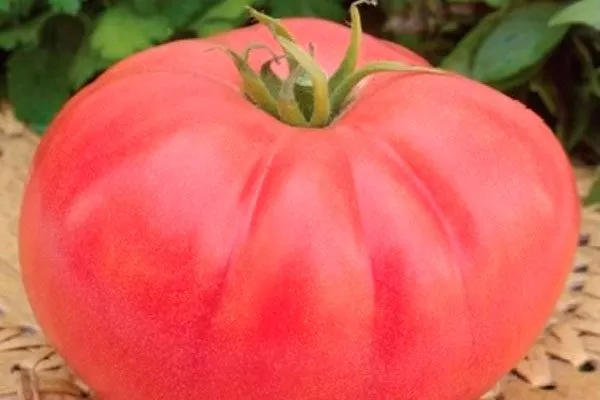
The harvested fruits are placed in wide containers, in a single layer. Only completely healthy and whole tomatoes, and those slightly underripe, are stored.
Reviews
The Honey tomato is a promising variety with large and truly delicious fruits. These tomatoes will definitely appeal to lovers of pink varieties, and most importantly, they can be grown practically anywhere in Russia.