
Honey-Pink is the name of a mid-early tomato variety bred in Siberia. It's a favorite among gardeners for its high yield and tolerance to extreme weather conditions. It's grown in greenhouses and open garden plots. The variety's signature feature is the unusual variegated coloring of its large, tasty fruits.
Growing regions and origin
The tomato variety was developed by specialists representing the Siberian Garden agricultural firm. The scientists' goal was to develop a large-fruited, productive variety well adapted to challenging weather conditions and harsh climates. Their creation turned out to be extremely hardy and cold-resistant.
The Honey-Pink tomato is primarily intended for cultivation in risky farming zones. It thrives in gardens in central Russia and in the south, where it is grown outdoors. In the north, cultivation is only possible in greenhouses.
Summer residents plant this variety in the following districts and regions:
- Northern;
- North-West;
- Central;
- Volga-Vyatka;
- Central Black Earth Region;
- North Caucasian;
- Middle Volga;
- Lower Volga;
- Ural;
- West Siberian;
- East Siberian;
- Far Eastern.
Description of the bush and fruits
The plants of this cultivar, developed by Siberian scientists, are indeterminate. Their appearance is described as follows:
- medium degree of branching;
- moderate number of shoots;
- height - 1.5 m in an open bed, up to 2 m in protected ground;
- foliage: not dense, jagged, green, standard size.
Tall tomato plants require staking, training into single or double trunks, and pinching out side shoots. These cultivation techniques are aimed at increasing their productivity. The first cluster forms at the ninth leaf.
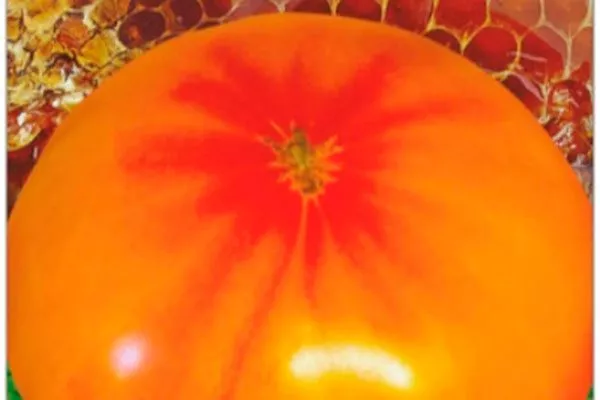
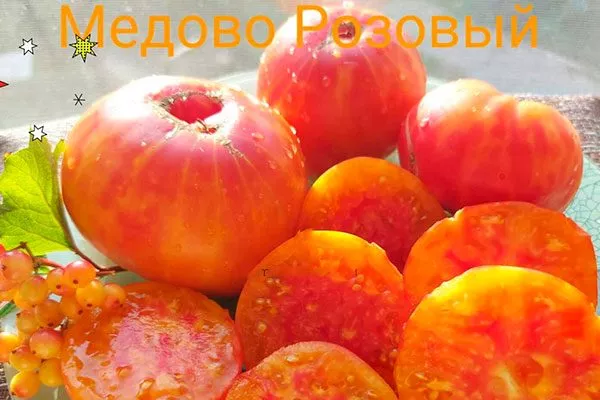
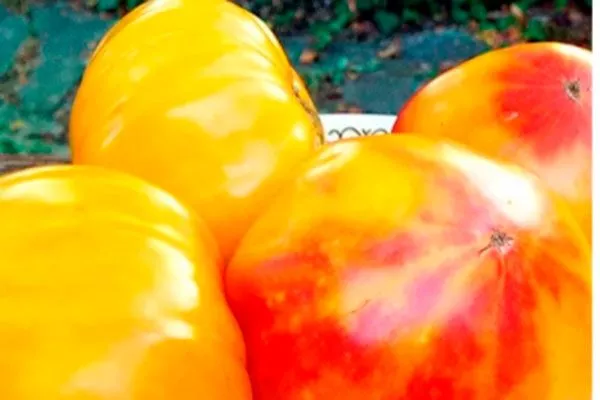
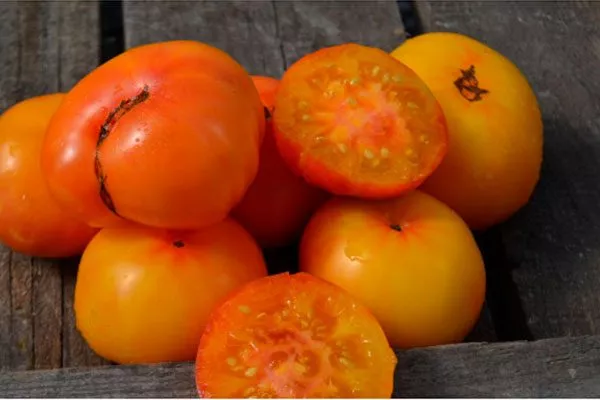
The distinguishing feature of the Siberian variety is the unique appearance of its fruits, which are bicolor. These tomatoes surprise gardeners with their variegated, two-toned coloring, visually reminiscent of exotic fruits.
They have the following characteristics:
- large sizes;
- weight - 350-500 g;
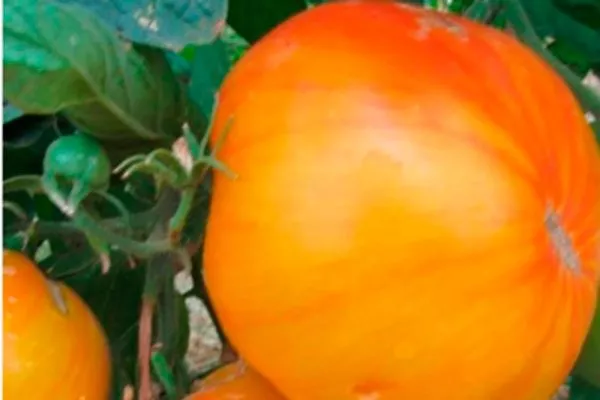
- flat-round shape;
- coloring, which is a mixture of bright yellow and pink (their crown is crowned with a small crimson cap);
- strong, glossy skin;
- dense pulp, uniformly colored pink, sugary, moderately juicy, with a delicate consistency;
- a small number of seeds.
The Honey-Pink variety's harvest is not only beautiful and unusual in appearance, but also delicious. The yellow-crimson tomatoes delight with a nectar-like sweetness, with fruity notes and virtually no acidity. Their delicate texture melts in your mouth.
As it turns out, the excellent tasting qualities of the heavyweight Siberian tomato are due to its high sugar and dry matter content, and minimal purine acids. It's also rich in vitamins, especially carotene. It's not only a delicacy but also a healthy dietary product.
Characteristics of tomato varieties
Siberian breeders have developed many excellent qualities: good yields that persist even in adverse weather, hardiness, increased cold resistance, ease of care, and strong immunity.
Ripening period, yield
Honey-Pink is a high-yielding, mid-early tomato variety and hybrid. Its key technical characteristics are as follows:
- ripening period: 108-110 days after germination;
- productivity - 5-6 kg of tomatoes from 1 bush growing in a greenhouse (3-4 kg is produced by the crop in open beds);
- the maximum yield is 16.5-17 kg per 1 sq. m of tomato planting;
- a long period of fruiting, starting in late July and continuing until frost;
- The peak harvest of vegetables is the first half of August.
Purpose and application
Siberian tomatoes are best eaten fresh (sliced, in summer salads). They are most delicious and healthy without any heat treatment. They are a true summer dessert that even the most discerning gourmets will appreciate.
Large-fruited yellow tomatoes with raspberry caps have also found their way into home cooking. Housewives use them in the following ways:
- added to side dishes, soups, pizza, casseroles and other dishes;
- stuffed;
- they make original sauces and ketchup from them;
- they are processed into juice and tomato paste;
- salted, marinated, frozen in sliced form;
- they decorate dishes with them.
Disease resistance
This variety delights gardeners with its strong immunity. Its bushes are rarely susceptible to nightshade diseases. The exceptions are infections that can damage plants due to poor care and unfavorable growing conditions:
- late blight;
- Alternaria;
- blossom-end rot.
Tips for growing the variety
Grow this bicolor variety using seedlings, then transplant them to a greenhouse or open garden bed. Sowing should be done in March or early April, 60-65 days before the planned transplant date.
Containers and soil mixture
Stock up on suitable containers for growing the Siberian variety indoors: boxes, cups with drainage holes, and peat pots. Wash reusable containers and treat the inside with a potassium permanganate solution. Be sure to disinfect them regularly to prevent seedling infection.
To grow heavyweight honey tomatoes, prepare a light and loose soil mixture with neutral acidity:
- universal, bought in a flower shop (it is rich in nutrients, disinfected, and has the correct structure);
- homemade (to obtain it, add humus to the turf soil in a 1:1 ratio, sawdust or peat for looseness, superphosphate).
Preparation and sowing
Don't neglect preparing vegetable seeds for sowing. This is especially necessary if you've harvested them yourself from your own garden.

Conduct events:
- keep them in a cool place for 3 days to harden;
- treat with a solution of potassium permanganate with a concentration of 1-2% or a fungicide to etch;
- Leave the seeds on a saucer with a damp cloth in a warm place to germinate.
After completing the preparatory work, begin sowing the Honey-Pink variety seeds to obtain seedlings. Follow these steps:
- Create a 2 cm thick drainage layer of expanded clay at the bottom of the planting container.
- Pour the substrate over the drainage, having first warmed it up to room temperature.
- Plant the seeds 1-1.5 cm deep into the soil. Maintain a 2-3 cm spacing between the seeds.
- Water the seedlings. Cover the container with plastic wrap to create a greenhouse effect. This will promote rapid and uniform germination of the seeds.
Move the seedling tray to a south-facing window in a room with a temperature of +20°C. Provide supplemental light, water moderately, and gently loosen the soil. Once the seedlings have developed two true leaves, transplant them into individual cups. Fertilize them several times with a complete fertilizer.
Transfer
Transfer tomatoes to their permanent location once the weather warms up and the soil reaches 15°C. The risk of frost should be completely gone. Transplant at the appropriate time:
- in the 3rd-4th ten days of April, in May - in a film greenhouse;
- in the last days of May, in the first half of June - in an open bed.
If you prefer to grow the Siberian variety without cover, choose a location in your garden that meets the following requirements:
- abundantly illuminated by the sun;
- windless;
- protected from drafts;
- not flooded by groundwater;
- with loose and fertile soil, characterized by acidity from 6 to 7;
- which served last year as a bed for garlic, cucumbers, carrots, onions, and legumes.
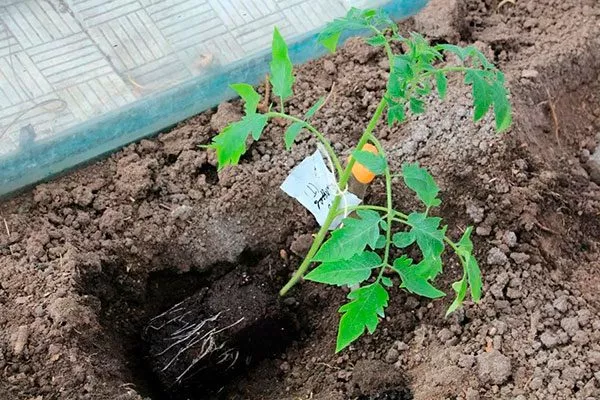
Transplant the Honey Pink tomato seedlings into a prepared bed, strictly following the step-by-step instructions:
- Carefully remove the plants from the cups along with the root ball.
- Place the seedling in the central part of the hole, having first added organic matter (humus, wood ash) to it.
- Cover it with soil. There's no need to bury the plant's root collar.
- Generously water the tomatoes with settled warm water.
- Install a support near each seedling bush.
An important point when planting is to adhere to the recommended planting density. For heavyweight honey tomatoes, a 40x50 cm pattern is suitable. Grow 3-4 plants per square meter of plot.
Care instructions
To ensure your Honey Pink tomato planting will reward you with long-lasting, abundant fruiting, robust health, and a high-quality harvest, follow the standard agricultural practices for tall varieties:
- WateringIndeterminate bicolor tomato plants require moderate watering, 1-2 times every 7 days. Soak the soil to a depth of 3-5 cm. Avoid waterlogging the bed.
Use settled, warm water to moisten the soil beneath the plant. Apply it at the roots. Avoid splashing the leaves and stems. When growing vegetables in an open bed, adjust the watering schedule based on the weather and precipitation.

- LooseningBicolor tomatoes benefit from surface loosening of the soil. Work it to a depth of 5 cm, no more. Perform this procedure the day after watering the plants or after rain.
Loosen the spaces between rows at least once every 10-12 days. This technique improves the soil's air and moisture permeability. - WeedingRemove weeds from your garden bed as they appear. They rob vegetable plants of nutrients, preventing them from developing properly. Furthermore, weeds harbor pathogenic microflora and insect pests.
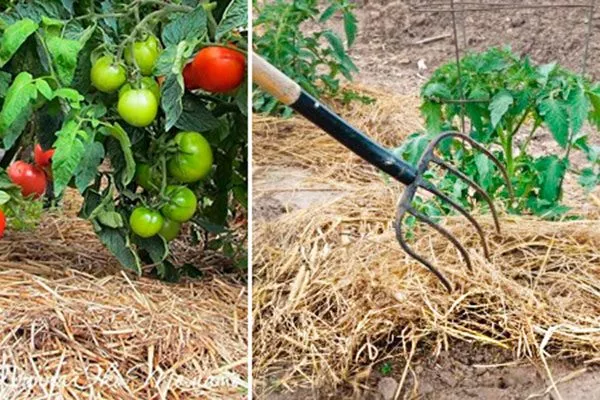
- MulchingCover the soil under tomato plants with organic materials to retain moisture and prevent weeds from growing.
- Top dressingApply fertilizer to increase the yield of the Honey-Pink tomato variety and the quality of the tomatoes. Use organic fertilizers and mineral complexes.
Water the tomatoes for the first time with a mullein solution 7-10 days after transplanting them to the garden. During flowering, apply superphosphate in dry or liquid form. When the plants begin to set fruit, boost their strength with potassium humate. They also respond well to foliar feeding with boric acid dissolved in water. - Formation and tying to supportsTrain indeterminate varieties with 1-2 trunks. It's preferable to leave one main stem for maximum productivity. Remove all side shoots and trim off lower leaves.
When growing bicolor tomatoes indoors, secure their shoots to a trellis; in open ground, tie them to stakes. Use special supports for the clusters during fruiting season.

Treatment against diseases and pests
Despite their strong immunity, the bushes require regular treatment against diseases (late blight, early blight) and harmful insects. To prevent plant diseases, use Ordan prophylactically. Spray them at the following times:
- Apply the medicine for the first time after the seedling bushes have 4-6 true leaves;
- then repeat the procedure every 2-3 weeks;
- The last time you should do it is no later than 20 days before the start of harvesting.
Bicolor tomatoes are also susceptible to blossom-end rot. Treatments such as Tattu, Ridomil Gold, Aliette, and Infinito can help prevent this problem.

When cultivating large-fruited varieties of vegetable crops in unfavorable conditions, there is an increased risk of attacks by harmful insects:
- aphids;
- winter moth;
- Colorado potato beetle.
You can combat tomato pests using commercial insecticides like Confidor and Fitoverm. Hand-pick the pests if you spot Colorado potato beetle larvae on the foliage. You can also use folk remedies: soapy water, spices, and herbal infusions (wormwood, tansy).
Pros and cons
Domestic gardeners consider the Honey-Pink variety unique and promising. It possesses numerous advantages that make it competitive and attractive to them:
Reviews
Honey-Pink is a miracle of domestic breeding, developed by the staff of the Siberian Garden agricultural firm. It boasts a unique fruit appearance and a vibrant, fruity-sweet flavor, good yields, cold resistance, and strong immunity. It's an excellent choice for those growing tomatoes specifically for fresh consumption, canning, and garnishing.