
The Mazarini tomato is an ideal choice for those who want a bountiful harvest of high-quality, delicious tomatoes with minimal effort. Although this variety requires some care and attention, the results are worth the time and effort. Good productivity, excellent flavor, disease resistance, and attractive appearance make it a popular choice.
History of the variety's appearance
It was developed in the Russian Federation by breeders from the Aelita agricultural firm: N. V. Nastenko, M. N. Gulkin, and V. G. Kachainik. In 2013, the hybrid was added to the State Register and received permission for mass cultivation throughout Russia.
Description and characteristics of the Mazarini tomato
This variety is an indeterminate plant, characterized by unlimited stem growth. In southern regions, it is successfully grown outdoors, but in areas with unstable climates and extreme temperature fluctuations, it thrives best in greenhouses, where it achieves maximum productivity.
Botanical portrait of a bush
The plant is large and medium-sized, reaching a height of 110-130 cm in open beds and 180-200 cm in greenhouses. It has moderate foliage. The emerald-green leaves are medium-sized, with a characteristic potato-like shape and serrated edges.
The bright yellow flowers are collected in simple racemes. The first raceme appears above the sixth leaf, and subsequent racemes form every one or two leaves. Typically, about six racemes form on a single stem, each raceme bearing five to six fruits.
Main qualities of fruits
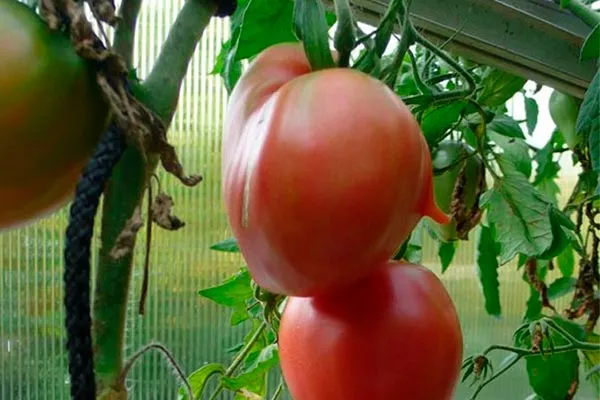
The crop is characterized by large tomatoes, especially on the lower clusters, where their weight reaches 600-700 g. On the upper clusters, the vegetables are usually half the size.
The main features of tomatoes:
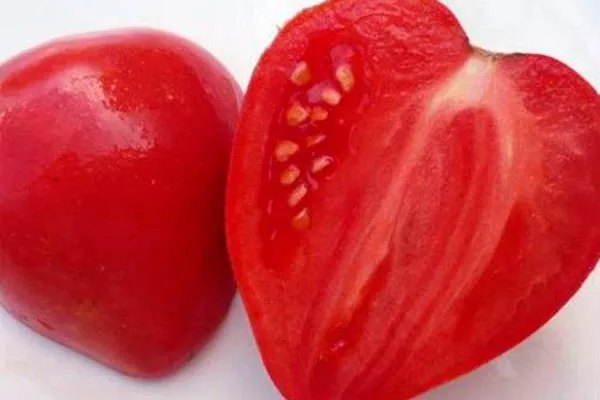
- original shape, reminiscent of a strawberry with a pointed tip;
- fleshy pulp with excellent taste, ideal for salads;
- dense skin that protects against cracking;
- good keeping quality and ability to ripen in the light during storage.
The fruits combine well with other products, which makes them versatile for preparing a variety of dishes.
Crop yield indicators
At least 13.5 kg of tomatoes are harvested per square meter of garden, with the maximum reported yield reaching 14 kg. However, such results are only possible if all agricultural practices are followed.
Use of the harvest
Tomatoes are eaten fresh in salads and used to make tomato paste, juice, ketchup, and condiments. Smaller tomatoes or larger, diced tomatoes are suitable for canning.
Taste qualities of fruits
The vegetables have a sweet, harmonious taste, completely devoid of sour undertones.
Soil requirements for planting
The crop does not have high requirements for soil composition, but to achieve good yields, it requires well-warmed, loose soil with neutral acidity, enriched with nutrients.
To improve soil quality, add humus, chicken manure, straw, and compost to the area in the fall, then dig it in thoroughly. If the soil is highly acidic, apply lime.
Required climatic conditions and regions
Warm climates, such as the North Caucasus and Krasnodar Krai, are best suited for growing tomatoes. In these areas, plant them outdoors in sunny, draft-free areas. In cooler climates, grow tomatoes in greenhouses.
Ripening time
Mazarini is an early variety, requiring 95-105 days to fully ripen. This period begins with the emergence of the first green shoots. The fruits are harvested as early as July and August, making this variety easy to grow and maintain.
Planting Mazarini tomato
To obtain a good harvest, it's important to consider several cultivation considerations. Before planting, the seedlings undergo preliminary treatment, after which they are grown in accordance with basic agricultural practices.
Timing and preparation of seeds
Before sowing, treat the seeds in a potassium permanganate solution to disinfect and improve their quality. Follow the instructions:
- To prepare the solution, dissolve 1 g of potassium permanganate in a glass of warm water.
- Wrap the seeds in a cloth and soak them in the solution for 15-20 minutes.
- Rinse thoroughly with clean water.
- To stimulate active growth, soak the seeds for 24 hours in a solution consisting of 1 liter of water and 10 g of nitrophoska. Maintain the water temperature at 30°C for 1-2 days to encourage germination.
This treatment helps prevent the development of viral diseases and saturates the seeds with essential nutrients.
Sowing for seedlings
The soil for planting should be nutritious and neutral in pH. Mix the soil with peat or humus, adding potassium fertilizer and superphosphate.

To plant Mazarini tomato seedlings at the end of February, follow these steps:
- Prepare a plastic container or wooden box by filling it with pre-prepared soil mixture.
- Make small holes 1 cm deep, keeping the distance between the holes at least 1 cm.
- Place the seeds in the holes, cover them with soil and water.
- Cover the container with glass or film and place it in a warm (23-24°C) and bright place.
- After 7-10 days, when the first sprouts appear, move them to a cooler, but brighter location. Remove the cover for 2 hours a day and then cover again.
After 2 months, when the sprouts grow and have 3-4 leaves, they will be ready for transplanting into open soil.
Growing Mazarini tomato seedlings
The optimal temperature for seedling growth is 22-27°C. Once the first shoots emerge, remove the plastic wrap and provide the plants with good light. In cloudy weather, use additional sources of daylight. Water the roots only when the soil is dry.
Picking
Breeders recommend pricking out the crop when the plants develop two leaves. This promotes the development of a fibrous and branched root system. The day before, spray the plants with immune boosters such as Epin Extra or Zircon to help them better withstand microtrauma.
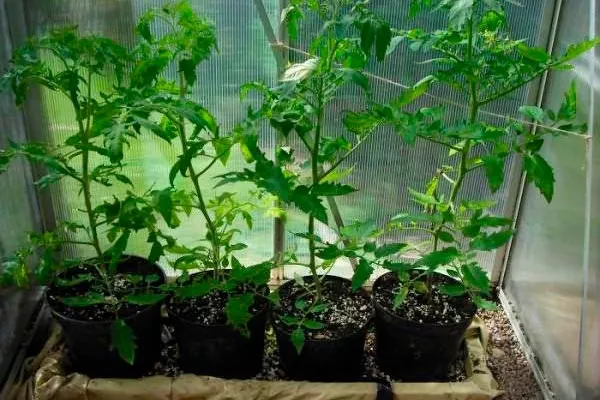
The growing season for this hybrid's seedlings is short, so additional fertilizing is usually not required. If the seedlings become excessively elongated, use the growth-control product Atlete, applying it three times according to the instructions.
Transplanting to a permanent location in the garden and greenhouse
Once night frosts have ended and the soil has warmed to 16-18°C, you can plant the seedlings outdoors, usually in May-June, depending on the region. Before planting, loosen the soil thoroughly and prepare the holes, adding 20 g of a mixture of potassium and phosphorus fertilizer to each.
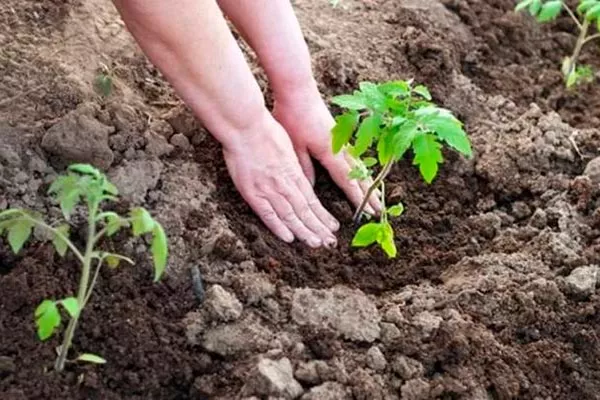
- ✓ Optimum soil temperature for planting: +16-18°C.
- ✓ Distance between bushes: at least 50 cm to ensure sufficient space for growth.
Fertilize monthly from now on, but avoid nitrogen fertilizers during the fruit formation period. Instead, apply wood ash to the tomatoes.
The optimal planting pattern for the Mazarini variety is three plants per square meter, as too dense plantings can negatively impact yield. Water the seedlings for the first time after planting after 1.5 weeks, then water as the soil dries out.
Caring for Mazarini tomatoes
Proper and regular care of the crop is the key to a bountiful harvest. To ensure vigorous growth and fruiting, simple agricultural practices are essential.
Watering and fertilizing
Water the bushes with settled tap water, avoiding overwatering, especially during the active growth phase. After watering, loosen the soil under the plants every 24 hours to allow the roots to get aerated air. Remove any diseased or wilted leaves immediately.
Each bush requires approximately 2 liters of water. Watering frequency is no more than 1-2 times per week (in hot and dry seasons, the frequency may increase). The best time to water is morning or evening.
Fertilize tomatoes 3-4 times throughout the season with mineral and organic fertilizers. Apply the first fertilizer after flowering begins, continuing until fruit formation.
Plant formation
The procedure involves pruning out any growing side shoots. Form the bushes into 1-2 stems, removing side shoots and lower leaves. To encourage the development of a second stem, leave one additional shoot at the base of the plant.
Diseases and pests of the Mazarini tomato variety
The Mazarini tomato can be susceptible to various diseases and insects, especially if cultivation techniques are not followed, which weakens the plants and reduces their immunity.
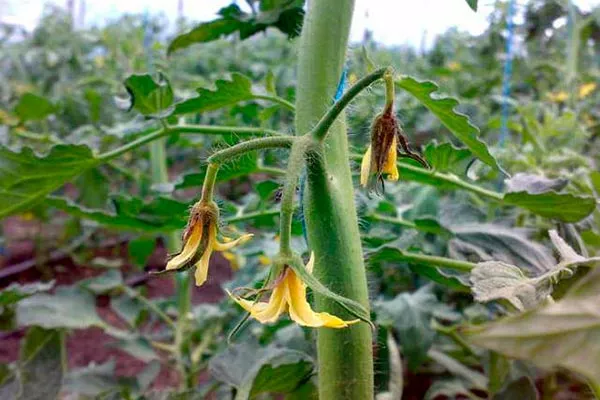
The most common diseases include:
- Late blight: appears as dark spots on leaves and fruits.
- Gray mold: accompanied by watery mold on the stems.
- Tobacco mosaic: causes curling of leaves followed by their drying out.
- Blackleg: constriction of seedlings in the area of the root collar.
To prevent diseases, use the following measures:
- spray with antifungal agents;
- use folk remedies for preventive treatments;
- Plant the following plants between the rows of tomatoes: mint, garlic and onions.
Tomatoes can also be affected by pests such as aphids, spider mites, slugs, and thrips. The following products are effective for controlling aphids and thrips:
- Anarin;
- Biotlin;
- Spark.
To combat spider mites, use Apollo, Akarin, Actellik, Iskra-BIO, and collect slugs by hand or set traps.
Harvesting and storage
Harvest Mazarini tomatoes as they ripen, as they store well and are easy to transport. Before frost, remove all the fruits from the bushes and place them in a cool, dark place to ripen, placing several ripe tomatoes nearby.
In these conditions, they can be stored for 1.5-2 months. Check them periodically and remove any rotten or damaged ones.
Advantages and disadvantages of the variety
This variety is easy to care for and requires little effort, making it accessible even for novice gardeners. It has many advantages:
Among the negative qualities, gardeners note the need for tying and the fact that to obtain abundant harvests, it is necessary to regularly shape the plant, removing excess shoots during the season.
Reviews from gardeners
The Mazarini tomato is a hybrid that has gained popularity thanks to its excellent characteristics. Featuring high-quality fruit, disease resistance, and excellent adaptability to a variety of growing conditions, this variety is an excellent choice for both greenhouse and open-field cultivation. Generous harvests are possible with proper care.