
The Marmande tomato is an early-ripening variety. Its bright red tomatoes have excellent flavor and are large in size, making them popular for fresh salads and preserves. The plants require shaping and pinching, but they provide a stable harvest even in challenging conditions. Even beginners can grow this easy-to-grow variety.
Features of the variety
Marmande is a large-fruited (beef-class), semi-determinate, and high-yielding tomato. The massive fruits have pronounced ribbing, a fleshy texture, and a sweet-and-tart flavor. It is grown both in open ground and in greenhouses. The crop stores well and is suitable for transportation.
Description of the bush
The plant is semi-determinate: its central shoots are capable of continuous growth, but typically reach 1.4-1.6 m and then stop developing. Pinching the top allows you to control the height of the bush and stimulate the growth of lateral branches.
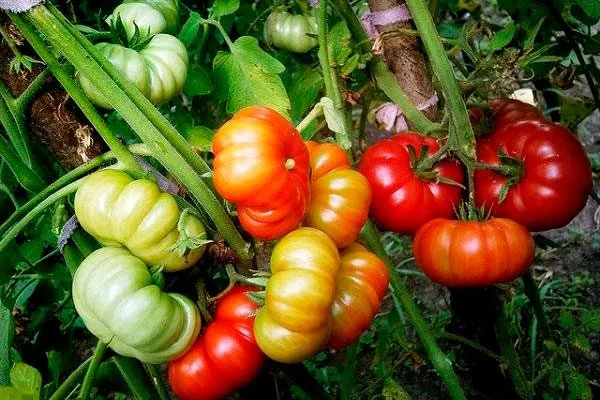
Marmande is not a standard variety and has the following characteristics:
- moderate foliage;
- slightly elongated shape and medium size leaves, painted in a dark green shade;
- small internodes;
- simple inflorescences;
- the first fruit cluster is formed above the 7-9th leaf, the subsequent ones – after 2-3 leaves;
- high fruit setting capacity;
- 4–5 tomatoes are formed in a brush.
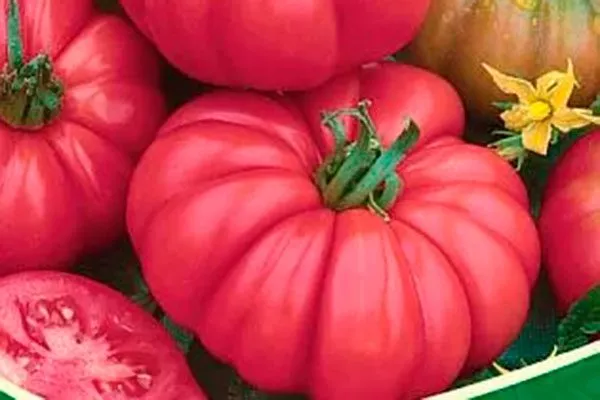
Description of fruits
The tomatoes are large, with distinctive ribbing. Their flavor combines sweetness with a hint of tartness. They withstand long-distance transport well without losing their marketable appearance.
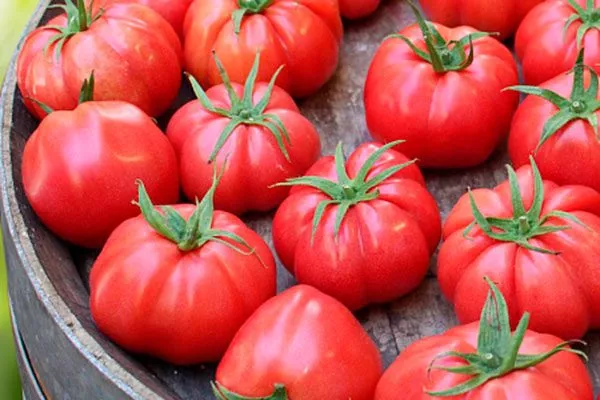
Other distinctive qualities:
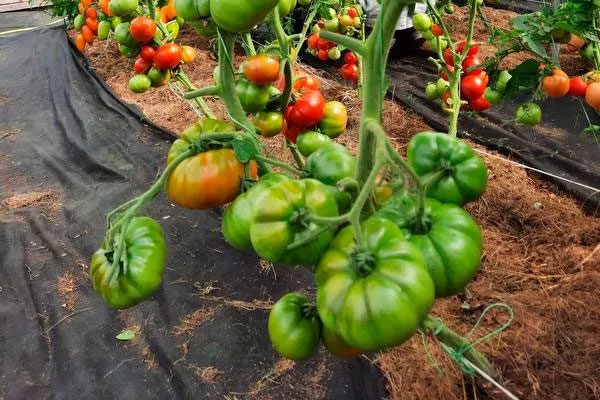
- The weight of the vegetables varies from 150 to 250 g. They have a flat-round, slightly flattened shape, and at the base of the stalk there is a pronounced wavy ribbing.
- Tomatoes ripen gradually: they initially remain green, then turn red. This can sometimes create problems: the bottom half may be ripe, but the top is still greenish.
- The pulp is sugary and fleshy, with 4-5 seed chambers formed inside.
The glossy skin is quite durable, but with sudden changes in weather conditions, for example, when drought turns to rain, cracks may appear on the fruit.
Main characteristics
Among the many tomato varieties, there are some truly national heirlooms. France is proud of the tomatoes from the city of Marmande, whose journey began thanks to an unexpected turn of events – an epidemic that devastated European vineyards.
History and regions of cultivation
The popular variety originates from the sub-prefecture of the same name and the natural region of Le Marmande in Aquitaine, France. The region enjoys an Atlantic climate with abundant rainfall, sunny days, and mild winters.
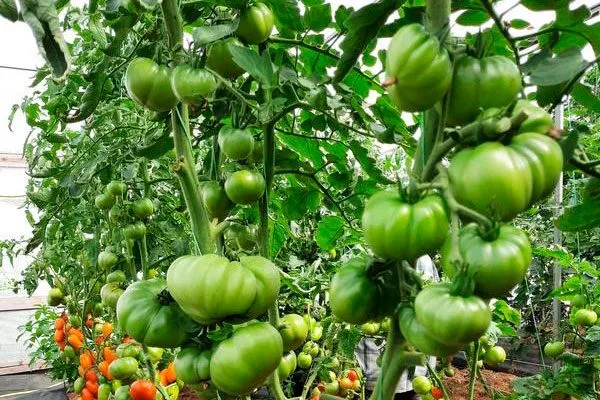
Interesting facts:
- Historically, this area was known for its extensive vineyards, but in the second half of the 19th century, a phylloxera epidemic (a pest imported from the Americas) threatened the wine industry. Seeking alternative crops, local farmers turned to tomatoes, with Marmande becoming one of the key varieties.
- Developed by the French company Vilmorin Seed, the oldest breeding center, it has been actively distributed throughout Europe since 1897: products were shipped to Paris, and England became one of the largest markets. Today, the crop is in demand in many countries around the world.
- Although the variety is not registered in the State Register of Breeding Achievements of the Russian Federation, it has long been known to domestic vegetable growers.
- The seeds are freely available and offered by European suppliers - Aviflora (Holland), Verve (England), Suvipiha (Finland), as well as Spanish, German and Russian companies, including Gardens of Russia.
The Marmande tomato is successfully grown in various parts of our country. Gardeners from:
- Kaliningrad region;
- Moscow region;
- Urals;
- Kuban;
- Volga region.
In warm southern regions, the variety thrives in open ground, while in more northern regions it shows maximum results under film covers and in greenhouses.
Ripening and fruiting, productivity
This variety is distinguished by its early ripening tomatoes, reaching technical maturity 90-95 days after germination. The tomatoes can be harvested immediately and left to ripen in a dark place.
The main harvest occurs in July, and each bush produces at least 40 tomatoes per season. Even with minimal care, a single plant can yield up to 4 kg.
The yield depends on growing conditions:
- in the greenhouse – 9-12 kg per 1 sq. m;
- in open ground – 7-9 kg per 1 sq. m.
Marmande is characterized by compact bushes, so plant no more than four seedlings per square meter. Maximum productivity is achieved when grown in protected soil.
How to use?
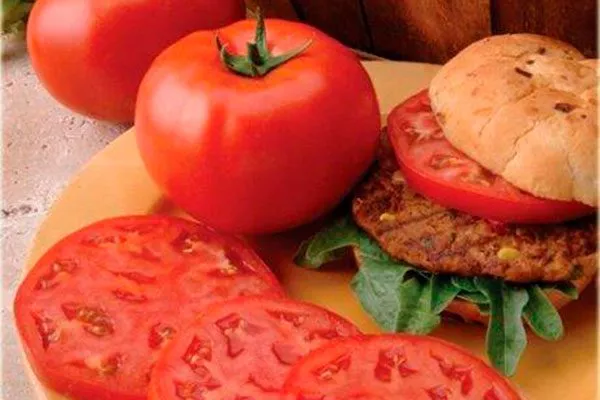
Tomatoes are versatile in cooking. They're perfect for fresh salads, sandwiches, vegetable platters, and cold appetizers. The fruits are used in a variety of dishes and preserves:
- soups;
- sauces;
- lecho;
- adjika;
- preservation (salting and pickling);
- paste.
Resistance to diseases and pests
Extensive selection has resulted in Marmande with strong immunity. The crop is rarely affected by the following diseases:
- tobacco mosaic virus;
- spotted wilt (bronzing of leaves);
- fusarium;
- Verticillium wilt.
Gardeners note that occasionally, bushes may be attacked by root-knot nematodes. However, other insects can reduce yields, so it's recommended to treat the plants with fungicides before transplanting.
How to grow seedlings?
Marmande tomato seedlings are grown indoors for two months. Transplanting to the garden or greenhouse occurs when the soil warms to 20°C, usually in late May or early June. Therefore, it is recommended to plan sowing the seeds for late March or early April.
Seed preparation
Proper preparation of planting material is essential to ensure strong, high-quality seedlings. Preliminary steps help disinfect the seedlings and accelerate germination.
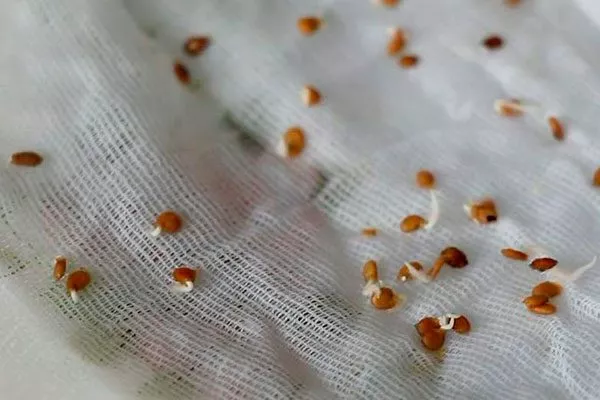
Experienced gardeners recommend the following steps:
- Selection. Select high-quality seeds: place them in a salt solution (20 g of salt per 1 liter of water). Seeds that float to the surface are not suitable for planting.
- Disinfection. To prevent diseases, soak the grains in a solution of potassium permanganate (1 g per 100 ml of water) for 20-30 minutes, then rinse thoroughly.
- Hardening. To increase plant resistance to adverse conditions, harden the seeds: place them in the refrigerator for 2-3 days, then return them to a warm place.
These techniques will help you carefully prepare the seeds for sowing to obtain high-quality and strong seedlings.
Container and soil
Use a variety of containers for growing seedlings, such as plastic and wooden boxes, cups, and peat pots. They should have drainage holes. The containers should be at least 10 cm deep to allow the plant roots to develop properly.
You can buy soil or substrate in a store or prepare it yourself by mixing:
- 5 kg of peat;
- 3 kg of humus or compost;
- 1.5 kg of sand;
- 500 g wood ash;
- 500 g vermiculite or perlite (optional).
Before filling the containers, line the bottom with drainage material made from large eggshells or walnuts. Add the substrate, leaving a few centimeters to the top, then compact the soil and pour boiling water with a pink solution of potassium permanganate over the top to disinfect.
Sowing
When planting, consider the ripening time of the fruit and the planned harvest date. Tomatoes take about 10 days to germinate. If you don't use supplemental lighting, sow the seeds in early March.
Follow these recommendations:
- Spread the grains evenly over the prepared substrate.
- Cover the top with a layer of soil about 1 cm thick, then spray with water from a spray bottle.
- Cover the container with a lid or plastic wrap until the first “loops” of sprouts form.
When seedlings appear, remove the cover and move the containers with seedlings to the windowsill.
Growing and care
When the seedlings develop their second true leaves, it's time to transplant. To do this, carefully lift the roots and soil with a knife or stick.
Please complete the important requirements:
- Moisten the seedlings well beforehand.
- Plant the plants deep enough to reach the cotyledons. Do not water.
- Provide 12-16 hours of light per day for seedlings, using phytolamps in case of insufficient natural light.
- Maintain the temperature at +18-20°C during the day and +16-18°C at night.
- Water moderately, avoiding over-watering, use warm, settled water.
- 10-14 days after emergence, feed with a weak solution of complex fertilizer.
Transfer
When choosing a site for planting Marmande tomatoes, keep in mind that soil previously used for growing other tomatoes, eggplants, or peppers is unsuitable for this variety. There's a risk of plant diseases that could affect the yield.
Moving seedlings to the greenhouse:
- Prepare a film shelter - wash the walls with a disinfectant and burn the garter material used last year.
- Dig up the beds and remove the roots of previous plants.
- Two weeks before planting, treat the soil in the greenhouse with Fitosporin, and 7 days before, with a solution of boric acid (20 g per 10 l of water).
- Dig holes and add compost, peat moss, or rotted manure. Don't use mullein or chicken manure, as they can burn the young roots.
- Move the seedlings together with the root ball and compact the root circle.
- Water the seedlings with plenty of water.
- Place no more than 5 pieces per 1 square meter so that they do not interfere with each other and do not compete for nutrients.
- ✓ Optimum soil temperature for transplanting seedlings: +20°C.
- ✓ Distance between bushes when planting: 50 cm, between rows: 40 cm.
Transplanting into open ground is only possible after warm weather sets in and the risk of night frosts has passed. Here's how:
- Dig up the beds and water them with a hot solution of potassium permanganate.
- Prepare the holes and add to them:
-
- 5 kg of humus (preferably rotted horse manure that has been stored for 2-3 years);
- 20 g potassium sulfate;
- 20 g Superphosphate;
- 100 g of wood ash;
- 20 g bone meal.
- Place the seedling in the hole, cover the roots with soil and compact it carefully.
- Moisten the bush with 1 liter of water, drive a stake next to it and tie it up.
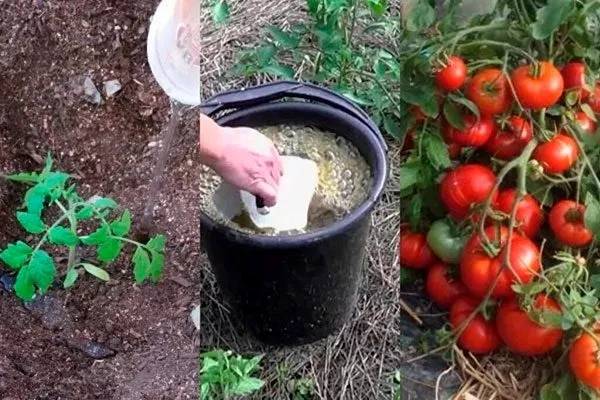
After 7-10 days, water with a nutrient solution of 100 g of baker's yeast per 10 liters of water to stimulate root growth.
Care
Marmande is one of the most popular varieties due to its large, tasty tomatoes. To ensure optimal growing conditions and an excellent harvest, several important aspects must be considered, including proper agricultural practices.
Correct watering regime
Marmande tomatoes require regular, but not excessive, watering. Maintaining uniform soil moisture is essential. avoiding Both drying out and overwatering are preventable. Perform this procedure in the morning or evening to prevent water from evaporating quickly and overheating the roots.
Avoid getting moisture on the leaves and fruits to prevent disease. Two to three waterings per week are sufficient, depending on the weather.
When and how to feed tomatoes?
Apply the first fertilizer 2-3 weeks after transplanting the seedlings into the soil, using organic matter such as mullein or chicken manure infusion. Subsequently, you can alternate between organic and mineral solutions every month, such as superphosphate and potassium fertilizer.
Avoid excess nitrogen to prevent plants from overextending their foliage at the expense of fruiting. Timely and balanced fertilization promotes vigorous growth and the formation of large, tasty tomatoes.
Collection, storage
Marmande tomatoes begin to ripen 75-100 days after the first shoots emerge, making them an early-ripening variety. The tomatoes have a firm texture, allowing them to withstand transportation easily and maintain their marketable appearance for a long time.
Store your harvest in a dark, dry, and cool place, such as a basement or pantry. Arrange vegetables in a single layer on shelves or in boxes to prevent damage. Fruits picked at full ripeness will stay fresh for up to 2-3 weeks without losing their flavor.
Features of cultivation and possible difficulties
Regular and moderate watering is essential for this plant, as overwatering can damage the root system. Helpful tips:
- To prevent fruit cracking, ensure even soil moisture. Mulching the beds helps prevent overheating and retain moisture.
- If the soil is very dry, watering should be gradual and repeated at intervals. Use warm, settled water, watering the bushes directly at the roots—no more than 1 liter.
The nuances of growing in open ground and in a greenhouse
The plants are compact, but they still need to be staked, as the branches can break under the weight of the fruit. Regular side-shooting is required throughout the growing season. For best results, train the bush into two or three stems.
During extreme heat in a greenhouse, flowers can become sterile, which can lead to reduced productivity. To prevent this, reduce the temperature or cover them with plastic or lutrasil to protect them from direct sunlight. Open doors and windows to ensure good ventilation.
Pest and disease control
Despite its strong immunity, Marmande can be susceptible to a number of problems if proper cultivation practices are not followed. Bushes may encounter the following difficulties:
- Late blight. One of the most dangerous tomato diseases, it causes fruit rot and foliar damage. To prevent this, practice crop rotation, avoid planting in the same spot two years in a row, and use fungicides.
- Tomato mosaic. A viral infection that causes leaf spots and deformed tomatoes. Remove affected plants from the garden to prevent the spread of the disease.
- Septoria. It appears on leaves as yellow marks, causing them to drop. For treatment, use copper-based products, such as Bordeaux mixture.
- White rot. A disease characterized by a white coating on stems and leaves and rotting of vegetables. To reduce the risk of spread, maintain optimal humidity and ventilate greenhouses.
- Aphid. The pest sucks the sap from leaves and stems, weakening the bushes. Control involves the use of insecticides or folk remedies, such as garlic infusion or tobacco dust.
- Colorado beetle. It's dangerous because it damages leaves and stems, killing plants. Insecticides and mechanical removal are effective.
- Slugs. Insects cause damage to trunks and tomatoes, especially in conditions of high humidity.Set up special traps, treat the beds with wood ash or lime.
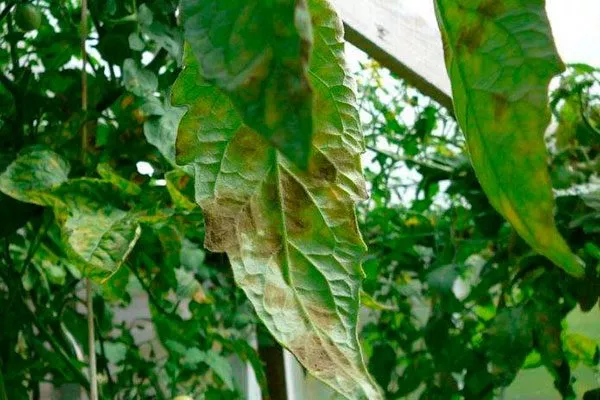
Marmande is quite resistant to various diseases and pests, but to prevent crop loss, follow agricultural practices, carry out preventative spraying, and monitor the condition of the bushes.
Pros and cons
Despite its Dutch origins, this variety thrives in Russia. It has gained popularity among gardeners thanks to its excellent varietal characteristics.
Gardeners value it for the following qualities:
Gardeners cite several negative aspects: the need for pinching, shaping, and tying up the bush, as well as the likelihood of vegetables cracking under conditions of sudden changes in drought and heavy rain.
Similar varieties
With the development of breeding technologies and the growing role of agriculture as a source of healthy food, scientists have developed many new tomato varieties. The table below provides descriptions and characteristics of Marmande's tomato equivalents:
| Name | Description and distinctive qualities |
| Giant Yellow | An indeterminate variety that requires pinching to limit growth. It matures in 110-120 days and can be grown both outdoors and indoors, depending on climate conditions.
The tomatoes are round and flattened, weighing approximately 400 g, and yellowish-red in color. They have moderate resistance to diseases and pests, and yield approximately 6 kg per plant. |
| Gigantism | An indeterminate bush, the fruits weigh between 500 and 750 g. They are flattened and red. Ripening occurs in 100 days, and the yield reaches at least 7 kg. This variety is characterized by low disease resistance. |
| Giant of Cuba | This is an indeterminate variety. The vegetables weigh approximately 600 g, have a flattened shape, and the skin is bright red. The yield is up to 6 kg per bush, and the tomatoes take 110 days to ripen. They require fertile soil and a warm climate, but are highly resistant to diseases and pests. They also withstand long-distance transportation well. |
| Azure Giant F1 | A determinate variety. Tomatoes weigh between 500 and 600 g. The fruits are flattened and richly red or brown in color. They ripen in 110-120 days.
The crop requires careful care, nutrient-rich, well-drained soil, and a warm climate. Maximum yield is 10 kg per bush, but this varies greatly depending on the growing conditions. The variety has a low susceptibility to disease. |
| Gigantella | An indeterminate bush with flattened, raspberry-colored fruits weighing approximately 500 g. It is recommended for greenhouse cultivation only, as it is a heat-loving plant. The tomatoes ripen in no more than 115 days, and the yield is approximately 5 kg. |
Each of these varieties has its own characteristics, suitable conditions for growth and care, which allows you to choose the most optimal option depending on the climate and the preferences of the gardener.
Reviews
The Marmande tomato is ideal for those looking for a reliable variety with excellent flavor and disease resistance. Proper care and adherence to recommendations will yield an excellent harvest for both personal consumption and storage. The plant has a strong immune system, requires little time or effort, and adapts well to a variety of conditions.