
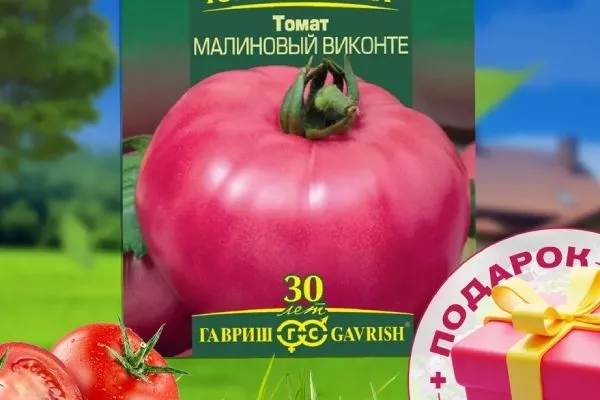
Raspberry Viscount is a relatively new Russian variety, whose name directly refers to the color of its fruits. This tomato from the domestic producer "Gavrish" boasts bright and attractive fruits, making it a favorite among gardeners looking for varieties with low bushes.
Who bred the Raspberry Viscount tomato?
The Raspberry Viscount variety was developed by breeders from the renowned Russian company, Gavrish Breeding Firm LLC. The following team worked on developing this tomato: S. F. Gavrish, V. V. Morev, E. V. Amcheslavskaya, O. A. Volok, T. V. Degovtsova, G. M. Artemyeva, and T. A. Redichkina.
The variety was approved for use in 2015. It is recommended for cultivation in all regions of the country.
Description of the variety
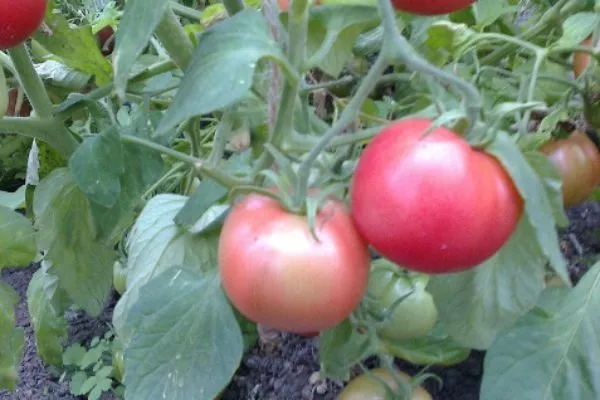
The Raspberry Viscount tomato plant grows low and compact, belonging to the determinate type. The stems are thick and strong, the bushes are sturdy and stocky, reaching 45-50 cm in height. The foliage is dense, the leaves are green, medium-sized, and the inflorescences are simple.
The fruits are large, individual specimens can reach a weight of 400 g. The fruits have well-defined seed chambers, and the skin is very thin.
Brief description of fruits:
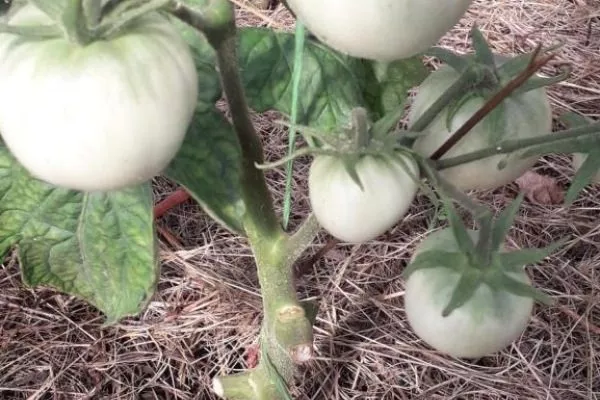
- Unripe fruit color: light green with a spot near the stalk.
- Color of ripe fruit: crimson.
- Form: flat-round, slightly ribbed.
- Pulp: medium density.
- Weight: 220-260 BC
Characteristics
The Raspberry Viscount tomato is a mid-early variety. It takes 90-105 days from germination to fruit ripening.
The fruits of the Raspberry Viscount tomato are plump and juicy, with a slightly tart flavor. The pulp contains 4.5% dry matter. Raspberry tomatoes are versatile and can be eaten fresh or processed into tomato juice.
This variety is known for its high yield—5-6 kg of tomatoes per square meter. It has excellent drought tolerance, is fairly cold-hardy, and rarely suffers from late blight.
Pros and cons
Before planting the Raspberry Viscount variety, familiarize yourself with all its advantages and disadvantages. Evaluate its qualities, growing conditions, and cultivation practices to determine how suitable it is for your intended purposes.
Pros:
Cons:
Landing features
The Raspberry Viscount tomato, like most varieties, is recommended for growing from seedlings. These can be purchased or grown yourself. This will require planting containers, nutrient-rich substrate, and time to care for the seedlings.
Preparing containers and soil
You can sow tomatoes in any suitable container, from special trays to kefir boxes. It's best to sow tomatoes in large planting containers or other large containers, from which the seedlings are then transplanted into individual containers such as pots or cups.
There are few requirements for planting containers. Individual cups should have a capacity of 350-500 ml and drainage holes in the bottom. Furthermore, used containers should be disinfected; new ones simply need to be washed with hot water and soap.
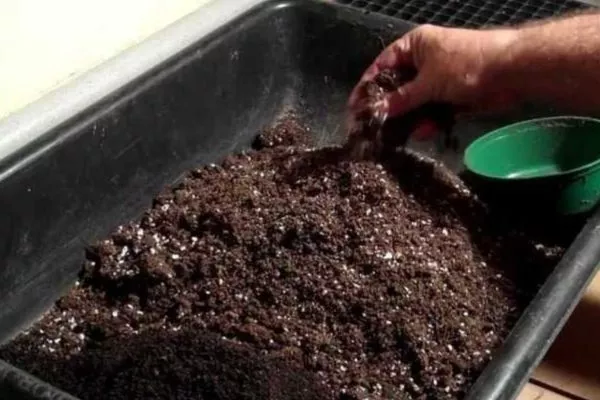
You can use a special store-bought substrate or a homemade mixture, such as turf, humus, sand, and peat. It's important to remember that homemade soil must be disinfected with potassium permanganate or baked in the oven. Fill the container approximately 2/3 full with soil.
Seed preparation
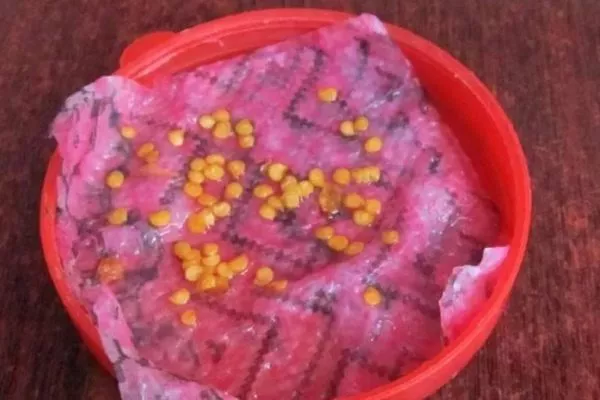
The Raspberry Viscount is a cultivar, so its seeds can be collected from ripe fruits. Store-bought seeds are usually ready to sow, but they can also be tested for germination and germinated before planting. Home-harvested seeds, however, require thorough processing—sorting, warming, hardening, and soaking in a growth stimulant.
Growing seedlings
Raspberry tomato seedlings are sown in March, with the exact timing depending on the region's climate and soil type. Indoor crops are planted 2-3 weeks earlier.
- ✓ Optimum temperature for seed germination: +22…+25°C.
- ✓ Required daylight hours for seedlings: 11-12 hours.
Features of sowing tomato seedlings Raspberry Viscount:
- The seeds are planted 1 cm deep in moist soil, leaving 2 cm between adjacent plants. Rows are made in containers, spaced 4 cm apart. If sowing in individual pots, sow 2-3 seeds per pot.
- The seeds are covered with plastic film to create a "greenhouse effect" and speed up germination. The seedlings are placed in a warm, bright room. However, they should be placed some distance from windows, with diffused lighting.
- The cover is removed daily to air the crops. If the top layer of soil dries out, it is moistened with a spray bottle.
- As soon as the shoots begin to emerge from the substrate, the film is removed, otherwise the sprouts will overheat and die.
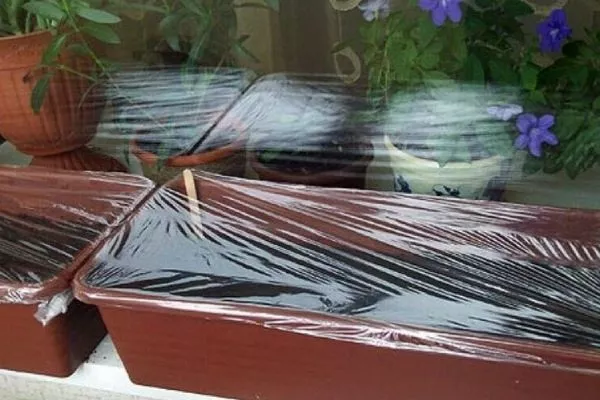
The seedling containers are moved to windowsills, closer to the light. At the same time, the air temperature is lowered from 22°C to 25°C to 14°C to 16°C. These conditions are maintained for 5-7 days. This helps prevent the seedlings from stretching, which can weaken them.
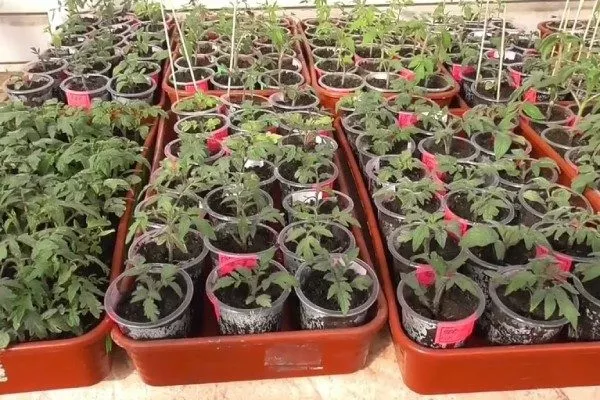
The seedlings need to be properly cared for for 50-55 days:
- Provide light. Initially, for about a week, the lighting should be 24 hours a day. Gradually, the daylight hours are reduced, reaching 11-12 hours by the time the seedlings are one month old.
- WateringFor the first two weeks, before transplanting, water the seedlings infrequently, about once a week. After transplanting into individual pots, water more frequently—3-4 times a week. Water should be poured directly onto the soil, taking care not to splash onto the above-ground parts, as this increases the risk of fungal diseases.
- FeedThe first seedling feeding is done 7-10 days after transplanting, when the plants begin to develop new leaves. Nitrophoska can be added first; it contains nitrogen and phosphorus, which plants need at this stage.
The second feeding is done two weeks after the first. Apply a fertilizer high in phosphorus and potassium, such as double superphosphate and potassium sulfate. The third feeding is done a week before transplanting the seedlings into the soil. - TemperTo ensure seedlings grow better outdoors, establish quickly, and adapt quickly, they need to be hardened off for 1-2 weeks before planting. Hardening off involves taking the seedlings outside daily. Initially, this should be done briefly, no more than half an hour, then gradually increasing the time spent outdoors to 12-14 hours.
Selecting a site
The Raspberry Viscount tomato planting area should receive ample sunlight. Direct sunlight is essential for the crop, requiring 6-8 hours of exposure. Shaded areas make the plants more vulnerable to fungal infections.
The site should have good air circulation, but avoid drafts and gusty northerly winds. Flat areas and slopes are suitable for planting; lowlands are not recommended, as water accumulates there, which causes root rot.
When choosing a site, consider crop rotation rules, which prohibit planting tomatoes in the same spot for at least 3-4 years. Also, avoid planting tomatoes after any nightshade crops such as potatoes, peppers, or eggplant. Tomatoes grow best after onions, garlic, cabbage, cucumbers, squash, and legumes.
Preparing the beds
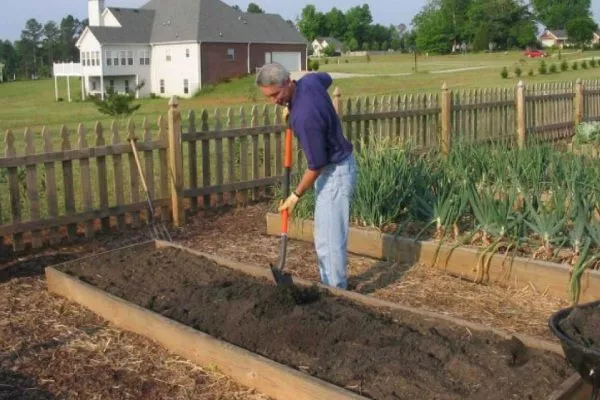
Tomatoes require nutritious soil that is loose, moisture- and air-permeable. It is recommended to prepare the soil in the fall by digging it deeply and adding organic matter—compost or humus (10 liters per square meter)—and mineral fertilizers. The optimal soil composition for greenhouses is 30% garden soil and humus, and 20% peat and river sand.
The soil should be neutral—between 6 and 6.5 pH. This can be measured using special litmus strips, which are available at gardening stores. If the soil is found to be acidic, add lime (slaked), wood ash, or dolomite flour.
Transplanting
Seedlings are planted taking into account climate conditions and soil type. Indoor plants are planted slightly earlier than in open ground. In any case, the threat of frost should have passed by this time. In southern regions, tomatoes can be planted without cover in early to mid-May, while in temperate climates, it's best to plant them in late May to early June.
Features of planting tomato seedlings Raspberry Viscount:
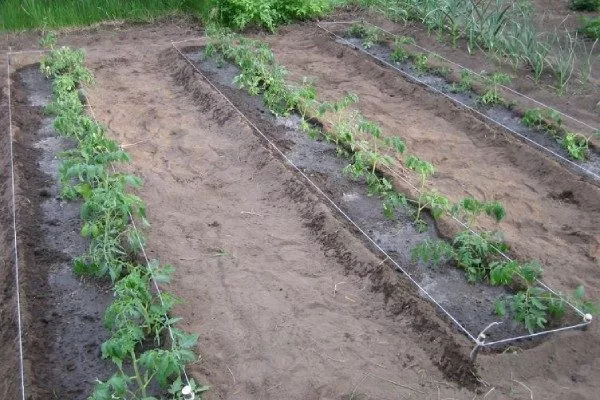
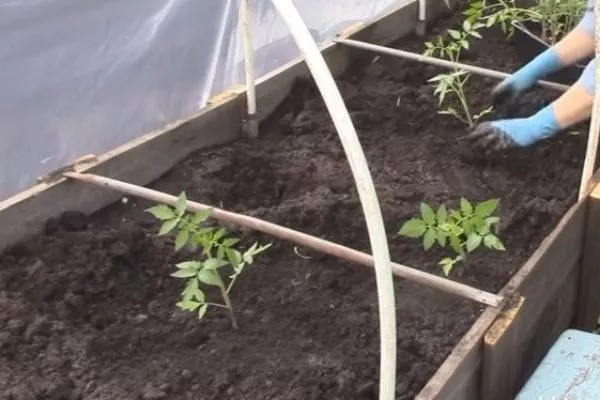
- Planting holes are dug in a 40 x 50 cm pattern. Three or four plants are placed per square meter. The holes are dug in rows or in a checkerboard pattern.
- Fertilizers, such as humus, wood ash and superphosphate, are placed in each hole, a little soil is added on top, and then 3-5 liters of water are poured in.
- After an hour, when the soil has settled, the seedling is placed in the hole, the roots and free space are covered with soil, and it is compacted, forming a small depression around the stem.
- The planted tomatoes are watered with warm, settled water. The next watering is not done until 10-12 days later.
Care Features
Unlike taller varieties, the Raspberry Viscount tomato requires little maintenance. Its low-growing bushes require regular watering, fertilizing, loosening the soil, and preventative spraying.
Watering
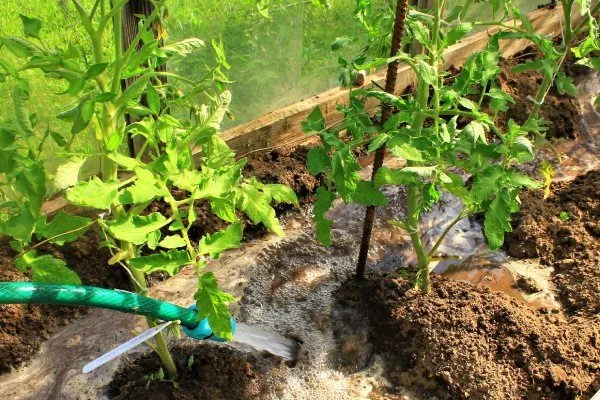
Watering should be generous, but not excessive. Under normal weather conditions, watering should be done 1-2 times a week. It's best to water tomatoes early in the morning or evening; if the weather is cloudy, water at any time of day. Use settled, sun-warmed water or rainwater.
Water should be applied at the roots, which is especially important during the flowering period. Drops of water can interfere with normal fruit set and even cause buds to fall off. During flowering, reduce the amount of water applied to 1-2 liters per bush; during fruit set, reduce the amount to 3-5 liters.
Loosening
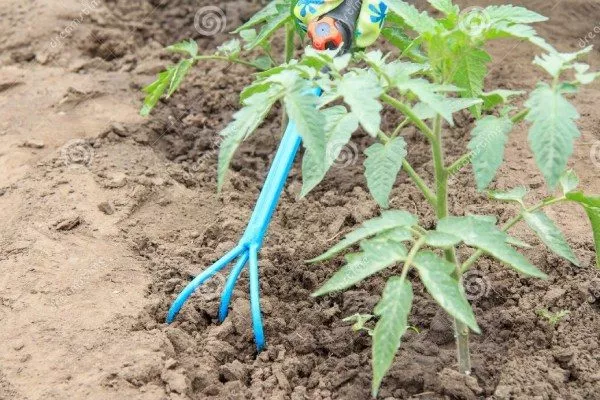
Loosening the soil ensures oxygen reaches the roots; otherwise, a hard crust will form. Along with loosening, weeds are removed, which should be avoided in tomato beds—they not only absorb nutrients from the soil but can also attract insect pests.
The depth of loosening depends on the stage of vegetation and the development of the root system. After planting, while the roots are small, the soil is loosened deeply, to a depth of 10-12 cm. Gradually, the loosening depth is reduced to 3-4 cm, as there is a risk of damaging the surface roots. It is recommended to loosen the beds the day after watering or rain.
Fertilizers
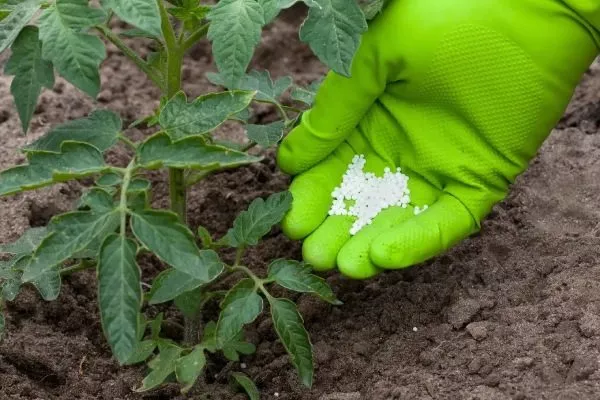
A couple of weeks after planting, water the tomato plants with a solution of complex mineral fertilizer, which is quickly absorbed by the roots. You can also mulch the soil with sawdust, straw, or other organic matter.
During flowering, potassium-phosphorus fertilizers are applied to regulate water balance and accelerate nutritional processes. During fruiting, complex fertilizers with high potassium and phosphorus content are also used, along with calcium supplements, which prevent blossom-end rot and improve fruit structure.
Shaping and garter
The Raspberry Viscount tomato requires no shaping. Its compact, standard-type bushes also require no support; unlike taller varieties, this tomato doesn't require staking. Pinching out any side shoots is also unnecessary.
Diseases and pests
The variety is resistant to late blight and many common fungal diseases, partly due to its early ripening period. However, to prevent damage, it is recommended to spray the bushes with copper-containing preparations and, if signs of disease appear, with broad-spectrum fungicides.
The Raspberry Viscount tomato can be affected by cabbage whites, codling moths, and sawflies, for which Lepidocid is recommended. Zubr is effective against nightshade leaf miners, Prestige can be used against Colorado potato beetles, and Decis or similar products can be used against aphids.
Harvesting
The harvest time for Raspberry Viscount tomatoes depends on the climate and soil type, but typically falls between July and early August. The fruits are picked in dry, warm weather, preferably early in the morning when there is no dew.
Reviews
The Raspberry Viscount tomato is an excellent variety for those who prefer a slightly tart flavor. This tomato is low-maintenance, productive, and fairly easy to grow, making it suitable even for gardeners with no experience growing vegetables.