
The Giant Raspberry is characterized by early ripening and impressive fruit size. One of its main advantages is its ease of care, making it accessible even to novice gardeners, who can easily reap a bountiful harvest. This is a natural variety, not a hybrid.
Selection
The Raspberry Giant tomato is a unique variety created by Russian breeding specialists. The patent for it belongs to the SeDek agricultural company, and the authors include A. N. Lukyanenko, S. V. Dubinin, and I. N. Dubinina. It was officially included in the list of varieties approved for northernization in 2007.
Raspberry Giant is positioned as a variety that is distinguished by its early maturity, tall growth, determinate type and does not require pinching.
When studying the characteristics of this tomato, it's worth considering that there's another variety with a similar name—Raspberry Giant F1. However, this is a hybrid with its own unique characteristics. It differs from the original in the following ways:
- more resistant to adverse weather conditions and diseases;
- produces even larger fruits with excellent taste;
- requires more careful care;
- does not allow collecting seeds for further propagation.
Description of the bush and tomatoes
SeDek presents the Raspberry Giant variety, with stems reaching 60-70 cm in open ground and up to 100 cm in greenhouses. This variety's leaves are large and bright green, without pubescence. The stem is strong and robust.
It also has other cellular characteristics:
- The clusters are fan-shaped, with the first appearing above the sixth leaf, and subsequent ones forming two leaves apart. Each cluster contains six to eight flowers.
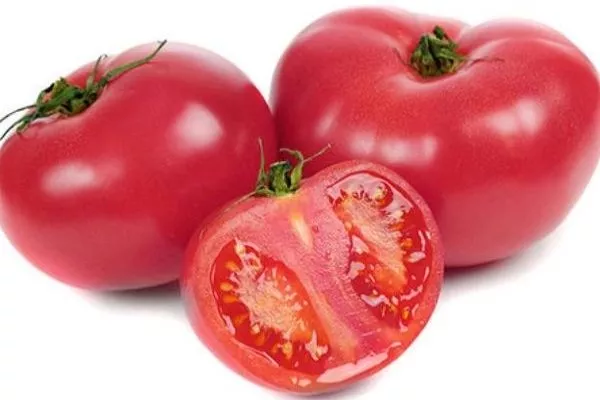
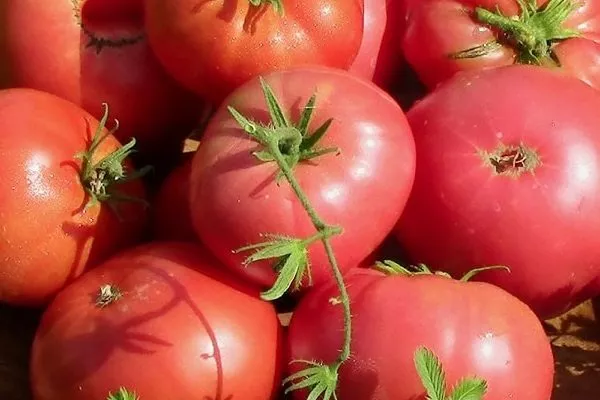
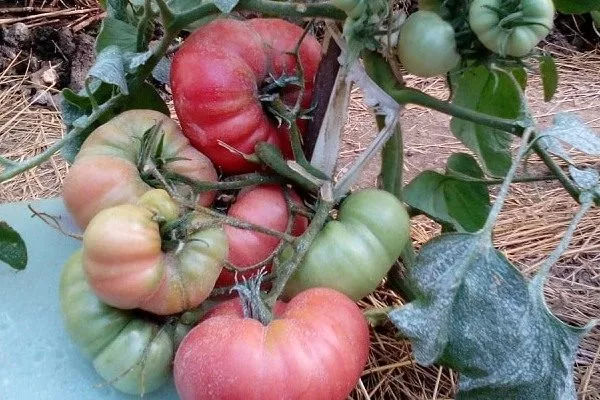
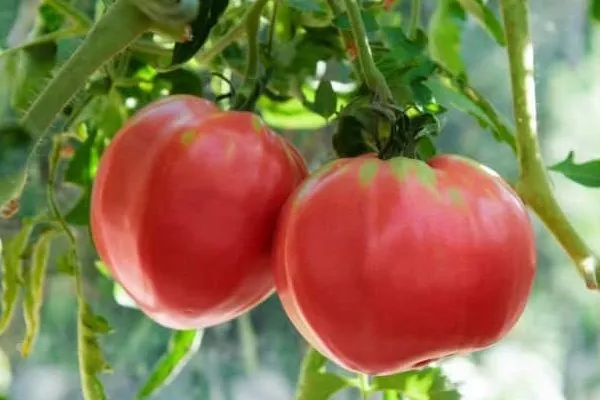
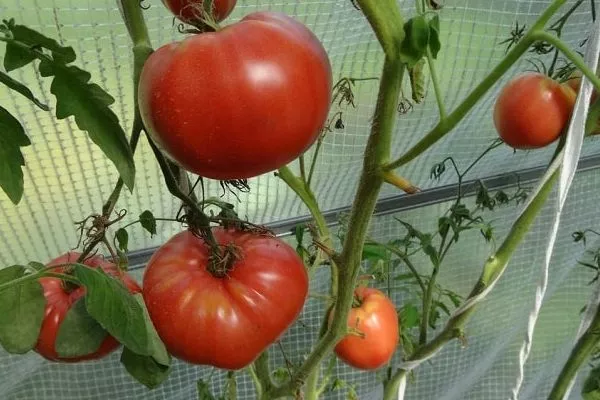
- The fruits are large, round, and slightly flattened, with slight ribbing. The weight of a single tomato can vary from 200 to 400 g, but with strict cultivation practices and careful control of the number of flowers in the inflorescences, the weight can reach 550-600 g.
- The skin is thin yet firm, with a sheen. When unripe, it is green with a dark green tint near the stem, and when fully ripe, it takes on a bright crimson hue.
- The pulp is very juicy, containing four to eight chambers, and the seeds are small and few in number. This seed size is typical for most tomato varieties that produce large fruits.
This variety is not a hybrid, which has both positive and negative aspects. On the one hand, hybrids are generally more resistant to diseases, adverse weather, and pests.
But the main advantage of heirloom varieties is that you can collect seeds and replant them the following season without losing the quality of the fruit. This allows for a consistent harvest year after year.
Main characteristics
Raspberry Giant tomatoes are distinguished by their early ripening—the crop is ready for harvesting just 90 days after the first green shoots appear. This applies to warmer regions of the country and greenhouse cultivation.
In cool climates, ripening times range from 105 to 110 days. Harvesting occurs during the summer, from July to August.
Other characteristic features:
- Due to their early ripening, these tomatoes are not susceptible to late blight, as the harvest is done before the onset of variable night and day temperatures.
- The variety is ideal for garden and greenhouse cultivation.
- Productivity is quite good – a single bush can yield over 6 kg of tomatoes, and a 1 sq. m area planted with up to 3 bushes yields around 18 kg. Experienced gardeners report increased yields when grown in greenhouses and with careful care.
- Tomatoes of this variety are distinguished by their excellent transportability and can be stored for quite a long time if the cellar has suitable conditions: dry, dark, and well-ventilated. During storage, it is important to maintain room temperature and avoid sudden temperature fluctuations.
- Experts highlight the pleasant sweet taste of the pulp with a slight sour undertone, which makes tomatoes safe for people with allergies and suitable for children and dietary nutrition.
- Raspberry tomatoes contain more nutrients than red tomatoes. And the Raspberry Giant retains these nutrients even after freezing and heat treatment.
- Tomatoes of this variety are ideal for various culinary uses, with the exception of canning, as their large size prevents them from fitting into jars. However, they do well preserved in wedges and added to vegetable salads.
Fresh, they are especially delicious and are often used in salads. The fleshy texture of the fruit makes them ideal for making ketchup, paste, and juices.
Specifics of purchasing seed material
This tomato variety was developed by specialists at SeDeK and registered in the state registry in 2007. Besides the manufacturer, other sellers also offer seeds of this variety. Beginning gardeners may encounter certain difficulties purchasing these seeds due to incorrect labeling on the packaging.
Products with duplicate or contradictory grade information sometimes appear on the market. For example:
- Aelita company packaging may contain different information about the Raspberry Giant: from variety to hybrid (marked F1);
- The brand “Uralskiy dachnik” also calls it a hybrid;
- The company “Semena Altaya” describes the variety as indeterminate.
All this can lead to confusion among buyers. Some gardeners believe that well-known plant varieties have specially developed hybrids with improved characteristics. But this is a misconception actively promoted by seed sellers.
Some nuances:
- In fact, hybrids do not improve because the process of breeding them is too difficult and time-consuming for breeders to want to give existing varieties new names.
- If you come across packaging of a variety with the addition of the F1 marking, then this is a pure marketing ploy that serves to attract attention to the product.
- In addition, sellers try to convince you of the need to buy seeds of your favorite plant every year instead of collecting them yourself.
- The packaging offered to you may contain seed material of the declared variety, or it may contain seeds of unknown origin and questionable quality.
Growing seedlings
Tomato cultivation can be achieved either by sowing seedlings or without them. The choice of method depends on the climate in which the plants will grow. However, even in southern regions, where the favorable climate allows for direct planting, using seedlings accelerates ripening and increases the yield.
Seed preparation
The tomato seed sowing process begins between March 7th and 15th. Before sowing, however, it's important to test their germination and prepare them for planting:
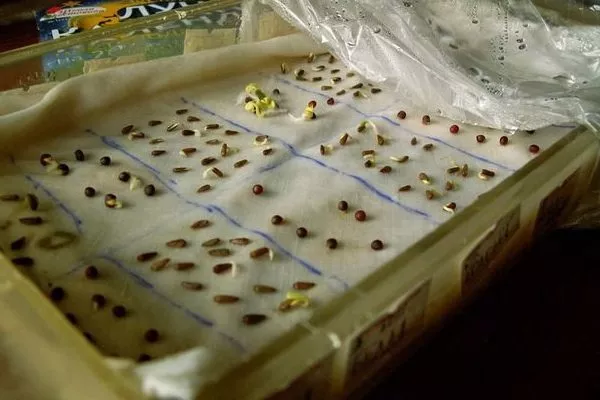
- To test for germination, soak all the seeds in a glass of salted water for 20 minutes. It's important to select the seeds that sink to the bottom, as those that float to the surface will not germinate.
- Afterwards, it's recommended to soak the seeds in a growth stimulator to improve germination. Follow the instructions for the specific product.
Soil and container for planting
Prepare a nutrient-rich substrate for your plants. The ideal mixture is a mixture of soil, sand, and peat. To reduce soil acidity, add ash. If you don't want to spend time creating the substrate, use a ready-made one. Remember to choose a product that is optimal for seedlings.
Sowing and growing
Warm water is typically used to moisten the soil before planting, but experienced gardeners suggest an alternative method: fill a container with snow to the top. This method differs in that the meltwater, traditionally called "living water," not only moistens the soil but also creates a mini-stratification, which accelerates germination and increases seed viability.
How to plant seeds correctly:
- Fill the container with soil until it is half full.
- Make furrows about 2 cm deep, leaving a gap of 3-4 cm between them.
- Place the seeds in the grooves, keeping a distance of 2-3 cm between them.
- Sprinkle with a layer of soil mixture.
- Moisten the container, then cover it with transparent film or a lid and place it in a bright, warm place. Be sure to ventilate the seedlings daily and remove any condensation from the lid.
- Once the seeds have sprouted, remove the covering.
Subtleties of care:
- Water the seedlings depending on the conditions; it is important to avoid both over-drying and over-watering;
- To prevent plants from stretching, use lighting;
- When the plants have two true leaves, transplant them into separate pots.
Planting in open ground
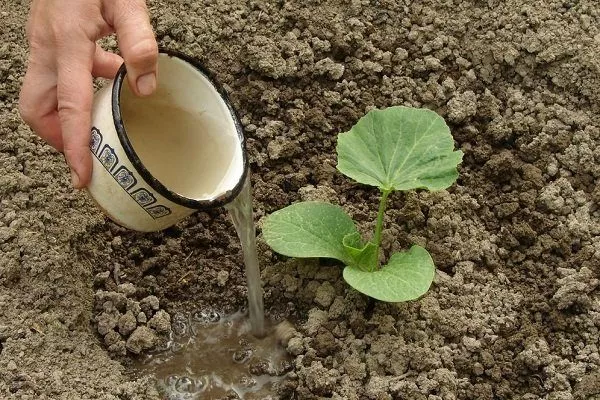
Once the danger of unexpected frost has passed, it is time to transplant the seedlings into the ground according to the following requirements:
- the seedlings should be distributed into holes located at a distance of at least 50-60 cm from each other;
- During the planting process, it is advisable to add a nutritious fertilizer to each hole, the most suitable of which is phosphorus.
- ✓ The optimal soil temperature for planting seedlings should be at least 15°C.
- ✓ The distance between bushes should be at least 50 cm to ensure sufficient ventilation and lighting.
The Raspberry Giant bush requires strong support, which should be taken into account when preparing the site for planting.
Caring for tomatoes
After planting, the plant requires some time to fully adapt to its new environment. During this period, watering is not necessary, and the first treatment should be carried out no earlier than a week after planting. During this time, it is important to loosen the soil and remove any weeds that are beginning to grow actively.
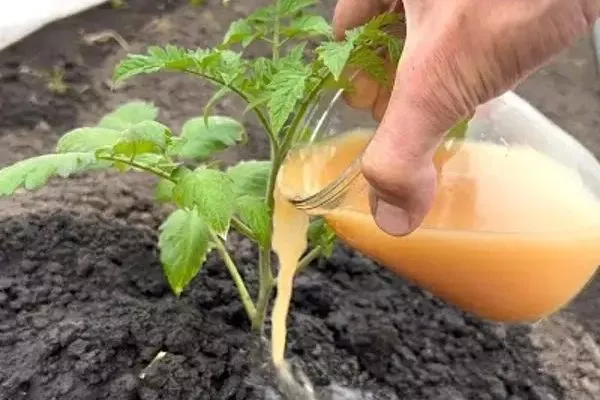
Approximately 18-20 days after planting, the first feeding is carried out, for which diluted mullein (in a ratio of 1:10) or complex agents such as nitrophoska are used.
Watering
Further plant care includes regular watering as needed, avoiding watering the foliage. Watering should be done with warm water, as cold water can stunt growth and cause root rot. For convenience, a drip irrigation system is recommended.
Peculiarities:
- Many gardeners use the traditional method of watering with a watering can or hose, recommending the use of pits or furrows to prevent soil erosion around the plant roots. This ensures uniform moisture distribution and direct water delivery to the roots.
- The norm for each plant is approximately 3-4 liters, and during the flowering and fruit setting period the volume of water increases.
- Rain can be a great help for tomatoes grown in open ground, while in a greenhouse all the procedures depend on humans.
Nutrition
Plants will require several fertilizing sessions throughout the season. However, three to four weeks before the fruit ripens, stop applying them.
Subtleties:
- Tomatoes love watering with ash infusions and green infusions made from fresh herbs.
- It's important to apply fertilizers correctly, especially nitrogen, as too much can lead to excessive plant growth and reduced fruit production. Nitrogen is essential for tomatoes during the initial growth stage, while later plants require potassium and phosphorus.
- Additionally, you can use an infusion of banana peel and baker's yeast, which provides excellent results.
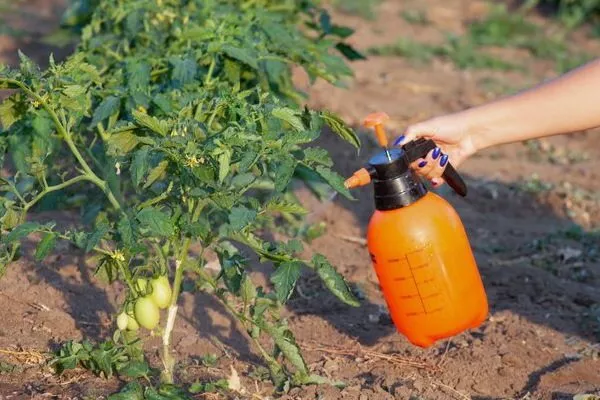
- Don't forget about foliar feeding, which is especially effective in cloudy weather, as nutrients are absorbed by plants more quickly, which promotes abundant flowering and early ripening of fruits.
Other works
For optimal growth, the bushes should be partially pruned, forming them from two stems. All leaves located below the first flower stalk should be removed. This variety requires partial side shoot pruning, which involves removing side shoots below the level of the flower clusters.
What else to do:
- Formed bushes should be secured with wide cotton rope, avoiding thin twine or stiff wires that can damage the stems.
- It's important to periodically loosen the soil to ensure it's saturated with oxygen. The heavier the soil, the deeper the loosening should be, but this should be done carefully to avoid damaging the plant's root system.
Pest and disease control, prevention
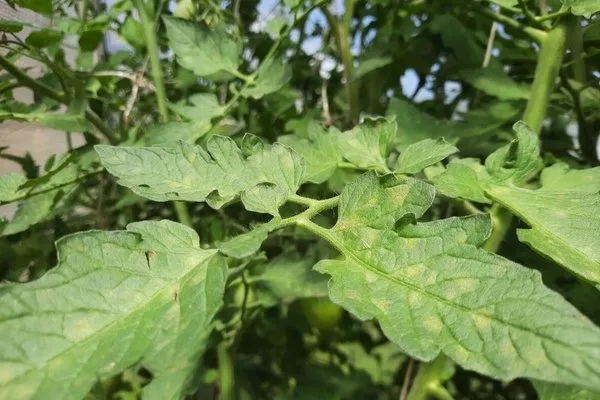
When planting Raspberry Giant, it's extremely difficult to completely eliminate insect pests, bacteria, and fungi. They can persist in the greenhouse, in the soil, and among plant debris. Therefore, to prevent their occurrence, gardeners employ a variety of protective measures:
- Since potatoes and tomatoes are susceptible to attacks by the same pests, you should not plant them next to each other.
- To prevent fungal diseases, it's important to maintain optimal humidity levels. Excessive humidity promotes the development of fungal infections.
- To prevent late blight, it's important to spray the seeds from the very beginning. This can be done using copper sulfate or a manganese solution.
- To prevent potato plague (late blight), it is recommended to use the following products for spraying tomatoes:
- kefir;
- copper sulfate;
- Bordeaux mixture;
- garlic tincture.
Recipes:
- To prepare a kefir solution, mix 10 liters of water with 1 liter of kefir and spray the plants every seven days.
- Treatment of Raspberry Giant tomatoes in a greenhouse with garlic infusion is carried out using the following composition:
- 1 cup (200 ml) minced garlic, filled to the top;
- 5 liters of water;
- 0.5 g potassium permanganate dissolved in hot water.
For effective prevention, several methods can be combined simultaneously.
Pros and cons
This determinate tomato variety is ideal for both outdoor and indoor growing, making it an excellent choice for home gardens.
Reviews
The Raspberry Giant is ideal for greenhouse cultivation, even in northern regions, and is perfect for gardeners who rarely visit their dachas. Because the plant is undemanding, produces a good harvest, and is resistant to various diseases, this variety is popular. The key is to purchase the right planting material, preferably from the original manufacturer.