
Raspberry Fountain is a tomato hybrid with excellent characteristics for commercial and home growing. It stands out for its good productivity, disease and pest resistance, and attractive appearance. The small, sweet, and firm fruits are ideal for canning and salads, retaining their flavor even during long-term storage.
Description of the bush and fruits
Gardeners appreciate this plant for its ease of care and excellent qualities. It stands out for its following characteristics:
- The plant is determinate, with strong stems and a moderate number of leaves. Height depends on growing conditions.
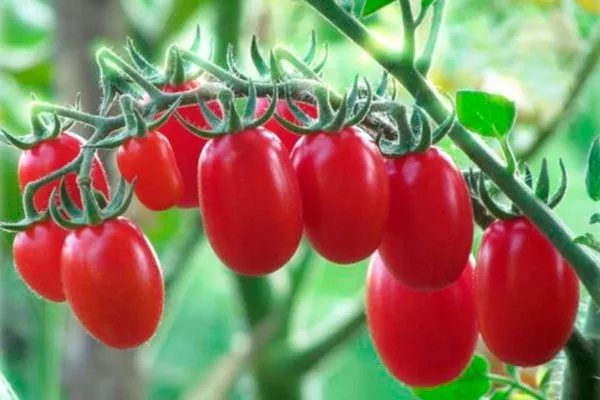
- The tomatoes are small, bright red, and resemble cherry tomatoes or finger tomatoes. They grow in simple or compound clusters of 10-30 tomatoes. Each tomato weighs between 20 and 27 grams. They ripen gradually, so harvesting is uneven.
- The skin is thick and the stem is strong, which allows the tomatoes to stay on the bush for a long time without falling off or cracking.
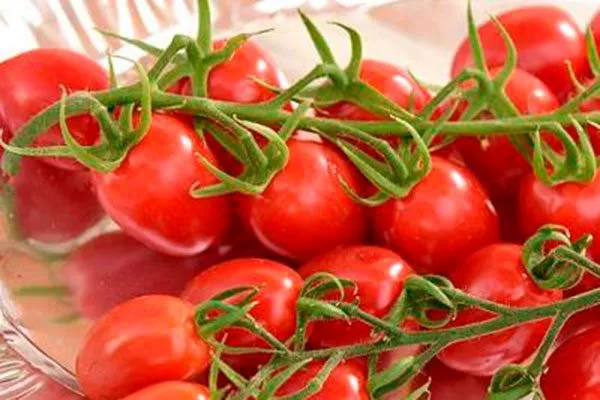
These miniature fruits are rich in vitamins A, B, and C, potassium, and iron. Eating 5-7 a day can meet your daily nutritional needs. They contain serotonin, which improves mood, and lycopene, which breaks down fat.
Characteristics of the variety
Thanks to the efforts of breeders, gardeners can choose from a wide variety of tomatoes suitable for growing in their gardens. One such variety is the Raspberry Fountain hybrid.
Growing regions, origin
The crop was developed by breeders Alexander Khovrin, Vladimir Korchagin, Sergey Maksimov, and Tatyana Tereshonkova of Agrofirma Poisk LLC. In 2020, the variety received official approval for cultivation.
The hybrid is successfully cultivated throughout the country, including in areas with harsh climates. It demonstrates consistent performance in the Urals, the Far East, and Siberia.
Ripening period, yield
This is a mid-early variety. Fruit ripens 100-105 days after germination. This variety boasts excellent productivity:
- in film greenhouses – 5.2-6.1 kg per 1 sq. m;
- in open ground – 4.8-5 kg per 1 sq. m.
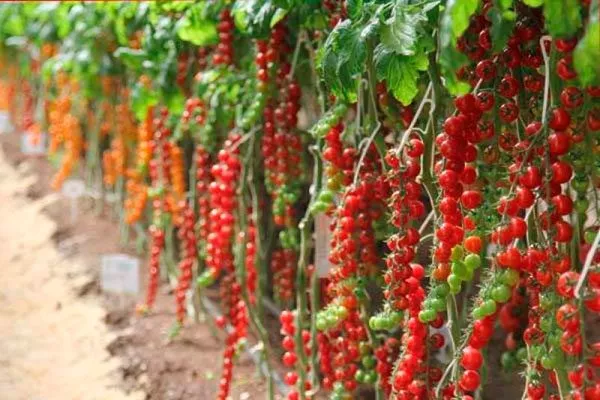
These characteristics make the Raspberry Fountain variety a promising option for commercial cultivation.
Scope of application
This is a versatile variety. Due to their small size, these tomatoes are ideal for whole-fruit canning, fresh eating, and salads. They are used to prepare:
- ketchup;
- paste;
- juice.
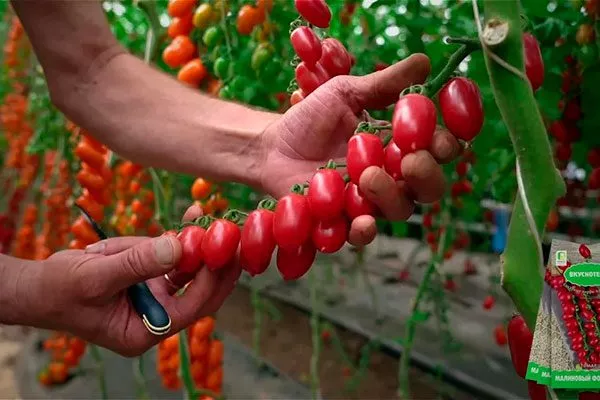
Vegetables are often used to garnish cocktails, sliced, and served with various sauces. Tomatoes are ideal for snacking.
Planting the Raspberry Fountain tomato variety
The plant is characterized by its low maintenance and requires little care. It is grown using the standard method typical for pink varieties.
Sowing seeds and growing seedlings
Raspberry Fountain is a hybrid variety, so you can't harvest the seeds yourself. You can only purchase them from a store, preferably from the cultivar's originator. Follow these recommendations:
- Pre-treatment of the seeds is not required—all key characteristics are genetically determined. Maximum results can be achieved only with proper care during growth.
- Sow the seeds in early March; after two months, the seedlings will be ready for planting. If the packaging indicates that the seeds have been treated, plant them dry to avoid damaging the protective coating.
- The soil should be nutritious and breathable, so add equal parts peat and sand. To regulate moisture exchange, add vermiculite to the soil mixture at a ratio of 1:10.
If you use soil from your plot, be sure to disinfect it by baking it in the oven or pouring it with a solution of potassium permanganate. - You can plant the seeds in individual cups or in wooden or plastic containers. Before use, treat the containers with a weak solution of potassium permanganate.
- Fill the containers halfway with soil and make furrows in the surface. Sow the seeds 1-1.5 cm deep, spacing them 2-3 cm apart. Then, moisten the soil with a spray bottle and cover the container with plastic or glass.
- Keep the seedlings in a warm, well-lit location for about three weeks until germination. For best growth, use a grow light. Water only when the soil is completely dry.
After the sprouts have appeared en masse, transplant the seedlings into individual cups and transfer them to a cooler place with a temperature of +20…+22°C.
Planting Raspberry Fountain tomato seedlings in open ground or a greenhouse
The planting date for seedlings varies by region. In southern regions, begin in April, while in northern regions, no earlier than late May or early June.
- ✓ Optimum soil temperature for planting seedlings: not lower than +15°С.
- ✓ Minimum distance between plants to ensure sufficient ventilation: 50 cm.
Basic requirements:
- Prepare the site in advance, starting in the fall: dig up the soil with fertilizer. A second application is recommended in the spring.
- Two weeks before planting, sow the beds with green manure, such as mustard, to enrich the soil with nutrients.
- Place the holes at intervals of 50 cm, leaving 70 cm between rows. The depth of the holes is about 25 cm, and their diameter should exceed the size of the pot by 5 cm.
- Plant the seedlings with the root ball to minimize root damage.
Caring for the Raspberry Fountain tomato variety
To ensure bountiful harvests and high-quality fruit, provide your crop with comprehensive care. Follow standard agricultural practices and guidelines:
- The bushes require a humidity level of 60-65%. The temperature during the active growth period should be +20…+25°C, and during the formation of vegetables – +24…+26°C.
- Ventilate the greenhouse regularly, as excess condensation can lead to diseases.
- Tomatoes ripen unevenly, so don't pick unripe ones—their flavor won't improve.
- This variety doesn't tolerate both drought and overwatering well. Watering should be moderate and consistent, otherwise the tomatoes may crack and rot.
- Apply fertilizer every 10-12 days, alternating organic and mineral fertilizers. For example, you can use a manure solution (10 kg per 100 liters of water). It's important not to overdo the nitrogen application to prevent excessive leaf elongation and the risk of late blight.
- As the plant grows, the soil settles, so add more soil periodically.
- Remove side shoots, leaving a stump 1.5-2 cm long, so as not to weaken the plant.
When the majority of the ovaries have formed, pinch off the top of the main stem and remove any excess flowering clusters to speed up the ripening of the tomatoes.
Harvesting and storing the Raspberry Fountain tomato variety
The crop is ready for harvesting 100 days after germination. The tomatoes ripen gradually, so only pick them when they're fully ripe—unripe tomatoes are inferior to ripe ones.
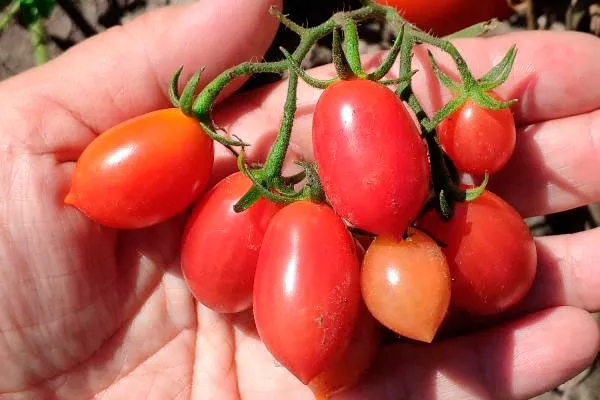
Thanks to their thick skin, the fruits store well, but their aroma and flavor fade over time. To preserve freshness as long as possible, store the harvest in a dark place at a temperature of 15 to 18°C.
Pest and disease control, prevention
Despite the variety's high immunity, plants can be susceptible to late blight if the air is too humid. For prevention, use sprays such as Fitosporin and Bordeaux mixture.
| Preparation | Validity period | Efficiency |
|---|---|---|
| Fitosporin | 10-14 days | High |
| Bordeaux mixture | 7-10 days | Average |
| Ridomil Gold | 14-21 days | Very high |
Folk remedies, such as a garlic and potassium permanganate infusion, are effective against late blight. For severe infestations, use Ridomil Gold or HOM. As a last resort, if none of these methods work, remove the affected bush by the roots and burn it outside the area.
To control pests, use insecticides such as Actellic or Confidor – they are effective against aphids and whiteflies. Garlic or tobacco infusions are also effective insect repellents. Inspect plants regularly and trim off any affected leaves.
Pros and cons
Raspberry Fountain tomatoes are excellent for canning whole, while maintaining their delicious flavor. But this variety also boasts several other advantages:
Among its drawbacks, vegetable growers note the need for careful shaping and the need for support. Another negative is that Raspberry Fountain is a hybrid, so it's impossible to harvest seeds for the following season.
Reviews
The Raspberry Fountain variety is deservedly popular among gardeners due to its versatile qualities and adaptability. With proper care, bush training, and moderate watering, you'll achieve excellent growing and harvesting results, regardless of your region's climate. This variety is ideal for beginning gardeners.