
Raspberry Flame tomatoes produce dense shoots, delighting growers with bountiful harvests. The ovoid tomatoes are a rich crimson hue, hence their name. This variety adapts well to various climates, is resistant to adverse weather conditions, and is suitable for fresh consumption and winter preservation.
Description of the bush and fruits
The tall hybrid reaches a height of 140-160 cm for its central shoots, and in greenhouse conditions this figure can increase.
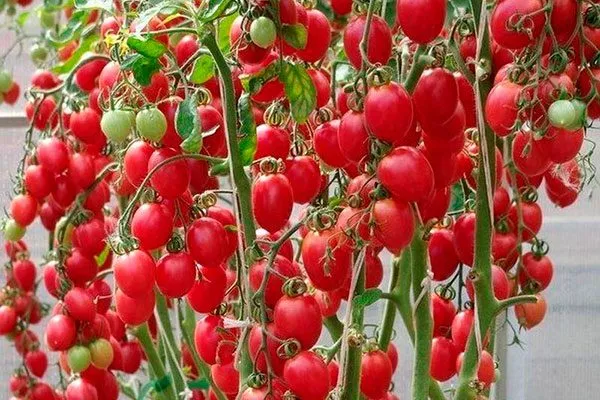
- ✓ Formation of the first inflorescence above the 6-7 leaf.
- ✓ Fruit formation in clusters of 12-13 pieces.
Distinguishing characteristics:
- The bushes are compact, standard type, covered with green leaves of medium length.
- The leaves are smooth, without pubescence.
- The inflorescences are simple, the first of which is formed quite high – above the 6-7 leaf.
- The fruits are formed in clusters of 12-13 pieces.
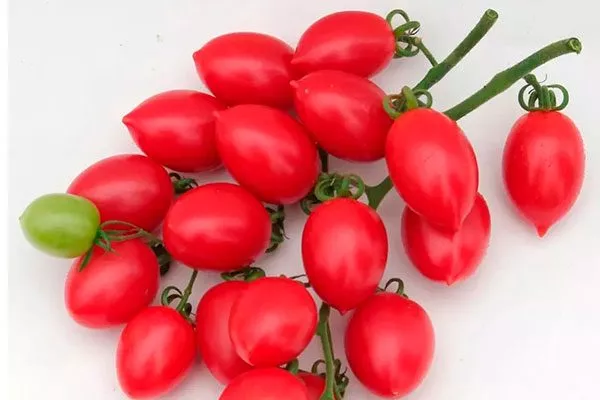
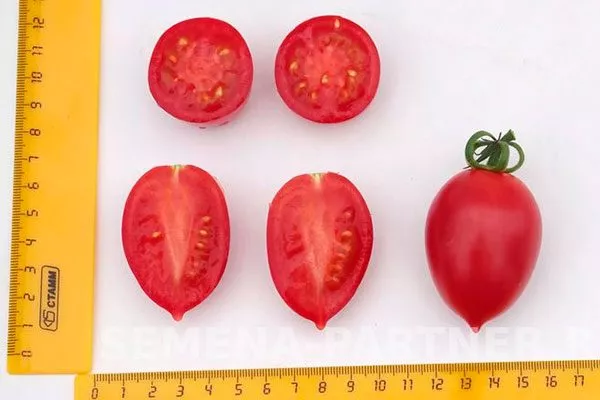
- The tomatoes have an attractive egg-shaped shape with slight ribbing.
- The average weight of each fruit is 45-50 g, the size is moderate.
- The skin is smooth, glossy, crimson, and medium thick. Unripe vegetables have a uniform light green hue without blemishes.
- The pulp is tender, juicy and not too dense.
- The taste is sweet and harmonious.
Characteristics of the Raspberry Flame tomato
This new hybrid demonstrates high yields and adaptability to a variety of growing conditions. This variety has become popular among both novice and experienced gardeners due to its combination of numerous advantages.
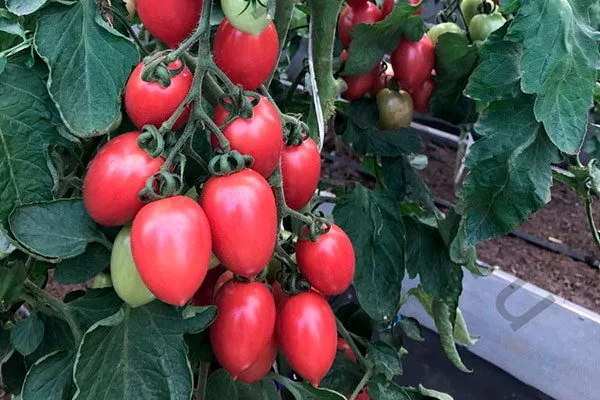
Productivity and ripening of the Raspberry Flame tomato
This hybrid is early-ripening and has a long fruiting period. Tomatoes reach maturity 85-90 days after germination. In open ground conditions, harvesting occurs from July to August, while in a greenhouse, the ripening period can be extended.
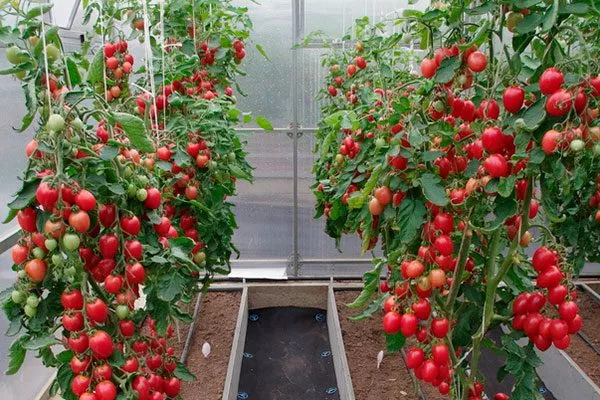
The hybrid demonstrates high yields. Up to 9.2 kg of tomatoes can be harvested per square meter in beds. With intensive planting in greenhouse conditions, this figure can reach 20 kg per square meter.
Resistance to diseases and pests
Raspberry Flame is characterized by high immunity, high resistance to mosaic virus, fusarium wilt, and brown spot. Thanks to its early ripening, late blight rarely has time to damage the bushes, as the disease usually develops only in August, after the tomatoes have already been harvested.
However, negative factors, including overwatering, dense plantings, and poor agricultural practices, can negatively impact plant health. To prevent root rot and fungal infections, it is important to follow agricultural practices.
Methods of application
The hybrid tomato variety "Malinovoe plamen" (Raspberry Flame) has a dense yet thin skin, ensuring excellent shelf life and long-lasting flavor. These tomatoes withstand long-distance transportation well, making them suitable for commercial distribution.
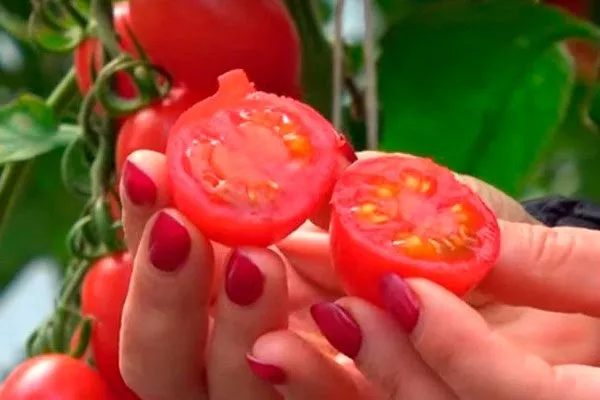
At home, the fruits are versatile. They're perfect for fresh salads, appetizers, and for making tomato juice and brine. Compact cherry-like tomatoes are easy to preserve fresh, as they fit easily even in small glass containers.
Weather tolerance and growing regions
This cultivar is well-adapted to cultivation in regions with short daylight hours. It is resistant to sudden temperature fluctuations and can withstand short-term weather changes without noticeable impact on flowering or fruit ripening.
The variety is recommended for cultivation in various climatic zones, including the northern and northwestern regions, the central part of the country, the Black Earth Region, the Urals and Siberia.
The hybrid is successfully grown on:
- Far East;
- North Caucasus.
Landing
To obtain a bountiful harvest of Raspberry Flame tomatoes, it's important to follow basic cultivation guidelines. It's essential to first grow high-quality seedlings, which are then transplanted into the garden beds for further development.
Sowing and growing seedlings
Sow seedlings 55-60 days before transplanting. Follow these recommendations:
- Before sowing, treat the seeds with a weak solution of potassium permanganate or a special growth stimulant. Then rinse with clean water and dry lightly.
- Use light and nutritious soil, which you can buy in the store or prepare yourself by mixing garden soil, humus and a little sand.
- Place the seeds in furrows 1-1.5 cm deep and 2-3 cm apart, then sprinkle them with a thin layer of soil, compact lightly and moisten with warm water from a spray bottle.
- Cover the containers with a bar or glass to create a greenhouse effect and place them in a warm place with a temperature of +25°C.
- Once the first shoots appear (usually within 5-7 days), remove the cover and move the containers to a bright location with a temperature of 18-20°C to prevent the sprouts from stretching. Provide moderate watering to prevent overwatering.
- When the plants have 2-3 true leaves, transplant the seedlings into individual containers of at least 300-400 ml capacity. This will help strengthen the root system. Feed the seedlings with a complete fertilizer once or twice during the growing season.
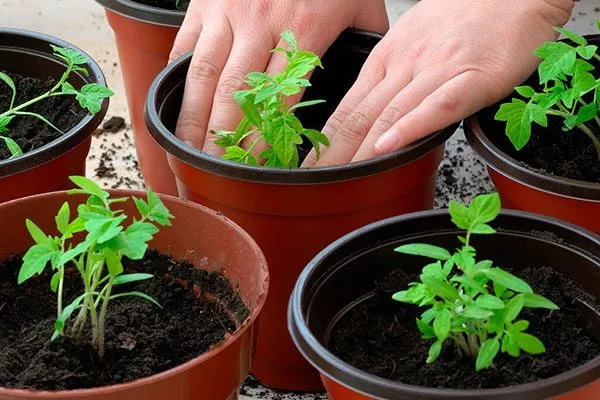
Ten to fourteen days before transplanting into the garden, begin hardening off the plants by gradually reducing the temperature to 15°C. Move the seedlings outdoors, increasing the time spent there. This preparation ensures the tomatoes are resilient to post-transplant stress.
Transplanting
Move the plants outdoors when the danger of night frost has passed and the soil has warmed to 14-16°C. This usually occurs in May or early June, depending on the climate zone.
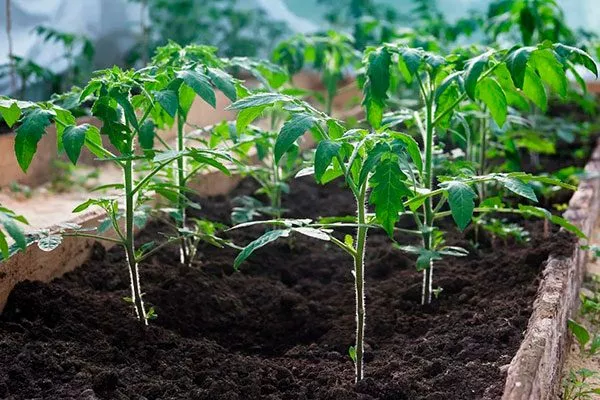
- ✓ Optimum soil temperature for planting seedlings: +14-16°C.
- ✓ Distance between bushes: 40-50 cm, between rows: 60-70 cm.
Please follow the basic requirements:
- Choose a sunny location protected from strong winds.
- Dig up the beds, adding organic fertilizers (humus or compost) and a little wood ash to increase the nutritional value of the soil.
- Prepare holes 20-25 cm deep with an interval of 40-50 cm between bushes and 60-70 cm between rows so that the plants do not shade each other and are well ventilated.
- Water the seedlings well the day before transplanting to make them easier to remove from the containers.
- Transplant the plants with the root ball, being careful not to damage the root system. Plant the seedlings deep down to the first true leaves to encourage additional root development.
- After planting, water each plant generously with warm water.
- Mulch the soil around the bushes with humus, peat or straw to retain moisture and prevent weed growth.
- If there is a risk of temperature drop, cover the seedlings with agrofibre or planks at night.
Following these rules will allow seedlings to quickly adapt to new conditions and develop a healthy root system for further growth.
Further care
Proper care of bushes after planting outdoors ensures vigorous growth, improves immunity, and enhances productivity. Follow standard agricultural practices:
- Watering. Moisten the roots of the plants with warm, settled water, avoiding contact with the leaves and stems. Water thoroughly immediately after planting, and then water as the soil dries, approximately every 5-7 days. Increase the frequency in hot weather.
Avoid overwatering to prevent root rot. - Refills. Apply the first fertilizer 10-14 days after planting, using organic fertilizers such as a mullein solution or herbal infusion. During flowering and fruit set, use complex mineral fertilizers containing phosphorus and potassium.
Feed the bushes 3-4 times per season, alternating organic and mineral fertilizers. - Soil care. Regularly loosen the soil around plants and between rows to improve airflow to the roots and prevent crusting. Mulch the beds with straw, humus, or peat to retain moisture and reduce weed growth.
- Formation. Remove side shoots, leaving 1-2 main stems. As they grow, tie the plants to supports or trellises to prevent lodging and improve ventilation.
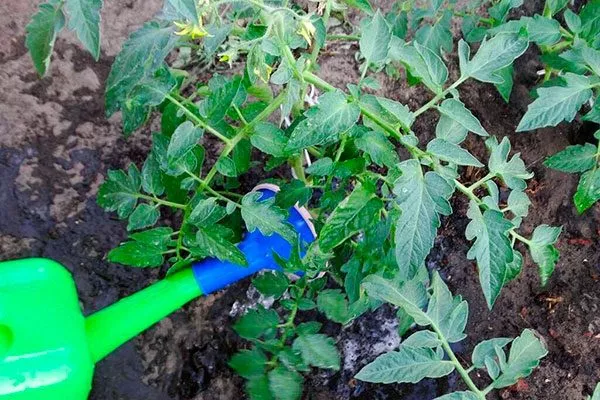
Harvesting and storing the tomato variety Raspberry Flame F1
Tomatoes ripen simultaneously on the vine, allowing for a short harvest. Since this is an early-ripening variety, it's best to harvest the crop immediately. Store the tomatoes at 8 to 12°C. This is the optimal temperature for preserving them without losing their flavor.
Place tomatoes in a single layer in wooden crates or cardboard boxes with ventilation holes. Store the harvest in a cool, dark, and well-ventilated area, such as a basement or refrigerator (in a separate section for vegetables).
Pest and disease control
Crimson Flame tomatoes rarely suffer from diseases and are rarely attacked by insects. However, if not properly cared for and exposed to unfavorable conditions, they can suffer from various problems:
- Alternaria. Brown spots appear on the lower leaves. To combat early signs of the disease, spray the bushes with Bordeaux mixture.
- Root rot. Tomato stems become thin and soft, resulting in the death of the plant. This disease most often occurs in acidic and heavy soils.
- Anthracnose. Round spots appear on green parts and ripening tomatoes. Fungicides such as Fundazol and Fitoverm are used for treatment.
- Wireworm. The pest eats roots and chews out stems from the inside. To control it, set traps and use Bazudin.
- Scoop. The caterpillars of this pest, both green and brown, make holes in leaves and fruits. Spray the bushes with Strela.
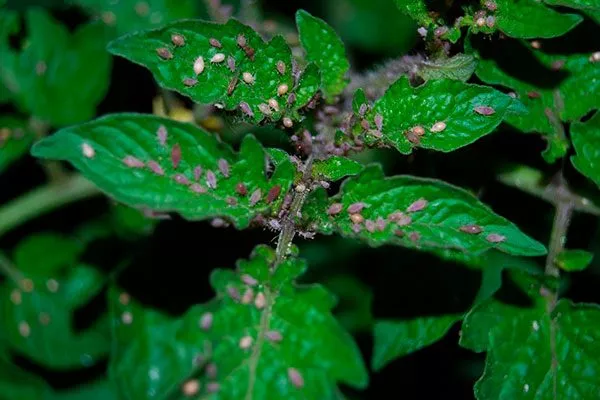
To prevent fungal diseases and insects, loosen the soil regularly and promptly remove plant debris. Plants require adequate moisture, but excess water can lead to root rot.
Similar varieties
Several varieties are available on the market that have similar characteristics to the Raspberry Flame hybrid. Below are similar varieties:
| Name | Description and characteristics |
| Marusya | An early-ripening determinate variety for open ground and greenhouses. Suitable for salads and whole-fruit canning. Heat-resistant. The tomatoes are ovoid, weighing 80-95 g. Ripening time is 105-110 days. Yield: 690 centners per hectare. |
| Flame | An early-ripening determinate variety for greenhouses. Requires training into three stems. Suitable for salads. Firm, elliptical tomatoes with an orange hue weigh up to 50 g. Ripening time is 90-95 days. Yield: 1,410 centners per hectare. |
| Mahitos | A mid-season indeterminate variety for greenhouses. Requires staking and training. Suitable for salads. The fruits are round, red, weighing approximately 72 g. Ripening time is 90-100 days. Yield is 340 centners per hectare. |
| Raspberry Liana | An early (ultra-early) determinate standard cultivar for open ground and greenhouses. Suitable for salads, canning, and processing. The fruits are round, with raspberry-pink skin. Weight ranges from 65 to 90 g. Ripening time is 85-90 days. Yield: 700 centners per hectare. |
| A gardener's dream | An ultra-early determinate variety for open ground and greenhouses. Requires staking and training. Suitable for salads. Flat-round tomatoes weigh approximately 80 g, are red, and have good flavor and medium firmness. Ripening time is 95-100 days. Yield: 630 centners per hectare. |
| Raspberry Farmer | An early-ripening determinate variety for greenhouses. Suitable for salads. Small, 50-60g-weighing vegetables have a round shape and slight ribbing. Ripening time is 85-90 days. Yield: 1,000 centners per hectare. |
| Pink miracle | This variety is a determinate variety. It is suitable for growing in greenhouses and open ground. The stems need to be secured. This makes it ideal for fresh salads. The tomatoes are round and raspberry-colored, weighing up to 100 g. Ripening period: 70-90 g. Yield: 230 c/ha. |
Pros and cons
The Raspberry Flame tomato hybrid has both advantages and some disadvantages. It's recommended to thoroughly familiarize yourself with its characteristics before purchasing seeds.
The positive aspects of the Raspberry Flame variety make it convenient for cultivation in the garden, but for further use, new seeds must be purchased annually.
Reviews
Raspberry Flame is an excellent choice for those who value bountiful harvests and strong immunity. Its resistance to late blight, attractive appearance, and excellent taste make it an indispensable crop for gardening. To achieve excellent results, it requires comprehensive and timely care.