
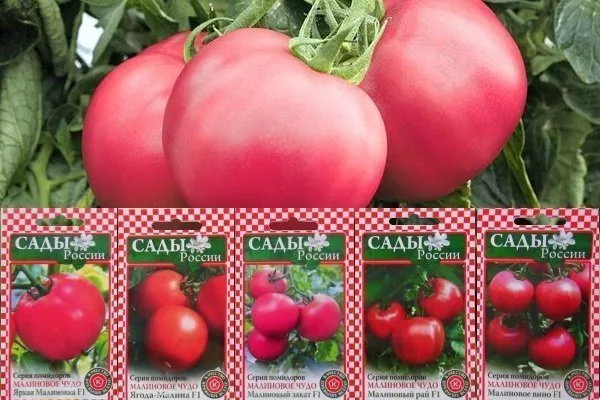
Raspberry Miracle is a series of 15 hybrid tomato varieties. These tomatoes boast attractive appearance and delicious flavor, and their low maintenance makes them a true treasure for gardeners and consumers. Before planting this variety, familiarize yourself with its characteristics and explore any potential pitfalls.
The origin of the Raspberry Miracle tomato
The tomatoes were developed by breeders from "Gardens of Russia." The work was completed over 12 years ago, resulting in three tomato series, each comprising five varieties with distinct characteristics.
After winning a gold medal at the 2014 agricultural exhibition, all tomato varieties were included in the State Register of Vegetable Crops. Tomato breeding didn't stop there.
Malinovoye Chudo tomatoes have a strong immune system and are resistant to a number of diseases. These varieties have thrived in all regions of Russia, producing a bountiful harvest with minimal input.
Main characteristics of the line
Raspberry Miracle is classified into three series, each with five varieties. These tomatoes are grown both in open fields and greenhouses. They are widely used by vegetable growers and consumers for freshly prepared dishes and canning.
General characteristics for all varieties of the line:
- tomato weight – 100-500 g;
- fleshy core;
- some seeds in the middle;
- the skin is smooth and even;
- moderate ribbing;
- dry matter in high concentration.
These varieties share a rich crimson hue and high yields, even with sudden temperature changes and insufficient watering. The largest tomatoes appear where the lower leaves are located, while medium and small fruits appear at the top of the plant.
The high quality of vegetables is beyond doubt; the main thing is to follow the basic rules of planting, care, harvesting, transportation, and storage.
Productivity and fruiting
If you follow the growing guidelines for the Raspberry Miracle, you can reap a bountiful harvest every summer. Over the course of a season (90-100 days), a single bush can yield 5-10 kg of fruit. This yield is not significantly affected by weather conditions, including sudden drops in temperature.
The fruits weigh 100-500 g each, depending on the variety chosen. The skin is thick and does not crack. Vegetable growers can confidently expect a bountiful harvest; the key is to increase watering during the fruiting period.
Application of fruits
Tomatoes are eaten fresh and processed. Thanks to their thick skin, they keep well in the refrigerator and make a healthy salad ingredient. This "raspberry miracle" is used for preserving: the small fruits are preserved whole or processed into juice, paste, vegetable salad, dressings for entrees, and sauces.
Vegetable growers use this variety for personal consumption and also sell it. This is due to its high yield: enough Raspberry Miracle for the family to eat and make a profit.
Resistance to diseases and pests
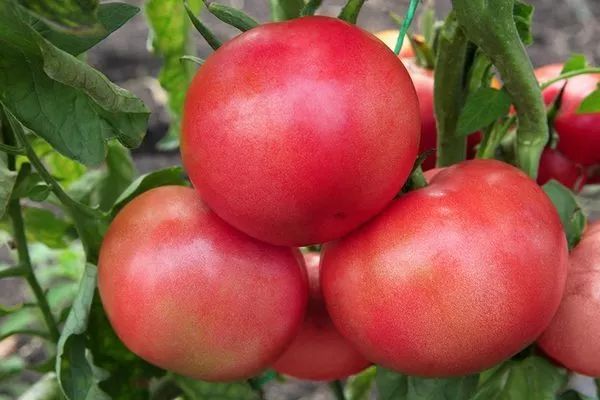
Raspberry Miracle is resistant to late blight (fungi) and has a strong immune system. But this doesn't mean they, like other plants, don't require preventative measures. It's best to stock up on special fungal protection products in advance to protect your tomato plants and your entire garden.
To avoid infection, it's best to remove the lower leaves of tomato plants, promptly remove weeds, and regularly loosen the soil to enrich it with oxygen. Avoid planting Raspberry Miracle in areas previously occupied by potatoes, bell peppers, or eggplants.
When planting Raspberry Miracle, make sure there are no potatoes nearby, otherwise the yield will drop significantly.
Tomato varieties
The Raspberry Miracle tomato line comprises three series, each containing five varieties. While the cultivation specifics are roughly the same, the fruits vary slightly in size and flavor, and have distinct yields.
First episode
| Name | Ripening period | Bush height | Fruit weight |
|---|---|---|---|
| Crimson sunset | early ripening | up to 2 m | 340 g |
| Raspberry wine | early ripening | up to 1 m | 300-400 g |
| Bright robin | early ripening | up to 1 m | 400 g |
| Raspberry berry | mid-season | up to 60 cm | 400 g |
| Raspberry Paradise | mid-season | up to 1 m | up to 500 g |
These tomatoes are easy to care for, thrive in any climate, produce a bountiful harvest, and rarely get sick. These are:
- Crimson sunsetThe crop is early maturing, grows up to 2 m in length, and produces round fruits weighing 340 g. One square meter yields up to 12 kg of tomatoes for fresh salads.
- Raspberry wineThe bush grows up to 1 m in length, producing small fruits weighing 300-400 g each, which are eaten fresh and have a pleasant taste.
- Bright robinThe plant ripens early, growing up to 1 m. The fruits are round, weighing 400 g each. A yield of up to 12 kg per square meter is obtained. The flavor is rich, making it an excellent choice for fresh salads.
- Raspberry berryThe variety ripens by mid-summer – July. The bushes grow up to 60 cm in height, producing fruits weighing 400 g each. One square meter yields up to 13 kg of tomatoes for vegetable salads.
- Raspberry ParadiseThe tomato ripens in July, producing large fruits weighing up to 500 g and growing up to 1 m in length. The yield is up to 12 kg per square meter. The fruits are very tasty and can be added to fresh salads.
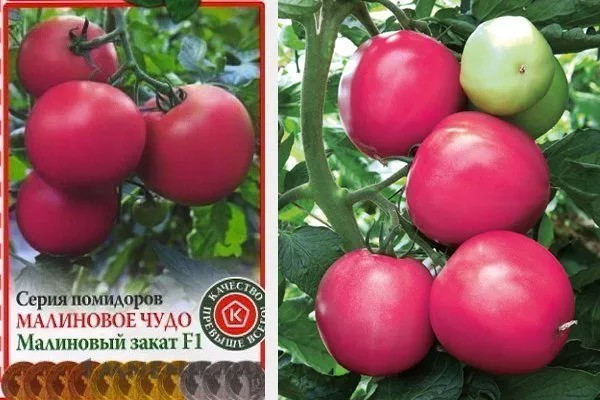
Raspberry Sunset Tomatoes
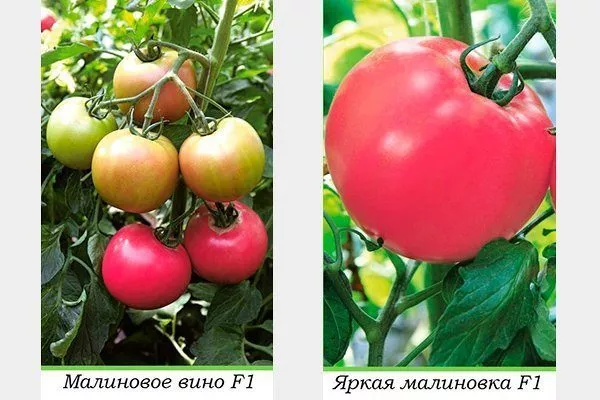
Raspberry Wine and Bright Robin tomatoes
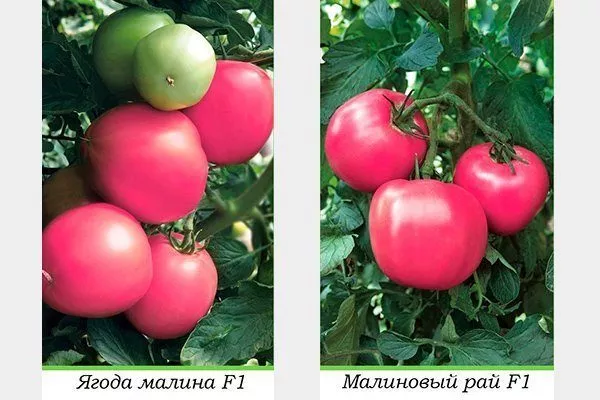
Tomatoes Raspberry Berry and Raspberry Paradise
Second series
| Name | Ripening period | Bush height | Fruit weight |
|---|---|---|---|
| Raspberry Joy | early ripening | up to 1 m | up to 150 g |
| Crimson Bison | mid-season | up to 1 m | 350 g |
| Crimson King | mid-season | up to 1 m | 300-350 g |
| Raspberry Dream | early ripening | up to 1 m | up to 350 g |
| Raspberry Desired | mid-season | up to 1 m | 300-400 g |
In this case, breeders placed greater emphasis on the shape and taste of the tomatoes. The second series includes the following varieties:
- Raspberry JoyThe tomato ripens in June, producing small fruits—up to 150 g each. The bush grows up to 1 m, yielding up to 14 kg per square meter. The skin is dense and ribbed, suitable for fresh salads and canning.
- Crimson BisonThe bush ripens in midsummer, producing 350g fruits that grow up to 1m in length. A yield of 12kg per square meter can be harvested per season. The flavor is excellent, the flesh is dense, and the skin is smooth.
- Crimson KingA mid-season variety with flat-round fruits weighing 300-350 g. The bush grows up to 1 m in length. For fresh salads, you can harvest 10 kg per square meter.
- Raspberry DreamThe tomatoes ripen in early summer, are flattened, round, and weigh up to 350 g. The plant grows up to 1 m. Per season, you can get up to 14 kg of salad tomatoes from 1 m² of area.
- Raspberry DesiredThe fruits ripen by mid-summer, weigh 300-400 g, and grow up to 1 m tall. The harvest is abundant, yielding 13 kg per square meter. The tomatoes are ribbed and suitable for salads.
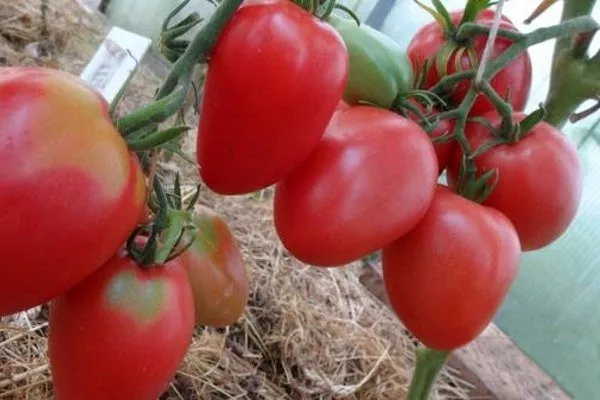
Tomato Raspberry Joy
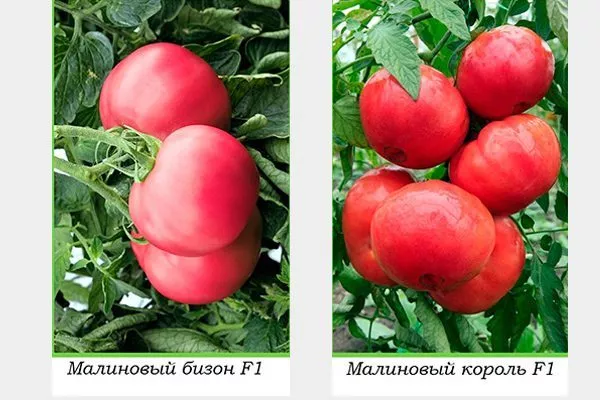
Tomatoes Raspberry Bison and Raspberry King
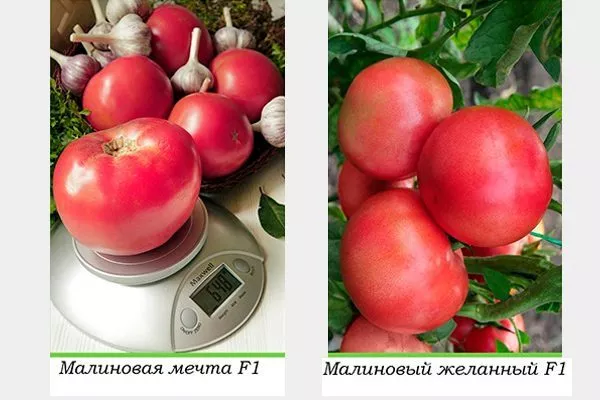
Tomatoes Raspberry Dream and Raspberry Desired
Episode three
| Name | Ripening period | Bush height | Fruit weight |
|---|---|---|---|
| Raspberry Popsicle | early ripening | up to 90 cm | up to 300 g |
| Raspberry Heart | mid-season | not tall | 300 g |
| Raspberry bunny | frost-resistant | up to 1 m | 350 g |
| Raspberry Surprise | early ripening | up to 90 cm | up to 350 g |
| Crimson Bogatyr | mid-season | up to 1 m | 500 g |
By following the planting and care guidelines for the third series, you can reap a bountiful harvest and the largest fruits. These include:
- Raspberry PopsicleThe bush is small – up to 90 cm in length. The fruits are round and slightly ribbed, weighing up to 300 g. Up to 14 kg of tomatoes can be harvested from 1 square meter.
- Raspberry HeartThe bushes are low, and the fruits are heart-shaped, hence the name. Each tomato weighs 300 g, yielding up to 13 kg per square meter.
- Raspberry bunnyThis frost-hardy plant grows up to 1 m in length, producing fruits weighing 350 g each, and is best suited for salads. Up to 12 kg of tomatoes can be harvested from 1 square meter.
- Raspberry SurpriseA low plant up to 90 cm in length, the fruits are flat-round and weigh up to 350 kg. Fruiting is up to 14 kg per square meter.
- Crimson BogatyrA distinctive feature is its large, 500g, crack-resistant fruits. The plant grows up to 1m in height, yielding up to 15kg per square meter.
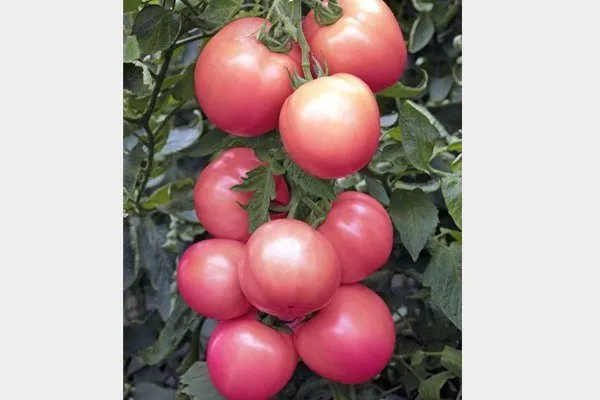
Tomato variety Raspberry Eskimo
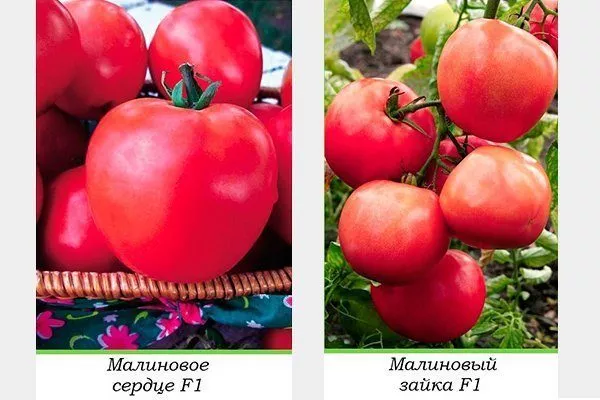
Tomato varieties Raspberry Bunny and Raspberry Heart
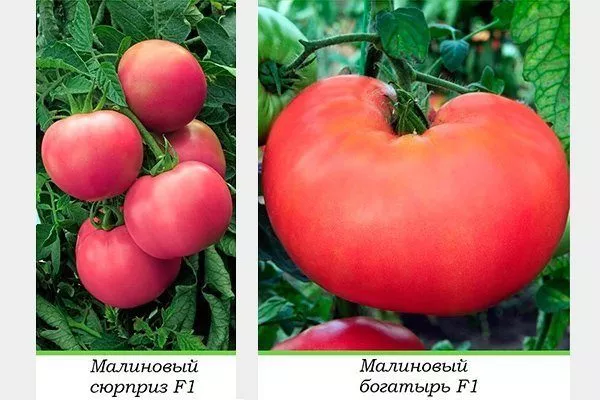
Tomato varieties Raspberry Bogatyr and Raspberry Surprise
Advantages and disadvantages
Tomatoes have a number of significant advantages, which increases their popularity among modern vegetable growers and makes them a sought-after product in agriculture.
Among the positive aspects:
- large fruits;
- juicy pulp;
- pleasant taste;
- ease of care;
- quick adaptation;
- disease resistance;
- dense skin, does not crack;
- strong immunity;
- presentable appearance;
- high yield even in unfavorable weather conditions.
There are also disadvantages to this choice:
- Possibility of purchasing seeds only as a set;
- the need to tie up plants;
- bush formation;
- late fruits are small.
Planting and growing rules
This tomato variety produces a bountiful harvest and quickly adapts to the new climate conditions of southern and northern Russia. With proper care, it bears fruit in any weather.
- ✓ Optimum soil temperature for planting seedlings: not lower than 15°C.
- ✓ The distance between plants should be at least 60 cm to ensure sufficient air flow and prevent diseases.
To ensure a strong and healthy plant, sow the seeds first, then transplant the seedlings into open ground or a greenhouse. The vegetable's yield doesn't decrease depending on the growing location.
In this video, you'll learn about the important aspects of growing Raspberry Miracle tomatoes in a greenhouse and open ground:
Seed preparation
After purchasing, open the package and carefully examine each seed. Remove any spoiled seeds; they won't produce fruit anyway. Then prepare them for planting, following these guidelines:
- Spray the soil of the container with potassium permanganate (make a pink solution).
- Treat the seeds with Ecosil, Baikal EM-1.
- Dry the grains naturally.
To plant seeds, choose warm weather. The optimal period is from March 1st to 10th. This time may vary (from February to March) depending on the regional climate.
Planting seeds for seedlings
To ensure seeds take root and the seedlings don't die, first prepare the soil and container. Basic requirements:
- The soil should be fertile and soft. It's best to choose a mixture of garden soil, peat, sand, humus, or composted plant waste.
- The container should be shallow but wide. After sowing the seeds, cover it with plastic wrap and keep it in a warm place.
Planting seeds at home is done in the following sequence:
- Make shallow holes – 0.5-0.7 cm.
- Place 20 seeds in each.
- Sprinkle a layer of soil no more than 1 cm on top.
- Water thoroughly.
- Keep in a warm place at 18-25 degrees.
Moisten the soil daily with a spray bottle. The first leaves will appear after 7-10 days.
Caring for seedlings
When the first buds appear, remove weak and lifeless shoots. Monitor the seedlings daily and thin them out. Eventually, 7 to 10 strong plants will remain in the container. Transplant these into individual pots or thin them out to leave 10 x 10 cm between them.
To grow seedlings, observe the following conditions:
- Temperature conditionsMaintain at 18-25 degrees.
- Increased humiditySpray plants 1-2 times a day.
- Good lighting. Place the container with seedlings on the south side of the apartment.
If the room is predominantly shaded, use additional artificial lighting such as lamps. Without light, seedlings grow poorly and wilt, which negatively impacts future yields.
Preparing the soil and transplanting seedlings
Prepare the soil for seedlings in the fall. You'll need sand, compost, and garden soil. Mix these ingredients in equal proportions and store in the basement until the season begins. Before sowing, water the soil with a pink solution of potassium permanganate or freeze it.
Transplanting seedlings is appropriate when the air temperature has stabilized and the risk of night frosts has passed. Failure to do so will result in the root system dying and the plant failing to produce a harvest.

Sequence of actions when planting seedlings:
- Dig a hole to a depth of 12-15 cm.
- Place a portion of fertilizer.
- Water generously.
- Plant the seedling and at the same time set the stick vertically.
- Cover the seedlings with soil and water them.
- After a week, tie the seedling to a stick.
Ensure the distance between adjacent bushes is 60 cm, and between rows – 70 cm.
Caring for tomatoes
The plant grows quickly. Leave two stems at a time and prune off any remaining side shoots as they appear. To increase yield, remember the standard care: regular watering, weeding, mineral fertilizer, weed control, and disease and insect prevention.
Basic rules of care:
- Moisten the soil with drip irrigation.
- Loosen the soil after pre-moistening.
- Choose superphosphates as fertilizer.
- Fertilize the soil with manure, peat, and wood ash.
- Tie the stems to the trellis and other supports.
Watering tomatoes
For Raspberry Miracle tomatoes, use drip irrigation. Set up a tape system to continuously supply the moisture the root system needs for accelerated growth.
During the fruiting period, tomatoes require a lot of water – about 3.5 liters per square meter. If they are grown in a greenhouse, water them generously in the morning on a sunny day. When grown outdoors, it's best to water them in the evening to prevent rapid evaporation.
Weeding
To improve aeration, loosen the soil surface after each watering. Avoid crusting, as this will impair oxygen supply to the soil and slow fruit growth and ripening.
Immediately after planting and for the next 7 days, loosen the soil to a depth of 12 cm, then no more than 8 cm. This is important to avoid damaging the extensive root system. The soil at the base of the bush should always be loosened.
Mulching the soil (covering the surface of the soil with special compounds) will help improve humidity and temperature levels.
Top dressing
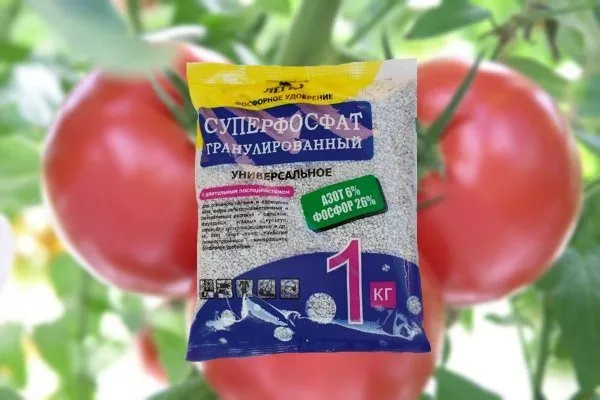
For fertilization, choose specialized complex preparations, such as tree resin, peat, humus, and manure. For top dressing, dissolve dry superphosphate in water according to the instructions, which is especially important during the fruiting period (to increase yields).
- First feeding: 2 weeks after transplanting the seedlings, use a complex fertilizer with a high phosphorus content.
- Second feeding: during the flowering period, increase the potassium content in the fertilizer.
- Third feeding: during fruiting, use fertilizer with a high content of potassium and microelements.
Bush formation
Space the bushes apart, but avoid planting them too close together, as this will deprive them of warmth and light. Tie tall bushes to support during active growth throughout the growing season.
Timely side-sonning, pinching of growing points, and bush shaping also increases yield. It's best to remove lower leaves, those close to the ground, immediately. This will promote plant growth and prevent fungal growth.
Harvesting and storage
Harvesting can begin in the summer months (June to August). The first fruits are the largest and are sold. Later, gardeners use the smaller tomatoes for canning. At temperatures below 13 degrees Celsius, the entire harvest is harvested, as the flavor deteriorates.
If the tomatoes are ripe, they can be stored for up to 3 days without breaking. If they need to ripen further, they can be stored in a warm, dry place for up to 7 days. Seeds for future seedlings are selected from large specimens. The shelf life is up to 10 years.
Diseases and pests
Tomatoes are resistant to late blight. Plants can be damaged by:
- Dry brown spot. The leaves are eaten away by brown spots.
- Blossom-end rot. The tops of unripe fruits begin to rot.
- Brown spot. Brown spots appear on the underside of the leaves and the plaque is difficult to get rid of.
Tomatoes can also be damaged by whiteflies and tomato moths, while aphids and spider mites can leave a velvety coating on the leaves. These microbes can be controlled with complex pesticides, but it's best to take preventative measures early.
Reviews of the Raspberry Miracle tomato
Raspberry Miracle tomatoes are a collection of varieties that allows every gardener to choose the perfect tomato to suit their taste. With minimal time, money, and labor, you can harvest a bountiful harvest for your family and for sale.