
Experienced gardeners who enjoy discovering new varieties will definitely appreciate the Malachite Box tomato. This tomato has a distinctive aroma and unique appearance. Although it can be challenging to grow, it deserves attention for its low-temperature tolerance, high productivity, and excellent flavor.
Description of the bush and fruits
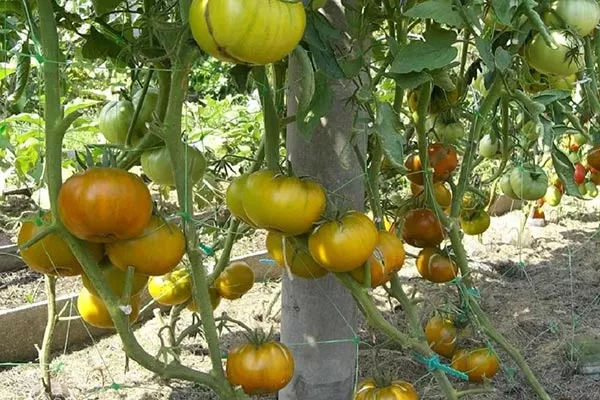
Malachite Box is an indeterminate variety, so bushes of this variety can reach heights of 120 to 150 cm, and sometimes even higher – up to 200-220 cm. Due to their continuous growth, the bushes must be secured to stakes or a special trellis system must be used.
Varietal characteristics:
- The stem is strong and sturdy, with well-developed hairs. As it grows, the bush produces numerous side shoots, which should be removed to ensure maximum yield. It is recommended to leave two main stems on the bush.
- The leaves are rich green and have a matte sheen. The foliage is very dense.
- The first fruit forms on the third leaf, and the inflorescences do not require additional pollination, making them resistant to barren flowers. Each cluster produces approximately five fruits.
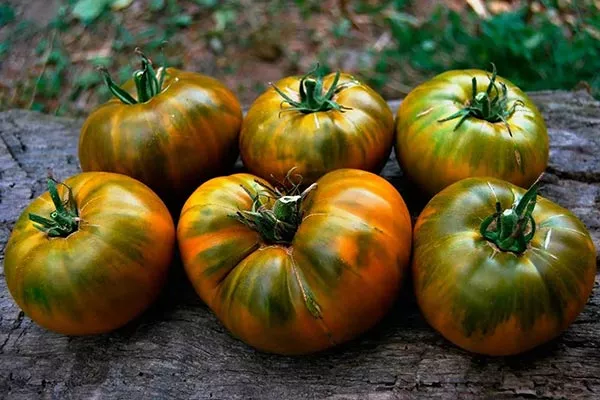
- The tomatoes are large, round in shape, and weigh between 250 and 300 g on average. In the lower part of the bush, the fruits can be significantly larger, reaching a weight of 700 to 900 g.
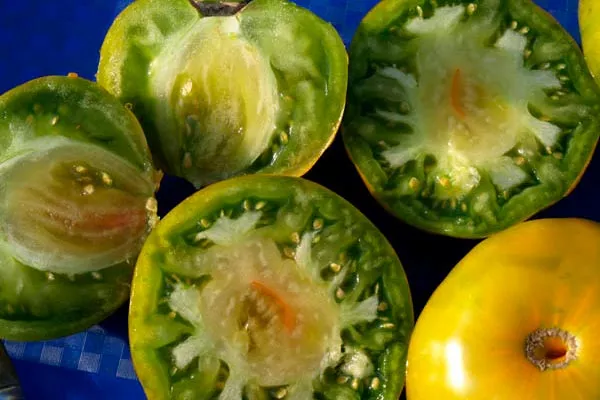
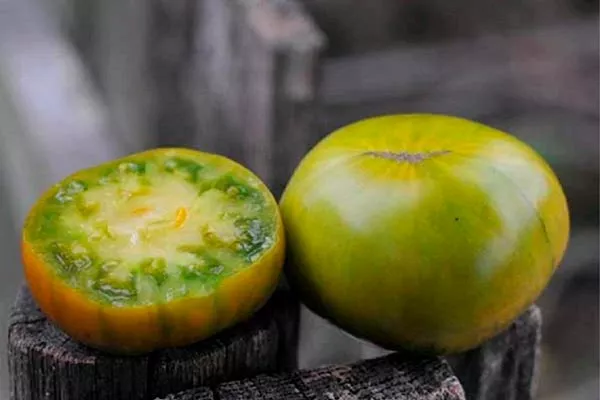
- This tomato is eye-catching due to its unique color. Initially, the fruit has green skin with distinct greenish veins. As it ripens, the color changes, and the tomato acquires a yellow hue with dark green longitudinal stripes.
- Inside there are 4 seed chambers, which contain a small number of small seeds.
- The tomato pulp has a light green hue and is firm and juicy.
- ✓ Fruits change color from green to yellow with dark green lines when ripe.
- ✓ The pulp of the fruit is light green and is firm and juicy.
Main characteristics
Novosibirsk breeders V. N. Dederko and O. V. Postnikova created the tomato variety "Malachite Box," which is distinguished by its increased resistance to sudden temperature fluctuations, including drops to -2 degrees Celsius.
Productivity, fruiting and ripening time
The Malachite Box variety is mid-season, with a ripening period of 108-110 days. The yield is good and long-lasting, with harvesting beginning in July and continuing until September. In open ground, 1 square meter can yield 4.3-5 kg of tomatoes, while in greenhouses, up to 15 kg.
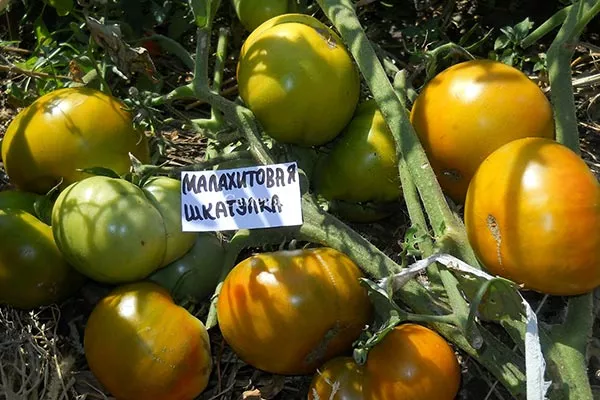
Malachite Box fruits have one unfortunate characteristic: their thin skin makes them difficult to store or transport for long periods. Therefore, it's best to eat them immediately or process them.
Taste and benefits
Many people note the unusual sweet melon aroma of these tomatoes. Others claim the aftertaste is reminiscent of kiwi. This variety contains several percent more sugar than other tomato varieties.
Tomatoes contain no red pigment, making them an ideal choice for people with allergies and children. Rich in chlorophyll, they help increase oxygen levels in the blood.
Scope of use
It is recommended to consume this variety of tomatoes when fresh or as an ingredient in salads.
Other features:
- It is not suitable for canning due to the large size of the fruit and the fragile skin, which often cracks during processing.
- It is ideal for preparing appetizers, lecho, various sauces, jams and preserves.
Growing seedlings
The Malachite Box tomato variety is recommended for cultivation in all climate zones of Russia according to the State Register. However, it's worth recognizing that our country's climate varies greatly. Although the fruits ripen 100 days after sowing, the optimal cultivation method is from seedlings.
Preparing soil and containers
In order to obtain healthy and strong seedlings, it is necessary to take into account a number of details:
- Many gardening enthusiasts prefer to prepare their own tomato soil mix. It's important that the soil is fertile, light, and allows for free air circulation.
- It is acceptable to use ready-made soil substrate from the store.
- Before sowing tomato seeds, disinfect the containers and soil. Experienced gardeners prefer to boil the seeds with potassium permanganate crystals.
- ✓ Optimum temperature for seed germination: 22-25°C.
- ✓ Required seed sowing depth: 1.5 cm.
To ensure the disinfection process is as effective as possible, cover the tomato boxes and soil with cling film.
Seed preparation
To grow high-quality tomatoes, you need to carefully select your planting material. Seeds purchased from reputable producers have already been selected. However, if you're using your own seeds, you need to carefully sort them:
- They are placed in a 5% salt solution. The poor-quality seeds, which are lighter, will rise to the surface. These should be removed, and the remaining seeds should be rinsed in clean water.
- Next, they are treated with a potassium permanganate solution or biostimulants such as Epin or Zircon are used to accelerate growth. Aloe juice is also effective for seed treatment.
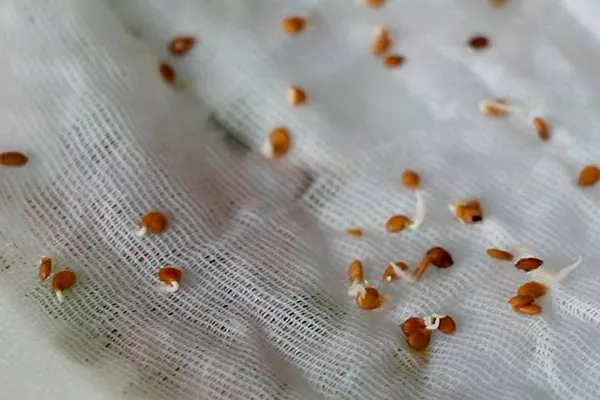
Tomato seeds should not be soaked in potassium permanganate for more than four hours, while soaking in aloe vera juice can take about twenty minutes. When using biostimulants, it's important to follow the manufacturer's instructions.
Sowing seeds
The sowing process is standard: fill the containers with the substrate and evenly distribute the seeds into the furrows, spaced 3 cm apart and 1.5 cm apart. Cover the containers with plastic wrap and place them in a bright, warm location with a temperature of 22-25 degrees Celsius.
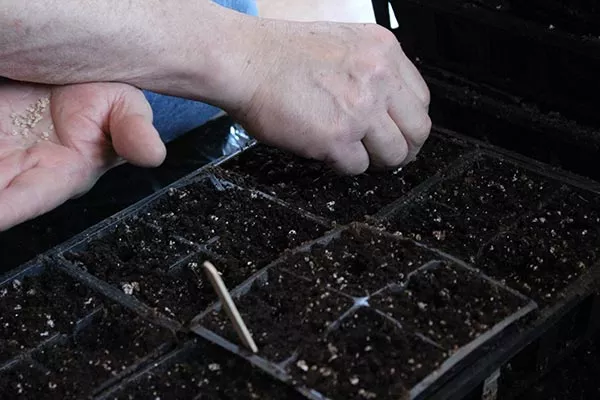
Then proceed as follows:
- After the first shoots appear on the third or fourth day, remove the covering.
- Reduce the temperature to 15 degrees to prevent excessive growth of seedlings, but there should be enough light for optimal growth.
- If there is a lack of natural light, install artificial lighting using lamps.
At this stage, water only as needed, but it is important to avoid overwatering to prevent the root system from rotting.
Picking
Tomatoes tolerate picking and transplanting well. Seedlings should be transferred to individual pots when three to five true leaves appear on the tomato plant. Picking achieves two important goals:
- plants get the opportunity to develop in a fresh and fertile substrate;
- will form an extensive root system.
After transplanting, it is important to monitor the moisture level of the top layer of soil to avoid it drying out, which can damage the seedlings.
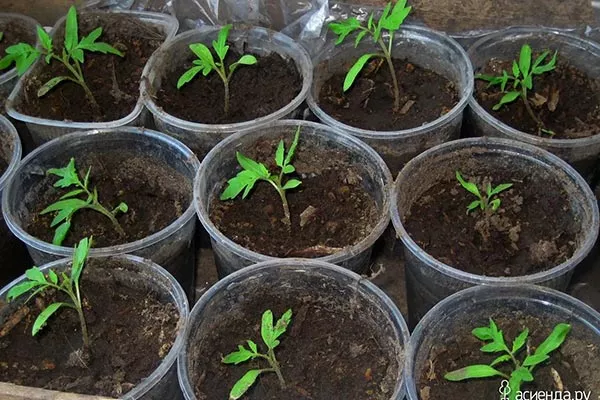
To ensure healthy growth and strength of tomatoes, it is recommended to feed them several times with mineral fertilizers, following the manufacturer's recommendations.
Over-fertilizing should be avoided, as excess nutrients can cause the plant to become too leggy, which will negatively impact the yield of the Malachite Box variety.
Hardening
To make tomatoes resistant to weather changes, they are hardened off first. This process involves placing the plants outdoors for ten days, gradually increasing their time there to acclimate them to the new conditions.
In a city apartment, balconies or loggias are best suited for this purpose, but it is necessary to avoid rooms with strong drafts.
Transfer
Depending on the climate, transplanting tomatoes into a greenhouse or open ground takes place between May 20 and June 15. Regardless of the exact time, the soil should be prepared two weeks beforehand. Traditionally, the soil for tomatoes is prepared in the fall.
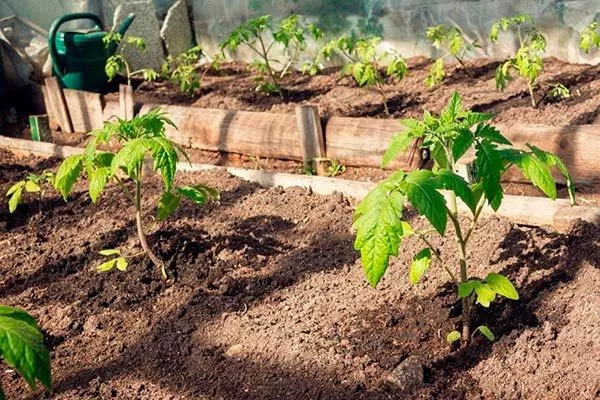
Basic rules:
- Before transplanting, the beds with fertilizers are dug up and watered with warm water.
- Once the soil has warmed, transplant. Dig holes to accommodate the seedlings' root system. Be sure to water them with boiling water, but add potassium permanganate to prevent blackleg.
- It is best to plant tomatoes in the evening so that by morning the seedlings have time to get used to the new conditions.
- It is recommended to plant no more than two plants per 1 square meter of space.
- Immediately after transplanting, install a secure support, tie the tomatoes to it, and water them thoroughly. The next watering should be done in three days.
Further care
To achieve abundant fruiting and ensure the well-being of plants, it is important to follow certain recommendations:
- Develop a consistent watering system that involves watering once or twice a week. During dry weather, you can increase the frequency of watering, and during periods of excessive moisture, reduce it.
- Immediately after planting the seedlings in the soil, begin staking the bushes. Otherwise, the long vines will droop toward the ground and sometimes break under the weight of the fruit.
For this purpose, wooden stakes are prepared in advance or a supporting trellis system is installed. In addition to the main stem and branches, the flower stalks of this variety are also tied up. - Perform the side-sonning procedure as the bushes develop. Each plant should form two main shoots, with the number of flowers not exceeding 7-8.
- Loosen the soil around the tree trunks twice a week, removing any excess weeds immediately. To limit weed growth, you can spread peat or dry compost around the bushes, which will help reduce weeds and conserve soil moisture.
- Fertilize the plants several times during the growing season. After transplanting, it's recommended to use high-nitrogen fertilizers; during budding and fruit set, use phosphorus and potassium fertilizers, as well as special solutions made from wood ash, peat, and organic waste.
Pest and disease control
Malachite Box has good resistance to various diseases and pests. However, to prolong the fruiting period, measures must be taken to prevent late blight.
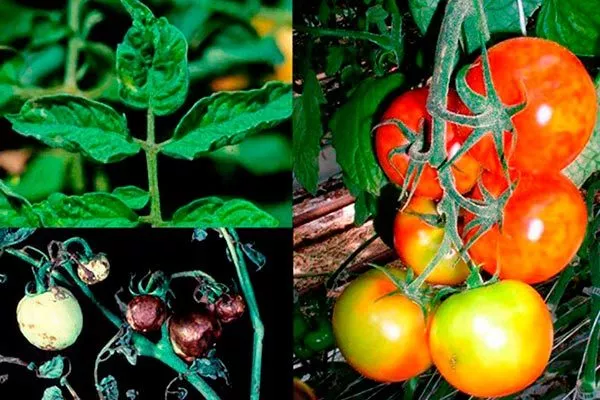
Therefore, the following preventive measures should be taken:
- At the end of the season, all plant remains are removed.
- They carry out soil cultivation.
- In June, tomatoes are treated with Bordeaux mixture.
- Place natural mulching materials under the bushes.
- When growing in a greenhouse, it is necessary to ventilate the room every day.
- Plants are pollinated with wood ash.
- The lower leaves are cut to the level of the first stalk.
Whiteflies are active predators, feeding on the sap of the shoots and leaves of this variety. Sticky traps are used to control them. Chemical treatments such as Iskra and Fitoverm are often used, while folk remedies include soapy water or garlic infusion.
Pros and cons
Similar varieties
| Name | Disease resistance | Growth type | Fruit color |
|---|---|---|---|
| Giant Emerald | High | Determinant | Green with a yellowish tint |
| Cherokee Green Gold | Good | Indeterminate | Golden |
| Everett's Rusty Heart Tomato | Average | Indeterminate | Bronze green |
The Malachite Box's characteristics and features resemble several other tomato varieties:
- Giant Emerald - This mid-season variety is suitable for both greenhouses and open-air gardens, with a growing season of 105-110 days. These bushes, reaching 80-100 cm in height, have powerful roots and wrinkled leaves reminiscent of potato leaves.
The fruits are round, green with a yellowish tint, and weigh between 200 and 400 g. A single plant can yield up to 4-5 kg of fruit. Giant emerald is highly disease-resistant. - Cherokee Green Gold – A variety developed by American breeders. This tall, indented variety, reaching 180 cm, requires support. The fruits are flat-round, gently ribbed, weigh 300-400 g, and are golden in color with green, sweet flesh.
One plant can produce up to 7-8 kg of vegetables; the variety is distinguished by good disease resistance. - Everett's Rusty Heart Tomato - This is an indeterminate variety of American origin, suitable for greenhouse cultivation, with bushes reaching 160-180 cm. The fruits ripen 110-120 days after planting.
The fruits of this variety are heart-shaped, fleshy, and weigh 250-350 g, with bronze-green tones. The flesh is juicy and sweet, and when cut, it is green with pink streaks. The Everett's Rusty Heart tomato has moderate resistance to nightshade diseases.
Some foreign varieties, similar in description but poorly adapted to Russian weather conditions, are often difficult to find. In contrast, Malachite Box is a variety developed in Siberia and adapted for cultivation in our harsh climate.
Reviews
Malachite Box is a true treasure for connoisseurs of flavor and lovers of green-hued tomatoes. These tomatoes, with their aromatic, fruity flavor, are ideal for eating raw, as well as for making juices and marinades. This variety is resistant to adverse weather conditions, produces a bountiful harvest, and boasts a high germination rate.