
The Lyubov tomato variety is an ideal choice for beginning gardeners seeking a quick and easy-to-care-for harvest. Suitable for growing in southern regions, this vegetable thrives in open areas. In northern latitudes, Lyubov only produces fruit in the protected conditions of greenhouses.
Breeding history
The variety was created by renowned breeder Yuri Panchev in 2006. It is a hybrid with limited growth. It is recommended for cultivation in open fields in the southern regions of the country or in greenhouses in the central part of the country.
Description of the plant
The Lyubov F1 tomato is determinate, meaning its growth stops after the inflorescences form. In open ground, the plant reaches a height of 80-100 cm, while in greenhouse conditions, it can reach 120-150 cm.
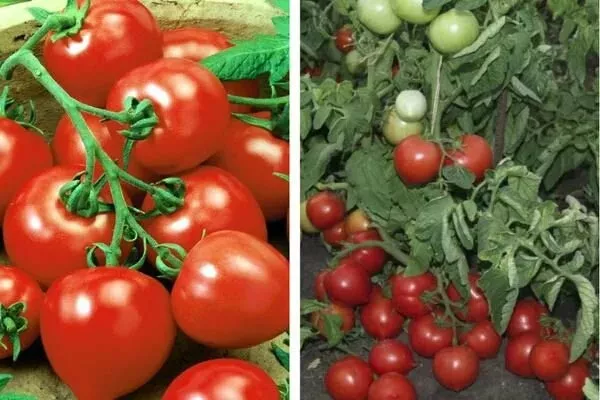
Other varietal characteristics:
- The leaves are dark green in color and of normal size, and there are not many of them on the plant.
- Tomato inflorescences are simple. Each plant produces up to five clusters, each containing five to six ovaries.
- The peduncle has a characteristic articulation.
- Initially, the seedlings stretch upward, forming numerous side shoots in the leaf axils. Therefore, the recommended training system for the Lyubov F1 variety involves retaining only one side shoot up to the seventh leaf, while all others are removed.
- At the bush level, starting from the 8-9 axil, the first brush with flowers is formed.
- The stems are characterized by strength and stability, they are covered with delicate pubescence.
Key indicators of tomatoes
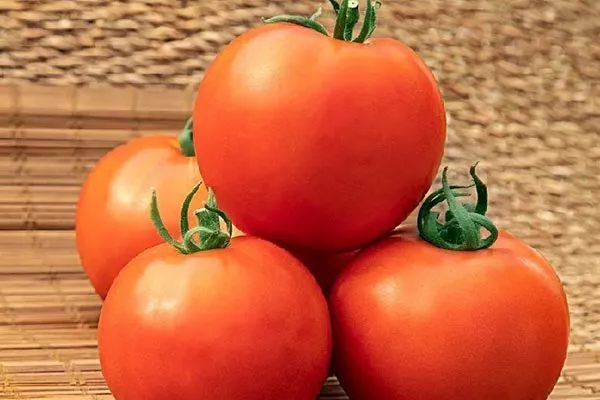
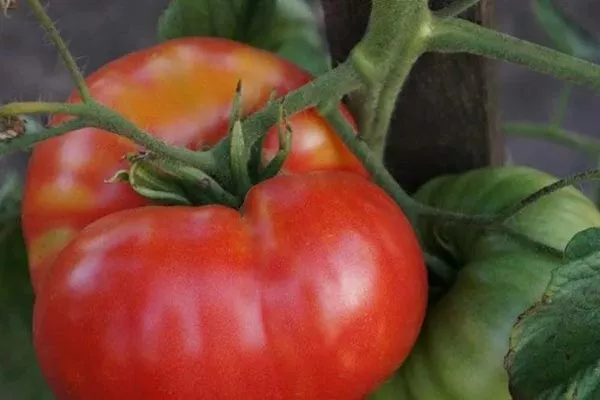
This tomato hybrid is renowned for its large, bright red or deep crimson fruits. Key features of the hybrid include:
- round or slightly flattened shape;
- weight within 200-240 g;
- thin but strong skin that reliably protects the fruit from cracking;
- high consumer properties – most tomatoes have an attractive appearance and are suitable for sale;
- juicy, homogeneous internal content and sweet and sour aroma;
- uniformity of fruit size, regardless of their location on the bush;
- the presence of 3-4 seed chambers, in which there are practically no seeds or voids;
- the possibility of long-term storage of the harvest in a cool and dry place – up to one month.
Varietal characteristics
The plants are resistant to diseases, especially tobacco mosaic. The Lyubov F1 variety is distinguished by good tolerance to drought and sudden temperature fluctuations.
The main purpose of the variety
Lyubov F1 tomatoes, distinguished by their large size, are intended for use in salad recipes. Their shape and size are not suitable for whole canning. However, these vegetables can be used to make a variety of delicious winter preserves, including:
- juice;
- ketchup;
- lecho;
- soup dressing.
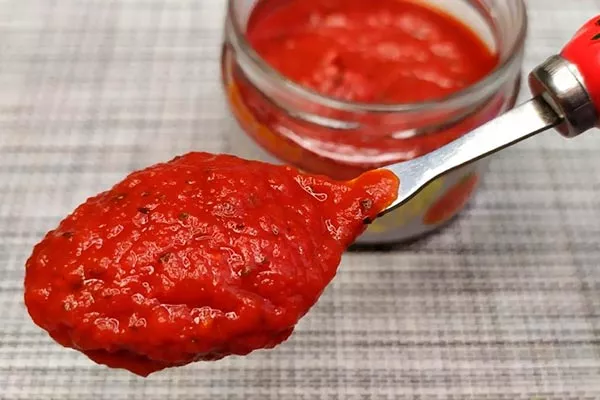
The hybrids impress with their flavor. Their tartness and sweetness are perfectly balanced, creating a unique taste. These qualities have been highly praised by many gardeners.
Ripening and fruiting cycle
Hybrid tomato seeds "Lyubov F1" are offered by agricultural companies such as "Aelita," "SeDeK," "Sibirsky Sad," and "Semena Altaya." According to the packaging, this variety is considered early or early maturing. The first fruits appear on the bushes 100-105 days after the shoots appear.
Productivity
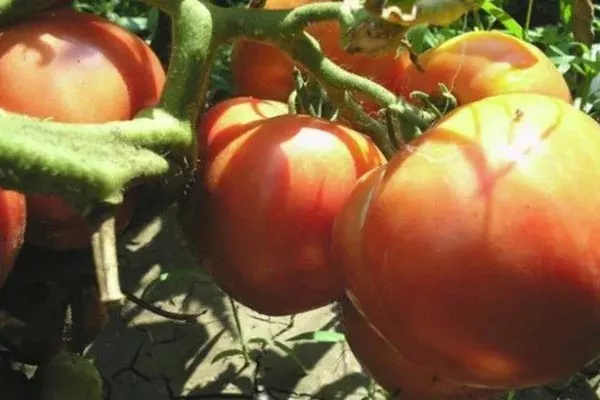
A single plant can produce up to 6 kg of ripe vegetables per season, but this is only achievable in a greenhouse. In open ground, the Lyubov F1 tomato yield ranges from 4 to 5 kg. With four plants planted in a 1 sq. m area, the variety yields 15-20 kg.
Resistance to diseases and pests
Thanks to its unique hybrid genetic heritage, the Lyubov F1 tomato variety has impeccable resistance to a number of diseases:
- tobacco mosaic virus;
- verticillium wilt;
- Fusarium wilt.
Planting near potato crops increases the risk of Colorado potato beetle infestation. However, other pests often refuse to settle near Lyubov F1 tomato plants.
How to grow?
Gardeners often prefer to grow their own seedlings, starting 1.5 to 2 months before transplanting them outdoors. The ideal time for planting is when the weather is already warm, with no risk of frost, which could kill the seedlings.
To achieve high yields, it is necessary to use fertilizers to nourish plants. Despite the relative resistance of hybrid varieties to various diseases, preventative measures are taken against potential diseases and pests.
Timing of sowing seeds for seedlings
Before transplanting into the ground, seedlings should undergo a developmental stage of 55-60 days. If you plan to plant tomatoes in a heated greenhouse, the optimal sowing period is February-March, taking into account the desired date of the first harvest. However, for growing tomatoes in open beds, it is recommended to start in March.
Soil
Soil quality is key to achieving high yields. Tomatoes require a rich, well-aerated soil mixture with sand, silt, and clay. A soil pH test should be performed before planting.
- ✓ The optimal soil temperature for sowing tomato seeds Lyubov F1 should not be below +15°C.
- ✓ The soil moisture level should be maintained within 70-75% of the total moisture capacity.
The optimal pH for tomatoes ranges between 6.2 and 6.8. If necessary, if the soil is outside this range, apply appropriate fertilizers.
To increase soil fertility, organic fertilizers are used:
- peat;
- compost;
- liquid manure.
To get rid of putrefactive bacteria and pests before sowing seeds for seedlings, the soil is intensively doused with boiling water. High temperatures can destroy many micropathogens. For a similar purpose, the soil is treated with a 1% solution of potassium permanganate. This substrate can also be purchased at the store.
Growing container
To plant seedlings, you can use a wide range of containers:
- wooden or plastic boxes of various shapes and sizes;
- cups made of plastic or polypropylene;
- professional seed containers;
- tablets or cups filled with peat (in this case, peat is not added to the substrate).
Any suitable-sized object readily available in the home can also be used, such as cut-down bottles or milk cartons. Containers can be purchased at specialty stores. However, peat pellets or cups are considered the most preferred due to their rich nutritional properties.
One of the key features of these containers is their ease of transplanting. If you need more space for your seedlings, simply move the tablet to a larger container. The peat dissolves in the soil over time, without harming the plant's root system and allowing it to adapt smoothly to the new conditions.
Seed preparation
To ensure a bountiful and high-quality harvest, seeds are treated to protect against various diseases and harmful insects. High-quality seeds are richly colored and do not float to the surface of the water when soaked. Seeds stored for more than a year develop a yellowish or pale gray tint. If you have such seeds, it is recommended to soak them in a growth stimulant to stimulate growth.
Before sowing, the seeds undergo the following disinfection procedure:
- to kill insect larvae and eggs, they are placed in hot water for 10 minutes;
- To combat fungi, mold and rot, grains are disinfected in a 1% potassium permanganate solution for 20-40 minutes.
To accelerate germination and ensure balanced emergence of tomatoes, soak seeds in a growth stimulant for 15-25 hours. Various products are used for this purpose, including:
- Energen;
- Kornevin;
- Zircon;
- Epin;
- Baikal EM-1.
A wide range of such products is available at agricultural supply stores. They must be used strictly according to the instructions on the packaging.
Sowing
The best method for growing seeds is using peat pellets. They are placed in plastic containers and moistened. After the pellets expand, the seeds are carefully planted in them and covered with plastic film to create greenhouse-like warmth and humidity.
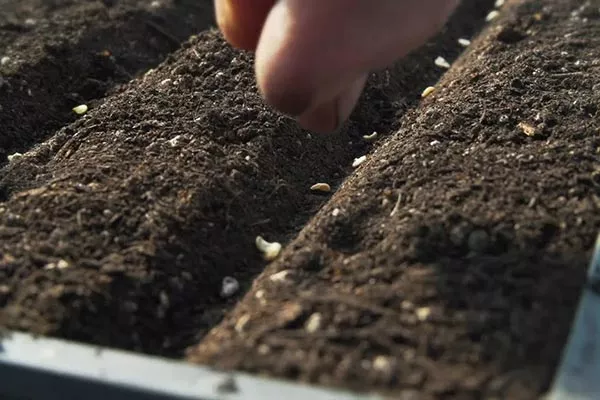
To plant seedlings in boxes, pre-treat the soil with a 1% solution of potassium permanganate. Sow the seeds so that they are 2 cm apart and 3 cm apart between rows. The seeding depth is 1 cm, maximum 1.5 cm.
Caring for seedlings
When the seedlings develop two or three true leaves, they are pricked out into individual containers. Plants need space to grow, so crowding hinders development, and leaf-to-leaf contact slows their progress.
Conditions and rules of care:
- The seedlings need to be provided with a sufficient amount of direct sunlight, but given the short winter days, artificial lighting for tomatoes is required for 14-16 hours daily.
For this purpose, phytolamps or LED systems are used, which are distributed evenly to prevent deformation. - The room temperature should be at least +17-18°C.
- During seedling growth, several fertilizing sessions are performed at two-week intervals. The first application is made when two or three true leaves have formed.
- Watering tomatoes is done regularly, at least once a week, depending on needs.
Hardening
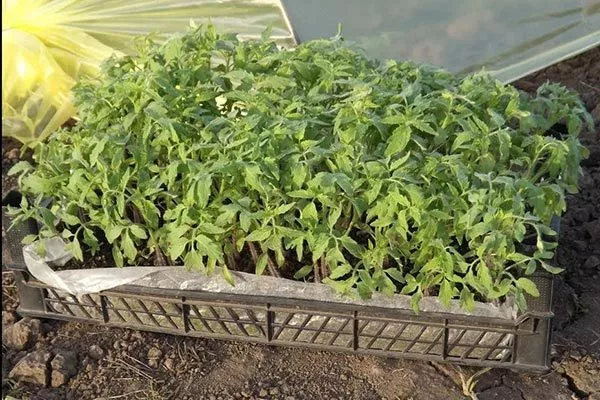
When the seedlings reach 40-45 days of age, they begin hardening off. At daytime temperatures of 15°C, the plants are taken outside for 1.5-2 hours. Over time, the duration of exposure is increased to 6-8 hours. This process facilitates more successful acclimatization of the seedlings when transplanted into the soil and increases their resistance to various weather conditions and diseases.
Planting seedlings in a permanent location
By the age of 55 days, the seedlings have developed approximately 10 large leaves, which signals the time to move them to their final location. Transplanting the seedlings into open ground occurs after the danger of spring frost has passed, and in the event of cold snaps, the root system is protected with a layer of mulch.
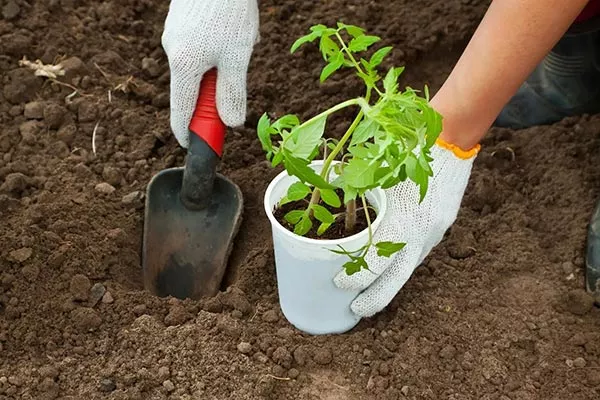
Tomatoes are planted in rows, which ensures easy maintenance and harvesting. Rows can be staggered or parallel to each other.
It is important to remember that when transplanting to a permanent location, seedlings should be buried to the level of the first leaves, which promotes the formation of additional roots and increased growth of the bushes.
Further care of plants
One mature tomato plant requires approximately 12-14 liters of water per week. This process is carried out early in the morning, but it's best to water the plants in the evening, as this is when they are actively growing and the water is absorbed by the plants rather than evaporated by the sun.
Other events:
- Pinching out stepsons. Lyubov F1 tomatoes actively develop lateral shoots. These need to be removed weekly to keep them no longer than 3-5 cm.
- Garter. Despite the bushes' relatively short stature, they still require support. This can be achieved by using either individual posts or wooden trellis-like structures.
- Top dressing. Ten days after transplanting the seedlings into the soil, apply the first organic fertilizer. By this time, the seedlings should have fully established roots. For fertilization, use 500 g of compost mixed with 10 liters of water. Use 500 ml of this solution per plant.
The next step is mineral fertilizers, which are applied two weeks after the organic fertilizers. Suitable mineral fertilizers include superphosphate or potassium sulfate (1 tablespoon per 8-10 liters of water). Each plant is fertilized with 1 liter of solution. Subsequently, organic and mineral fertilizers are alternated. - Soil care. This involves loosening the soil to a depth of 8-9 cm, which is done the second day after watering, while removing weeds. It's also common to hill up tomatoes, which strengthens the root system and, consequently, increases yield.
- Using mulch. It consists of a 5-8 cm layer of straw, wood shavings or freshly cut grass, helps retain moisture in the soil and prevents the development of weeds, and also protects the foliage from accidental splashes during watering.
Prevention of diseases and pests
Love tomatoes are prone to problems such as:
- late blight;
- rot of the top and roots.
To prevent fungal infections, plants are sprayed with a 1% solution of potassium sulfate or specialized products such as Quadris and Acrobat. Infected areas should be removed and destroyed, for example by burning.
Besides diseases, crops can become a target for insect pests such as slugs, cutworms, and aphids. To prevent these, use an infusion of garlic or onion (200 g of crushed spices per 10 liters of water).
Chemicals are used to control pests:
- Karate;
- Meta;
- Decis;
- Storm.
To repel slugs, place red pepper, crushed eggshells, and mulch made from pine needles around the bushes.
Collection and storage
Tomatoes should be picked immediately after they ripen, otherwise they will spoil quickly. You can also pick them before they're ripe; they'll ripen on their own within a month.
Tomatoes should be stored at a temperature of 14 to 16 degrees Celsius in a well-ventilated area to prevent spoilage. It's important to regularly sort the vegetables to prevent rot from spreading to others.
Freezing is a great way to preserve fruit, but there is one downside: the taste may change.
How to grow Love tomatoes on a windowsill?
During the colder months, you can successfully garden right on your windowsill. To do so, follow these helpful tips:
- Large containers must be carefully prepared.
- The soil must be pre-treated (for example, with a heated solution of manganese), heated with steam or frozen.
- The recommended substrate composition includes soil, peat, compost, and sand in equal proportions. Coal ash and sawdust can be added to ensure soil aeration.
- Sprouted seeds are inserted into a moistened substrate, digging small holes no more than 1 cm deep.
- It is necessary to carefully care for the seedlings, water them regularly and strengthen the taller stems by tying them to a supporting structure.
- Plants need regular feeding with organic and store-bought fertilizers once every 10 days.
- To stimulate growth, it is important to stir the soil periodically.
- To ensure that tomatoes produce as many flowers as possible, self-pollinate by gently shaking the buds.
- To strengthen the ovaries, it is effective to use a boric acid solution: add 1 g of boric acid and a few crystals of manganese to 1 liter of water.
Pros and cons
Vegetable growers highly value the Lyubov f1 tomato hybrid for a number of advantages:
The disadvantages of this hybrid are not noticeable if you do not take into account its high requirements for fertilizer and support.
Other varieties with the word Love
On the agricultural seed market, you can find tomatoes with names that include the word "Love." It's important not to confuse them with the hybrid created by Yu. I. Panchev:
- Earthly love. This variety was also developed by Yuri Panchev, but its bushes bear smaller fruits, weighing up to 180 g;
- Lyubushka. The variety released by the Aelita agricultural firm is distinguished by its better productivity and excellent taste;
- My love. Hybrid by breeder L. A. Myazina;
- Early love. A variety from Novosibirsk, ripening in the middle of the season, and the fruits externally resemble the hybrid Lyubov;
- Love and doves. This variety is distinguished by its large, heart-shaped fruits.
Reviews
The Lyubov f1 tomato variety has gained popularity among summer cottage owners: this hybrid is ideal even for novice gardeners due to its ease of care. It is resistant to drought and most pathogens. Lyubov f1 fruits are distinguished by their attractive appearance, sweet taste, and versatility.