
Lyubimets tomatoes are attractive due to their round shape. Their sizes vary, but they average 200 g. They are used not only for salads but also for canning. The plants produce excellent results with minimal care, are rarely susceptible to disease, and produce well in all regions of the country.
Description of the bush and fruits
This is a determinate variety. The height of the bush varies from 70 to 140 cm. The plant has strong stems that do not require staking until fruiting begins.

Distinguishing characteristics:
- Leaves - green, ovoid.
- Flowers – white or yellow in color, collected in racemose inflorescences, which are formed after the appearance of 6-7 leaves.
- Unripe tomatoes – light green, and when ripe, they turn bright red without the characteristic green spot near the stalk. Average weight is 220-260 g, round in shape, and contains 4 to 6 seed chambers.
- Pulp – dense, fleshy and juicy.
The Lyubimets variety boasts excellent flavor thanks to its sweet and juicy flesh. It's versatile: it's added to salads, used in various dishes, and used in winter preserves such as juices, pastes, ketchup, and more.
Main characteristics
Among the key advantages of Lyubimets is its resistance to extreme weather conditions. This ensures good fruit set even in unfavorable conditions. The variety has excellent stress tolerance and is considered a mid-early variety, with germination occurring in 104-112 days.
This cultivar is suitable for growing both outdoors and in plastic or standard greenhouses. Yields reach 4-6 kg per square meter, making it attractive to both beginner and experienced gardeners.
Planting tips
Grow the crop using seedlings. Before sowing, prepare the planting material:
- Select high-quality seeds and immerse them in a saline solution (5 g of salt per 200 ml of water).
- Remove any floating specimens and rinse any that settle with clean water.
- To protect against diseases, immerse the grains in a weak solution of potassium permanganate or Fitosporin for 20-30 minutes.
- After disinfection, soak the seeds in warm water or a growth stimulant solution (such as Epin or Zircon) for 6-12 hours. Then place them on a damp cloth and leave them in a room at 22-25°C until small sprouts appear.
Now you can begin sowing. Follow these recommendations:
- Use a fertile mixture of garden soil, peat, and sand in a 2:1:1 ratio. To increase the nutritional value, add ash (200 g per bucket of the mixture).
- Fill the containers with prepared soil, moisten it, and make furrows 1-1.5 cm deep, with 3-4 cm between the seeds. Cover with soil and compact it lightly.
- Place the containers in a warm place with a temperature of 24-26°C. Once the seedlings emerge (usually after 5-7 days), move them to a cooler room (18-20°C), providing good lighting (at least 12-14 hours per day).
- When the seedlings have 1-2 true leaves, transplant them into separate 500 ml containers.
The site should be well-lit and protected from the wind. The soil is tilled in the fall, adding organic matter (humus, compost). In the spring, the soil is loosened and complex mineral fertilizers (superphosphate, potassium salt) are added.
7-10 days before planting, begin hardening off the seedlings: place them outdoors daily, gradually increasing the time, starting with 1-2 hours. Plant when the soil warms to 14-16°C and the risk of frost has passed. The optimal age for seedlings is 50-60 days, with a height of 20-25 cm.
Step-by-step algorithm:
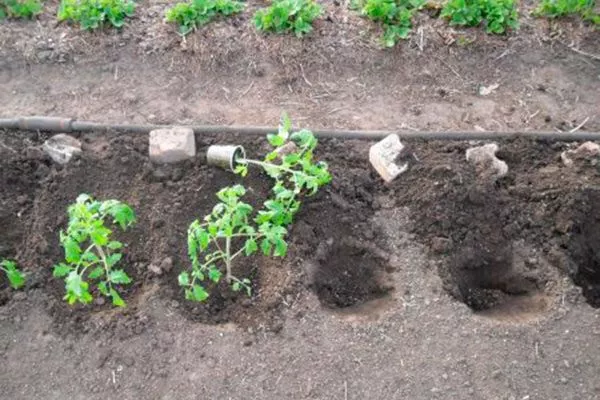
- Dig holes 15-20 cm deep and water them generously with warm water.
- Add a handful of wood ash or a little humus to each hole.
- Plant the seedlings deep enough to reach the first true leaves to encourage additional root growth. Space them in a 50x40 cm pattern. Plant no more than 4 seedlings per square meter.
- Water the bushes and mulch the soil with peat or dry soil.
Do not water the plants for the first 7-10 days to allow them to take root better.
Care
Proper care ensures healthy tomatoes and a high yield. With timely care, tomatoes grow strong, and the fruits are large and tasty. It's important to follow standard agricultural practices.
Secrets of proper watering and the best fertilizers for the Lyubimets tomato
Moisten the bushes at the base to prevent blossom-end rot. Drip irrigation is the best method; it ensures even soil moisture. Water only after the soil has dried out.
Start fertilizing 14 days after planting. Use the following fertilizers:
- Aqueous solutions and infusions of bird droppings and manure – saturate plants with organic substances.
- Universal Fertilizer – contains humic substances, which are especially important for the full growth of tomatoes.
- Rastvorin – provides bushes with a balanced composition of macroelements, suitable for any variety.
- Magnesium sulfate – is an excellent choice for your pet due to its magnesium content, which supports photosynthesis.
Use all fertilizers strictly according to the manufacturer's instructions.
Other events
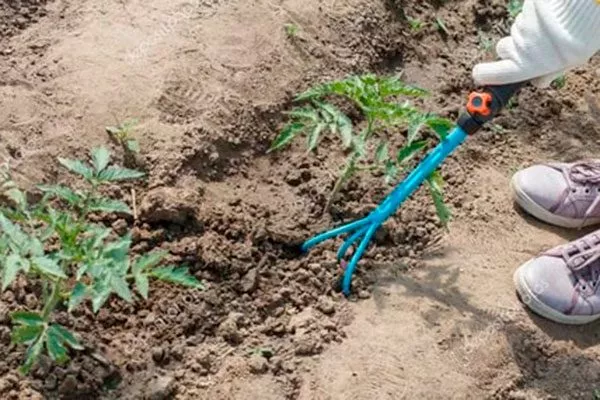
After each watering or rain, loosen the soil around the bushes to prevent crusting and improve oxygen access to the roots. The soil should be loosened to a depth of no more than 5-7 cm to avoid damaging the root system.
Please meet other requirements:
- Remove weeds regularly to avoid competition for moisture and nutrients. Weeds can become breeding grounds for pests and diseases, so weed promptly, especially during the tomato plant's active growth phase.
- Form the bush into 2-3 trunks, removing side shoots. Leave a small stump 1-2 cm long to slow down their re-growth.
Diseases and pests
This cultivar has a strong immune system, but if not properly cared for, it can be susceptible to certain diseases and insect attacks. It's important to begin treatment promptly:
| Disease/Pest | Description | Methods of control |
| Late blight | One of the most dangerous tomato diseases, it leads to the death of the crop. It appears on the leaves as dark spots, which eventually spread to the stems and fruit. | Treatment with copper-containing products such as Bordeaux mixture or Hom. Removal of affected plant parts. Increase ventilation in the greenhouse, regularly airing. |
| Blossom-end rot of fruits | A disease that manifests as black spots on the tops of tomatoes, which gradually begin to rot. This is caused by a calcium deficiency and irregular watering. | Apply water to the roots, avoiding direct contact with the tomatoes. Use calcium fertilizers. Maintain stable soil moisture levels. |
| Powdery mildew | A disease characterized by a white coating on leaves and stems that eventually turns into dust. Affected leaves begin to turn yellow and wilt. | Use fungicides such as Topaz or Fundazol. Destroy infected parts. Regularly ventilate the greenhouse and maintain a watering schedule. |
| Aphid | Small insects that suck sap from plants, weaken bushes, and can be carriers of viral diseases. | Spraying with insecticides such as Aktara or Confidor is recommended. Folk remedies such as a soap solution or garlic infusion are also effective. |
| Spider mite | Small insects that suck the sap from leaves, leaving tiny whitish spots. Webbing can be seen on the underside of leaves. | Treat bushes with acaricides such as Nicticid or Actellic. Regularly mist all parts with water to reduce mite populations. |
| Whitefly | A pest that weakens plants by sucking sap and spreading viral diseases. Leaves begin to turn yellow and fall off. | Spraying with insecticides or weak soap solutions. Using glue traps to capture insects. Garlic infusion helps. |
Pros and cons
Before you begin growing the Lyubimets tomato, it's important to carefully study its characteristics, advantages, and disadvantages. Its main advantages are:
Gardeners did not find any significant disadvantages to this variety.
Reviews
Lyubimets tomatoes will appeal to lovers of red vegetables. They boast excellent flavor, attractive presentation, and resistance to cracking during long-distance transportation. Their ease of care and consistent yield will satisfy even the most experienced gardeners.