
The Lyana tomato is a Russian-bred variety that is very popular among gardeners. It combines excellent flavor with excellent agronomic characteristics, making it suitable for both gardening and commercial cultivation.
The history of the Liana tomato
The Liana variety is a product of Moldovan selection; it was developed at the Transnistrian Research Institute of Agriculture in 1993. This tomato was added to the State Register of the Russian Federation in 1996.
The variety is recommended for cultivation in the Central, Volga-Vyatka, Central Black Earth, Middle Volga, Ural, West Siberian and East Siberian regions.
Description of the plant
The Liana tomato plant grows as a low-growing, determinate, non-standard variety with moderate branching and good foliage. Plants reach a height of 35-40 cm. The leaves are medium-sized, dark green, dissected, and slightly corrugated.
The inflorescences are simple and compact. The first inflorescence is initiated above the 5th or 6th leaf, with subsequent inflorescences occurring between 1 and 2 leaves. The peduncles are articulated. Despite their low growth, the Lyana variety requires support due to the heavy fruit clusters.
Description of fruits
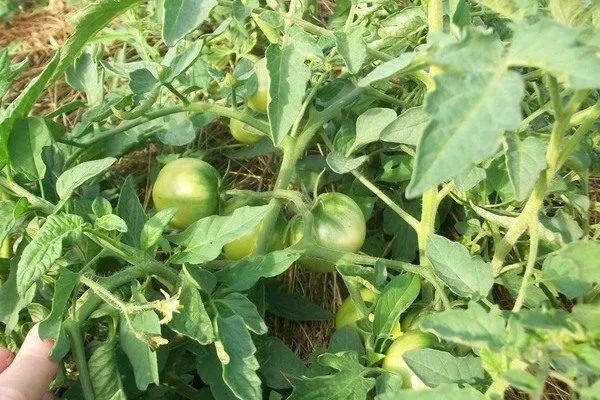
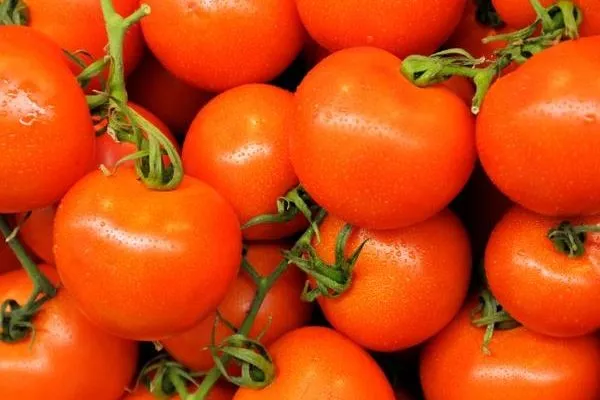
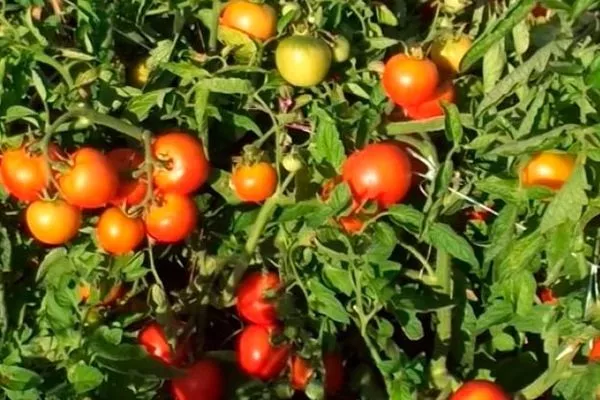
The fruits of the Liana tomato are small, uniform, with dense pulp.
Brief description of fruits:
- Color: red.
- Shape: round.
- Skin: smooth.
- Weight: 65-90 g.
Taste and purpose
The fruit has excellent flavor. Ripe fruits are medium-juicy, sweet and sour. Tasters give this variety the highest score for flavor.
The fruits are versatile, delicious fresh, and used in salads, canning, cooking, and creating a variety of tomato products.
Characteristics
The Lyana tomato is an early-ripening variety. Ripening times vary depending on climate conditions. For example, in the Central region, the fruits ripen in 95-110 days, while in the East Siberian region, they ripen in 115-125 days.
The variety's yield depends on weather conditions, agricultural practices, and growing region. On average, 4.5-7.3 kg of tomatoes are harvested per square meter. One bush yields approximately 2-3 kg. In commercial cultivation, 260 to 713 centners of tomatoes are harvested per hectare. The variety has good resistance to cold, drought, and disease.
Pros and cons of the Liana tomato
It's no wonder the Lyana tomato is popular among gardeners and vegetable growers—this variety has so many advantages that most tomato lovers are willing to put up with its few shortcomings.
Landing
The Liana variety, like most tomatoes, is heat-loving and is typically grown from seedlings. The finished seedlings are then planted outdoors or in greenhouses or hotbeds.
- ✓ Optimum soil temperature for planting seedlings: +14..+16 °C.
- ✓ Recommended seeding depth: 0.5-1 cm.
Seed preparation
You can harvest Liana tomato seeds yourself. Store-bought seed is usually already processed—disinfected, calibrated, etc. However, it's recommended to prepare your own seeds by sorting, hardening, disinfecting, and treating them with Epin or Zircon.
Gardeners have traditionally used a potassium permanganate solution for disinfection. Since this solution is now difficult to find in pharmacies, you can substitute it with a baking soda solution. Also, soak the seeds before planting, wrapping them in damp cheesecloth. As soon as sprouts appear on the seeds, they should be sown.
Growing seedlings
Tomato seedlings are sown between March 20 and April 10. They grow for approximately two months, during which time you should produce strong, healthy plants that are not stretched or disease-free.
Features of growing seedlings:
- Prepare containers with drainage holes for the seedlings, such as plastic containers or cups. The containers are disinfected with boiling water and filled with a substrate—either store-bought or homemade.
- The soil mixture is prepared by mixing two parts turf soil with one part each of humus and sand. Add 500 ml of wood ash. The mixture is then heated for half an hour in an oven at 100°C.
- The soil is lightly moistened, and then the sprouted seeds are sown. They are planted 0.5-1 cm deep, with 2-3 cm intervals between seeds. The crops are covered with a transparent material such as film or glass.
- Seedlings should appear after 4-6 days. After this, remove the covering and immediately lower the temperature from 23-25°C to 14-16°C. Otherwise, the seedlings will begin to stretch and grow foliage without taking root well.
- When the first true leaves appear, the seedlings are pricked out—transplanted from the large container into disposable cups. The roots of the seedlings are pinched off during this process—this procedure is called pricking out.
- The seedlings are regularly watered from a spray bottle and fed once every 2 weeks with mineral compounds, biostimulants, and organic fertilizers.

How to choose a site?
The Lyana tomato thrives in light and warmth, so the planting site should be chosen accordingly. It should be level, protected from drafts and gusty winds, and prevent moisture from accumulating.
Tomatoes require loose, fertile, and well-drained soils. Sandy loam and loamy soils are best suited for this crop; they retain water while being permeable and breathable, meaning they have high air permeability.
Soil preparation
The soil under tomato beds is dug in the fall. Along with organic and mineral fertilizers, loosening and acidifying agents are added during digging to improve the soil structure and quality. 10 liters of humus, 50 g of superphosphate, and 100 g of wood ash are added per square meter (for highly acidic soils, 500 g of ash per square meter).
After the snow melts, the soil is loosened, harrowed, and leveled to ensure good water drainage. It is recommended to warm the soil if its temperature is below 16°C by laying plastic film or agrofibre on it. After planting the seedlings, these can be used to protect the plants from night frosts.
Transplanting
Liana tomato seedlings are planted between late May and early June. Timing varies by region and depends on whether the tomatoes are planted outdoors or indoors. When planting, consider the weather conditions: air and soil temperatures should warm to at least 18°C and 14°C, respectively.
Features of planting tomato seedlings Liana:
- Before transplanting, seedlings are watered to make them easier to remove from the planting container, and the lower leaves, which are weak or yellowed, are removed.
- The variety is low-growing, so the recommended planting pattern is 30-40 cm x 60 cm (between plants and rows, respectively).
- Dig holes measuring 15 x 20 cm for planting. Disinfect them, for example, with a pale pink solution of potassium permanganate. Then, add water to the hole, and once it's absorbed, plant the tomato seedling.
- If the soil is poorly fertile, or if the required fertilizers weren't applied in the fall, you can add nutrients directly to the holes. For example, granulated chicken manure, horse manure, or other organic matter.
- The seedlings are planted deep down to the cotyledon leaves, covering the roots with soil and compacting it. Once the seedlings have been planted, they are watered again; once the moisture has been absorbed, the soil is mulched with straw, hay, sawdust, etc.
It's recommended to plant tomatoes in cloudy weather or in the evening. The optimal time for planting is between 10:00 and 12:00 a.m. and between 3:00 and 5:00 p.m.

Care
Regular and proper care largely determines yield, directly influencing the growth and development of the plants. To ensure a good harvest of Liana tomatoes, it's important to water and fertilize the plants regularly, tie them up, and spray them.
Watering
The bushes are watered infrequently but thoroughly, soaking the soil to a depth of 50 cm. Watering frequency depends on the weather, temperature, and rainfall; on average, the Lyana tomato is watered 1-2 times a week.
When watering, apply water at the roots, avoiding the above-ground parts of the plants. Use only warm, settled water. As the fruit ripens, reduce or stop watering altogether—this interruption has a beneficial effect on the taste of the tomatoes.
Fertilization
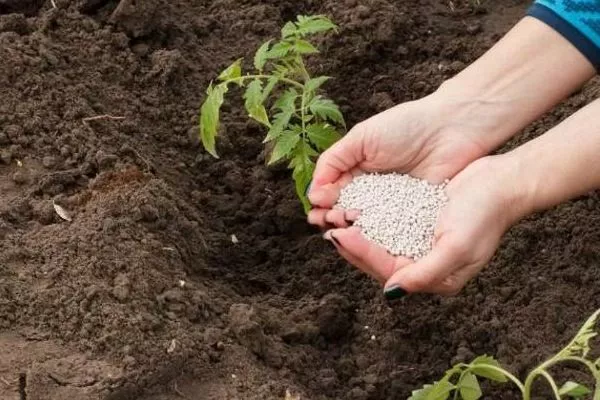
Fertilizers are applied throughout the growing season. Before flowering, the bushes are fertilized with complex mineral fertilizers, chicken manure infusion, or slurry. During flowering, the bushes are sprayed with a boric acid solution or another boron-containing product.
During the period of fruit filling, fertilizers containing phosphorus are added to the tomatoes: superphosphate or monopotassium phosphate, diluted in water according to the instructions.
Loosening and weeding
The soil in the tomato beds is loosened after each watering to prevent the formation of a hard crust that prevents oxygen from reaching the root system.
Weeds are removed simultaneously with loosening the soil. The soil should be loosened to a depth of no more than 4–6 cm, otherwise the tomato plant's root system may be damaged.
Mulching
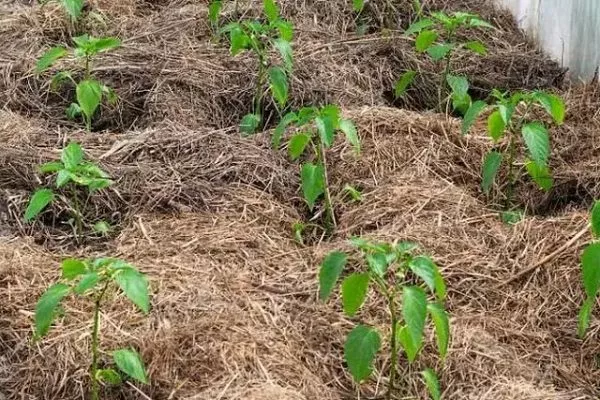
To retain soil moisture and slow weed growth, tomato beds are covered with loose organic matter—mulching. This reduces the need for watering, tilling, and weeding. A variety of organic materials can be used as mulch, including dry and freshly cut grass, straw, and so on.
Shaping and garter
The Liana variety's bushes tend to become dense, so they are often trained into two shoots. Side shoots growing below the first cluster are pinched off, while those above are left untouched. At the end of July, the tops of the shoots are pinched off to ensure the plant focuses all its energy on ripening the fruit.
If the Liana tomato is grown in a greenhouse, the bushes are trained into a single stem, removing all the lower leaves—this accelerates ripening. During the fruiting period, the shoots are tied up to prevent them from breaking under the weight of the fruit.
Diseases and pests
The variety is highly resistant to fungal diseases, rarely affected by blossom-end rot, and can only become infected with late blight and septoria under a combination of unfavorable factors, such as a combination of poor weather and poor agricultural practices.
Harvesting
The fruits are harvested in late July, at either technical or full ripeness, depending on the intended purpose. The former can be transported and stored, while the latter can be eaten fresh, processed, or preserved.
If there are a lot of fruits, some are picked while still green to prevent the bush from breaking. The harvest continues throughout August, before the cold weather sets in.
Reviews
The Lyana tomato is a truly popular variety that needs no introduction to gardeners and summer residents. This early tomato attracts them with its classic flavor, high yield, low maintenance, and early ripening.