
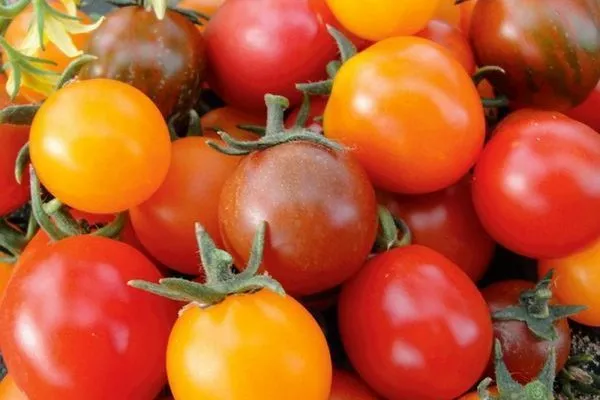
Recently, amazing tiny cherry tomato varieties have become especially popular among gardeners. Not only do they have a unique appearance, but they also boast a delicate tomato flavor. The varieties are divided into short and tall varieties, all differing in productivity, but they all share one thing in common: their miniature fruit size.
History of appearance
Cherry tomatoes are incredibly popular today, but until 1980, they were largely unknown. Scientists have determined that the original varieties originated in the Andes, and over time, residents of what is now Mexico learned to grow the crop.
The first tomato trees grew wild in small, isolated clusters, but in the 15th century, Europeans in what is now America learned to cultivate tomatoes with different flavors and fruit sizes. Cherry tomatoes were among them.
To this day, no one knows who brought cherry tomatoes from America to Europe. Many historians believe it was members of Columbus's expedition. The first mentions in European writings date back to 1623.
Two places immediately laid claim to the origin of the small tomato crop in Europe: Israel and the Greek island of Santorini. Scientists' opinions are divided, with some believing the tomatoes could not have been brought from America but rather developed by Israeli breeders. Others argue that Santorini is an excellent choice for growing cherry tomatoes and is the origin of the plant.
Despite this, historians agree on one thing: until 1980, few knew about the plant, and tomatoes were grown in isolated locations across Europe. The development of the cherry tomato began with a wealthy English realtor who dreamed of stocking his stores with tasty, juicy, and, most importantly, presentable tomatoes.
Scientists in Israel received his commission and began perfecting cherry tomatoes. They succeeded in making the fruit sweeter. They devised a better way to store tomatoes and developed specialized methods for more organized cherry tomato cultivation. These miniature tomatoes immediately gained popularity among vegetable lovers, and they remain so to this day.
Main characteristics and appearance of cherry tomatoes
Almost all varieties are hybrids. They tolerate sudden temperature fluctuations and climate change very well. The plants can retain and utilize stored moisture for long periods, especially if left without water.
Bushes are divided into three main sizes: low-growing, medium-growing, and tall. The fruits are collected in clusters. A single cluster can contain up to 22 tomatoes at once. They ripen simultaneously, so the entire cluster is harvested.
Cherry tomatoes are no different from regular tomatoes in terms of ripening time; they also come in early, mid-season, and late varieties. However, cherry tomatoes have a longer ripening period, so the first harvest doesn't arrive until midsummer.
Cherry tomatoes can be grown both in a greenhouse and in the open ground. The exact yield depends on the growing region and the type of cherry tomato. In recent years, scientists have developed varieties of tomatoes that can be easily grown on your balcony. The fruit has excellent flavor; many varieties have the sweet, characteristic tomato taste, while others have a bitter aftertaste.
The best varieties
Breeders are constantly developing new cherry tomato varieties, and over a hundred have already been created. Let's take a look at the best of them:
| Name of the cherry variety | Ripening period | Yield per 1 sq. m, kg | Weight of 1 fruit, g | Where can you grow it? | Type of tomatoes | Peculiarity |
| Balcony miracle | Early | 4-5 | 20-30 | Open ground, balcony and windowsill | Determinant | The fruits are similar in color and shape to cherries. |
| Blossom F1 | Early | 2.5-3 | 20-25 | Open ground | Determinant | It is considered one of the sugariest cherry varieties. |
| Bonsai | Early | 2-3 | 20-25 | Balcony, windowsill | Determinant | It is not just an early variety, but an ultra-early one. |
| Vera F1 | Early | 15-18 | 30-35 | Open ground, greenhouses | Indeterminate | Nematodes are not scary. |
| Black cherry | Early | 3.5-6 | 18-20 | Greenhouses | Indeterminate | It reaches 2-3 m in height. |
| Yellow cherry | Early | 4-6 | 15-20 | Open ground, film greenhouses | Indeterminate | Be sure to destroy the stepchildren. |
| Red cherry | Early | 3.5-5 | 15-20 | Open soil | Indeterminate | Refers to ornamental plants. |
| Ira F1 | Early | 12-15 | 30-35 | Film greenhouses | Indeterminate | The fruits are slightly elongated. |
| Sugar-coated cranberries | Early | 2-3 | 15-20 | Universal | Determinant | Not susceptible to late blight. |
| F1 paints | Early | 5-8 | 20-25 | Open ground, film greenhouses | Indeterminate | The most famous yellow cherry variety. |
| Little Red Riding Hood | Early | 2-3 | 15-20 | Universal | Determinant | Does not require plant shaping. |
| Lyuba F1 | Early | 12-15 | 25-30 | Open ground, film greenhouses | Indeterminate | Maintains its marketable appearance for a long time. |
| Honey drop | Mid-early | 4-5 | 25-30 | Universal | Indeterminate | It has good transportability. |
| Honey Candy F1 | Early | 4-6 | 15-20 | Open ground, film greenhouses | Determinant | Not susceptible to verticillium wilt and fusarium wilt. |
| Pinocchio | Mid-season | 4-6 | 15-20 | Universal | Determinant | Universal use. |
| Porpora F1 | Ultra early | 3.6-7 | 20-25 | Universal | Indeterminate | Not susceptible to verticillium wilt and fusarium wilt. |
| Button | Early | 4-4.5 | 10-15 | Universal | Determinant | The harvest quantity is not affected by temperature fluctuations or climate change. |
| Rose F1 | Early | 10-12 | 30-35 | Open ground | Determinant | Resistant to tomato mosaic virus, verticillium wilt, fusarium wilt, blossom end rot, cladosporiosis, and late blight. |
| Yellow date palm | Mid-late | 4-6 | 15-20 | Film greenhouses | Semi-determinate | Stress-resistant. |
| Red date palm | Mid-late | 4-6 | 15-20 | Open ground, film greenhouses | Semi-determinate | The result is excellent preserves. |
| Black bunch F1 | Early | 13-15 | 35-70 | Universal | Indeterminate | Not susceptible to tobacco mosaic virus. |
| Dark chocolate | Mid-season | 4-5 | 20-28 | Film greenhouses | Indeterminate | Very sweet fruits. |
| Cio-chio-san | Mid-season | 7-8 | 30-40 | Universal | Indeterminate | Stress-resistant. |
| Chocolate F1 | Mid-season | 6-6.2 | 30-40 | Universal | Indeterminate | Does not react to temperature fluctuations. |
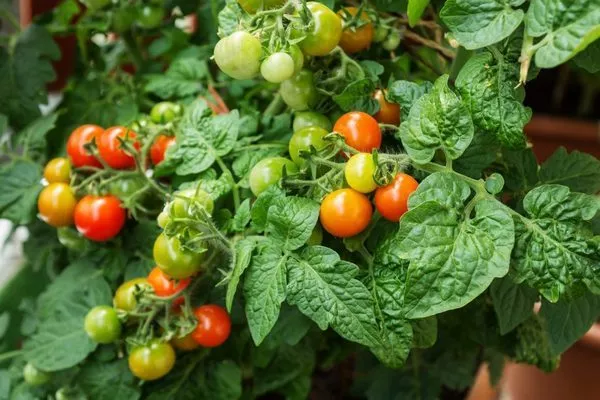
Cherry variety Balcony Miracle
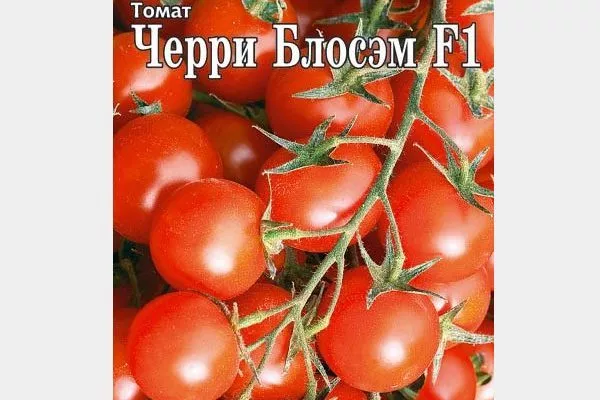
Cherry tomato Blossom F1
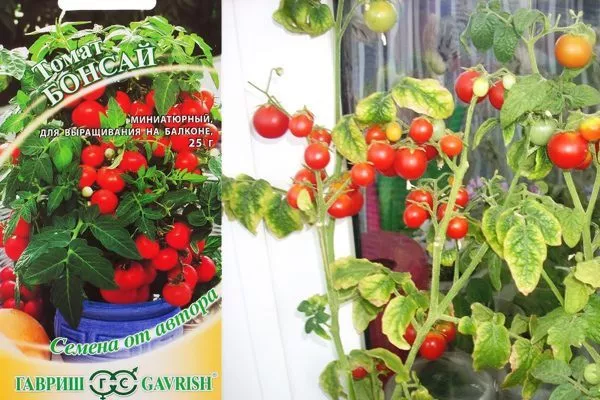
Cherry Bonsai variety
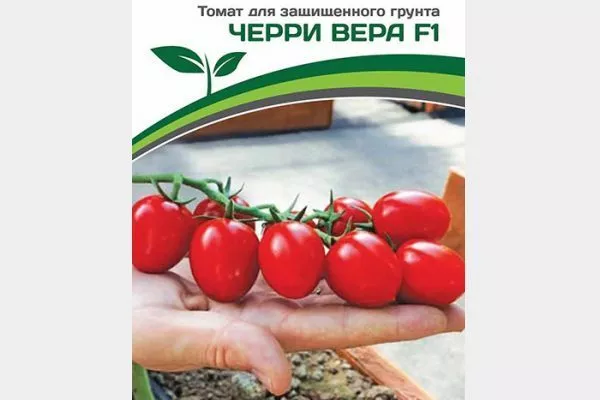
Cherry tomato variety Vera F1
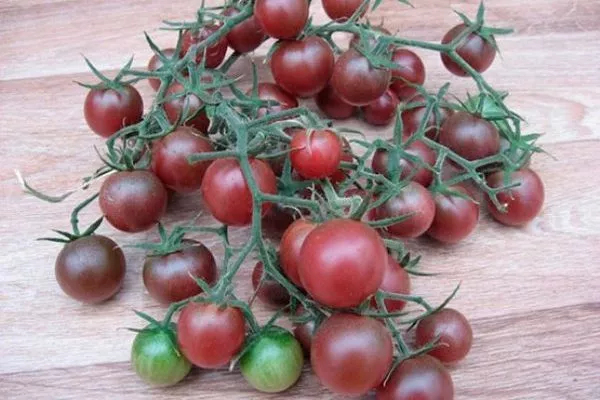
Cherry Black variety
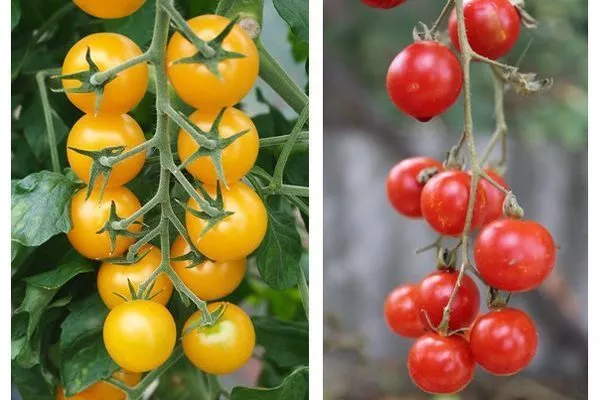
Tomato varieties: Yellow Cherry and Red Cherry
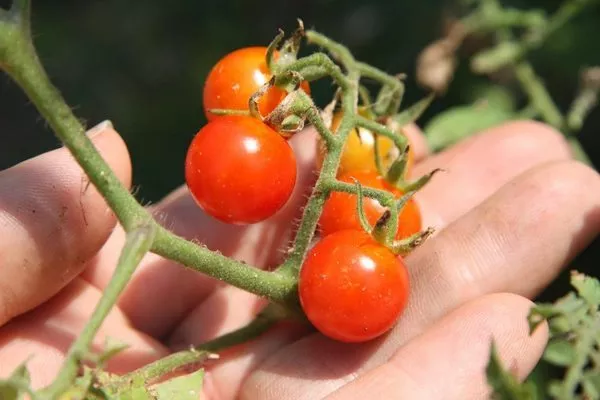
Tomato Ira F1
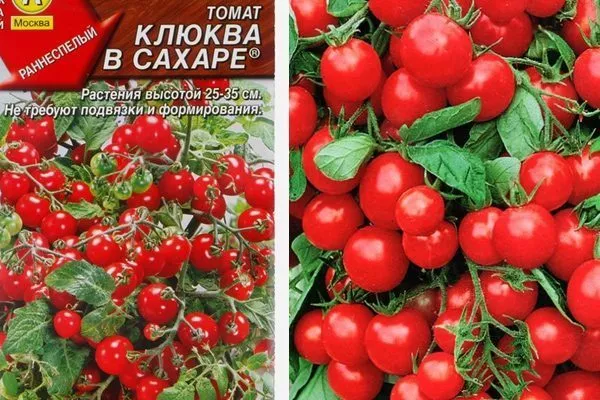
Tomato variety Cranberry in sugar
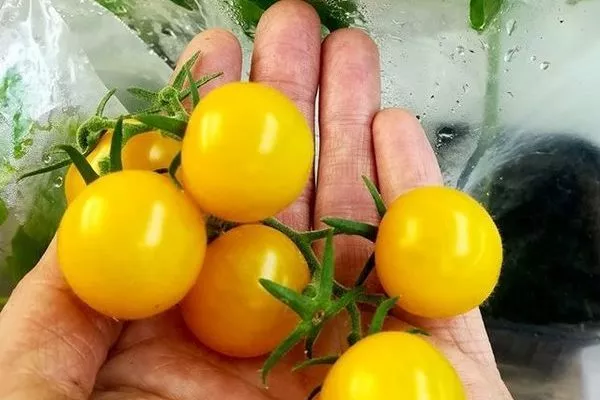
Tomato variety Kraski F1
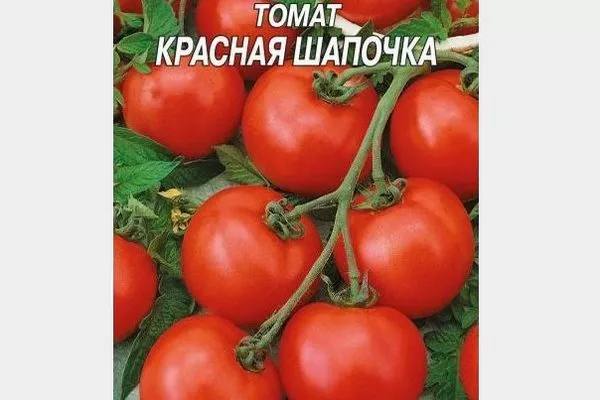
Cherry variety Red Riding Hood
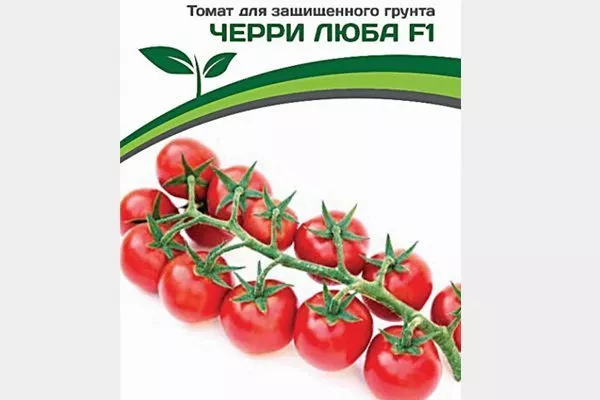
Tomato Lyuba F1
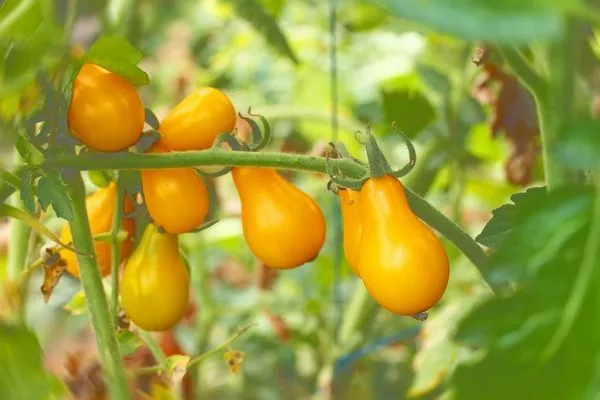
Honey Drop Tomato
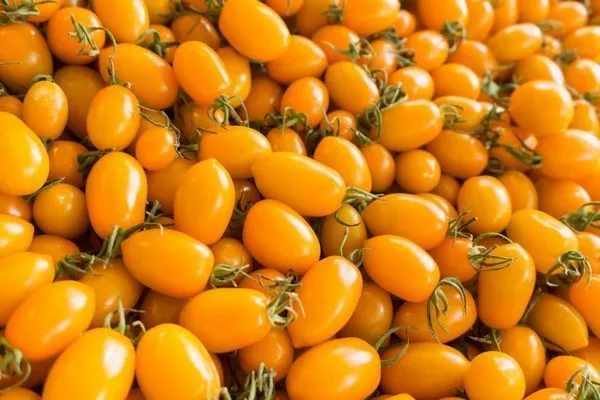
Honey Candy Tomato
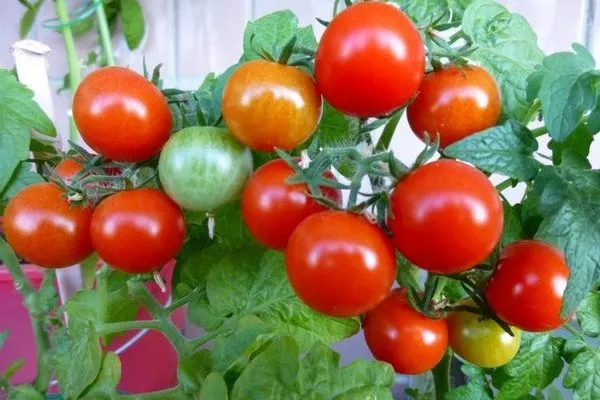
Tomato Pinocchio
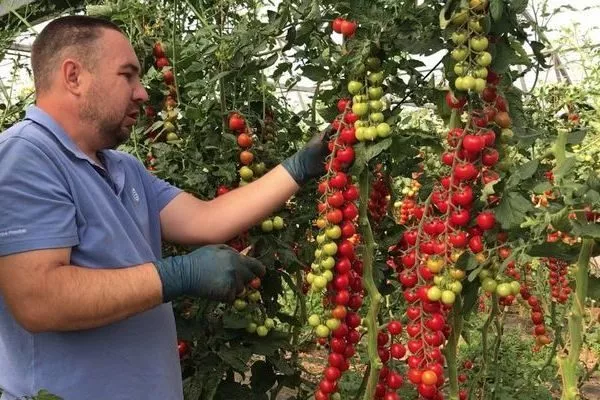
Tomato Porpora F1
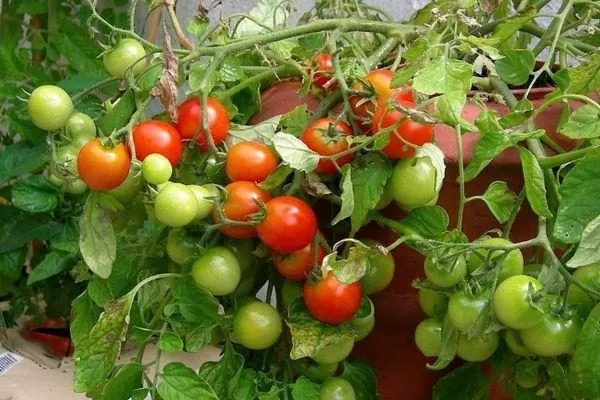
Tomato Button
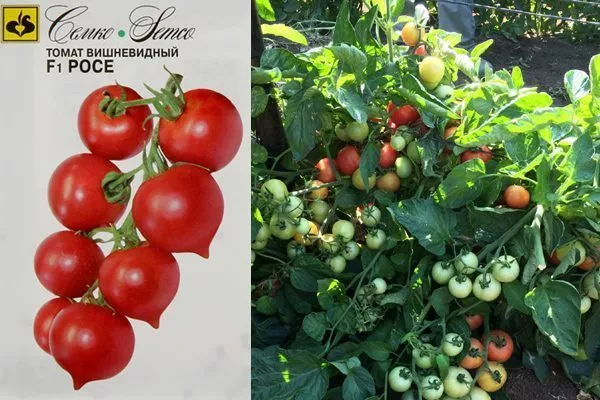
Tomato Rose F1
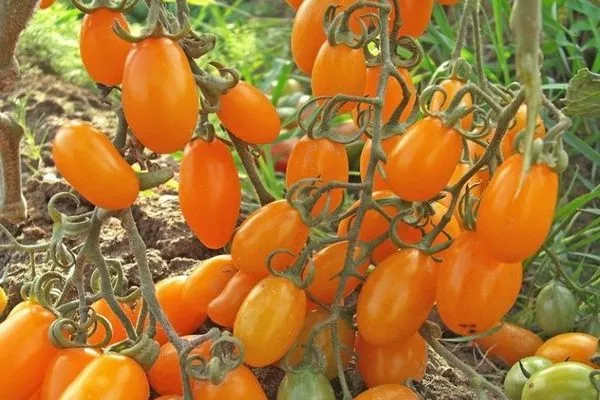
Tomato Date Yellow
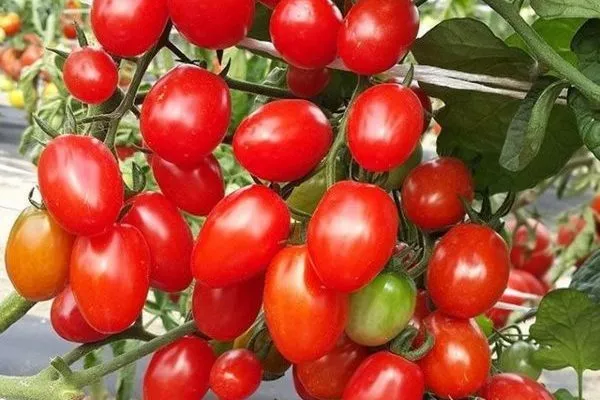
Red date tomato
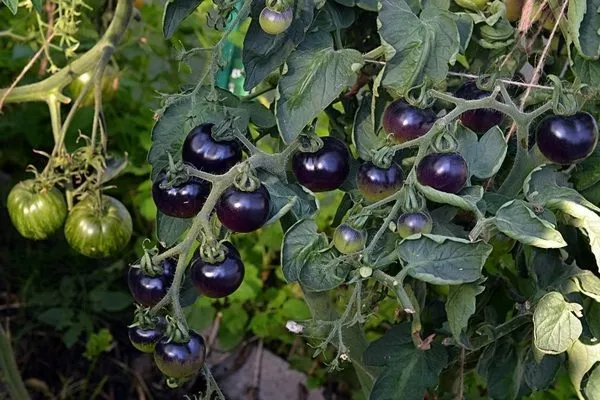
Tomato variety Black Bunch
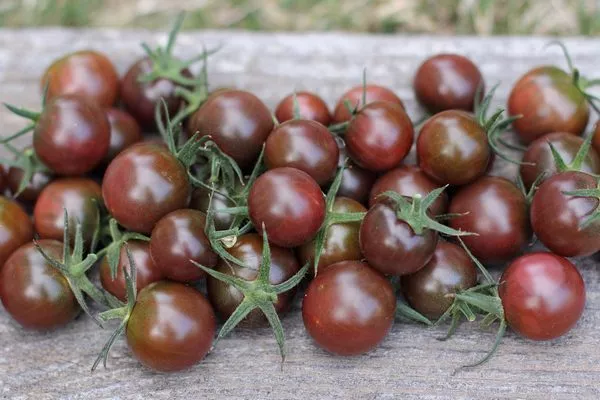
Tomato variety Dark Chocolate
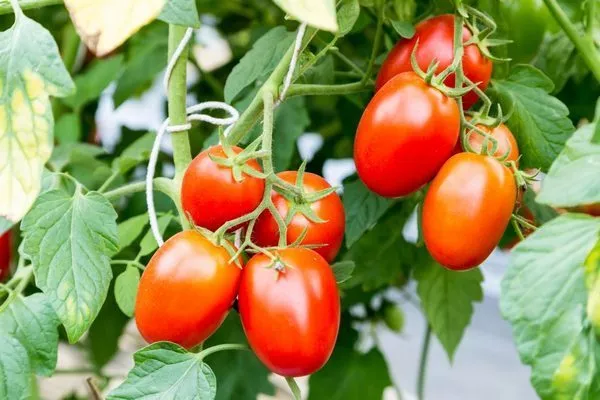
Tomato variety Chio-chio-san
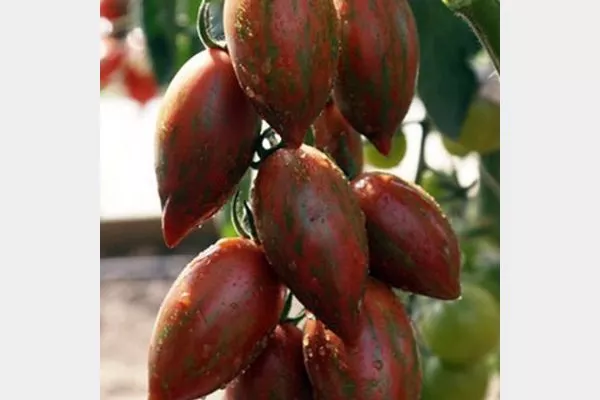
Tomato Chocolate F1
Growing methods
There are two main growing methods: hanging and seedling. Each has its own advantages and disadvantages.
Hanging method
In order for a cherry tomato bush to be grown using this method, the variety must have the following characteristics:
- The presence of long branches and the absence of stepsons.
- Flexible branches that won't break under the weight of tomatoes.
- ✓ Make sure the variety has long, flexible branches without side shoots.
- ✓ Check that the branches can support the weight of the fruit without support.
These varieties are planted directly in hanging pots on open terraces and balconies. Sowing occurs in early May. The tomatoes will ripen until the cold weather sets in, so after summer, they are brought indoors, where they continue to produce fruit, albeit not as abundantly as during the hot season.
For the hanging method, take only self-pollinating varieties.
Seedling method
This method of growing cherry tomatoes helps grow any variety, regardless of branching habit, ripening time, or yield. The seedling method involves growing the plant's seedlings in individual pots and then transplanting them into open soil or a greenhouse.
Features of agricultural technology
Cherry tomatoes are one of those plants that cannot produce a rich harvest without proper planting and care, so gardeners should follow the basic rules and tips regarding the cultivation of this crop.
Learn from this video what to do to ensure full ripening of cherry tomato clusters and what agricultural techniques to use:
Growing seedlings
Quick and proper seedling preparation is the key to a high-quality and lush harvest. Cherry tomato seeds are planted in the soil in March.
Basic rules for growing healthy seedlings:
- Place planting material only in nutritious and breathable soil.
- To ensure that the seedlings emerge at the same time, cover the pots with glass.
Read more about how to properly germinate seeds. Here.
- The temperature in the greenhouse with seedlings should be no less than +27 Celsius.
- Seedlings need to be illuminated, if there is not enough natural light, use phytolamps.
- Prepare the planting site in open ground or a greenhouse in time.
Seedling substrate
The soil for this type of tomato must be fertile, not only in the pots with the seedlings but also in the open ground. To improve the soil, add nutrient fertilizer. The easiest option is to go to the store and buy a suitable soil mix, but it's better to make your own at home.
The cherry tomato mixture consists of:
- turf soil;
- soil from the garden;
- peat;
- sand.
- Mix turf soil, garden soil, peat and sand in equal proportions.
- Disinfect the substrate with a weak solution of potassium permanganate or heat it in an oven.
- Allow the substrate to cool before use.
A substrate for planting planting material is required disinfectUse a weak solution of potassium permanganate or place the soil in an oven for a quarter of an hour.
Features and timing of planting
To enjoy cherry tomatoes in the first days of summer, plant the seeds in the soil in the last week of February or in early March.
Plant tomatoes in 12 cm containers, making sure to provide cover. Five days after planting, the seedlings will begin to sprout; remove the glass. When the seedlings have two plates, carefully transplanting plants into different cupsCherry tomatoes grow in separate pots until they are transplanted to the main location.
Make holes in the cups in advance so that excess water drains away and does not remain in the soil.
Planting seedlings in open ground
Fully formed seedlings look like this: green leaves, approximately 0.2 m tall, and thick, strong stems. Don't transplant seedlings directly into either indoor or outdoor soil, otherwise the plant won't withstand the climate and weather and will die.
Harden off the seedlings 10 days before transplanting. Initially, expose the seedlings to fresh air for about 2 hours, then increase the time, and on the 8th or 9th day, they can be left out overnight.
In the open ground, dig holes and place a small amount of wood ash in them, water them, and plant the seedlings. Then, cover the seedlings with soil and compact it lightly. If the climate in your area has normalized, you can plant the seedlings. mulchFor this, use straw, hay or dried grass.
Mulch protects plants from weeds, helps retain moisture in the soil longer, and prevents the formation of a dry crust on the top layer of soil.
Transplant seedlings on a cloudy, rainy day, or better yet, in the evening. This method will help the plants establish themselves more quickly and better in the soil.
This video talks about the experience of growing cherry tomatoes in open ground:
Care Features
A novice gardener won't be able to grow cherry tomatoes in their garden unless they follow all the rules and recommendations for plant care.
Care instructions:
- Plants don't tolerate drought, so they require constant, abundant watering. It's best to water them daily, either in the morning or late in the evening.
- Cherry tomatoes are spreading, so maintain the proper distance between seedlings. Ideally, at least 1 meter apart to ensure the plants receive sufficient light and warmth.
- If you don't water enough, your tomatoes will develop brown cracks. If you water too much, the fruits will split and become too watery.
- Don't give up on supports; they will help keep the harvest safe and sound, and will also prevent branches from falling onto the ground.
- Mulch the soil. If the fruit falls, it won't get dirty, and the soil won't overheat and dry out.
- Harvest the tomatoes when they are fully ripe, otherwise you will get tasteless tomatoes.
Prevention of diseases and pests
Almost all varieties are hybrids, and scientists have specifically bred them to have strong immunity. However, some diseases can occur in the plants, such as:
- Tomato mosaicThe main symptoms: the plant breaks and the entire bed dies before your eyes.
- Late blightTo combat the disease, the crop is sprayed with chemicals.
- Fruit crackingPlants are getting too much water and should be reduced.
As preventative measures, gardeners use a variety of products; Fitosporin, Actofit, and Mikosan provide quick results.
As for pests, the most dangerous insect for cherry tomatoes is the mole cricket. It chews through tomato stems and destroys the plant's roots. You can try to get rid of it manually while digging the garden, but you can also use special products. Don't miss the opportunity to take preventative measures, otherwise you'll have to spend a long time protecting your garden from diseases and pests.
Harvesting and storage
The fruits are picked immediately after they are fully ripe. This is when the harvest reaches its full potential. Cherry tomatoes are very difficult to pick individually, so gardeners pick the entire bunch. After this, the tomatoes can be picked individually from the bunch.
You can pick unripe tomatoes and place them in a cardboard box, separating each layer with newspaper. Place the box in a dark place where the fruit ripens. In a cardboard box, the tomatoes turn red, but their flavor deteriorates. These tomatoes are simply not comparable to those picked fresh from the garden.
Growing recommendations
Proven tips from gardeners are always helpful; they'll help you get a big and tasty harvest:
- To ensure you can eat fresh cherry tomatoes until the cold weather sets in, plant the rooted shoots a second time in June.
- If there's not enough light and your tomato plants are starting to stretch, you can use a simple technique to stimulate their growth. Take a small, soft brush and occasionally brush it over the tips and leaves of the shoots. This will slightly damage the hairs on the surface of the plant, causing the tomato plant to develop a much fuller appearance and grow more slowly upward.
- Some gardeners plant this crop in iron buckets. These seedlings are not transplanted into open ground. It's better to grow tomatoes in such containers, as iron is believed to repel late blight, preventing the plants from becoming infected.
Gardeners' reviews
Healthy and nutritious cherry tomatoes can be grown not only outdoors but also on your windowsill. All you need is knowledge about growing and caring for tomatoes.