
Fox tomatoes have gained popularity due to their low maintenance, disease resistance, and good productivity. This variety tolerates temperature fluctuations well, is drought-resistant, and is characterized by a long fruiting period. The tomatoes are bright orange, medium-sized, and have excellent flavor. The compact plants don't take up much space in the garden.
Origin and growing regions
It was developed in 2005 by specialists at the SORTSEMOVOSCH agricultural enterprise. In 2007, it was included in the State Register of the Russian Federation. The authors of this variety, which is resistant to sudden temperature fluctuations, were breeders T. E. Ivanova, V. G. Zverkova, and Yu. V. Vasiliev.
Chanterelle is excellent for cultivation:
- in Moscow and the Moscow region;
- in the regions of Siberia and the Far East;
- in the Urals;
- in the Volga region;
- in the Black Earth Region and the Central Belt;
- in the center and north of the European part of Russia.
The crop is successfully grown both in open ground and in greenhouses.
Description of the bush and fruits
The determinate (low-growing) variety stops growing after 4-5 clusters have formed. In the garden, the plant reaches 60 cm, and in the greenhouse, up to 110 cm.
Distinguishing qualities:
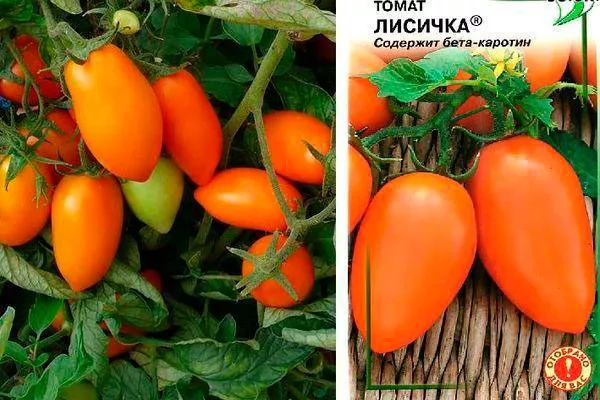
- The bush has a slender stem, a spreading habit, and small, rich green leaves. The clusters are simple, containing 4-6 tomatoes. The flowers are small, yellow, and the peduncle is jointed.
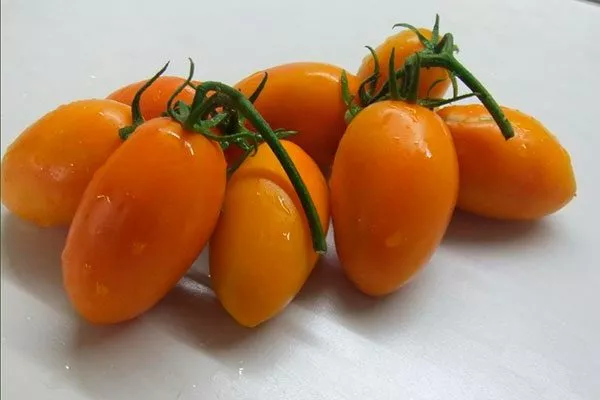
- The tomatoes are elongated-oval (plum-shaped), smooth, glossy, with thin, crack-resistant skin. A cross-section reveals 2-3 seed chambers.
- When technically ripe, the vegetables are bright orange in color; yellow and red specimens are less common.
- The average length of the fruit is 4-5 cm, weight varies from 100 to 130 g.
- The pulp is dense, the taste is sweetish, with a light tomato aroma.
Main characteristics
Most gardeners prefer versatile varieties that produce abundant fruit for a long time. The mid-early "Fox" variety stands out among them for its excellent taste and attractive appearance.
Ripening and fruiting, productivity
The crop yields 100-110 days after germination. The exact timing depends on growing conditions and soil conditions, but overall, the crop produces a consistent yield.
The average yield reaches 9 kg per square meter, but this figure varies depending on seed quality, agricultural management, and weather conditions. Insufficient fertilizer or cold soil can significantly reduce yields.
Scope of application
Chanterelle fruits have a rich, sweet flavor with a pleasant, spicy aroma. The pulp is rich in vitamins C, A, B, and magnesium, and its low calorie content makes it ideal for dietary use.
The harvest is eaten fresh, pickled, dried, and processed into sauces. The tomatoes are ideal for whole-fruit canning.
Growing seedlings
Obtaining strong, high-quality seedlings is possible if you follow these important recommendations. Sow seeds in late March or early April, 55-65 days before transplanting.
- ✓ Optimum soil temperature for sowing seeds: +23°С.
- ✓ Seed sowing depth: 1 cm.
- ✓ Distance between plants when planting: 30×40 or 40×40 cm.
Seed preparation
Seeds, whether store-bought or home-harvested, must be disinfected before planting. Soak them for half an hour in a weak solution of potassium permanganate or for 10 minutes in 2% hydrogen peroxide.
Soil preparation and sowing
Sow seeds directly into peat or plastic cups, avoiding transplantation, as Chanterelle seedlings appear weak and do not transplant well. Follow these recommendations:
- Prepare the soil mixture from equal parts of black soil, peat and river sand.
- To disinfect, pour boiling water or a solution of potassium permanganate over the soil, bake it in the oven and keep it in the cold for 2-3 days.
- Fill the cups with moist substrate, place 2 seeds in each container at a depth of 1 cm, sprinkle with a layer of soil and moisten with a spray bottle.
Cover the containers with film and place in a dark, warm place with a temperature of +23°C.
Caring for seedlings
Once the seedlings emerge, move the cups to a well-lit windowsill. Follow these agronomic practices:
- Water the seedlings 1-2 times a week, depending on when the top layer of soil dries out.
- To strengthen seedlings, use Agricola, Siyanie, Baikal or Effekton fertilizers, following the manufacturer's recommendations.
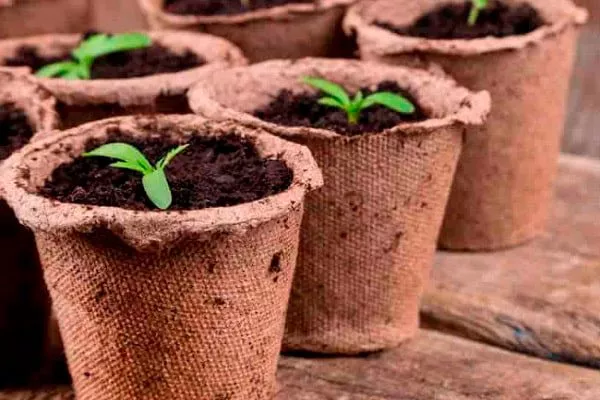
Fox tomato seedlings do not require hardening before being transplanted to the site, as the variety is resistant to sudden temperature changes.
Transfer
Transfer the plants to a greenhouse or open ground in late spring or early summer, when the nights become warm. Add compost and mineral fertilizer to each hole, moisten with water, and then carefully plant the seedlings.
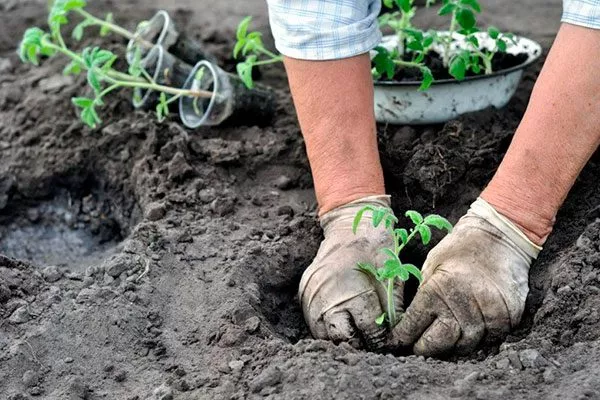
If the seedlings were grown in peat pots, place them in the soil along with the pots. Immediately tie the transplanted plants to supports. Place no more than 4 seedlings per square meter, following a 30x40 or 40x40 cm pattern.
Agricultural technology of tomatoes
The crop is easy to care for and resistant to adverse weather conditions. However, to obtain a good harvest, it is important to follow several key requirements.
Watering and loosening
Bushes prefer moist soil, so don't let it dry out. Follow these steps:
- Water the plantings only with warm, settled water or rainwater, watering strictly at the roots so as not to get it on the leaves, once every 5-7 days.
- After watering, loosen the soil and weed as needed, carefully removing weeds.
Pinching out side shoots and shaping bushes
Train the plants into 2-3 trunks, removing any excess shoots. Carefully break off side shoots by hand or cut them off with a sharp knife.
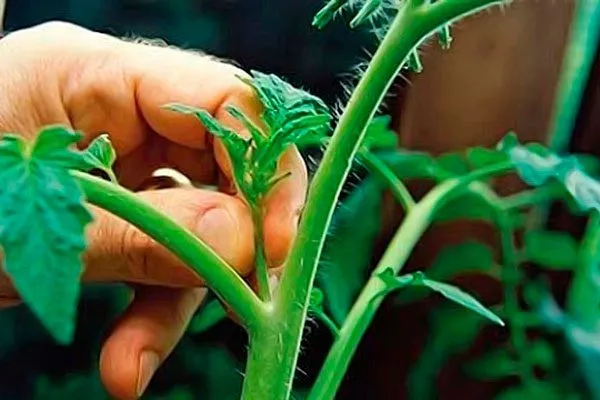
A month after planting, remove the lower leaves. Leave no more than 7 clusters on each plant to maximize productivity. Since the stems may not be able to support the weight of the vegetables, secure them to supports promptly.
Top dressing
After planting, fertilize the crop 3-4 times per season, paying particular attention to the plants during flowering and fruit set. Use both organic and complex mineral nutrients.
Fertilizer application stages:
- during landing – a handful of humus and a pinch of ash in each hole;
- two weeks after moving into the ground - potassium-phosphorus solutions (1 l per bush);
- during the flowering period – 500 ml of bird droppings, 25 g of potassium sulfate, 3 g of potassium permanganate per 10 liters of water;
- during the formation of ovaries – 2 l of wood ash, 10 g of boric acid per 10 l of water.
A variety of fertilizers are available in specialized stores:
- organic – biohumus Vermix, supercompost Pix, compost Reliable;
- complex – diammophoska, nitroammophoska, Kemira, Rastvorin.
Apply the last two fertilizers without adding nitrogen. Excess nitrogen can accumulate in the fruit and soil, which can lead to poisoning and even death of the plant.
The nuances of growing in open and closed ground
Growing Chanterelle tomatoes is usually straightforward, even for novice gardeners. However, there's one important point: periodic hilling is required to strengthen the root system.
This variety tolerates temperature fluctuations and can survive when other tomatoes freeze. Its yield remains consistently high both in greenhouses and in the garden.
Possible problems
Tomatoes of this variety do not crack when heated, but excessive watering or a rainy summer can cause cracks to form. The crop is not susceptible to blossom-end rot.
The plants tolerate drought and temperature fluctuations well. This variety is not considered a "disease-prone" tomato, but regular preventative treatments are necessary.
If your Chanterelle seedlings look a little weak compared to other varieties, don't worry. This plant is a generative plant – the bush may be weak, but productivity remains high.
Harvesting and storage
Tomatoes begin to ripen approximately 100 days after germination. Fruiting is prolonged, continuing until the end of August. This variety is versatile: it's great eaten fresh or preserved for winter. The small, fleshy tomatoes are ideal for sun-drying or oven-drying.
Gardeners note that at the technical maturity stage (when the fruits are yellow), they lack a pronounced tomato flavor and aroma. To enjoy all the characteristics of the crop, wait until they are fully ripe, when they turn orange.
Pest and disease control, prevention
Chanterelles are immune to verticillium wilt and fusarium wilt, but can be susceptible to late blight. Symptoms of the disease include brown spots on leaves, stems, and fruit, a whitish coating on the underside of the green foliage, and deformed tomatoes.

For prevention, follow these recommendations:
- treat greenhouses with sulfur checkers;
- disinfect the soil with copper sulfate;
- do not allow water to stagnate in the beds and water moderately at the roots;
- remove the lower leaves;
- Loosen the soil and weed frequently;
- Mulch the soil with peat, hay, sawdust or black agrofibre.
If late blight occurs, remove affected plant parts and burn them. Disinfect tools and treat the bushes with fungicides:
- Ridomil;
- Quadris;
- Acrobat;
- Agate;
- Fundazol.
The crop can be attacked by pests such as aphids, spider mites, slugs, mole crickets, and cutworms, but whiteflies do not bother them. The following products are suitable for insect control: Grom, Force, Strela, Fitoverm, Epin, and Flumite.
For environmentally friendly products, use folk remedies:
- Pour 1.5 liters of warm water over 200 g of onion peels and add 50 g of laundry soap. Let it steep for 3 hours. Spray the bushes weekly.
- Boil 3 kg of tomato tops in 10 liters of water, strain and use to treat plants.
- Boil 4 kg of wormwood in 10 liters of water for 15 minutes, cover, and let sit for 1 hour. Use once a week.
A hot pepper infusion is effective against mole crickets, and slugs can be controlled manually or with an ammonia solution. Planting marigolds, dill, chamomile, or mint near tomatoes attracts ladybugs, which help control aphid populations.
Similar varieties
There are several varieties of tomatoes, producing orange or yellow fruits. They are suitable for both fresh eating and pickling.
Popular analogues:
| Name | Description and characteristics |
| Banana legs | The bushes are characterized by vigorous branching, reaching 80-90 cm in open ground and up to 1.2 m in greenhouses. The fruits are small, cylindrical, with a bumpy surface and an elongated, slightly tilted beak. When unripe, they are light green with stripes, and when ripe, they acquire a rich yellow-orange hue with pinkish flecks.
This is an ultra-early variety, ripening in 90-95 days. Fruiting is long and undulating, especially when some side shoots are retained. In colder regions, the tomatoes ripen closer to autumn. |
| Golden gelfruit | A mid-early, determinate variety with a bush height of 60-80 cm. It is vigorous, has medium foliage, and is usually formed into a single stem and grown in open ground. The plants are compact and do not spread out much.
Ripe fruits weigh up to 100 g, are bright yellow, and have smooth, shiny skin that doesn't crack. The flesh is firm and fleshy, with a rich, sweet flavor and a slight tartness. Full ripening occurs 75-90 days after germination. Characterized by the uniform ripening of tomatoes, which requires rapid harvesting and processing. On average, 5-7 tomatoes are produced per cluster, but with proper care, this number increases. Productivity is excellent – up to 20 kg can be harvested per square meter. |
| De Barao orange | Tall bushes reach 2 m or more, characterized by vigorous branching and dense, dark green foliage with moderate corrugation. The fruits are oval, medium-sized (79-83 g), with a slight indentation at the base. Green when unripe, they turn a rich yellow or lemon color when ripe.
This mid-season variety ripens in 120 days, and harvesting occurs in August-September. The yield per plant is 4-5 kg, or 6.2-6.4 kg per square meter. With proper agricultural practices, yields can increase significantly. |
| Orange banana | This mid-season, indeterminate tomato variety grows up to 1.5 m. The plant is covered with medium-sized, light green leaves reminiscent of potato leaves. The cylindrical, elongated (7-9 cm) fruits are bright orange, hence the unique name.
Weight varies from 85 to 95 g. The skin is thin, dense, smooth, and glossy. Tomatoes ripen 107-110 days after germination. Yields are stable: 3-3.5 kg per bush, or 8-9 kg per square meter. |
| Roman candle | This is an indeterminate variety. The tomatoes are small (25-35 g), golden-yellow, with 4-6 seed nests. They have a sweet, slightly tart flavor, medium firmness, and a juicy texture.
Suitable for fresh consumption, pickling, and canning. When grown under plastic covers, productivity reaches 6.4 kg per square meter. |
Pros and cons
Chanterelle is a popular variety among gardeners and farmers due to its numerous advantages. The main benefits of this variety are:
Vegetable growers did not discover any other significant shortcomings during cultivation.
Reviews
The Fox tomato combines excellent flavor and good productivity. Its disease resistance, ease of care, and adaptability to a variety of conditions make it an ideal choice for both novice and experienced gardeners. These vegetables delight not only with their taste but also with their beautiful appearance, making them the perfect choice for winter preserves.