
Lapochka is an early-ripening tomato hybrid with excellent flavor. These tomatoes are vibrantly colored, store well, and are suitable for a variety of uses, including canning. Their high resistance to disease and stress, excellent productivity, and compact plant size make them an ideal choice for growing.
Originators
This variety is relatively new, having been developed in 2021. Its creator is V. Blokin-Mechtalin. It is registered in the State Register as suitable for cultivation in open ground and under plastic shelters.
A salad variety, Lapochka tomatoes are successfully grown in garden beds and greenhouses in most regions of our country.
Description of the bush and fruits
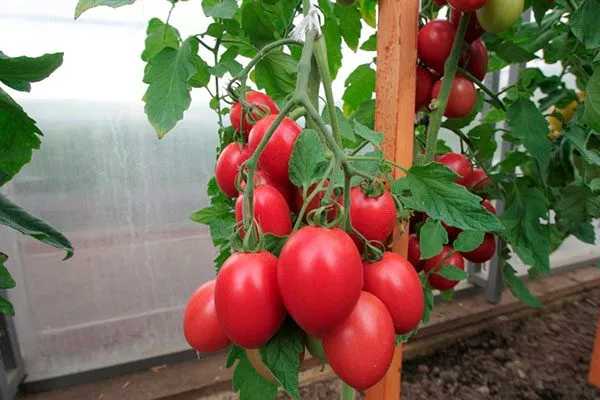
The height of the plants depends on growing conditions: in closed ground they reach 90-100 cm, and in open areas they grow no higher than 70 cm.
Distinctive features:
- The bushes have moderate foliage, form a minimal number of lateral shoots and are characterized by compactness.
- The leaves are green and medium-length. Small flowers are collected in racemes, producing up to 20 fruits. The first raceme usually appears under the 7th or 8th true leaf, with subsequent ones appearing every two leaves.
- The inflorescences are complex, and the peduncle is articulated.
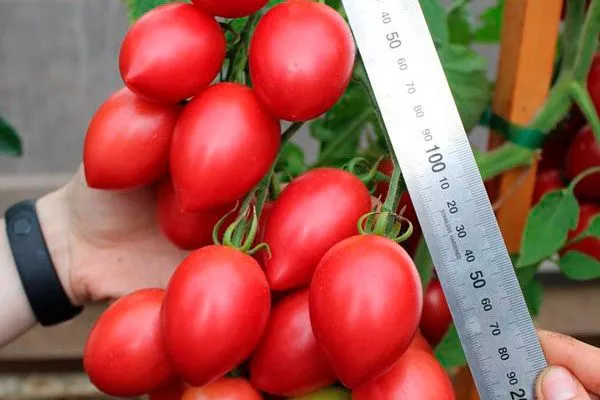
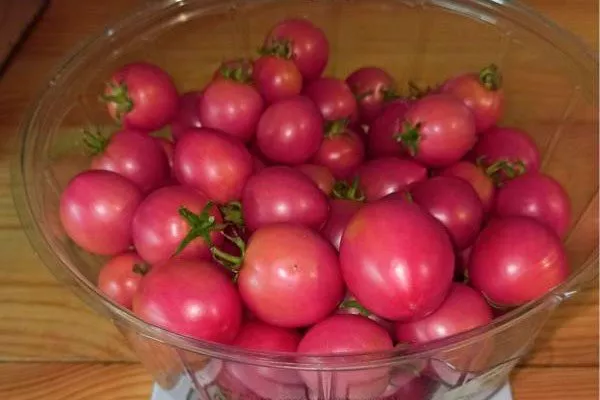
- The tomatoes are ovoid, moderately firm, and slightly ribbed. They have an obovate shape with a small beak. The average weight of one fruit is 50-60 g.
- The skin is strong, smooth, shiny, and resistant to cracking. The flesh is juicy and tender, containing two seed chambers with a minimal number of small grains at the milky stage of ripeness.
Main characteristics
The sweet pea is distinguished by its early ripening period—the first fruits are harvested just 85-90 days after planting. In polycarbonate greenhouses, productivity is approximately 12 kg per square meter, but in commercial cultivation, this figure can reach 15 kg in protected soil and 13 kg in open ground.
The hybrid is resistant to a number of common diseases, including:
- late blight;
- Verticillium wilt;
- fusarium.
Among the pests that can affect plants, the most common are:
- wireworms;
- Colorado potato beetles;
- slugs;
- whiteflies;
- snails.
Ripe tomatoes are eaten fresh, added to summer salads and appetizers, and used for whole-fruit canning.
Growing and care
Before planting, thoroughly prepare the soil and perform a number of other steps. Follow these recommendations:
- Dig over the beds and add fertilizer. Use organic matter, such as compost or rotted manure, and mineral solutions, such as superphosphate and potassium supplements. The soil should be well-aerated and drained, as tomatoes do not tolerate stagnant water.
- Grow seedlings from purchased planting material. Sow seeds in February-March, and transplant the seedlings to a plot or greenhouse when they are 50-60 days old.
- Once the soil warms to 15-18°C and the threat of frost has passed, begin planting the seedlings. Space the seedlings 40-50 cm apart, leaving about 60 cm between rows for easy harvesting.
- ✓ Soil pH should be between 6.0-6.8 for optimal nutrient absorption.
- ✓ The soil should be enriched with organic matter of at least 3-5% to ensure good structure and water-holding capacity.
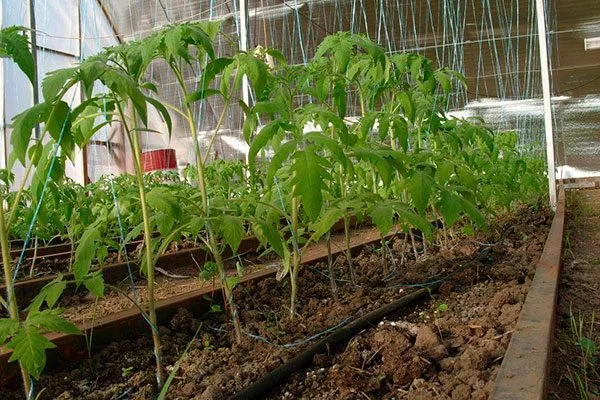
Provide the crop with comprehensive care to achieve the most generous harvests. Follow standard agricultural practices:
- Watering. Ensure regular watering, especially during flowering and fruit ripening. Pour water at the roots, avoiding the leaves and stems. Use warm water that has been left to stand for several hours.
Avoid over-watering the soil as this can lead to root diseases and rot. - Fertilizers. Provide your tomatoes with adequate nutrition. Apply the first fertilizer 10-14 days after planting, using nitrogen-rich compounds. Subsequently, complex mineral fertilizers with added phosphorus and potassium are effective for improving fruit development.
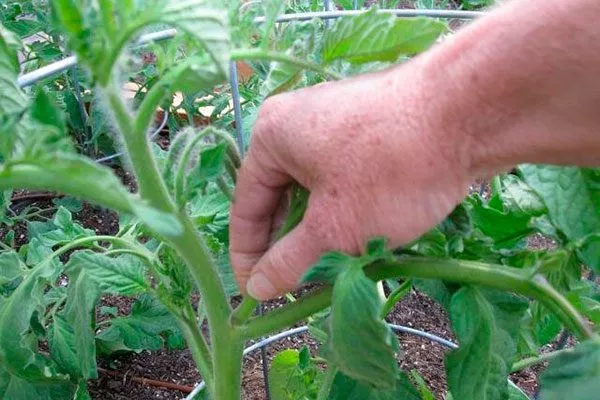
Alternate organic and mineral fertilizers. Three to four applications per season are sufficient. - Pinching and shaping. To prevent the bushes from becoming overgrown and to ensure adequate light for the fruit, regularly remove side shoots—those that emerge from the leaf axils. Additionally, tie the plants to supports or trellises to improve air circulation and protect them from damage.

- Soil care. To retain soil moisture and prevent weed growth, mulch the beds, such as with straw or grass clippings. Loosen the soil after watering or rain, and weed.
Pest and disease control
The plant has a strong immune system, but with improper care or unfavorable conditions, it can be susceptible to various problems. Bushes suffer from the following diseases and insects:
| Disease/Pest | Signs | Methods of struggle |
| Late blight | Caused by a fungus, it attacks leaves, stems, and tomatoes, causing brown spots that quickly spread and lead to rot. | Treat with fungicides - Topaz, Promin, Ridomil Gold. |
| Powdery mildew | It appears as a white coating on leaves, stems, and fruits, which impedes photosynthesis and weakens plants. It often develops under conditions of high humidity and insufficient ventilation. | Spray with Topsin, Fundazol, or Vitaros. Folk remedies, such as a baking soda solution or milk diluted with water, are also effective. |
| Verticillium wilt | A fungal disease that causes wilting, yellow spots on leaves, and general weakness of the bushes. | Use fungicides – Rovral or Topsin. |
| Fusarium | It is accompanied by yellowing and wilting of the lower leaves, and rapid death of the plant. | Remove affected bushes and treat healthy ones with fungicides Fundazol or Previkur. |
| Colorado beetle | It eats the leaves and stems of tomatoes, which leads to weakening. | Collect the parasites manually and use insecticides – Decis, Aktara or Confidor. |
| Aphid | It can damage leaves, trunks and fruits by sucking the sap from the bush, which leads to its weakening and a decrease in the number of vegetables. | Effective insecticides include Actellic, Fitoverm, and Inta-Vir. A soap solution or garlic tincture will also help. |
| Whitefly | It feeds on sap, which can cause leaf deformation and a decrease in their photosynthetic activity. | Set up sticky traps and use insecticides such as Karate or Aktara. |
Pros and cons
Planting and growing tomatoes is a simple task that even a beginner can handle, but it's important to carefully study the crop's characteristics. Lapotchka has many advantages:
This variety has virtually no obvious drawbacks. However, planting material must be purchased annually. The fruits are small, but this is more of a plus than a minus.
Reviews
Lapochka is a hybrid that combines excellent productivity and superb flavor. Early ripening, disease resistance, and long-lasting storage make it an excellent choice for gardening. Experienced gardeners and novice gardeners will appreciate it.