
The Ladoshka tomato is a domestic variety popular with both amateur gardeners and professional farmers. It produces unusual, beautiful, vibrant, heart-shaped fruits, and, most importantly, it's a very hardy and undemanding variety that can be successfully grown in Siberia.
Who and when developed the Ladoshka tomato?
The Ladoshka variety was not developed at a research center; it is the product of amateur selection. Its creator is L. Krivoguzova from Kupino (Novosibirsk Oblast). The Ladoshka variety appeared on the market in 2021.
Description of the variety
The bushes are indeterminate and tall, reaching up to 1.8 m in height. The bushes are vigorous and well-foliated. The fruits ripen in clusters, each bearing 3-5 ovaries.
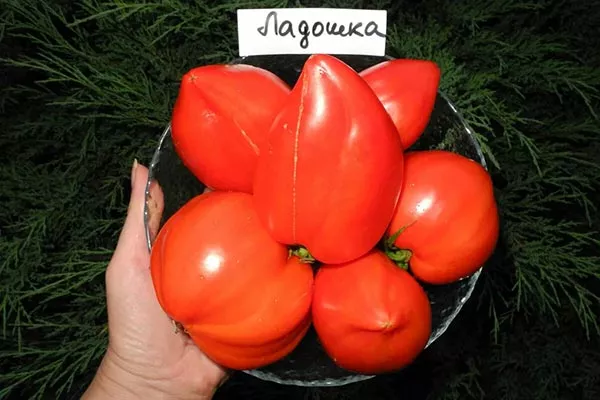
Brief description of fruits:
- Color: red.
- Shape: elongated, heart-shaped (pointed), with edges, ribbed.
- Weight: from 150 to 450 g. On average, fruits weigh 200-300 g.
The first fruits grow the largest; they can be simply gigantic – up to 900 g. The pulp is dense, there are very few seeds, literally a few per fruit.
Taste and use of fruits
The fleshy pulp of the fruit has a very pleasant, slightly sweet flavor with virtually no acidity. The tender tomato pulp is rich in sugars and carotene. Due to its small seed content, the Ladoshka variety is ideal for making tomato juice, sauces, ketchup, and other products.
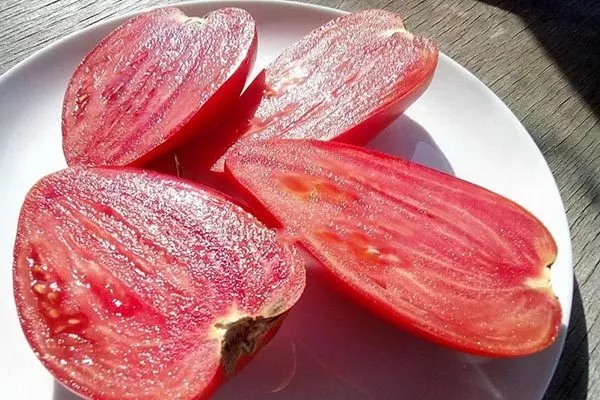
Ladoshka tomatoes are also delicious fresh and can be used in a wide variety of culinary dishes and homemade preserves. Their flavor is not affected by cooking.
Main characteristics
The amateur tomato "Ladoshka" has quite good agronomic characteristics. This Novosibirsk variety with heart-shaped fruits has every chance of being a success among gardeners.
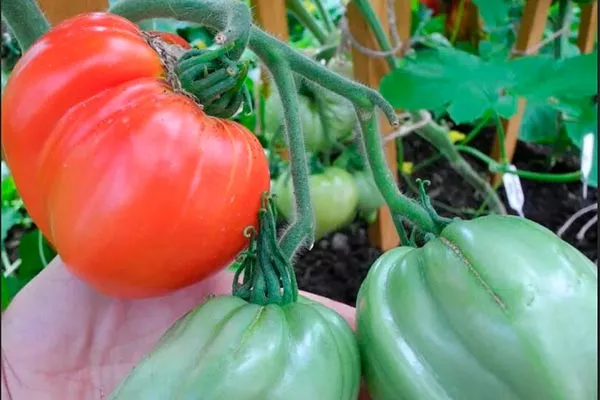
Peculiarities:
- Productivity. The Ladoshka tomato has a medium yield. Compared to other indeterminate varieties, it doesn't produce many fruits. With proper care, a single tall plant can yield about 4 kg of tomatoes.
- Ripening periods. The Ladoshka tomato is a mid-season variety. This mid-season tomato takes 90-120 days to ripen. Growing seedlings takes 60-65 days.
- Frost resistance. This variety is heat-loving and completely frost-intolerant. The optimal temperature for growth and development is 23 to 25°C. Drought resistance is standard—it requires regular watering, and moisture deficiency negatively impacts the health of the plant and its fruit.
Pros and cons
The Ladoshka tomato has many attractive advantages for gardeners. However, before planting, it's worth considering its drawbacks.
Landing features
The Ladoshka variety is grown in open or closed ground using seedlings. This tomato performs best in greenhouses.
How to sow seedlings correctly?
The timing of sowing seedlings depends on climate and weather conditions. They grow for approximately two months. The growth and development of the bushes, as well as their yield, depend on how strong and healthy the seedlings are.
- ✓ Check the seeds for germination by soaking them in water for 10-15 minutes. Non-viable seeds will float.
- ✓ Pay attention to the expiration date of the seeds. The optimal shelf life for tomatoes is no more than 4-5 years.
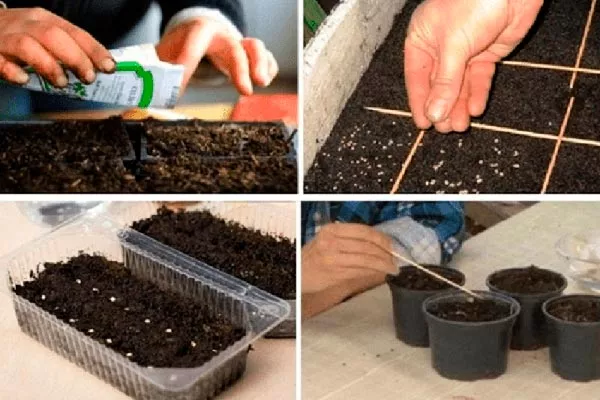
Landing features:
- The seeds are pre-prepared for sowing, sorting out weak and non-viable specimens. They are then disinfected in a potassium permanganate solution, washed, and dried. It is also recommended to soak the seeds in a growth stimulant, which will ensure stronger seedlings.
- For sowing, use containers with drainage holes. They are filled with a prepared substrate or a soil mixture made from 5 kg of fertile soil, 3 kg of peat, and 0.5 kg of wood ash. You can also sow seeds in individual containers, including peat cups.
- Before sowing the seeds, compact the soil slightly and moisten them. Plant them 1 cm deep. Leave 1 cm gaps between adjacent seeds and 4 cm between rows. Sow several seeds in cups to select the strongest seedlings later. Cover the seedlings with transparent film or glass.
How to care for seedlings?
Seedlings are sensitive to any external influences and require specific growing conditions. It's important to provide them with light, water, and fertilizer in the amounts required by agricultural practices.
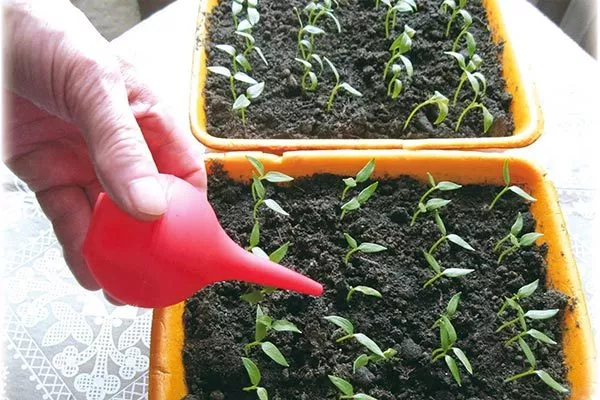
Features of caring for Ladoshka tomato seedlings:
- Seedlings require long daylight hours—at least 12-14 hours. They grow best on south-facing windowsills. On other windowsills, they require the support of phytolamps.
- Until seedlings emerge, the room temperature should be between 20 and 25°C. Once seedlings emerge, remove the covering and move the container to a cooler location. Maintain the temperature at 10 to 15°C (but no higher than 18°C) for 5 days, and 6 to 7°C at night.
- Seedlings are watered regularly, but sparingly. The soil should dry out slightly, and water should not stagnate, otherwise the seedlings may become infected with blackleg, a dangerous disease that often affects seedlings and is incurable.
Water the seedlings in the morning so that the soil dries out by evening. Stop watering a week before transplanting. - When 2-3 true leaves appear, the seedlings are transplanted from containers into individual cups. They are pricked out, pinching the root tips. When planting, the plants are planted deep down to the cotyledons.
- Fertilize tomato seedlings twice: first, three weeks after germination, and again one week before transplanting. Use a solution of ammonium nitrate (15 g), superphosphate (30 g), and potassium sulfate (30 g) diluted in water (10 l).
If the seedlings are being transplanted outdoors, they should be hardened off a week before transplanting, gradually acclimating them to the new conditions. The day before planting, it's recommended to leave them outdoors overnight, provided the temperature doesn't drop below 10°C.
How to choose a landing site?
Tomato seedlings are grown in a greenhouse or outdoors. In the latter case, choosing the right planting location is important. It should be well-lit, shade-free, and protected from cold winds.
You can plant the beds on a slightly raised platform, but areas with stagnant water are not suitable—overwatering damages the root system and causes various types of rot. Tomato soil should be loose and well-drained, with a pH of 6.0-7.0.
- ✓ The optimal soil pH for tomatoes is 6.0-7.0. Check the soil acidity before planting.
- ✓ Make sure the soil is well-drained. Tomatoes do not tolerate standing water.
The best predecessors for tomatoes are greens such as lettuce, spinach, and dill, as well as cabbage, cucumbers, zucchini, and onions. Tomatoes should not be planted after potatoes or any nightshade crops.
How to prepare the soil?
The planting area is dug over in the fall. Fertilizers and other components that improve soil quality are added during the digging process. The soil should not only be fertile but also loose, permeable to moisture and air, and have an optimal acidity level.
Compost, humus, and peat are used as fertilizers. Superphosphate, potassium salt, and bird droppings can also be added. Over the winter, the fertilizer will dissolve and be absorbed into the soil, and any pathogenic bacteria that float to the surface will freeze.
In the spring, the soil is loosened or dug again. A few weeks before planting the seedlings, the soil is disinfected by watering it with copper sulfate (1 tablespoon per 10 liters of water).
Planting seedlings in the ground
When the soil warms up to +10…+12°C at a depth of 10 cm. At night, the temperature should not fall below +14-16°C.
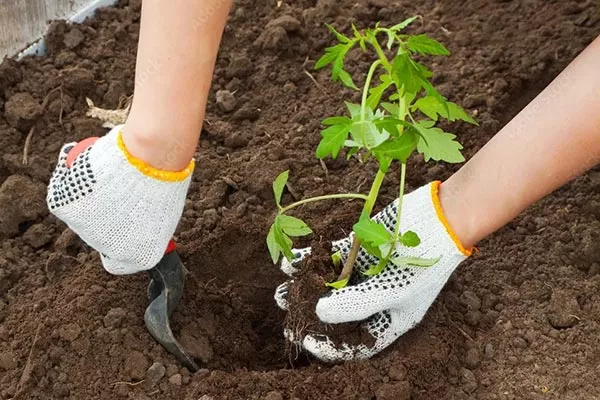
Features of planting seedlings:
- The holes are dug large enough to accommodate the seedlings' roots freely. The diameter and depth of the holes should be approximately 10-12 cm.
- Before planting, water the holes with 3-5 liters of water. Then wait about an hour for the soil to settle. Water the seedlings as well to make them easier to remove from the planting containers. Then, transplant the seedlings, soil and all, into the planting holes.
- The roots are covered with soil, compacted, and watered again. Then, the seedlings are not watered for 10 days, unless there is extreme heat.
Ladoshka variety seedlings are planted at a rate of 3 plants per 1 sq.m.
Care
The Ladoshka tomato requires standard care. In addition to watering and fertilizing, it also requires shaping and support, as this variety's bushes are quite large and branched.
Watering mode
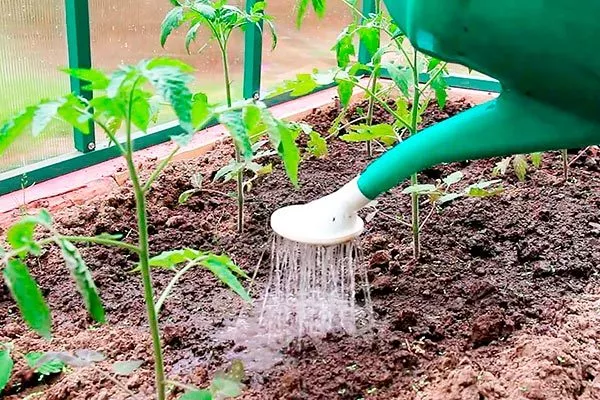
Water the Ladoshka tomato plant moderately but regularly, avoiding stagnant water or allowing it to dry out. In dry and cloudy weather, water the plants on average once a week. The recommended watering rate is 2 liters per plant. On sunny days, water twice as often.
Fertilization
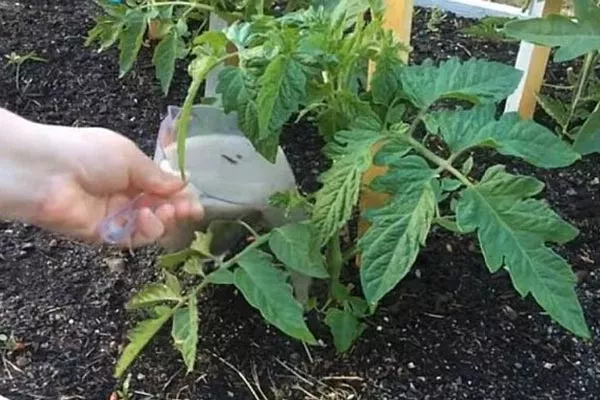
The Ladoshka tomato plant should be fertilized once every two weeks. Fertilizer dosages are gradually increased. It is recommended to combine fertilizing with irrigation.
Loosening and weeding
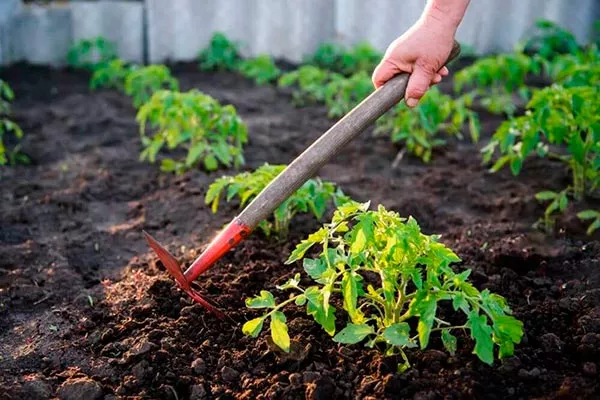
After watering and rain, the soil in the beds is loosened to prevent hardening and ensure oxygen reaches the roots. Loosening is done carefully to avoid damaging the stems and roots, and weeds are removed simultaneously.
Shaping and garter
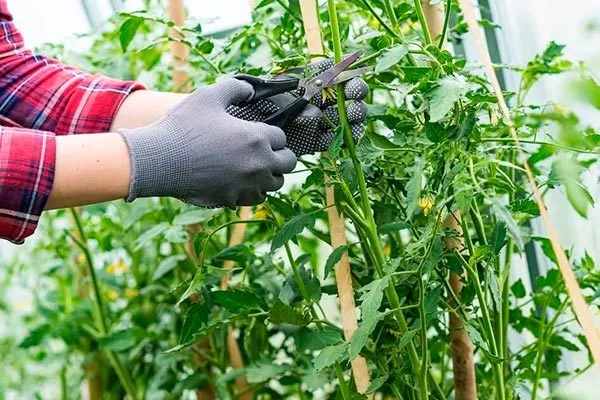
The best results are achieved with bushes formed into two stems. Throughout the growing season, the plants need to be tied to supports. The bushes are also regularly pinched off by removing shoots growing in the leaf axils.
Prevention of diseases and pests
The Ladoshka tomato has a fairly strong immune system, protecting it from the most common diseases. Inclement weather and improper cultivation practices can expose the bushes to late blight, septoria leaf spot, early blight, and other fungal infections. To combat these, use Silar, Bronex, Bacterra, or similar products.
The variety isn't susceptible to any specific pests, but if they proliferate, attacks from whiteflies, fungus gnats, aphids, midges, thrips, and other insects are possible. Insecticides can be used for protection, but be mindful of harvesting. For example, Corado is effective against the Colorado potato beetle.
Harvesting and storage
It's important to harvest all the tomatoes before the first frost. If the tomatoes are to be transported and/or stored, they should be picked when they reach technical ripeness. This amateur variety doesn't store particularly well; it's recommended to pick them when ripe, eat them immediately, or use them for canning.
Reviews
The Ladoshka tomato is a promising and interesting variety that Siberians will surely appreciate. This tomato will also appeal to lovers of unusual varieties, thanks to the unique shape of its fruits. It's hardy, productive, and delicious, and can be grown in regions other than Siberia.