
The Kurazh tomato is one of the new hybrid varieties bred in Russia. It produces small, elongated fruits, popularly known as "cream." This hybrid is easy to care for and can be successfully grown even by novice gardeners.
Who and when bred the Courage tomato?
The Courage tomato is a hybrid. It was developed by Heterosis Selection LLC, a company specializing in vegetable breeding and seed production. The Courage hybrid was approved for cultivation in 2020.
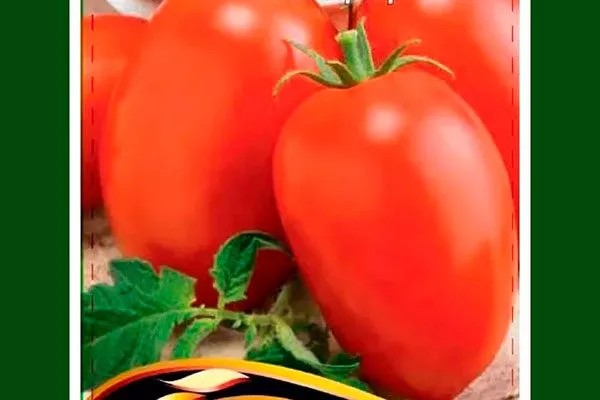
The hybrid was obtained by crossing the Dolka x GS:18-262 tomatoes. The group of authors who developed the Courage tomato included T.V. Steinert, N.S. Teplova, A.V. Aliluyev, L.M. Avdeenko, and V.Yu. Poldnikova. The hybrid is recommended for cultivation in all regions of the country.
Description of the plant
The bushes are medium-sized, semi-standard, and belong to the determinate type of plants. They reach a height of 45-55 cm. The bushes of the Courage hybrid are compact, not spreading. The leaves are long and dark green. The clusters are closely spaced, with every other leaf being 1-2. The inflorescences of this hybrid are intermediate, and the peduncles are articulated.
Description of fruits
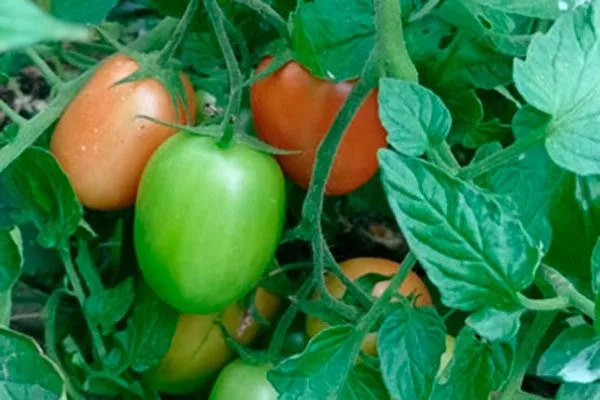
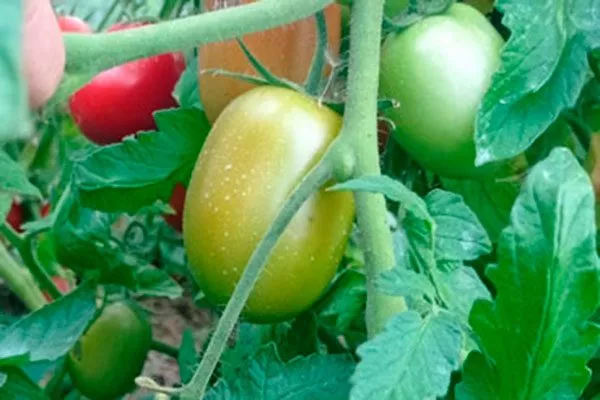
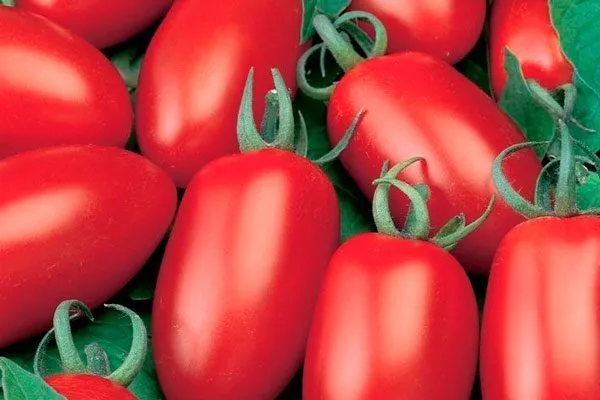
The fruits of the Courage tomato are small, resembling plum tomatoes. Five to six fruits form in a single cluster.
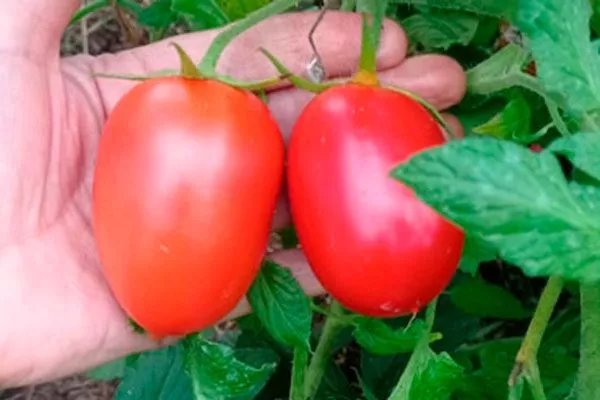
Brief description of fruits:
- Color of unripe fruits:green with a spot near the stalk.
- Color of ripe fruits:red.
- Weight of one fruit:80-90 g.
- Form:elliptical, slightly ribbed.
- Pulp:dense.
Taste and purpose
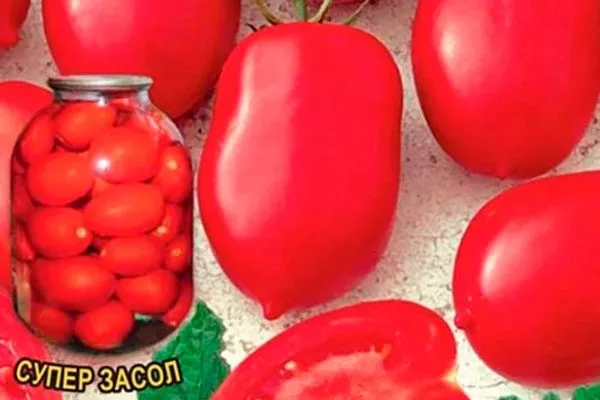
The fruits of the Kurazh hybrid have a classic tomato flavor, pleasant and rich. They are ideal for eating fresh, adding to prepared dishes, making sauces, ketchups, various preserves, and for whole-fruit canning.
Characteristics
The Courage tomato is an early-ripening variety. It takes 115-120 days from germination to the first tomatoes ripening. The average yield of this hybrid is 4.8 kg per square meter.
Pros and cons
If you're considering planting the Courage hybrid in your garden, greenhouse, or open ground, be sure to familiarize yourself with all of its advantages and find out if it has any disadvantages.
No flaws have been found in this variety. Some might be displeased with the small size of the fruit, but this is a characteristic of the hybrid.
Landing features
The Courage hybrid is not recommended for direct sowing; seedlings are preferred. You can grow the seedlings yourself in a heated greenhouse (if available) or indoors.
Preparing containers
Seedlings can be grown in trays, large containers, or individual cups. Seedlings require transplanting, so it's easier to sow them in one large container and then transplant them into individual pots or cups with a capacity of 300-500 ml.
Before use, thoroughly wash containers with boiling water and soap. If the container is old, it must be disinfected, for example, with chlorhexidine, potassium permanganate solution, hydrogen peroxide, or vinegar. The container used for transplanting should have drainage holes to prevent water from stagnating in the soil.
Selection and preparation of seeds
The Courage tomato is a hybrid, so there's no point in collecting seeds; they must be purchased. When choosing planting material, it's important to pay attention to the expiration date; seeds typically retain high germination rates for up to five years.
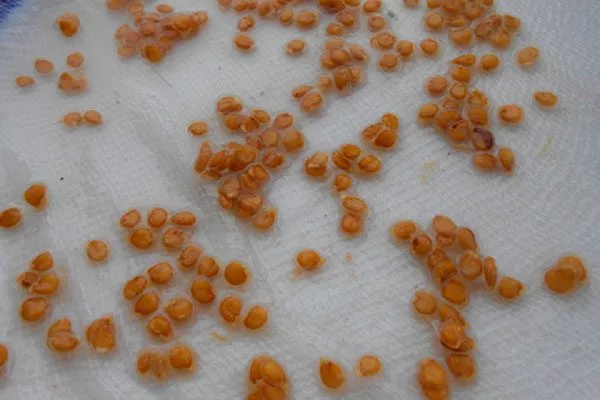
Seeds from the manufacturer are usually completely ready for planting; they are disinfected and treated with growth stimulants. If desired, you can test the seeds for germination by immersing them in a salt solution and waiting for half an hour. Any seeds that float to the top are discarded. The seeds also need to be germinated by wrapping them in a damp cotton cloth or cheesecloth.
Preparing the soil mixture
For growing seedlings, you can use ready-made substrates such as PETER PEAT "Hobby Line," Veltorf for tomatoes and peppers, Fasco Malyshok, Hera bio-soil with vermicompost, etc. Instead of store-bought soils, you can also use homemade soil mixtures.
You can prepare a seedling mixture using turf soil, mixing equal parts humus (or compost) and river sand. You can also add superphosphate, potassium salt, and ammonium nitrate to the nutrient mixture (50 g, 20 g, and 10 g each, respectively, per 10 liters of prepared soil).
Growing seedlings
Seedlings are grown for 50-60 days. Sowing occurs from late February to mid-April. The timing depends on the regional climate and soil type. Tomatoes are planted under cover a couple of weeks earlier.
Features of sowing tomato Courage for seedlings:
- Before sowing tomato seeds, moisten the soil in the planting container. It's best to do this with a spray bottle.
- The easiest way to sow seeds in large containers is in rows—shallow depressions spaced 3-4 cm apart. Seeds are placed within the rows at 2 cm intervals.
- For sowing, you can also use cassettes, individual containers (pots or plastic cups), as well as peat pots or tablets.
- Plant 2-3 seeds at a time in separate containers, leaving a distance of 3 cm between them.
- The seeds are planted 1-1.5 cm deep and covered with a thin layer of soil. The seeds are covered with transparent film; larger containers can also be covered with glass.
- ✓ Optimum temperature for seed germination: +20…+25 °С.
- ✓ The need for round-the-clock lighting for the first 3-5 days after germination.
The container with the sown tomatoes is placed in a warm, bright room where the temperature is maintained at +20…+25°C. The cover is removed for half an hour every day to air the crops.
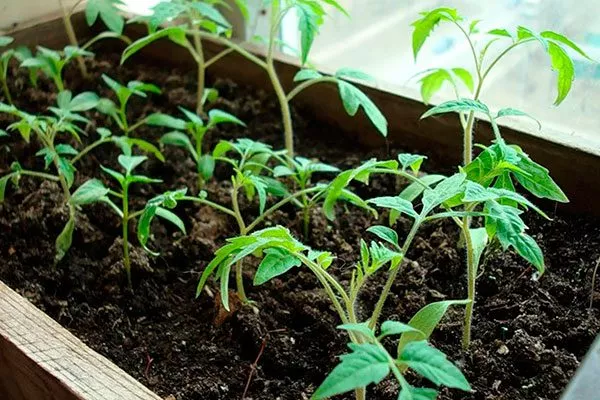
Features of caring for tomato seedlings Courage:
- When seedlings emerge, the covering is immediately removed to prevent the sprouts from "cooking," and the temperature is sharply lowered to 15°C during the day and 10°C at night. A week later, the temperature is raised to 18°C to 25°C. This weekly temperature reduction helps prevent the seedlings from stretching.
- For the first 3-5 days after germination, lighting is provided around the clock. Then, daylight hours are reduced, first to 18-20 hours, then to 11-20 hours.
- Until the seedlings are pricked out, water them infrequently, 1-2 times a week. After pricking out, water more frequently—3-4 times a week. Water the seedlings in the morning. The soil should be well-moistened, but not allowed to stagnate.
- It is recommended to carry out preventive treatments against late blight - 3 times at intervals of 10 days.
- The easiest and most effective fertilizer to use is ready-made mineral complexes for fertilizing tomato seedlings.
- Pricking out is done when the seedlings have two true leaves, using a 10x10 cm pattern. Alternatively, seedlings can be transplanted into individual cups, after pinching back the central root by 1/3. Plants are planted deep up to the cotyledon leaves to encourage the development of additional roots.
Hardening off is recommended to begin three weeks in advance. During this time, the seedlings need to acclimate to the outdoors and cool temperatures. This is necessary if the seedlings are to be planted outdoors. The first time, the seedlings are taken outside for an hour and a half, gradually increasing the time spent outside by 15-30 minutes per day.
Selecting a site
The site for planting the Courage tomato should be chosen so that it receives maximum light and warmth. The chosen location should be protected from gusty winds and drafts.
Soil preparation
The soil for planting tomatoes is dug over in the fall. Fertilizers and other components are added during the digging process to help improve the soil structure or normalize its acidity.
Features of soil preparation for planting the Courage tomato:
- Add 10 kg of humus, compost, or vermicompost per square meter to the open soil. Also add 200 g of peat and wood ash, 50 g of superphosphate, and 30 g of potassium sulfate to this area.
- Organic matter is also added to the greenhouse in the fall. If this hasn't been done, mature compost or vermicompost is spread around the area in the spring at a rate of 10 kg and 3 kg per square meter, respectively.
The optimal soil acidity for the Courage tomato is neutral, with an acidity of no higher than 6–6.5 pH. Slaked lime, wood ash, or dolomite flour are added to acidified soils.
Transplanting
Tomato seedlings are planted in open ground when the threat of frost has passed and warm weather has set in—at around 18 to 22°C. Not only the air but also the soil should warm up to 12 to 14°C. Planting occurs when the seedlings are 50 days old.
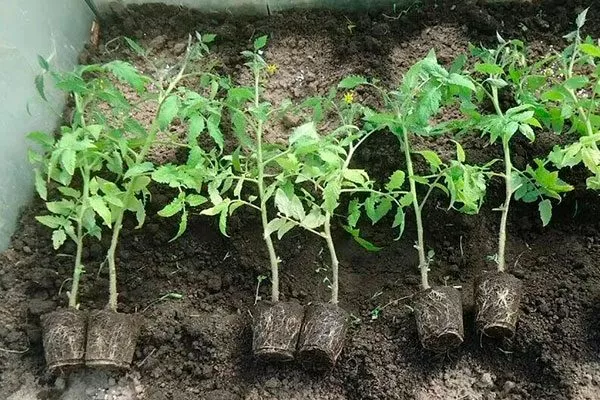
Features of planting seedlings:
- For planting, dig holes measuring 15 x 20 cm. Their size should be such that the root system with a lump of earth or a peat pot fits freely into them.
- The Courage tomato plant grows small, so 7-8 plants can be planted per square meter. The optimal planting pattern is 40 x 70 cm.
- Organic fertilizers are placed into the dug holes - humus, wood ash, and 1 tablespoon of superphosphate is also added.
- The holes are filled with warm, settled water. After an hour, when the soil has settled slightly, the tomato seedlings are transplanted into the holes using the transshipment method.
- The empty space is filled with soil, which is then compacted, creating a small depression for watering. The seedlings are watered again with warm, settled water, and once it has been absorbed, the soil is mulched with peat, hay, straw, sawdust, etc.
Care Features
The Courage tomato is easy to grow and requires standard care to produce a good harvest. The bushes need to be watered regularly, fertilized and sprayed several times per season, and the soil should be loosened, mulched, and weeded.
Watering
When watering the Courage tomato, it's important to maintain a balance. The soil shouldn't dry out, but it shouldn't be overwatered either. Keep it slightly moist. Water the tomatoes 1-2 times a week. The recommended watering rate per plant is 5 liters.
Water tomatoes at the roots, ensuring water does not reach the above-ground parts of the plants. In cool and/or damp weather, water less frequently. Use only warm water.
Loosening and weeding
Tomato beds are loosened after each watering, initially to a depth of 10-12 cm. As the plants grow and their root system develops, the loosening depth is reduced to 4-5 cm.
Loosening the soil allows oxygen to pass through, which is essential for plant roots. While loosening the soil, weed the beds, removing any growing weeds. To slow moisture evaporation and prevent weed growth, the soil around the tomato plants is mulched with organic matter.
Top dressing
Fertilize the Courage tomato (after planting in the ground) a couple of times per season. Both organic and mineral fertilizers are used.
Approximate fertilizing schedule for tomato Courage:
- The first feeding is done two weeks after transplanting the seedlings into the soil, when the first cluster of flowers has bloomed. Diluted superphosphate and potassium sulfate are added to the bushes (2 tablespoons and 1 tablespoon per 10 liters of water, respectively).
- The second feeding is carried out during the period of intensive fruit growth. Apply 1 tablespoon of ammonium nitrate and potassium sulfate per square meter.
It is also recommended to feed tomatoes with organic matter, for example, a diluted solution of mullein or bird droppings (1 liter of infusion per 10 liters of water).
Shaping and garter
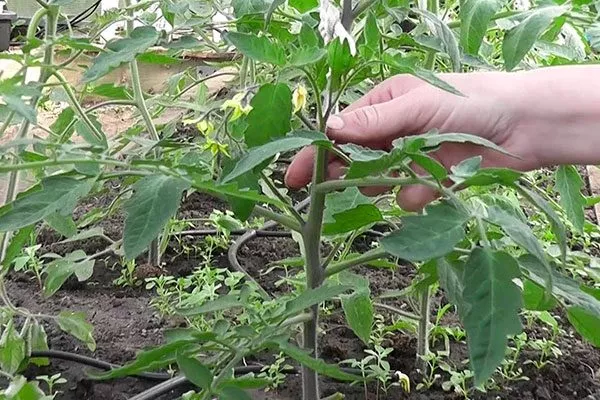
Kurazh doesn't require any shaping or staking. Thanks to its low, unspreading bushes, these measures are unnecessary. This hybrid also doesn't require pinching.
Diseases and pests
The Kurazh variety has strong immunity to many dangerous nightshade diseases, but under unfavorable conditions, the risk of infection increases. Preventative spraying with copper sulfate, boric acid, and iodine solution helps prevent these.
The Courage tomato is not susceptible to pests, but insect attacks are possible. In case of widespread aphid infestations, spray the bushes with Karbofos, Trichopolum, Insektobacterin, etc. For spider mites, use special products such as Antikleshch, Clipper, or similar.
Harvesting and storage
The Courage tomato has a prolonged fruiting period, so harvesting takes at least a month. In greenhouses, harvesting begins in early to mid-July, and in open ground, in late July to early August. The fruits are harvested at biological ripeness for consumption, and at technical ripeness for storage.
Store the fruits at room temperature or in a cool basement. This variety has excellent shelf life, and the tomato flavor only improves with age.
Reviews
The hybrid variety Kurazh is an excellent choice for gardeners who enjoy small tomatoes. It combines all the best qualities of the ideal tomato—it's productive and easy to grow, and its delicious fruits are perfect for all occasions.