
The Kumato tomato is a black-fruited, indeterminate, GMO-free variety. It attracts gardeners thanks to its black fruit and increased nutrient content. For example, it contains 2-3 times more vitamin C than yellow and red varieties. What determines Kumato's unique composition, how to grow it, and how to use it? Let's explore further.
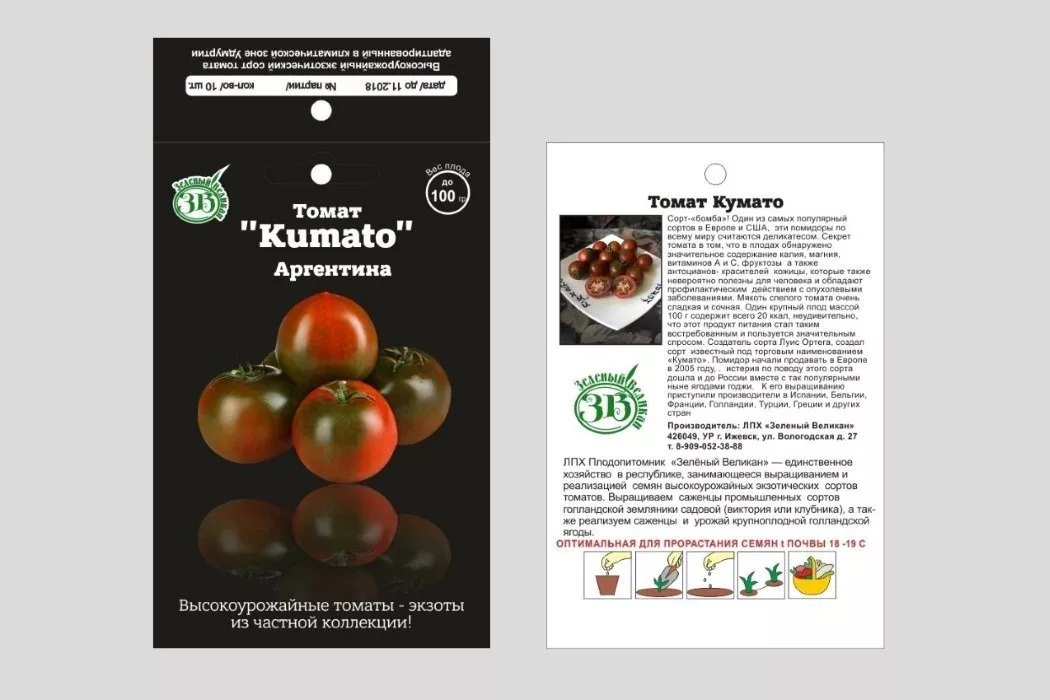
Kumato tomato seeds
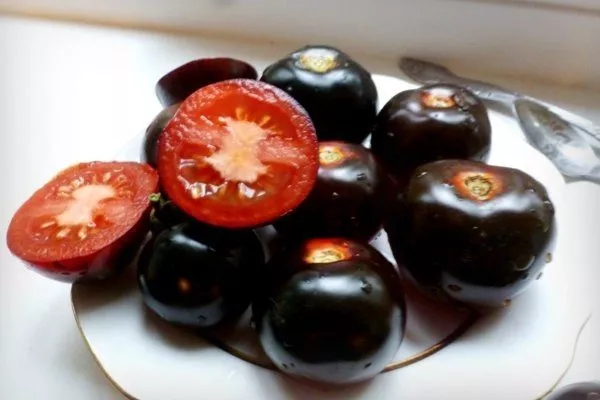
Tomatoes of the "Kumato" variety in cross-section
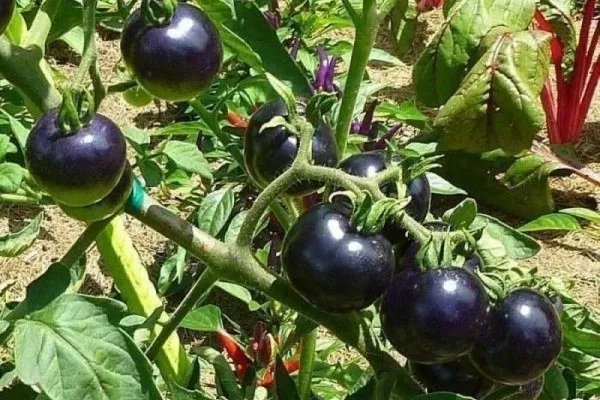
The fruits of the Kumato tomato are aphrodisiacs.
History of breeding and distribution
The origin of this variety is rather controversial. The leading theory is that it originated in the Galapagos Islands, where it grows wild. However, its current form appeared on the European market thanks to the scientific work of Belgian breeders, who, without any genetic engineering, crossed wild tomatoes with domesticated varieties. The fruits' black color stems from the blackberry pigment they contain.
According to another popular theory, specific work on developing this hybrid variety began nearly 50 years ago by geneticist Luis Ortego. In the 1970s, the farmer was exploring his fields in the village of Agra (on the coast of Almería, Spain) and noticed that the tomatoes in the last rows, where salty soil prevails and moisture is least, had a different color but a more intense flavor and a brighter aroma. From then on, Ortego decided to grow only these tomatoes, creating specific conditions for them, which was not difficult in the Mediterranean.
The Spanish company Syngenta later acquired the right to breed the black tomato. The resulting tomato was named Olmeca F1, but in many countries it is better known under the brand name Kumato.
Today, the variety is very popular in Europe, Turkey and Australia, but has not gained much popularity in the CIS countries.
In Russia, the variety is not included in the State Register of Breeding Achievements, but can be grown throughout the country, especially in the southern regions.
Description of the variety
The Kumato tomato is a mid-season variety, closer to late. The harvest can be completed 100-120 days after the first shoots appear. We'll discuss how the bushes develop and what distinguishes the fruits, other than their black color, separately.
Bushes
The external qualities of this plant are traditional and correspond to the category of tall varieties:
- HeightKumato is an indeterminate growth variety, reaching 2-2.5 m in height. The top of the shoot should be pinched before it reaches 2 m to ensure favorable conditions for fruit development.
- RhizomeDense, vigorous growth extends more than 0.5 m in all directions and covers an area up to 50 m in diameter. It spreads without depressions.
- StemIt is a hardy, bristly, vine-like plant with medium foliage. It continues to grow even during the fruiting season.
- LeavesThey are small in size, have a typical structure typical of most tomato varieties, a wrinkled, cellular surface, and a dark green color. There is no pubescence.
- JointIt is simple and intermediate, meaning the first inflorescence forms above the 8th-9th leaf, and subsequent ones form every 1-2 leaves.
- BrushA single plant can produce up to 8 simple flower clusters, each producing 6-8 tomatoes.
Fruit
The fruits, collected in clusters, are distinguished by their exotic appearance and original taste:
- ColorUnripe fruits are pale green, unblemished and uniform at the stem. As they ripen, the color gradually darkens, first turning deep burgundy and then chocolate brown. Sometimes the coloring can be uneven, with thin green stripes.
- Shape and sizeThe shape of the fruit can be either round or oval with a few ribs. Their size is average: diameter is about 5-7 cm, weight is on average 80-100 g. All ripe tomatoes look almost identical.
- PulpFleshy and dense, yet tender. It has a rich, dark red color, but greenish notes are sometimes visible. The number of ribs indicates the number of seed chambers inside a ripe tomato. There are usually 2, 3, or, rarely, 4. Therefore, the seeds occupy a smaller portion of the fruit and are evenly distributed among the chambers. The dry matter content of tomatoes is over 5%, which is significantly higher than that of regular red tomatoes.
The pulp is sugary and oily in structure, with thick walls and a high juice content.
- TasteBlack tomatoes have a unique flavor—sweet with light fruity notes and a complementary tartness. The aroma is bright and rich. Remarkably, the flavor is retained even after cooking.
- ApplicationKumato is a dessert variety and is best eaten fresh. The fruits can be served sliced or in various salads. They can also be used in soups and main courses. Some farmers also prefer to can these tomatoes, which withstand heat treatment well due to their dense texture.
The fruits store well and are easy to transport because they do not crack thanks to their thick skin.
You can see what black tomatoes look like in the following video:
Table of characteristics
The main characteristics of the Kumato tomato can be found below:
| Parameter | Description |
| Main qualities | Indeterminate, mid-season, dessert variety |
| Ripening period | 100-120 days after the first shoots appear |
| Productivity | Stable and high yield. A single bush can yield up to 8 kg of nearly uniformly sized fruit. The average yield per square meter of planting area is approximately 15 kg. |
| Features of cultivation | The plant requires staking and pinching. It's best to train these varieties with 2 or 3 stems. The bushes can reach 2.5 m in height, so pinching them before they reach 2 m is essential. |
| Disease resistance | High – the variety is resistant to most tomato diseases |
| Keeping quality | Tomatoes store well – up to 2 weeks at room temperature. Refrigerating them is not recommended, as they lose their sweetness. |
Beneficial properties
The Kumato tomato is a non-GMO product and has an improved chemical composition compared to other domestic and wild tomato varieties. This gives it the following unique properties:
- They contain anthocyanins, which give tomatoes their characteristic color. These substances are essential for human health, but they are not produced independently and cannot accumulate in the body, so it is crucial to obtain them through food. Anthocyanins strengthen blood vessel walls, reduce swelling, boost the immune system, and improve vision. They are also powerful antioxidants, which helps prevent cancer.
- They contain high amounts of vitamin C, a powerful antioxidant and immune booster. Therefore, eating tomatoes helps strengthen the body's defenses and the cardiovascular system.
- Contains special pigment substances that stimulate tissue regeneration and suppress malignant activity.
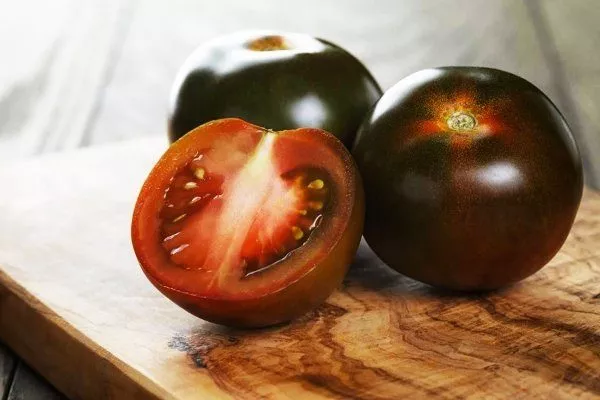
Due to its high vitamin and microelement content, tomatoes have aphrodisiac properties – a substance that stimulates or enhances sexual activity.
Agricultural technology
When growing such an original tomato variety, it is worth considering the following rules:
- Sow seeds for seedlings The planting period should be 60-65 days before the intended planting in its permanent location. Depending on the region, the optimal period is from late March to the first ten days of April.
- Kumato should be planted in open ground with adequate insulation or in a greenhouse. In the latter case, the plant will need to be pruned due to its tall growth.
- The seeds must be sown in well-prepared soil, previously enriched with phosphorus, disinfected and steamed to remove pathogenic microflora.
- After planting, the soil should be moistened and covered with plastic or glass to create favorable conditions for seed germination. Keep the containers with seedlings in a well-lit and warm place.
- When planting seedlings in open ground, a ratio of up to 4 plants per 1 square meter should be used. The optimal distance between them is 50 cm.
- Caring for seedlings involves tying them to a support using synthetic material, proper watering, fertilizing, removing weeds, etc. There is no need to shape the bush, but you need to pinch off the side and lower shoots.
Black tomatoes are grown in the same way as regular tomatoes, but they need to be watered less often to ensure they grow sweet and with a balanced acidity.
Seed collection and storage
Planting material can be purchased at a gardening store or prepared by hand, following these instructions:
- Carefully collect the seeds with a toothpick.
- Rinse the seeds with clean water to remove the tomato coating.
- If desired, soak the seed material in a weak solution of potassium permanganate to disinfect it.
- Dry the seeds for 2-3 days, wrap them in newspaper and store until spring.
Some gardeners don't rinse the seeds and instead store them immediately. However, this is a serious mistake, as after soaking them in potassium permanganate and planting them in the soil, the tomato coating will begin to peel off, which will negatively affect the plant's yield.
How to grow seedlings?
Preparations can often begin at the end of March. Growing seedlings is produced in several stages:
- Pre-sowing seed preparationSoak the seeds for a few minutes in a 5% saline solution. Remove any that float to the top, and disinfect the rest in a pale pink solution of potassium permanganate. Then rinse and soak in a growth stimulator for 24 hours. Once the seeds have swollen, harden them on the bottom shelf of the refrigerator.
- Substrate preparationYou can buy it at a gardening store or make it yourself by mixing peat, humus, and river sand in a 60:30:10 ratio. Add a cup of wood ash to the mixture. Next, treat it for pathogens by heating it in a preheated oven for a few minutes.
- Planting seedsThe prepared substrate should be poured into a spacious box or individual cups and moistened with warm water. Its optimal temperature is 22°C. The seeds should be planted 2 cm deep, leaving a 2 cm gap between them. Water the seedlings, cover with plastic wrap or glass, and transfer to a well-lit area where the temperature remains at 25°C. Critical parameters for successful cultivation
- ✓ Optimum soil temperature for seed germination: 25°C.
- ✓ Distance between plants when planting: 50 cm.
- ✓ Seed planting depth: 2 cm.
Some gardeners don't cover their crops with protective material. This ultimately leads to poor seed germination due to excessively dry soil.
- CareAround day 5, when most of the seedlings have emerged, the covering should be removed. When 2-3 true leaves have grown, dive seedlings In separate disposable cups or peat pots. A big advantage of the second option is that the seedlings can be planted directly in open ground. After transplanting, water the seedlings as the soil dries (keep it moist, avoiding water on the seedlings themselves!) and fertilize them twice with mineral fertilizer, two weeks apart. If the seedlings don't receive enough light, use fluorescent lamps several times a day.
- HardeningTwo weeks before planting in their permanent location, the seedlings should be hardened off to help them adapt to the new conditions more quickly. To do this, take them out onto the balcony or outside for a couple of hours every day.
- First feeding: 10 days after picking, use complex mineral fertilizer.
- Second feeding: 2 weeks after the first, use fertilizer with a high content of phosphorus and potassium.
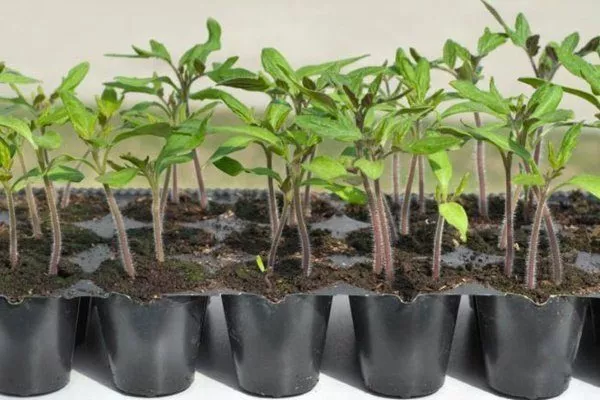
Growing seedlings will take about 1.5 months. They can be planted in open ground or in greenhouse beds. They should be about 35 cm tall, healthy in appearance, with a developed root system, strong stems, and disease-free leaves. Typically, a seedling bush should have 8-10 leaves about 0.6 cm thick.
Transplanting seedlings to a permanent location
The seedlings are transplanted into the beds from mid-May. growing in open ground Transplanting can be delayed for two weeks until the threat of further frost has passed. This means it can be done in late May or even early June. Transplanting seedlings is done in the following order:
- Prepare holes 50-60 cm apart. A 50x50 or 60x60 cm pattern is best. A staggered planting pattern is optimal.
- Fertilize the prepared holes with phosphorus-containing fertilizers. Do not add fresh manure to the plants.
- Replant the seedlings, deepening the stems by 2.5-3.5 cm, and the overgrown ones - even deeper.
- Planted plants should be generously moistened and mulched with peat.
- Each seedling should be immediately tied to an individual support, using only synthetic material for this.
If you use materials other than synthetics to tie up plants, you could cause them to rot.
Caring for seedlings and harvesting
To obtain a good harvest of the Kumato hybrid tomato, it is necessary to provide the seedlings with proper care, which includes the following agricultural practices:
- systematically water the plant with warm water as a thin crust forms on the top layer of soil;
- After moistening, carry out shallow loosening of the soil and remove weeds;
- soil around the bushes mulch (for example, organic matter) to create favorable conditions for the growth and development of bushes;
- feed tomatoes with mullein and other mineral complexes strictly according to the schedule - once every 10 days;
- pinch off the side and lower shoots without forming a bush, since the tomato grows in 2-3 stems;
- For preventative purposes, spray the seedlings with special store-bought products against diseases and pests (disinfection of seeds and soil will help prevent many major diseases, but preventative treatment of seedlings should not be neglected!).
If you follow all the care instructions for your seedlings, you can harvest your first crop of delicious black tomatoes as early as the end of July. They should be harvested promptly to ensure continued fruiting. Ripe tomatoes should be inspected for damage to select the best ones, which can be stored in crates for up to 14 days.
Pros and cons
Lovers of all things exotic often try growing the black Kumato tomato, although it is not included in the State Register of Breeders' Achievements in Russia. However, in addition to its distinctive appearance, this variety has a number of advantages. These include:
- high yield (about 15 kg of fruit per 1 sq. m of garden bed);
- high taste qualities;
- the content of a group of substances that are responsible for cell restoration and rejuvenation of the body as a whole;
- increased vitamin content (for example, the concentration of vitamin C is 2-3 times higher than in regular tomatoes);
- absence of GMOs;
- good tolerance to high temperatures;
- resistance to long-distance transportation;
- resistance to many common tomato diseases.
As for the disadvantages, some point to the same original color, because not everyone likes black tomatoes.
However, the tomato's distinctive fruity, berry-like flavor overshadows this nuance. Besides its black color, the variety has the following characteristics:
- almost all fruits have the same round shape, which is quite rare among other varieties;
- The seeds germinate fairly quickly, but then their growth slows down.
Video: Growing Black Tomatoes
In the following video, an experienced gardener shares his experience growing Kumato, covering every step of the process—from seed preparation to harvest:
The Kumato tomato is an indeterminate, mid-season variety that produces sweet tomatoes with firm skin and fleshy flesh. Their main distinguishing characteristics are their black color and unique flavor with fruity notes. This variety is grown in the same way as traditional tomatoes, but offers additional benefits, as it stimulates cellular regeneration and activates rejuvenating functions.